Google launches Rambler for Gboard, bringing Gemini-powered voice dictation to Android


3 Sources
[1]
Google adds Gemini-powered Dictation to Gboard, which could be bad news for dictation startups | TechCrunch
Google announced Rambler, a new AI-powered voice dictation feature for Gboard -- its widely used Android keyboard app -- at its Android Show: I/O Edition 2026 event on Tuesday morning. The launch puts Google in direct competition with the likes of Wispr Flow and Typeless, a growing crop of
[2]
Gboard is learning to turn your stream-of-consciousness rambling into polished text
Rambler is optional, and it lives right in Gboard -- you'll be able to access it anywhere throughout Android when it arrives this summer. Voice-to-text transcriptions are intended to save Android users the hassle of manually typing on their tiny virtual keyboards. A single filler word or moment of
[3]
Google's Rambler could turn voice typing into something I don't hate
Gemini Intelligence's Rambler could be something you use everyday While the idea is appealing, I have never fully enjoyed using the speech-to-text feature for voice typing. I understand why it exists, and I have used it in a pinch. But it has always felt like one of those phone features that works
Share
Copy Link
Google unveiled Rambler, a new AI-powered voice dictation feature for Gboard at its Android Show: I/O Edition 2026. The feature removes filler words, handles mid-sentence corrections, and supports code-switching between languages. Rolling out this summer on Samsung Galaxy and Google Pixel phones, Rambler poses a direct challenge to dictation startups like Wispr Flow and Typeless.
Google Brings Gemini-Powered Dictation to Gboard
Google announced Rambler, a new AI-powered voice dictation feature for Gboard, at its Android Show: I/O Edition 2026 event on Tuesday morning. The launch marks a significant expansion of Google's AI capabilities within its widely used Android keyboard app, positioning the tech giant in direct competition with dictation startups like Wispr Flow and Typeless
1
. The feature aims to transform how users interact with their devices by turning natural spoken thoughts into concise text, addressing long-standing frustrations with traditional speech-to-text transcriptions3
.
Source: TechCrunch
Rambler Removes Filler Words and Handles Real Speech Patterns
Unlike traditional voice typing that captures every utterance, Rambler intelligently processes how people actually speak. The feature removes filler words like "ums" and "ahs" while understanding mid-sentence corrections such as "I am going to meet you on Wednesday at our usual coffee shop at 3 PM... umm, 2 PM"
1
. This capability addresses a fundamental problem with existing voice typing: people don't speak in rigid sentence structures. Real speech includes pauses, restarts, half-formed thoughts, and random corrections that traditional systems struggle to handle3
. Rather than focusing solely on accuracy, Rambler picks out important parts and fits them into messages that still sound natural.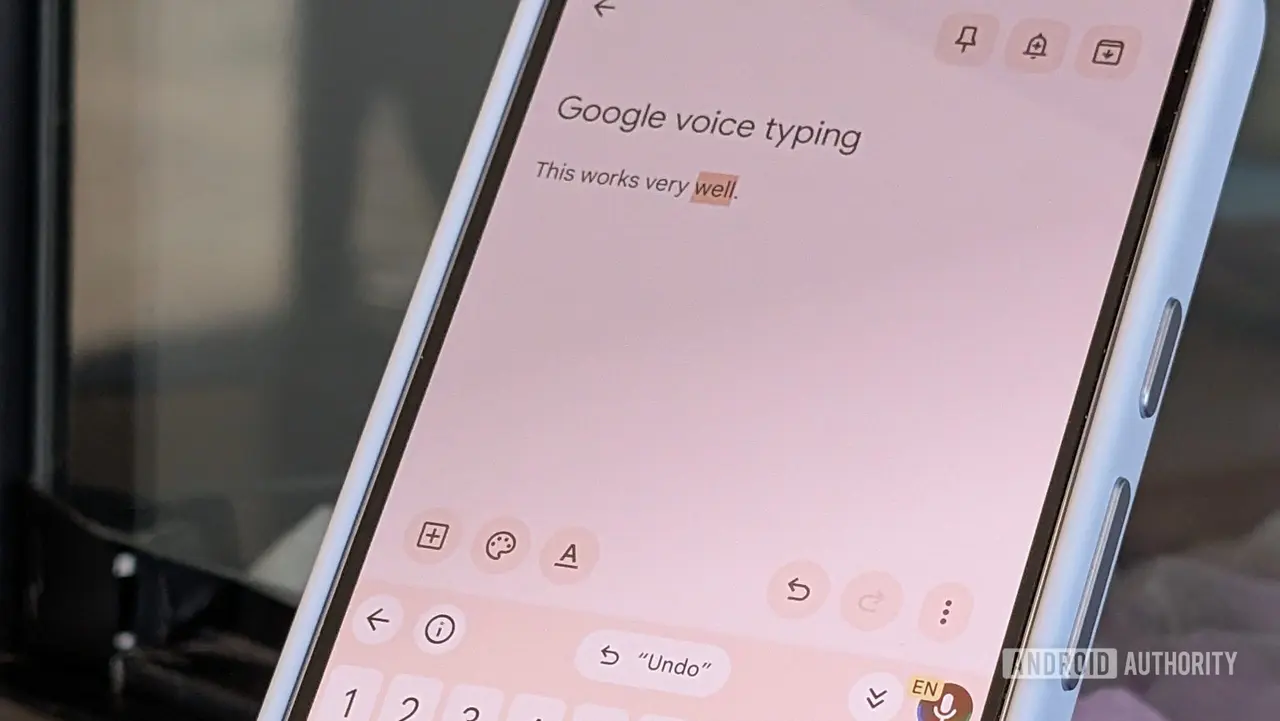
Source: Android Authority
Multilingual Models Enable Code-Switching for Global Users
Google is using Gemini-based multilingual models that support code-switching, allowing users to move between languages mid-sentence without losing context
1
. Users can seamlessly switch from English to Hindi within a single message, reflecting how many multilingual speakers actually communicate. This capability represents a significant advantage over Western dictation apps that have been slow to support mixed-language flow3
. For bilingual users who naturally blend languages depending on context, person, or mood, this feature makes Rambler far more practical than generic AI tools.Related Stories

Privacy Safeguards and Processing Architecture
On privacy and security, Ben Greenwood, director of Android Core Experiences, explained that Google uses a combination of on-device AI and cloud-based processing. The company has "invested significantly over many years" to ensure features are "safe and private"
1
. Gboard will clearly indicate when the Rambler feature is active, and Google emphasizes that it doesn't store any voice recordings, using audio only for real-time transcription1
. This messaging appears calculated to position Rambler favorably against third-party dictation apps that may handle data differently.Distribution Advantage Challenges Dictation Startups
Rambler will initially roll out this summer on Samsung Galaxy and Google Pixel phones before reaching other Android devices
1
. The feature lives directly in Gboard, making it accessible anywhere throughout Android2
. Google's core advantage lies in distribution: Gboard serves as the default keyboard for the vast majority of Android users worldwide, meaning Rambler arrives pre-installed for hundreds of millions of people. This platform-level integration poses a significant challenge for standalone apps like Wispr Flow, Willow, SuperWhisper, Monoglogue, Handy, and Typeless, which have primarily focused on desktop and iOS1
. When a platform player enters at the operating-system level, standalone apps need compelling reasons—better accuracy, deeper features, or stronger privacy guarantees—to justify a separate download. For dictation startups, the question shifts from whether they can build something good to whether they can build something good enough that users actively seek it out.References
Summarized by

Navi
[1]
[2]
[3]
Related Stories
Google AI Docs Live transforms spoken thoughts into documents for Pro and Ultra subscribers
19 May 2026•Technology

Google quietly releases free offline AI dictation app that polishes speech into clean text
06 Apr 2026•Technology

Google lets Mac users activate Gemini voice commands by pressing the fn key
29 Jul 2026•Technology

Recent Highlights
1
Microsoft and Nvidia Launch Surface Laptop Ultra: A $2,599 AI-Ready PC With RTX Spark Chip
Technology

2
Google Unveils Gemini 4 Argon AI Model, Restricts Access to Trusted Cyber Defenders
Technology

3
Trump Consulted Grok AI Before Ordering Venezuela Invasion and Capture of Nicolás Maduro
Policy and Regulation

Recent Highlights
Today's Top Stories






Don’t drown in AI news. We cut through the noise - filtering, ranking and summarizing the most important AI news, breakthroughs and research daily. Follow topics that matter to you and stay ahead.


