Google unveils Gemini Spark, a 24/7 AI agent with deep Gmail and Workspace integration


33 Sources
[1]
Google introduces Gemini Spark, a 24/7 agentic assistant with Gmail integration | TechCrunch
In the race to build compelling personal AI agents, Google may have an underrated advantage: it already has all your emails. At the company's I/O developer conference on Tuesday, Google announced a new agentic personal assistant called Gemini Spark that was built from Gemini base models and an
[2]
Google's Response to OpenClaw's 24/7 AI Agent
Gemini Spark is Google's take on a steroided-out assistant agent that knows everything about you, announced as part of the company's updates to its Gemini chatbot app at this year's I/O developer conference. Software companies have been talking up AI agents for some time now, but I wasn't
[3]
Gemini Spark Gives Google Way Too Much Access to Your Data
Dashia is the consumer insights editor for CNET. She specializes in data-driven analysis and news at the intersection of tech, personal finance and consumer sentiment. Dashia investigates economic shifts and everyday challenges to help readers make well-informed decisions, and she covers a range of
[4]
Google is launching its own version of OpenClaw
Gemini Spark is powered by the newly introduced Gemini 3.5 Flash and runs in the background 24/7 using virtual machines on Google Cloud. The AI agent will connect to Workspace apps like Gmail, Docs, Sheets, and Slides, but Google is expanding integrations to third-party apps using the Model Context
[5]

Is Spark Another Rebrand of Google Gemini or Something Else?
MOUNTAIN VIEW -- I wouldn't blame you if you came away from the recent Google I/O keynote with no idea what Gemini Spark is. After all, Gemini began its artificial life as Bard, Google's first-gen AI chatbot. Based on what we saw during the keynote, it might seem that Gemini is now transmogrifying
[6]
Google's Spark Uses Gemini AI to Help Plan Your Life
Expertise Smartphones | Gaming | Telecom industry | Mobile semiconductors | Mobile gaming At Google I/O 2026, new AI models and features are spilling off the presentation stage. One, called Gemini Spark, is what Google describes as a personal AI agent that runs 24/7 taking actions on your
[7]

Google reveals it's big plan to take on OpenClaw as the race for agentic AI begins
* Google unveils Spark, an agentic AI that runs tasks for you 24/7 on Google Cloud * Currently connects to Gmail and Docs, analyzes uploads overnight; macOS desktop actions planned * Rolling out to testers and US AI Ultra subs soon, with wider release likely When OpenAI brought LLMs into the
[8]

Google's Gemini Spark is an agentic AI assistant - Engadget
Google has announced a "24/7 personal AI agent" called Gemini Spark at this year's I/O developer conference. The company says Spark transforms Gemini from a standard AI assistant to an "active partner" that actually perform tasks for you. Spark is powered by Gemini 3.5 and is deeply integrated with
[9]

Google takes on OpenClaw with Gemini Spark, a 24/7 AI agent for your digital life
Serving tech enthusiasts for over 25 years. TechSpot means tech analysis and advice you can trust. What just happened? It's been impossible to avoid the impact that OpenClaw has had on the AI industry. Google knows all too well how popular the agentic personal assistant is proving, so it's
[10]

Google announces Gemini Spark to quietly run your digital life for you
Google says Spark will eventually be able to create custom sub-agents, shop on your behalf, and have deeper integrations with services like OpenTable, Instacart, and Chrome. Google just revealed a major redesign for the Gemini app as well as ambitious new features that take the chatbot well beyond
[11]

Google Comes for OpenClaw With Gemini Spark, a Personal AI Agent
The open-source OpenClaw launched the start of the personalized AI agent craze, and now the major players are getting in on the action with their own walled-garden offerings. Enter Gemini Spark, Google's "personal AI agent" offering announced during the company's Google I/O developer conference on
[12]

Google launches Gemini Spark agentic AI assistant at I/O 2026
Google announced Gemini Spark at I/O 2026, an always-on agentic AI assistant built on Gemini 3.5 and the Antigravity harness. It runs on dedicated cloud VMs, integrates natively with Gmail and Workspace, and will be available to AI Ultra subscribers next week.[/tldr] Google has unveiled Gemini
[13]
Google I/O 2026: Gemini Spark and Gemini Voice Coming to MacOS This Summer
Speaking from Google's Mountain View, California, HQ during Google I/O, Josh Woodward, VP of Google Labs, Gemini app and AI Studio, demonstrated how you can select a bunch of documents you've uploaded onto your MacBook -- in his example, he used paperwork related to his pets, like vaccination
[14]

Google's new Spark agent works 24/7, even when your phone is locked
Karandeep Singh Oberoi is a Durham College Journalism and Mass Media graduate who joined the Android Police team in April 2024, after serving as a full-time News Writer at Canadian publication MobileSyrup. Prior to joining Android Police, Oberoi worked on feature stories, reviews, evergreen
[15]

Google's new Spark AI agent will run your digital life for $100/month
Spark can perform complex functions like drafting emails and creating study guides, with a new Android Halo interface launching later this year to monitor its activities. As predicted, Google has unveiled a Gemini-powered personal AI assistant that will work tirelessly in the cloud, and now we
[16]

Google unveils Gemini Spark -- a '24/7 personal AI agent'
Google has unveiled a new personal AI agent called Gemini Spark at Google I/O today, and it could be the tool that pushes agentic AI into the mainstream. The new tool runs on dedicated virtual machines on Google cloud and is available 24/7 to help "navigate your digital life." The point of agentic
[17]
Google is giving Gemini far more control over your Mac than before
Gemini Spark will work like a full desktop assistant. Instead of simply answering questions, it is designed to handle repetitive tasks across your Mac, work with local files, and automate workflows that would normally require jumping between multiple apps manually. It can use information from
[18]

Google's new AI agent can draft your emails, monitor your inbox and eventually spend your money
Google on Tuesday unveiled Gemini Spark, a personal AI agent designed to work around the clock -- drafting emails, assembling documents, monitoring inboxes, and eventually making purchases -- even when a user's laptop is closed and their phone is locked. The announcement, made at Google I/O 2026,
[19]

Google I/O 2026: Gemini Spark is a wildly ambitious AI agent
Google announced Gemini Spark at I/O 2026 today, and it might be the most ambitious thing the company has put on stage. Billed as "your personal AI agent," Spark is a cloud-based AI that runs continuously. According to Google, Spark runs in the Cloud, so you don't need a Mac Mini or a dedicated
[20]
Gemini Spark screenshots reveal an AI that actually gets things done on its own
I've been covering Android and other mobile technology for close to ten years now, with a specific interest in phone accessories, e-readers, and what makes each individual phone different from another. I delight in looking at the phone market from as many angles as possible, and while my opinions
[21]

Google's new Gemini Spark AI agent can run your errands while you run your life
Google finally built an AI assistant that keeps working even when you stop. Google just announced Gemini Spark at Google I/O 2026, and it might be the most genuinely useful AI feature the company has ever shown off. Unlike most AI tools that wait on you, Gemini Spark takes a task and runs with it,
[22]

Google Launches Gemini Spark: A 24/7 AI Agent That Wants to Make You Ditch OpenClaw - Decrypt
Spark integrates with Gmail, Docs, and Slides out of the box, and adds MCP connections to Canva, OpenTable, and Instacart starting today. Google's Gemini app has more than 900 million monthly users. Up until now, most of them used it as a very smart chatbox. That changes today. At Google I/O
[23]

Why Google's Gemini Spark AI agent could be a game changer
Megan Cerullo is a New York-based reporter for CBS MoneyWatch covering small business, workplace, health care, consumer spending and personal finance topics. She regularly appears on CBS News 24/7 to discuss her reporting. Google's Gemini Spark AI tool could be a game-changer for consumers wading
[24]
Gemini's Spark agent has leaked, and it looks like it's gunning for Claude Cowork's throne
Spark is expected to interact with other apps to execute multi-step tasks without human intervention. Earlier this week, Google showcased the facelift that's coming for Gemini, along with new automation features. But along with this, Gemini may be getting a truly agentic upgrade with an
[25]

Google unveils Gemini Spark, an always-on AI agent for daily digital tasks - SiliconANGLE
Google unveils Gemini Spark, an always-on AI agent for daily digital tasks Entering into the AI agent era, Google LLC today introduced Gemini Spark, a 24/7 personal artificial intelligence assistant that can help people navigate their digital lives and do real work on their behalf. Under the
[26]
Gemini is about to get wings on your phone with agentic skills
Google I/O is almost here, and now that Google has already wrapped up The Android Show, all eyes are shifting toward the company's AI ambitions -- especially Gemini. While nothing has been officially announced yet, a new leak gives us an early glimpse of what Google could be preparing behind the
[27]

Google launches Gemini Spark as a personal AI agent
Google has introduced a new AI assistant named Gemini Spark, described as a "24/7 personal AI agent" that functions as an "active partner" instead of a conventional assistant. The new assistant is powered by Gemini 3.5 and is integrated with Google Workspace applications, including Gmail, Docs, and
[28]

Google's Gemini Spark is the first AI agent built for people who don't know what an AI agent is
Quentyn is a career tech journalist with nearly two decades of experience. He has written thousands of stories for publications such as The Verge, Forbes, Consumer Reports, and Business Insider. Quentyn specializes in reporting about mobile technology (including smartphones, tablets, wearables,
[29]

Google Shows Off Gemini Spark, its New Always-on Personal Agent - Phandroid
Google I/O is finally here, although unlike previous conferences where the company focused on Android and its Pixel devices, this year's show pretty much focused on AI. While Google showed off a lot of new additions to its AI ecosystem, it also unveiled Gemini Spark, which essentially works as a
[30]
Google's upcoming 'Gemini Spark' could soon book your flights and handle your inbox
Google has experimented with AI agents before with internal projects like "Remy," but the current Gemini Agent tools have been largely confined to paying AI Ultra users. Spark looks like the next step in that evolution, but this time with a wider consumer-facing angle. Meanwhile, Google is also
[31]

Google IO 2026: Google Brings Gemini Spark to Apple's Mac
Gemini Spark was introduced by the Mountain View-based tech giant on Tuesday during its annual developer conference, Google I/O 2026. The new Gemini Spark is the company's latest personal AI assistant, which is backed by Google's latest Gemini 3.5 series models. During the event, the tech giant
[32]

Google I/O 2026: What is Gemini Spark, the AI assistant that works even when your laptop is off
The company also introduced AP2 safeguards to control spending permissions and AI-driven transactions. During the Google I/O 2026, the company introduced Gemini Spark, a new AI-backed assistant that is made for operating like a personal autonomous agent rather than a traditional chatbot. The
[33]
Google reportedly working on Gemini Spark, an always-on AI assistant: Here is what it may do
Gemini Spark is said to be an always-on AI assistant that can complete tasks for users in the background instead of waiting for prompts. Google is currently preparing for its I/O 2026 event, which is scheduled to kick off next week. Ahead of the event, a new leak has revealed details about a
Share
Copy Link
Google announced Gemini Spark at its I/O developer conference, positioning it as an AI-powered personal assistant that runs continuously in the cloud. Built on Gemini base models and integrated with Gmail, Docs, and other Google Workspace apps, Spark can autonomously handle multi-step tasks like organizing events, drafting emails, and tracking expenses. The proactive AI agent launches in beta next week for Google AI Ultra subscribers at over $100 per month, though concerns about personal data privacy and autonomous access persist.
Google Introduces Gemini Spark as Next-Generation Agentic AI
Google announced Gemini Spark at its I/O developer conference on Tuesday, marking the company's entry into the rapidly expanding market for autonomous AI agents
1
. Alphabet CEO Sundar Pichai described Gemini Spark as "the next evolution of smart digital assistants," positioning it as an AI agent capable of taking on long-horizon tasks with minimal oversight1
. Built from Gemini base models and powered by Gemini 3.5 Flash, the proactive AI agent runs continuously on dedicated virtual machines in Google Cloud, meaning it operates even when laptops and phones are turned off1
4
.
Source: TechSpot
The AI-powered personal assistant follows similar offerings from competitors, notably Anthropic's Claude Cowork and OpenClaw, which went viral earlier this year among power users attempting to fully automate their digital lives
2
. However, Google may possess an underrated advantage in this space: it already has access to users' emails, calendars, and documents through its ecosystem1
.Deep Integration with Google Products Sets Spark Apart
The defining characteristic of Gemini Spark lies in its seamless integration with Google products, particularly Gmail integration and broader Google Workspace integration
1
. Users can email Spark directly through a dedicated Gmail address, and the agent can interact with the web through Chrome1
. Out-of-the-box connections to Gmail, Google Docs, Google Calendar, Sheets, and Slides eliminate the setup friction that plagues third-party alternatives1
4
.
Source: MakeUseOf
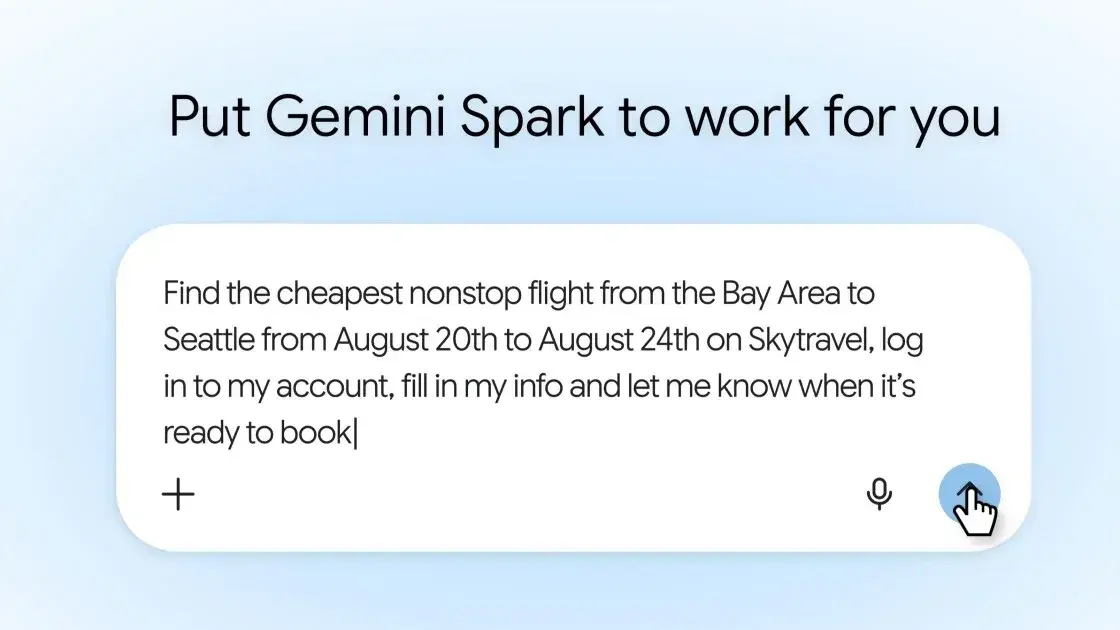
Josh Woodward, VP of Google Labs and the Gemini App, explained practical applications: "Need to send an email to your boss with a status update? Spark can pull all the facts from your emails, your docs, your sheets, and slides and write the draft for you"
1
. Small businesses can deploy Spark to monitor inboxes and ensure customer inquiries never go unanswered1
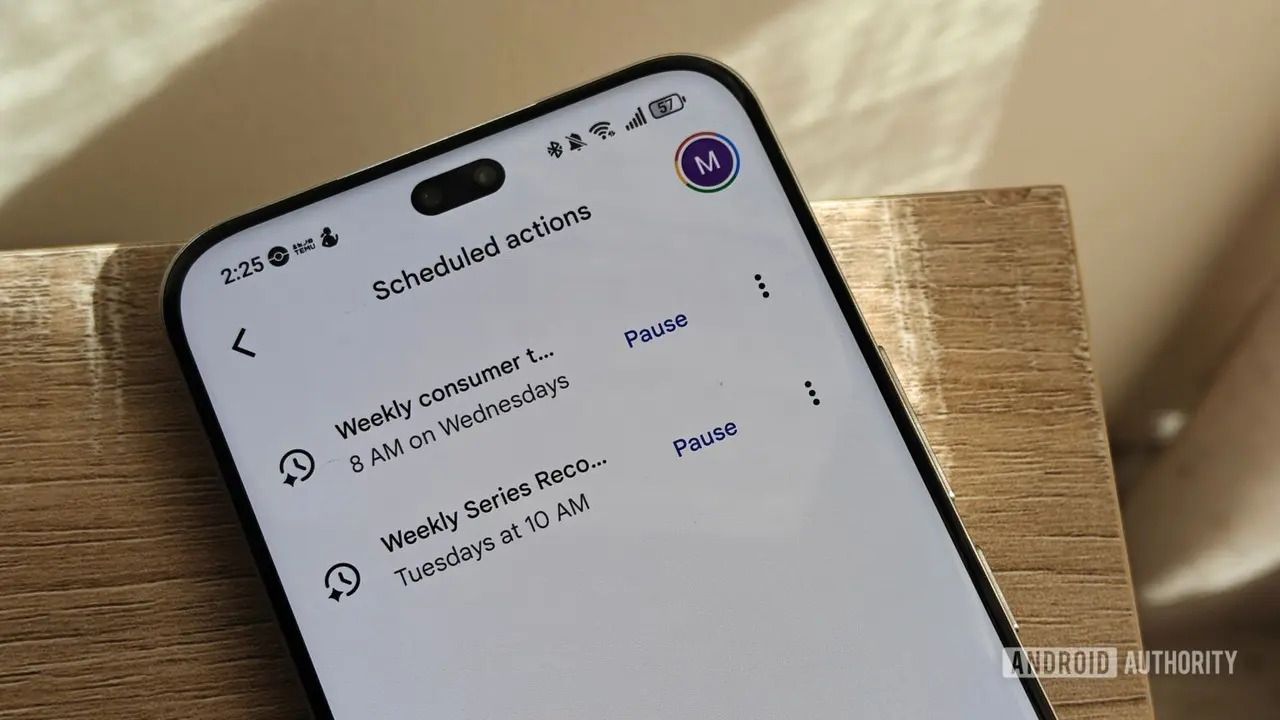
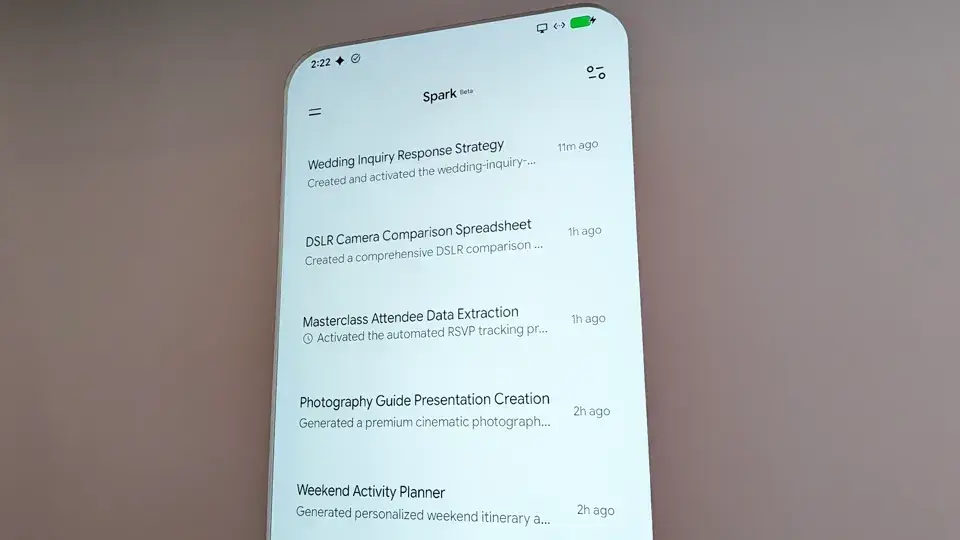
.Demonstrations at Google I/O showcased Spark handling multi-step tasks like planning a block party by counting RSVPs, following up with non-respondents, and creating an automatically updating tracker in Gmail
3
. The agent can also review credit card bills to flag unexpected fees, skim preschool-related emails to highlight key dates for morning digests, and compile meeting notes into Google Docs while generating follow-up emails2
.
Source: Android Authority
Expanding Beyond Google's Ecosystem Through Open Standards
While Gemini Spark's initial strength centers on native Google integrations, the company plans to expand connectivity to third-party applications using the Model Context Protocol (MCP), an open standard that allows AI models to plug into external systems
4
. Integrations with services like Canva, OpenTable, and Instacart are planned for the coming weeks2
4
.This summer, Google will enable Spark to interact with local files through the Gemini app on macOS, along with the ability to text or email commands directly to the agent
2
4
. On mobile, users can track the agent's progress through the new Android Halo system1
.Availability and Pricing Create Accessibility Questions
Gemini Spark enters testing this week with a small group of early users before launching in beta next week for subscribers to Google AI Ultra, the company's premium tier priced at over $100 per month
1
2
. The steep subscription cost positions Spark as a tool for early adopters willing to pay a premium for cutting-edge agentic AI capabilities2
. Plans exist to make Spark available as a Mac desktop app and later on Chrome for broader audiences3
5
.Related Stories
Personal Data Privacy Concerns Shadow Launch Excitement
Despite the convenience promises, significant questions about personal data privacy and data safety have emerged. Google states that connections to apps are turned off by default and that Spark "does not read your emails indiscriminately," but concerns persist about what information gets stored and shared when these connections are enabled
3
.CNET's consumer insights editor raised pointed concerns: "If it's running in the background on its own, I'm concerned it's watching my screen like a hawk to complete tasks independently"
3
. The risks extend beyond simple errors—payment information, addresses, phone numbers, and sensitive work documents could potentially be exposed if security measures fail3
.Google acknowledges these concerns by designing Spark to ask permission before performing high-stakes actions like spending money or sending emails
2
. Woodward compared the approach to "giving a teenager their first debit card," with plans to implement spending limits and preferred merchant restrictions for agentic shopping features2
. Yet the experimental nature of the software means users are taking calculated risks with their personal information2
.Distinguishing Spark from Gemini's Broader Product Line
Confusion about Gemini Spark's relationship to Google's existing AI products has complicated its launch narrative. Unlike the standard Gemini chatbot app, which requires active prompting, Spark's differentiator lies in its ability to proactively gather details and take action autonomously
2
5
. It represents a distinct product category—digital assistants that function as active partners rather than reactive tools5
.Observers at Google I/O noted that the presentation added confusion rather than clarity about what Spark actually represents within Google's AI ecosystem
5
. The product is not a rebrand of Gemini but rather a specialized application built on those foundational models, designed specifically for long-form, ongoing projects like wedding planning or home renovations5
.As Google pushes AI agents further into mainstream consciousness, the success of Gemini Spark will depend on whether it can deliver practical value without the catastrophic failures that have plagued experimental tools like OpenClaw, which nearly deleted an entire email archive for one Meta employee
2
. For users willing to navigate the privacy trade-offs and premium pricing, Spark offers a glimpse of how agentic AI might reshape daily digital routines.References
Summarized by

Navi
[1]
[4]
[5]
Related Stories
Google rolls out Gemini Spark, a 24/7 AI agent that handles tasks while your devices are off
23 May 2026•Technology

Google launches Gemini Spark, an agentic AI tool that works 24/7 even when devices are off
03 Jun 2026•Technology
Gemini Spark AI Agent Lands on macOS to Automate Desktop Tasks and Remote Workflows
30 Jun 2026•Technology
Recent Highlights



Recent Highlights
Today's Top Stories





Don’t drown in AI news. We cut through the noise - filtering, ranking and summarizing the most important AI news, breakthroughs and research daily. Follow topics that matter to you and stay ahead.


