Huawei's paper claims double-density AI memory, but nobody knows if it can be built


2 Sources
[1]
Huawei teases an AI memory chip to take on Samsung and SK Hynix
A research paper due in February describes high-bandwidth memory with twice the data pin density of Korean rivals. Huawei is set to present a high-bandwidth memory design with double the data pin density of chips Samsung and SK Hynix mass-produce, Bloomberg reported. It is unclear how close Huawei
[2]
Huawei Poised To Grow China's AI Chip Market With A Next-Generation HBM Design With Double The Data Pin Density To Surpass Bandwidth Limitations
The LogicFolding design for chips was only the start of Huawei's ambitions, because the Chinese giant is reportedly set to share technical details of a next-generation High-Bandwidth Memory (HBM) architecture engineered to rival and potentially surpass existing solutions from South Korean memory
Share
Copy Link
Huawei will present a new memory chip design at a major engineering conference in San Francisco in February, and the paper's title claims it doubles a key measure of the memory that AI systems depend on
2
1
. That matters because China is largely cut off from the companies that make this memory.A claim on paper
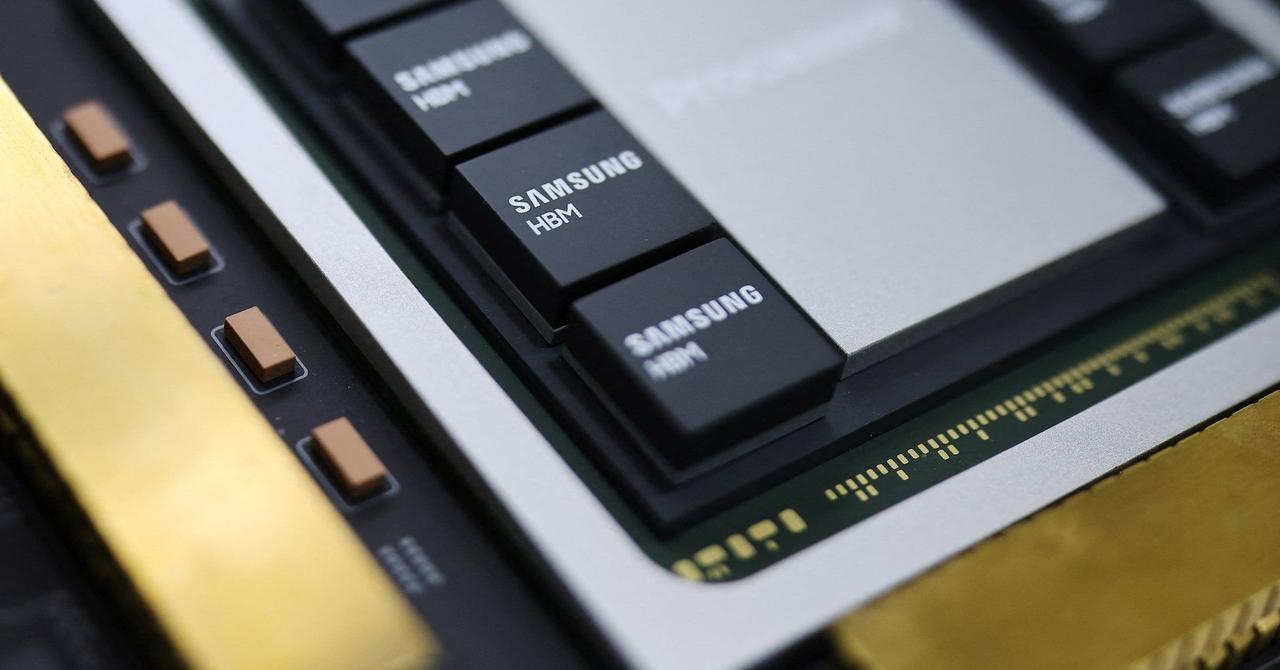
The memory is high-bandwidth memory: chips stacked in layers that feed data to AI processors. Per the paper's title, the design doubles the data pin density of the chips Samsung and Hynix mass-produce
2
1
. Data pins are the connection points that move information in and out, so doubling their density means more pathways between the stacked memory layers and the processors. More pathways would in theory let data move faster, which is what AI accelerator workloads need2
.
Source: Wccftech
But the claim so far lives in a title. How close the company is to manufacturing is unknown; conference papers often present concepts rather than finished products. Huawei did not respond to Bloomberg's request for comment
1
.Why China needs its own memory
The three firms that make nearly all of it, Samsung, Hynix and Micron, are barred from selling advanced high-bandwidth memory to Chinese customers under US trade restrictions
2
1
. Huawei has reportedly told some clients that the Ascend AI chip it is building next will depend mostly on Korean memory brought in through smugglers1
.
Source: The Next Web
Domestic production is starting too: one Chinese memory maker has begun making the memory, though with low yields
1
. Huawei has shown other workarounds before. In June it laid out a chip design method that, by its own account, could match 1.4nm-class chips by 2031 without needing the most advanced lithography machines1
.The report hit shares of Samsung, Hynix and Micron
1
.The density figure is a claim on paper, not a demonstrated product, and the gap between the two is where this story sits. How far along Huawei is on manufacturing stays unknown; the February conference session is when the design gets its public airing.
Related Stories
References
Summarized by

Navi
[1]
Related Stories
Huawei Pulls Ascend 960 AI Chip Launch Forward by Three Quarters, Doubling Performance Targets
17 Sept 2026•Technology
Huawei Unveils Ambitious AI Chip Roadmap, Challenging Nvidia's Dominance in China
12 Sept 2025•Technology

Chinese Firm Tongfu Microelectronics Begins Trial Production of HBM2 Memory, Signaling Advancements in Domestic AI Chip Manufacturing
27 Jan 2025•Technology

Recent Highlights



Recent Highlights
Today's Top Stories











Don’t drown in AI news. We cut through the noise - filtering, ranking and summarizing the most important AI news, breakthroughs and research daily. Follow topics that matter to you and stay ahead.


