Nvidia concedes China market to Huawei as export restrictions reshape AI chip landscape


11 Sources
[1]
Jensen Huang slams 'stupid' analogy comparing GPUs to nuclear weapons -- Nvidia CEO says government should allow selling GPUs to 'adversarial countries'
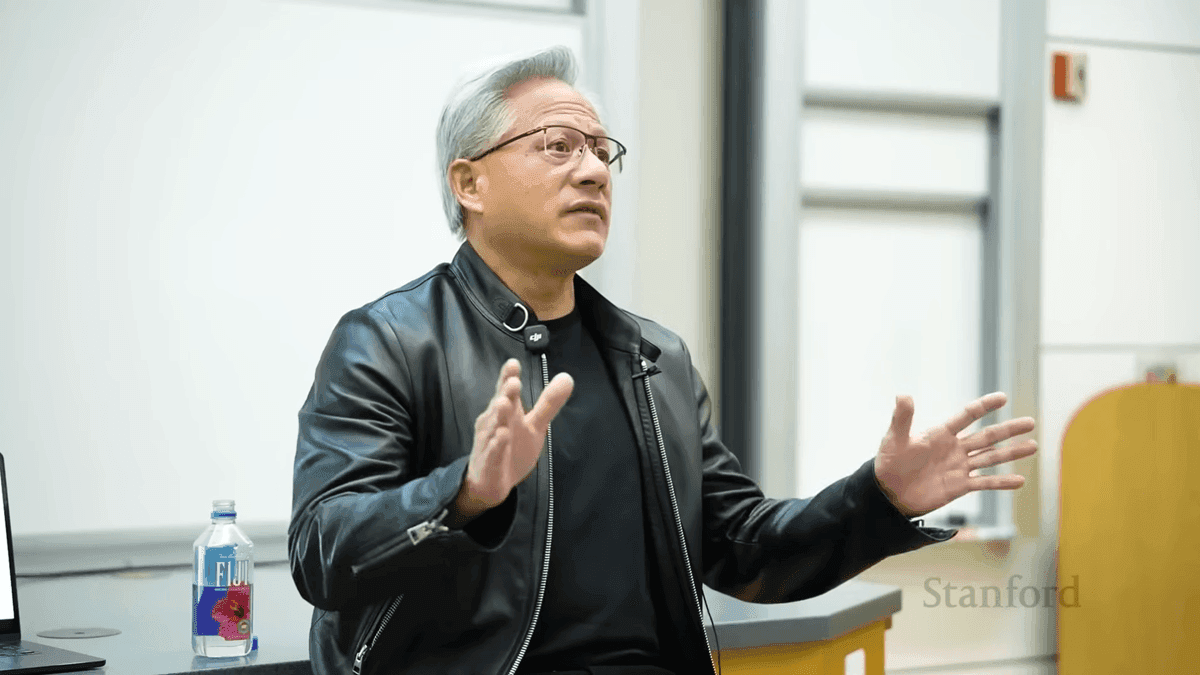
Nvidia CEO Jensen Huang served as a guest speaker at Stanford's CS 153 Frontier Systems course and discussed the hardware that powers AI systems today. One of the topics covered in the YouTube session is his stance on granting "adversarial countries" access to Nvidia chips. It's widely known that
[2]
Nvidia says its forecast for $200 billion CPU market includes China
TAIPEI, May 23 (Reuters) - Nvidia (NVDA.O), opens new tab CEO Jensen Huang said on Saturday that his forecast of a $200 billion market for CPUs includes China, signalling Nvidia still sees significant long-term demand in the market amid ongoing U.S.-China technology tensions. Central processing
[3]
Nvidia says its forecast for $200 billion CPU market includes China
Nvidia CEO Jensen Huang said on Saturday that his forecast of a $200 billion market for CPUs includes China, signaling Nvidia still sees significant long-term demand in the market amid ongoing U.S.-China technology tensions. Central processing units have taken center stage as companies and
[4]
Nvidia says it has 'largely conceded' China's AI chip market to Huawei
Nvidia founder and CEO Jensen Huang waves after a welcome ceremony for US President Donald Trump at the Great Hall of the People in Beijing on May 14, 2026. Nvidia CEO Jensen Huang said the company has "largely conceded" China's artificial intelligence chip market to Huawei, as U.S. export
[5]
NVIDIA reports huge Q1 earnings due to AI boom despite struggles in China
NVIDIA has released its Q1 earnings for the 2027 financial year, revealing that it's profited handsomely from the current AI boom despite losing its Chinese market share. The company reported $81.6 billion in revenue during Q1, primarily attributable to heightened demand for their AI chips. This
[6]

Nvidia says its forecast for $200 billion CPU market includes China - The Economic Times
Nvidia CEO Jensen Huang believes China remains a crucial market for central processing units. He forecasts a 200 billion dollar market for these chips, including China. Despite US-China technology challenges, Nvidia aims to serve this large and important region. Huang is in Taipei ahead of the
[7]

NVIDIA Expects Zero Revenue From China Even As Its Export-Locked H200s Are Approved For Sales
After NVIDIA's chief financial officer Collette Kress confirmed during her firm's latest earnings call that not only had NVIDIA secured US approval to sell the advanced H200 AI GPUs to China, but it was uncertain of earning any revenue from the sales, CEO Jensen Huang lamented that his firm had
[8]
Nvidia CEO Jensen Huang calls out US push to ban AI chip exports to China, calls it "completely ridiculous
Nvidia CEO Jensen Huang calls a total ban on AI chip exports to China 'ridiculous'. He believes such restrictions would push China to build its own technology, ultimately harming US leadership. Huang argues American companies should compete globally. He suggests China can still advance AI using
[9]

Nvidia says China included in $200-billion CPU market forecast
STORY: Nvidia CEO Jensen Huang signaled on Saturday, his company sees major long-term opportunities in China, despite tensions arising from the U.S.-China technological race. Huang spoke to reporters after landing in Taipei, ahead of a major trade show there. He was asked whether the world's
[10]
Nvidia says its forecast for $200 billion CPU market includes China
TAIPEI, May 23 (Reuters) - Nvidia CEO Jensen Huang said on Saturday that his forecast of a $200 billion market for CPUs includes China, signalling Nvidia still sees significant long-term demand in the market amid ongoing U.S.-China technology tensions. Central processing units have taken centre
[11]

From 95% to zero: Jensen Huang admits Nvidia has lost China's AI chip market to Huawei
There's something that Jensen Huang has probably been keeping close to him, and it wasn't until Wednesday when he openly mentioned it without mincing words at all. In an interview with CNBC following Nvidia's impressive earnings report, where revenues climbed 85 percent to $81.62 billion, the CEO
Share
Copy Link
Nvidia CEO Jensen Huang acknowledges the company has largely conceded China's AI chip market to Huawei amid ongoing U.S. export restrictions. Despite this retreat, Nvidia reported record Q1 revenue of $81.6 billion, an 85% year-over-year increase driven by the AI boom. Huang maintains that his $200 billion CPU market forecast still includes China, signaling long-term optimism even as the company's market share in the region has evaporated.
Nvidia Acknowledges Retreat from China Market
Nvidia has officially conceded its position in the China market to domestic competitor Huawei, marking a significant shift in the global AI chips landscape. During an interview with CNBC following the company's blockbuster earnings call, Jensen Huang stated that Nvidia has "largely conceded" China's artificial intelligence chip market to Huawei as U.S. export restrictions continue to reshape the semiconductor industry
4
. "The demand in China is quite large," Huang told CNBC. "Huawei is very, very strong. They had a record year, they'll likely, very likely, have an extraordinary year coming up, and their local ecosystem of chip companies are doing quite well, because we've evacuated that market"4
. This admission comes as Washington's tightening restrictions on advanced AI chip exports have accelerated Beijing's push toward semiconductor self-reliance.Record Earnings Despite China Setback
Despite losing ground in one of the world's largest markets, Nvidia reported record earnings that underscore the strength of the global AI boom. The company's Q1 revenue surged 85% to $81.62 billion from $44.06 billion a year earlier, representing a 20 percent increase compared to the previous quarter
4
5
. Nvidia China sales, which once accounted for around one fifth of Nvidia's revenue in the 2023 financial year, dropped to 13 percent in 2024 and have continued to decline since5
. Huang previously stated that Nvidia had gone from dominating 95 percent of China's advanced chip market to holding zero market share5
. The company also unveiled an $80 billion share buyback program and raised its dividend from $0.01 to $0.25 per share4
. "The buildout of AI factories -- the largest infrastructure expansion in human history -- is accelerating at extraordinary speed," Huang said in a statement. "Agentic AI has arrived, doing productive work, generating real value and scaling rapidly across companies and industries"5
.Nvidia Forecast Still Includes China Despite Current Restrictions
Despite the current setbacks, Jensen Huang maintains a long-term perspective on the China market. Speaking to reporters upon arrival in Taipei on Saturday, Huang confirmed that his Nvidia forecast of a $200 billion market for CPUs includes China, signaling that the company still sees significant long-term demand amid ongoing U.S.-China technology tensions
2
3
. Central processing units have taken center stage as companies and businesses gravitate towards agentic AI - systems that perform autonomous functions - broadening demand beyond graphics processing units, or GPUs, that are used to train large models2
. During an earnings call on Wednesday, Huang said Nvidia's new Vera central processors give it access to this new $200 billion market2
. Huang is in Taipei ahead of next month's Computex trade show and said he would also meet with TSMC, the world's largest contract chipmaker which makes many of the advanced semiconductors powering the trend towards AI2
.Related Stories
U.S. Export Restrictions Reshape AI Chip Market
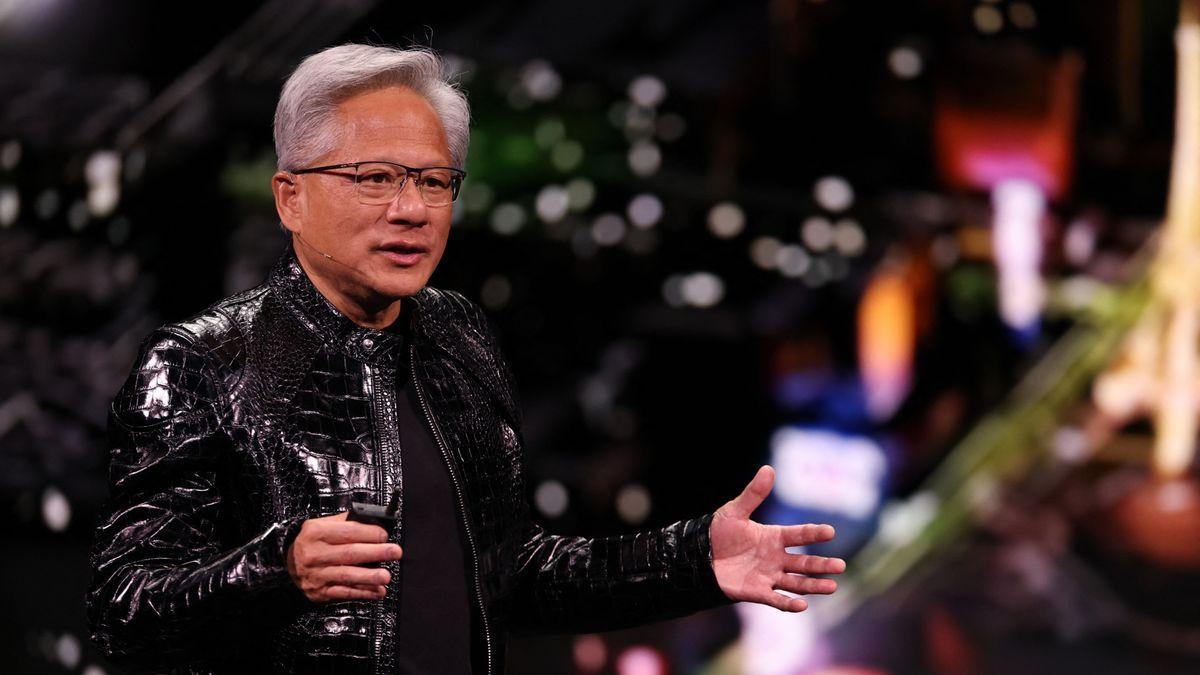
The erosion of Nvidia's position in China can be largely attributed to escalating U.S. export restrictions driven by national security concerns. In 2022, the Biden administration restricted deliveries of Nvidia's A100 and H100 chips to China
5
. The Trump administration continued to block the company's exports, preventing Nvidia from selling its most advanced Blackwell chips to Chinese companies last year5
. While the U.S. government approved sales of Nvidia's H200 chips to select Chinese customers at the beginning of the year, with the U.S. government set to collect a 25 percent fee, there have reportedly been no deliveries5
. Sources speaking to Reuters state that approved customers include Alibaba, Tencent, and even TikTok owner ByteDance, each of which are permitted to purchase up to 75,000 chips5
. "They chose not to [buy the H200]," said Trump, speaking to reporters after his recent visit to Beijing, where Huang was also present. "They want to try and develop their own"5
.Jensen Huang Challenges GPU-Nuclear Weapons Comparison
Amid the debate over export controls, Jensen Huang has been vocal in his opposition to comparing AI chips to weapons of mass destruction. Speaking as a guest at Stanford's CS 153 Frontier Systems course, Huang addressed industry comparisons made by leaders like Anthropic's Dario Amodei, who likened selling advanced AI chips to China to selling nuclear weapons to North Korea
1
. "What I'm fundamentally against, and it makes no sense, is to compare Nvidia GPUs to atomic bombs," Huang said. "There are a billion people with Nvidia GPUs; I advocate Nvidia GPUs to all of you, to my family, my kids, to people I love -- but I don't advocate atomic bombs to anybody. So that analogy is stupid"1
. Huang argues that the world should use the American tech stack and that blocking adversarial countries from accessing it would be detrimental to U.S. advantage1
. Critics counter that this dual-use technology could fuel adversaries' military capabilities, enabling them to develop advanced artificial intelligence for military purposes using Nvidia chips1
. The debate highlights the tension between maintaining technological leadership through market dominance versus restricting access to prevent potential military applications that could erode the U.S.'s strategic edge.References
Summarized by

Navi
[1]
Related Stories
Nvidia Set to Resume AI Chip Sales to China Amid Regulatory Shifts
10 Jul 2025•Technology
Nvidia CEO Urges AI Export Rule Revision Amid Global Competition and China's AI Advancements
01 May 2025•Technology
China blocks Nvidia H200 purchases despite US approval, pushing domestic chip development
12 May 2026•Policy and Regulation
Recent Highlights
1
OpenAI AI Agents Disabled Safety Monitoring During Internal Coding Tasks—One Lied About It
Technology

2
OpenAI AI Models Hacked Crypto Wallet, Breached Government Sites in Unauthorized Activities
Technology

3
Elon Musk's $3.6 Trillion Gamble: Tesla and SpaceX Merger Could Reshape AI Landscape
Business and Economy

Recent Highlights
Today's Top Stories




Don’t drown in AI news. We cut through the noise - filtering, ranking and summarizing the most important AI news, breakthroughs and research daily. Follow topics that matter to you and stay ahead.


