Kioxia jumps as much as 14.5% after Nvidia tie-up on SSDs for AI memory


5 Sources
[1]
Kioxia and Nvidia demo 144 SSDs that expand GPU memory past 1 petabyte in a GB200 NVL72 rack
Serving tech enthusiasts for over 25 years. TechSpot means tech analysis and advice you can trust. In a nutshell: The computational capabilities of AI accelerators and GPUs are now limited by how much high-bandwidth memory the processors can access at any given time. According to Kioxia,
[2]
Kioxia jumps 14.5% after Nvidia SSD collaboration
Kioxia Holdings shares rose as much as 14.5% to 7,895 yen on Thursday after the Japanese memory-chip maker announced a collaboration with Nvidia on using solid-state drives to expand effective GPU memory capacity. The stock outperformed Japan's Nikkei index, which gained 1.3% to close at
[3]
NVIDIA and KIOXIA combine high-bandwidth memory with fast SSDs to push memory capacity beyond 1 Petabyte
NVIDIA and KIOXIA have announced a partnership that will leverage NVIDIA SCADA (Scaled Accelerated Data Access) and high-speed KIOXIA SSDs to expand memory. With high-performance AI systems and data centers requiring large amounts of high-bandwidth memory (HBM) to deliver peak performance for
[4]
Kioxia jumps 14% after Nvidia collaboration as chip stocks rebound By Investing.com
Investing.com -- Kioxia Holdings shares surged on Thursday, extending a sharp rebound in Japanese semiconductor stocks after the memory chipmaker announced a collaboration with Nvidia to expand effective GPU memory capacity using its solid-state drives. Kioxia rose as much as 14.5% to 7,895 yen,
[5]
Why is Kioxia stock surging today? By Investing.com
Investing.com -- Kioxia Holdings stock surged 14.2% to ¥7,875 on Thursday, propelled by a collaboration with Nvidia in which the two companies flagged the potential to extend effective GPU memory capacity to petabyte scale -- using Kioxia's high-performance NVMe SSDs paired with Nvidia's SCADA
Share
Copy Link
Kioxia shares jumped as much as 14.5% on Thursday after the Japanese memory maker announced a collaboration with Nvidia to stretch GPU memory using ordinary flash storage
5
4
2
. One outlet credits Kioxia with inventing flash memory1
.The idea is simple enough. GPUs carry a small amount of high-bandwidth memory on the chip itself, and it is fast, expensive and small, so huge datasets quickly run past it
3
1
. Per the joint announcement, the demo put 144 Kioxia SSDs into a single Nvidia GB200 rack-scale system: 18 server nodes, eight drives each, roughly 1.1 petabytes of raw capacity3
4
1
. The setup could handle a database of 2 trillion vectors, the numbered entries AI systems use to represent information3
4
1
. It is a proof-of-concept under Nvidia's Storage-Next initiative, with Nvidia storage software managing the drives3
.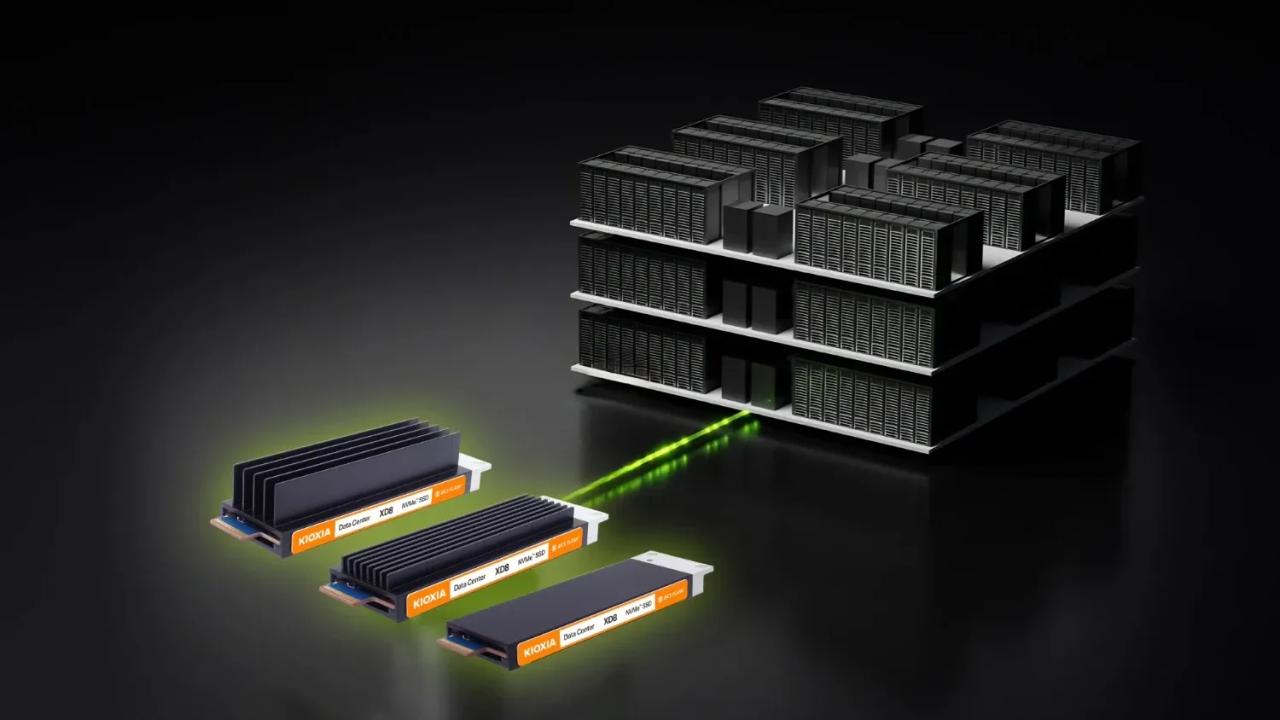
Source: TweakTown
Why flash instead of more high-bandwidth memory
If flash can act as memory, AI systems could work over far larger datasets without paying high-bandwidth memory prices for every gigabyte
3
2
. Nvidia's storage chief Jason Hardy framed the point as knowledge rather than horsepower: for AI agents, intelligence will rest more and more on what they can access, not just the compute they burn3
.For Kioxia the tie-up also serves a pivot already underway. The company, credited with inventing flash memory in its Toshiba years, now sells primarily to data-center and AI customers, per TechSpot
1
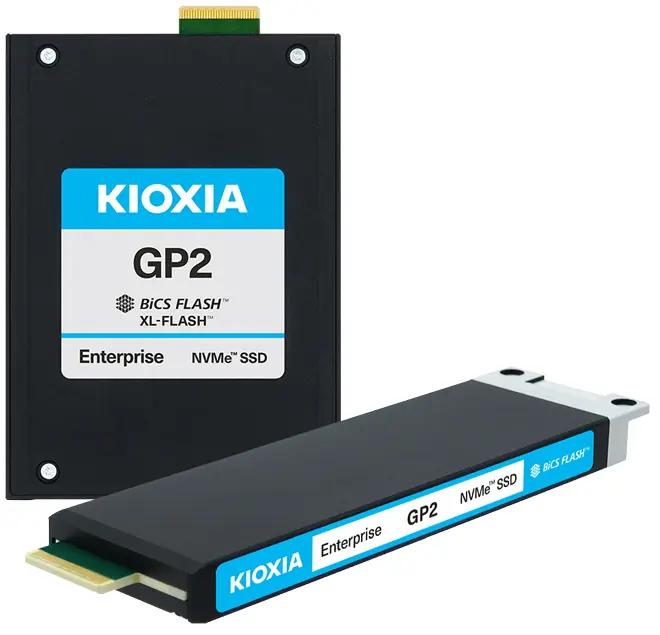
. Per the same outlet, it already has a PCIe 6.0 drive line in development that talks to GPUs directly1
.A bounce inside a rough week
The surge landed in a violently jittery week: Kioxia rose nearly 10% on Tuesday, fell 14.18% on Wednesday amid worries about AI spending and tariffs, then rebounded Thursday
4
2
. The Nikkei 225 gained 1.3% on the day, with chip peers Advantest and SoftBank up about 7.8% and 5.3%, so part of Kioxia's move was the sector coming back5
4
.Two things fed the buying. Investors read the announcement as a design-in win with the dominant AI accelerator vendor, per Investing.com's characterization
5
. Separately, Kioxia disclosed it would receive a 2.2 trillion yen dividend from its operating subsidiary, potentially completable before year-end, and investors started betting on buybacks5
. Chip stocks stay exposed to swings over whether AI investment will pay off and over US trade policy, so one day's gain says little about where the sector settles4
2
.The companies say they are still evaluating whether the architecture is technically feasible and how well it performs
4
2
1
.Related Stories
References
Summarized by

Navi
[1]
[2]
[3]
[4]
[5]
Related Stories
Nvidia and Kioxia Collaborate on Revolutionary 100 Million IOPS SSD for AI Servers
12 Sept 2025•Technology
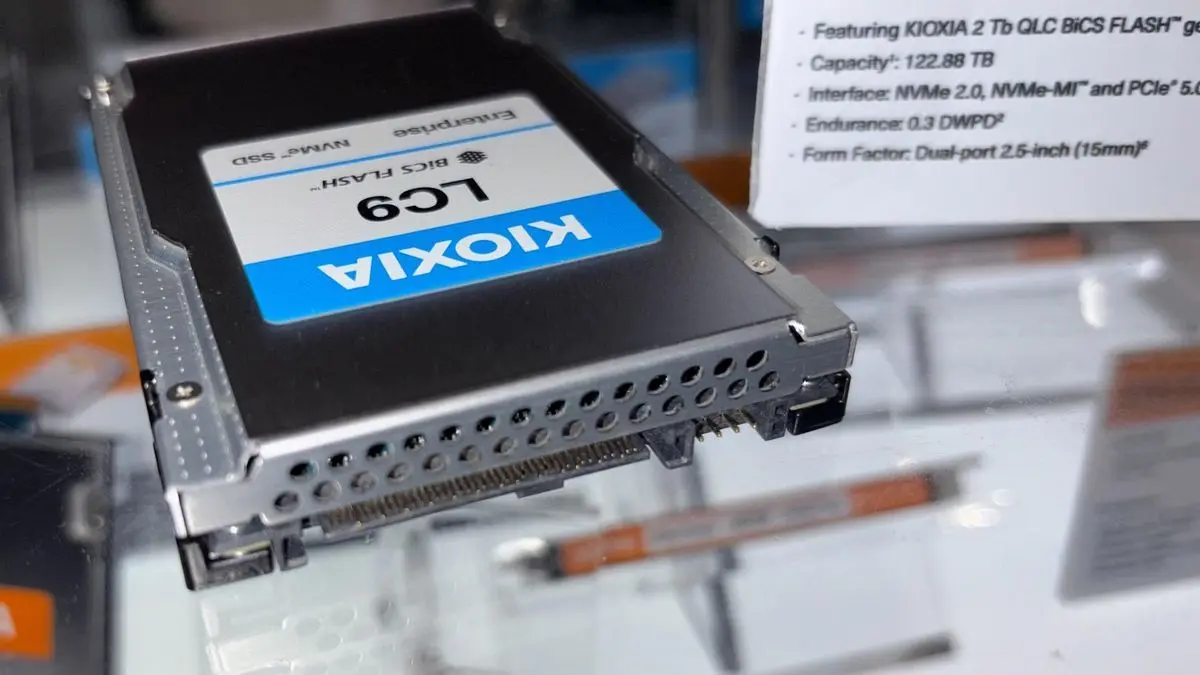
Kioxia Unveils PCIe 6.0 SSDs Targeting 10 Million IOPS for AI Workloads
29 Jul 2026•Technology

Nvidia and SK Hynix develop AI SSD targeting 100 million IOPS to solve inference bottlenecks
17 Dec 2025•Technology
Recent Highlights



Recent Highlights
Today's Top Stories










Don’t drown in AI news. We cut through the noise - filtering, ranking and summarizing the most important AI news, breakthroughs and research daily. Follow topics that matter to you and stay ahead.


