4 Sources
[1]
Softbank CEO Shoots Down Musk's Plan for Orbital Data Centers as SpaceX Stock Falls Back to Earth
Masayoshi Son, the billionaire founder and CEO of Japanese conglomerate SoftBank Group, doesn't seem too convinced by Elon Musk's plan to put data centers in space. Son said the costs of orbital data centers would likely outweigh the benefits and that the AI race will be decided much closer to home, Bloomberg reports. "In the battle for AI, the next few years will be far more important than what might happen a decade or so from now," said Son on Tuesday when asked at an investors event if he plans to send data centers into space. Son's comments come just weeks after SpaceX finally hit Wall Street with a historic IPO that turned it into one of the most valuable companies in the world and made Musk the world's first trillionaire overnight. However, SpaceX shares have already started to fluctuate after their huge debut. The stock briefly dipped below its opening-day price of $150 on Tuesday morning before rebounding. 'He who strikes first wins' Part of the reason SpaceX was able to pull off such a massive IPO is that the company is selling investors on a completely absurd future earnings potential. In its IPO filing, the company estimates it has a $28.5 trillion total addressable market, with roughly $26.5 trillion expected to come from AI alone. The rocket and satellite company, which acquired Musk's AI company xAI earlier this year and Cursor after its IPO, has also been selling another dream. Musk has said SpaceX is working toward putting data centers in space. Last year, Musk said he sees a path to shooting 100 gigawatts of computing power into orbit each year with solar-powered AI satellites. And Musk isn't the only rich tech guy thinking along those lines. Amazon founder Jeff Bezos predicted that humans could start building massive data centers in space within the next two decades. Still, Son does not appear to have fallen for the hype. Son said the main benefit of putting data centers in space would be lowering electricity costs. But according to him, electricity only makes up about a small fraction of the cost of operating an AI data center, while the rest goes toward chips, servers, and other infrastructure. Space would also come with plenty of new costs including launching equipment off Earth and dealing with communication delays. Son called Musk a "remarkable agent of change," but said SoftBank will focus on building "formidable" data center capacity on Earth. "He who strikes first wins," Son said. Son isn't the only one bearish on orbital data centers For his part, Son is fully invested in the AI race here on Earth. SoftBank has committed to invest billions into OpenAI and is part of the company's Stargate data center initiative. He is also not the only one skeptical about putting data centers in space. Analysts at Morningstar have warned that SpaceX's IPO was overvalued. In Morningstar's best case scenario for SpaceX, the company could eventually use reusable rockets and orbital data centers to capture a significant share of the data center compute market. But the firm assigned that scenario just a 7% probability.
[2]
Masayoshi Son dismisses Musk's space data centres as an AI-race bet
Masayoshi Son does not think the future of artificial intelligence is in orbit. The SoftBank Group founder told shareholders on 23 June 2026 that there is little merit in building data centres in space, the idea Elon Musk has been championing, and predicted the AI race would be won by compute kept firmly on the ground. Son made the comments at the annual meeting of SoftBank's mobile unit, according to Bloomberg, and his case rested on a piece of cost arithmetic rather than any objection to ambition. The single advantage an orbital data centre offers, he argued, is cheaper electricity, beamed straight from solar panels with no atmosphere in the way. But power, he noted, is a small slice of what it costs to run a data centre. The expensive part is the hardware, the chips above all. Whatever a company saved on electricity in space, Son said, it would hand straight back in the cost of hauling everything up there, then maintaining it, then living with the communication delays that come from operating servers hundreds of kilometres overhead. The savings are real but trivial; the penalties are real and large. Seen that way, the ledger does not balance. His timeline matters as much as his maths. "In the battle for AI, the next few years will be far more important than what might happen a decade or so from now," Son said, a remark reported by Seeking Alpha. Space data centres are, by any reading, a long-horizon project. Son is betting the war will be decided long before the satellites are ready to fight it. The target of his scepticism was not named at length, but the idea is closely associated with Musk, who has floated launching vast constellations of orbital data centres, and with Jeff Bezos, who has talked up similar plans. The pitch in both cases is that space offers constant sunlight and no neighbours to complain about heat, water, or noise, the constraints that increasingly hem in terrestrial sites. SpaceX itself has acknowledged the hurdles, with one filing flagging that orbital data centres may not prove viable. Son's caution is striking given his own appetite for grand technological wagers, and his comments add a heavyweight voice to a chorus of scientists questioning the physics of cooling and powering computers in vacuum. The heat a dense cluster of chips throws off has to go somewhere, and in space, with no air to carry it away, getting rid of it is a genuinely hard problem, the kind that tends not to feature in the launch-day renderings. For all that, the orbital pitch keeps resurfacing because the terrestrial alternative is straining. Data centres on Earth are colliding with limits on grid capacity, water, and land, which is why space has been floated as a fix for AI's energy problem at all. Son's answer is that the fix is more expensive than the problem, at least on the timescale that counts. There is a competitive edge to the timing, too. SoftBank has poured money into AI through its Vision Fund and its stake in Arm, and Son has tied his legacy to getting the technology right in the present rather than the distant future. A rival who spends the next few years lofting servers into orbit is, on his reading, a rival distracted from the contest that actually counts. The message doubles as a warning that the moonshot risks missing the moment. SoftBank has not detailed any shift in its own infrastructure plans on the back of the remarks, and Son was speaking to investors rather than announcing a strategy.
[3]
Softbank CEO dismisses Elon Musk's extraterrestrial data center idea in favor of maximizing Earth-side construction now: 'He who strikes first wins' | Fortune
The billionaire founder of Softbank, who made a fortune backing companies with world-changing ideas like Alibaba, said Elon Musk's orbital data center plans are as out there as the eccentric SpaceX founder himself. "In the battle for AI, the next few years will be far more important than what might happen a decade or so from now," Softbank CEO Masayoshi Son said Tuesday in response to a question at the annual shareholder meeting for Softbank's wireless and broadband division Tuesday, Bloomberg reported. Sending AI data centers in space doesn't make sense, he explained, because it will take many years and lots of money. Instead, Softbank is focusing on building out data centers here on Earth. "He who strikes first wins," he said. While Son noted that Musk is a "remarkable agent of change," he said his idea for orbital data centers misses the mark because their main purpose would be to cut back on electricity costs, a negligible line item for data centers. Compared to hardware and chips, he said, electricity represents a fraction of the total cost of operating a data center, he explained. Softbank is instead staying grounded. The company is one of the main backers of the Stargate project led by OpenAI that aims to build AI infrastructure across the U.S. In January last year, Son visited the White House to announce Softbank's initial commitment of $19 billion for the project that plans to invest a total of $500 billion into the effort over four years. Building more data centers on Earth immediately rather than planning to build in space years from now is the way to go, he said Tuesday. Besides, any costs saved by the plentiful, and clean, solar power harnessed in space would be canceled out by the additional costs transporting the required materials into space and maintaining the facilities, he added. Communication delays between Earth and space would also be an issue. Earth over orbit Although Son may be unimpressed with Musk's orbital data center idea, SoftBank has plenty of out-of-the-box plans of its own. At the company's annual shareholder meeting Wednesday, Son set a target of raising SoftBank's net asset value to 1 quadrillion yen ( $6.4 trillion) over the next 16 years, fueled by its pursuit of "artificial superintelligence," a system he has said could be 10,000 times smarter than a human. A quirky presentation shown at the shareholder meeting this week also highlighted Softbank plans to create robots that can be used in high risk work such as underwater welding as well as in disaster rescue operations. Son, 68, also dismissed talk of an AI bubble as "blasphemy against AI" and said he has no plans to retire anytime soon. The disagreement between Son and Musk over orbital data centers is the latest flashpoint between the two billionaires, but it is hardly the first time they have clashed. The two billionaires met back in 2017 met to discuss Softbank investing in Tesla before talks broke down over disagreements over ownership, Bloomberg reported. Later, Musk publicly criticized the Stargate project that is key to Son's AI strategy, saying the company didn't have enough money to pull it off. "SoftBank has well under $10B secured. I have that on good authority," wrote Musk in a post on X after the project was announced last year. Some experts have previously told Fortune that while orbital data centers may be feasible, they will face large hurdles and a longer timeline than expected to come to fruition, if they ever do. Boon Ooi, a professor at Rensselaer Polytechnic Institute, previously told Fortune that to generate just one gigawatt of power in space, you would need about one square kilometer of solar panels. While SpaceX has helped bring down the cost to take materials into space, as of 2018 it still cost $2,720 per kilogram to take material into low Earth orbit on the company's Falcon 9 rocket, according to NASA. "That's extremely heavy and very expensive to launch," Ooi said at the time. To be sure, the energy constraints facing Earth-based data centers that orbital data centers aim to tackle are very real. Global data centers last year consumed 448 terawatt-hours -- more electricity than the entire nation of Saudi Arabia. U.N. researchers estimate that number will double by 2030, mainly to meet the growing demand for AI. Despite the challenges involved with bringing orbital data centers to fruition, Musk has made them central to SpaceX's investment thesis. The company went public earlier this month in the biggest IPO in history, and Morningstar analyst Nicolas Owens wrote in a report that investors were paying a $72 premium on SpaceX's initial share price for the chance to get in on its lofty orbital data center ambitions. "The more likely you believe cost-competitive orbital AI data centers will be, the closer to the offering price a reweighted valuation of SpaceX gets, and those extra projects could be seen as free options," he wrote.
[4]
Masayoshi Son dismisses Musk's idea for orbital data centers
SoftBank Group founder Masayoshi Son said there's little merit to building data centers in space, as championed by Elon Musk, predicting that the artificial intelligence race will be clinched by computing power on Earth. The main advantage of building data centers in space would be to slash electricity costs. But such expenses comprise a small fraction of the cost of operating data centers, compared with hardware like chips, Son said during an annual shareholder meeting for SoftBank's mobile unit on Tuesday. The tradeoff for any power cost reductions would also include higher fees to transport everything into space, maintenance and communication delays, he added. "In the battle for AI, the next few years will be far more important than what might happen a decade or so from now," he said after a SoftBank shareholder asked if the Japanese company planned anything similar to the SpaceX chief's grandiose plans. While calling Musk a "remarkable agent of change," Son said that SoftBank will focus on building "formidable" data center capacity on Earth. "He who strikes first wins," he said. The Japanese tech investor has committed about $65 billion to OpenAI and has also pledged to direct hundreds of billions of dollars into building data centers and related infrastructure around the globe. But as demand for computing power grows, both SpaceX and Jeff Bezos' Blue Origin have announced plans to build and launch orbital data centers to beat energy and space constraints on the planet. Son also acknowledged that AI competition is intensifying, but said that there was more than enough room for growth for OpenAI and its biggest rivals Anthropic PBC and Google. AI is still in its early stages with scope for "ten-fold, a hundred-fold" growth, he said. Separately, SoftBank's telecom unit is also preparing forays into the "neocloud," AI-focused cloud infrastructure, and data center storage battery markets in the U.S., according to Junichi Miyakawa, who heads the unit, Japan's third-largest wireless carrier. The Japanese neocloud business is scheduled for launch this year.
Share
Copy Link
SoftBank CEO Masayoshi Son dismissed Elon Musk's vision for orbital data centers, arguing that the costs of launching and maintaining space-based infrastructure far outweigh electricity savings. With SoftBank committing $65 billion to OpenAI and the Stargate project, Son insists the AI race will be decided on Earth in the next few years, not in orbit a decade from now.
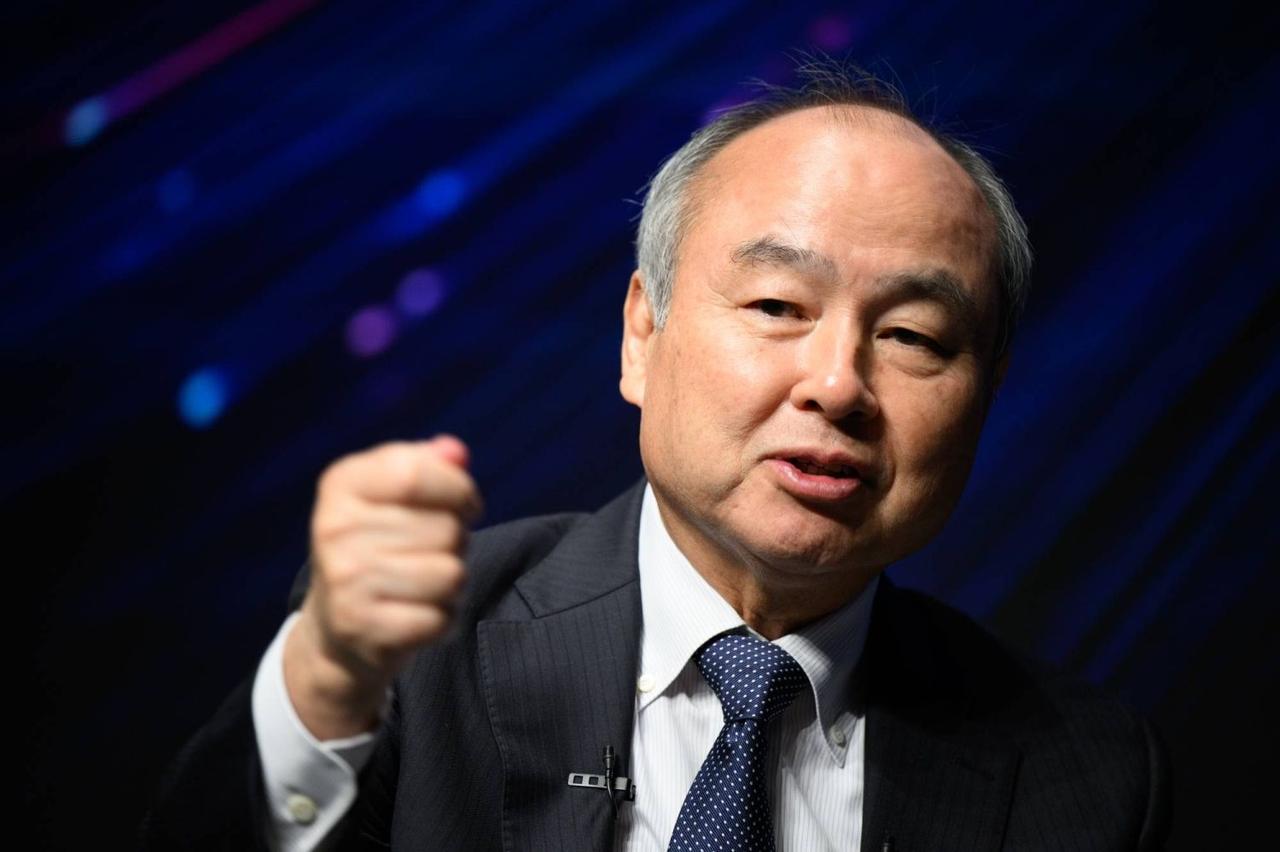
Masayoshi Son, the billionaire founder and CEO of SoftBank Group, has publicly dismissed Elon Musk's vision for orbital data centers, arguing that the AI race will be won with terrestrial data centers rather than extraterrestrial infrastructure. Speaking at an annual shareholder meeting for SoftBank's mobile unit on June 23, 2026, Son told investors that the costs of space-based AI compute solutions would likely exceed any benefits, and that the battle for AI dominance will be decided much closer to home
1
2
. "In the battle for AI, the next few years will be far more important than what might happen a decade or so from now," Son stated, emphasizing the urgency of building Earth-based AI infrastructure now rather than betting on orbital facilities that may take years to materialize3
.
Source: Japan Times
Son's skepticism rests on a straightforward cost analysis. While acknowledging that orbital data centers could reduce electricity costs through direct solar power access, he pointed out that power represents only a small fraction of total data center operating expenses
4
. The bulk of costs come from hardware, chips, servers, and other infrastructure. Any savings on electricity would be offset by the substantial expenses of launching and maintaining equipment in space, plus the communication delays inherent in operating servers hundreds of kilometers above Earth1
. According to NASA data from 2018, SpaceX's Falcon 9 rocket still cost $2,720 per kilogram to transport materials into low Earth orbit3
. Experts have noted that generating just one gigawatt of power in space would require approximately one square kilometer of solar panels, creating massive weight and launch cost challenges3
.While calling Elon Musk a "remarkable agent of change," Son made clear that SoftBank will focus on building "formidable" data center capacity on Earth
1
. "He who strikes first wins," he declared, underscoring his belief that immediate action trumps long-term orbital ambitions3
. SoftBank has committed approximately $65 billion to OpenAI and is a major backer of the Stargate project, which aims to build AI infrastructure across the United States4
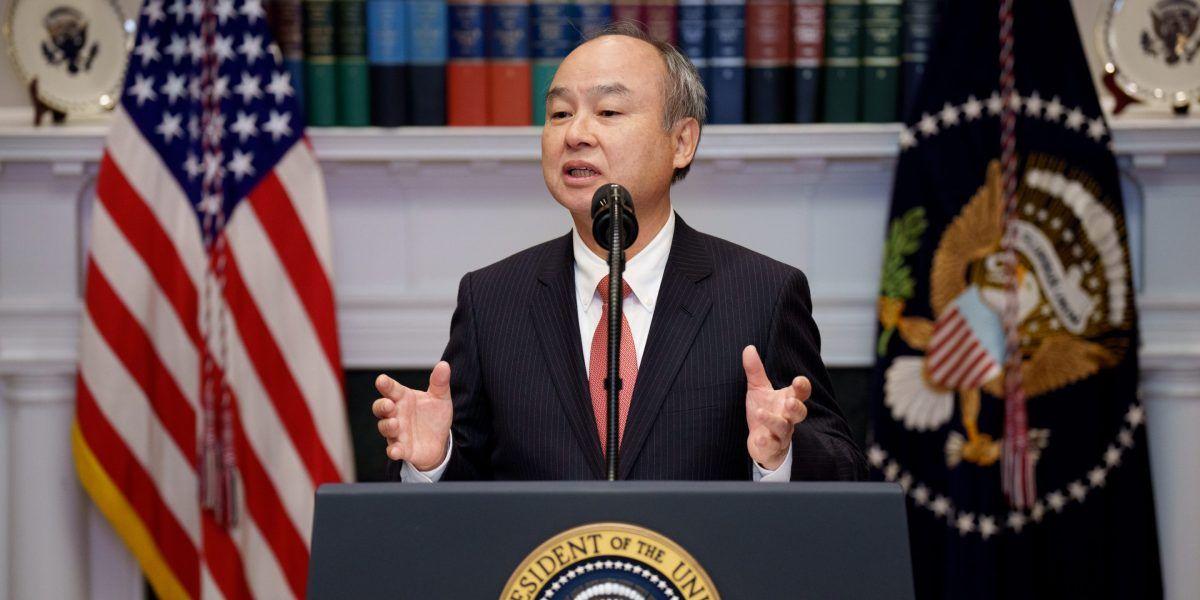
. In January 2025, Son visited the White House to announce SoftBank's initial commitment of $19 billion for the Stargate project, which plans to invest a total of $500 billion over four years3
. The company's telecom unit is also preparing forays into neocloud, AI-focused cloud infrastructure, and data center storage battery markets in the U.S., with the Japanese neocloud business scheduled for launch this year4
.
Source: Fortune
The timing of Son's comments is notable, coming just weeks after SpaceX completed a historic IPO that briefly made Musk the world's first trillionaire. However, SpaceX shares have already begun to fluctuate, briefly dipping below the opening-day price of $150 on Tuesday morning before rebounding
1
. In its IPO filing, SpaceX estimated a $28.5 trillion total addressable market, with roughly $26.5 trillion expected to come from AI computing alone1
. Musk has said SpaceX is working toward launching 100 gigawatts of computing power into orbit annually with solar-powered AI satellites1
. Analysts at Morningstar have warned that SpaceX's IPO was overvalued, assigning just a 7% probability to the best-case scenario where the company successfully uses reusable rockets and orbital data centers to capture significant data center compute market share1
. Morningstar analyst Nicolas Owens noted that investors were paying a $72 premium on SpaceX's initial share price for the chance to participate in its orbital data center ambitions3
.Beyond the economics, significant technical hurdles remain for orbital data centers. Scientists have raised questions about the physics of cooling and power dissipation in the vacuum of space
2
. The heat generated by dense clusters of chips must be dissipated somehow, and without air to carry it away, thermal management becomes a genuinely difficult problem2
. These technical challenges tend to be absent from promotional materials but represent fundamental obstacles to making space-based facilities viable. SpaceX itself has acknowledged these hurdles, with one filing noting that orbital data centers may not prove feasible2
.Related Stories
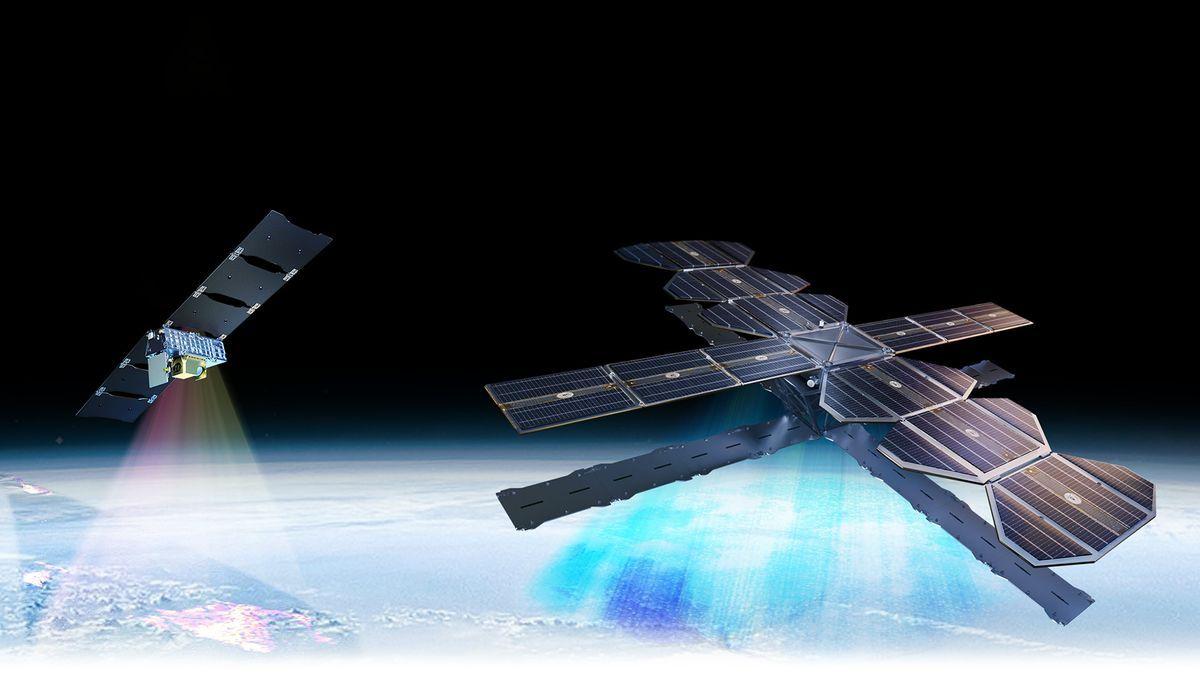
Son's argument hinges as much on timing as on economics. He believes the AI race will be decided in the next few years, long before orbital data centers could become operational
2
. This makes them a distraction from the competition that actually counts. At SoftBank's annual shareholder meeting, Son set a target of raising the company's net asset value to 1 quadrillion yen ($6.4 trillion) over the next 16 years, fueled by its pursuit of artificial superintelligence, a system he claims could be 10,000 times smarter than a human3
. Son dismissed talk of an AI bubble as "blasphemy against AI" and said he has no plans to retire soon3
. He also noted that AI competition is intensifying but said there is room for "ten-fold, a hundred-fold" growth for OpenAI and rivals like Anthropic and Google4
.The debate over orbital versus terrestrial data centers reflects a real crisis in AI computing infrastructure. Global data centers consumed 448 terawatt-hours of electricity last year, more than Saudi Arabia's entire consumption, and U.N. researchers estimate that number will double by 2030 to meet growing AI demand
3
. Data centers on Earth are colliding with limits on grid capacity, water, and land, which is why space has been proposed as a potential solution2
. Both SpaceX and Jeff Bezos' Blue Origin have announced plans to build and launch orbital data centers to overcome these energy and space constraints4
. Bezos has predicted that humans could start building massive data centers in space within the next two decades1
. However, Son's position is that the fix is more expensive than the problem, at least on the timescale that matters for winning the AI race2
.Summarized by
Navi
[1]
[4]
19 Feb 2026•Technology

29 Jan 2026•Technology

29 Jan 2026•Technology

1
Policy and Regulation

2
Policy and Regulation

3
Policy and Regulation