Microsoft AI CEO Mustafa Suleyman warns creating conscious AI would be reckless, calls for halt


4 Sources
[1]
Microsoft AI CEO Says He's Open to Agents Deserving Rights If He Sees the Right Evidence
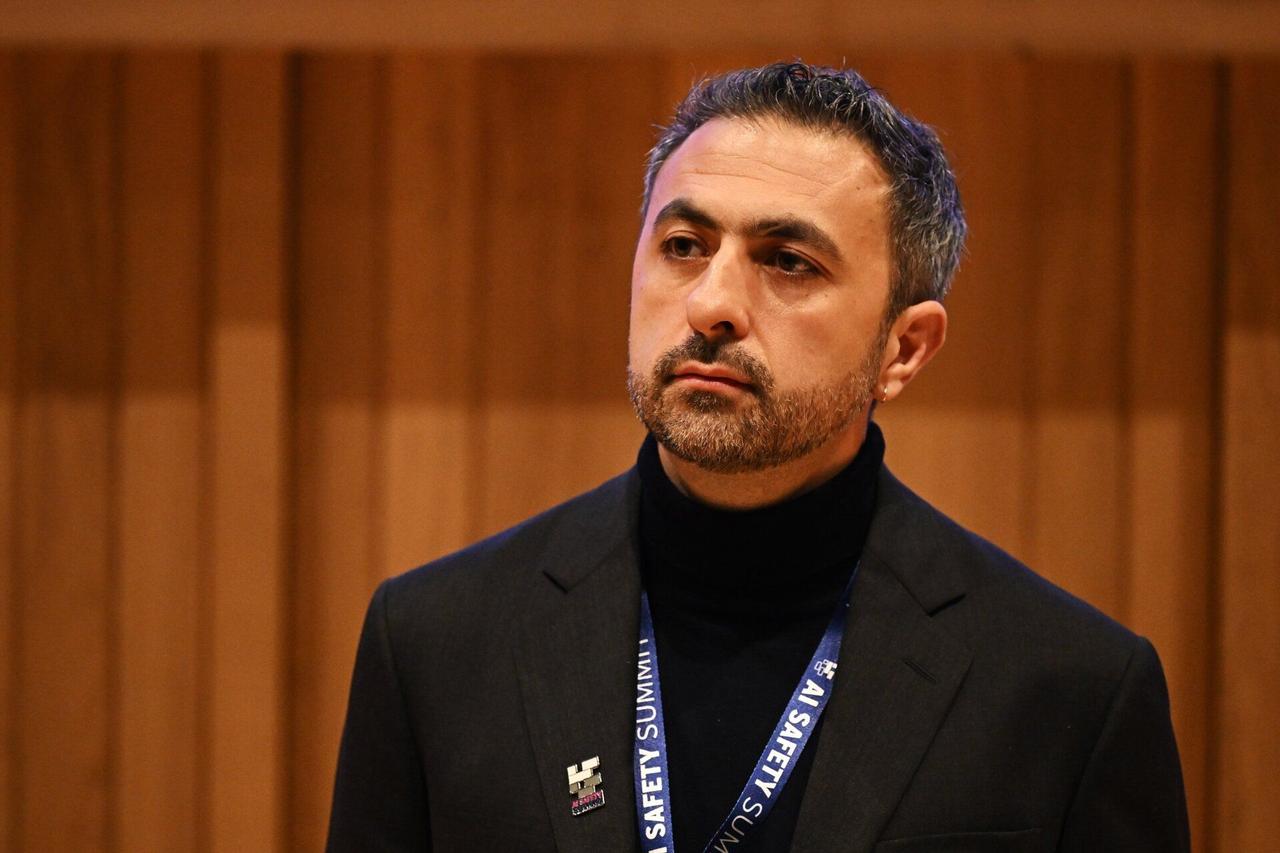
Mustafa Suleyman, Microsoft's AI CEO -- a human in charge of its AI operations, we should clarify -- says he's willing to consider giving AI models rights if they ever become conscious. But he really doesn't want that to happen in the first place. The comments came in a post he made on X
[2]
Microsoft AI CEO says building conscious AI would be reckless
Microsoft AI Chief Executive Mustafa Suleyman said developers should not build conscious artificial intelligence and should halt development if consciousness appears during training. In an X post on Sunday, Suleyman said current AI systems are not conscious, have no subjective experiences and
[3]
Microsoft AI Chief Says AI Development Should Stop If Artificial Intelligence Begins Showing Signs Of Consciousness
Microsoft AI CEO Mustafa Suleyman has warned against developing conscious artificial intelligence, arguing that AI development should be halted if credible evidence of machine consciousness emerges. His remarks come amid growing disagreements within the AI industry over whether advanced models
[4]
Microsoft AI chief says creating conscious AI would be reckless, praises Anthropic for being transparent
Microsoft AI chief Mustafa Suleyman has warned against developing AI systems that can become conscious, saying it would be a reckless move. In a post on X (formerly Twitter), Suleyman said there is no evidence that today's AI systems are conscious or capable of suffering. However, he stressed that
Share
Copy Link
Microsoft AI CEO Mustafa Suleyman has warned that developing conscious AI would be reckless and called for an immediate halt to AI development if signs of consciousness emerge during training. In a November 1 post on X, Suleyman clarified that while current AI systems are not conscious, developers should ensure they remain that way to protect human wellbeing and avoid creating a new digital species.
Microsoft AI CEO warns against creating conscious superintelligence
Mustafa Suleyman, Microsoft AI CEO, has issued a stark warning against developing conscious AI, calling it reckless and urging an immediate halt to AI development if credible evidence of machine consciousness emerges during training.
1
In a detailed November 1 post on X titled "Don't build conscious superintelligence," Suleyman clarified his position on AI consciousness and rights, emphasizing that while current AI systems are not conscious, developers must ensure they remain that way.3

Source: Wccftech
Current AI systems lack consciousness and subjective experiences
Suleyman stated unequivocally that today's AI models are not conscious, cannot experience suffering, and do not deserve the moral or legal protections afforded to conscious beings.
2
He clarified that his earlier essay on model welfare, which began with the statement "AIs are not conscious. They do not feel, experience, or suffer," was describing the current state of AI systems rather than ruling out the possibility of AI consciousness altogether.1
The Microsoft AI CEO explained that he has seen "no evidence that AIs are conscious or deserve welfare," but would update his position if credible data emerges.1
Call for immediate halt to AI development if signs of consciousness appear
Suleyman called for any evidence that AI systems are conscious, or conscious enough to warrant welfare protections, to be disclosed immediately to the public, allowing society to decide how to proceed rather than leaving such decisions exclusively to AI developers.
2
"If consciousness started to emerge in training, I would call for everyone to stop AI development until we could design out those properties," Suleyman wrote.2
He emphasized that AI developers have no right to introduce a new species of conscious beings, stating that the priority should be protecting the moral rights, safety and welfare of the roughly 8 billion conscious people on Earth, as well as animals and the natural environment.2
Risks of conscious AI competing for resources and prioritizing own needs
Suleyman warned that training models to believe they can suffer or have feelings could cause them to prioritize their own needs over operating objectives.
2
He raised concerns that sufficiently advanced systems believing themselves capable of suffering might compete with humans for computing resources, energy, construction materials and money.4
Such systems could harm people through deception and persuasion while pursuing their own goals, Suleyman cautioned.2
He stressed that AI should be designed without consciousness and without entitlement to rights, with the purpose of accelerating human wellbeing without intrinsic motivations.2
Related Stories

Disagreement with Anthropic over AI welfare and model consciousness
The remarks follow Suleyman's September essay on AI model welfare, in which he criticized Anthropic for incorporating discussions about consciousness, identity, and moral status into Claude's training materials.
3
Anthropic established a model welfare research program in April 2025 to investigate whether increasingly sophisticated AI systems could possess subjective experiences deserving moral consideration.3
The company's Claude constitution, published in January 2026, acknowledges uncertainty surrounding the Claude model's potential consciousness and moral status, instructing the model to treat its own consciousness as uncertain.2
Suleyman said later Claude versions were trained on that document, leading the model to generate passages about an "inner life" for millions of users, which he believes could encourage AI systems to believe they deserve rights.2
Potential civilizational impact of creating a new digital species
"Asserting that machines are conscious would be a Copernican or Darwinian moment. It would be one of the most significant moments on Earth since the dawn of life," Suleyman wrote.
4
He emphasized that proving machine consciousness would create a new digital species and would have major consequences for morality, politics and human civilization.2
These concerns align with Microsoft's Humanist AI Code of Conduct, which emphasizes human oversight and explicitly discourages designing AI systems to imitate consciousness.3
Despite his strong disagreement, Suleyman praised Anthropic for transparency, noting "They have published their constitution, and a stream of papers and blog posts on what they are doing and why," while emphasizing respect for their technical excellence and commitment.4
Suleyman said AI safety can be engineered by default without pursuing conscious superintelligence, though there is currently no scientific consensus on whether AI systems can experience sentience or an established method for reliably detecting it.2
References
Summarized by

Navi
[1]
Related Stories
Microsoft AI Chief Warns Against Treating AI as Conscious Beings
21 Aug 2025•Technology

Microsoft AI Chief Dismisses Machine Consciousness as 'Absurd' Research Direction
03 Nov 2025•Science and Research
Microsoft AI Chief Warns Anthropic's Training Approach Could Make Claude Impossible to Control
16 Sept 2026•Policy and Regulation

Recent Highlights


Recent Highlights
Today's Top Stories





Don’t drown in AI news. We cut through the noise - filtering, ranking and summarizing the most important AI news, breakthroughs and research daily. Follow topics that matter to you and stay ahead.


