4 Sources
[1]
Windows questions? How Copilot can analyze your PC settings now
Follow ZDNET: Add us as a preferred source on Google. ZDNET's key takeaways * Copilot's new PC Insights can analyze your Windows environment. * You can ask questions about your hardware, software, and settings. * The goal is to provide key info so you don't have to hunt for it yourself. Troubleshooting a Windows problem or even just locating a specific setting can be challenging. Often, you end up stumbling around the operating system, hoping to find what you need. Now, Microsoft is aiming to ease that challenge through its own Copilot AI. Also: Microsoft goes all in on new AI-powered Windows security strategy - what it means for you Now rolling out to the Copilot Windows app is a new skill known as PC Insights. Here, you can ask Copilot a variety of questions about your Windows environment, and the AI will analyze it to provide the answers. As spotted by Windows Latest and described in a Microsoft support article, PC insights tries to serve up the right details so you don't have to manually dig around your own system settings. How to use the new PC Insights skill Here's how this works. Download and install the Copilot Windows app if you don't already have it. Rev up the app and then ask a question about your environment. Some examples cited by Microsoft include: * "How is my battery health?" * "What's my BIOS version?" * "What's my current CPU usage?" * "What network adapters does my PC have?" * "Do I have enough storage for a large game or app?" * "Is my printer online?" Copilot will ask your permission to access the necessary system resources and information. You can grant permission only for a single request, always allow it for similar requests, or deny the permission for this session. A single session lasts until you close the app or restart your computer. Also: Microsoft's new Windows 11 recovery tool is the ultimate Undo button - how to enable it In response, the AI grabs the specific data needed to answer your question. Microsoft promises that Copilot won't store or use your personal files to train its AI models. You can also revoke the permissions you granted at any time by going to Copilot's privacy settings. You can use PC insights if you're simply looking for a specific Windows setting or trying to troubleshoot a technical issue with your hardware or software. But there are limitations as to what the AI can achieve. According to Microsoft, Copilot will answer questions about your system and files, clarify technical info, and explain what's happening on your PC. But it can't fix issues or make system changes on its own, nor can it automatically run specific troubleshooting steps. Once the AI identifies a potential problem area, you'll have to play PC doctor yourself to try to resolve it. Also: Your Windows 11 PC might be hiding a 500GB storage bug - how to check Still, this could be a useful way to get help in Windows. I often turn to different AIs to talk through and troubleshoot problems on my PC. With direct access to my system components and settings, Copilot might be better equipped to handle this task. With PC insights just now rolling out, you'll have to wait for it to arrive. I checked the Copilot Windows app on my main Windows 11 laptop and two virtual machines. At this point, the skill has yet to reach me. But once it pops up, I'll be curious to see it in action.
[2]
Copilot Could Soon Answer Questions About Your PC's Hardware, Health
An experimental features lets you talk to Copilot about your PC's CPU usage, specs, storage, connected printers, and more. Microsoft is testing a Copilot feature that will allow you to talk to the AI assistant about your Windows PC's specs and performance. The feature, called PC Insights, was spotted by Windows Latest and is currently available as an opt-in experience in the Copilot on Windows app. The idea is to let customers "conversationally ask Copilot questions about their Windows PC and receive clear responses based on their device's state without having to dig through system settings," Microsoft says on a support page. At launch, the feature responds to questions about graphics cards, storage, CPU usage, antivirus, battery health, and connected peripherals. For example, you could ask it whether your printer is online or if you have enough space for a 100GB game. Every time Copilot needs to check your system or a file to respond, it will seek permission, Microsoft says. When you see a pop-up request, you can either decline access to the intended location or allow Copilot to dig into it once or indefinitely. For now, PC Insights can only provide information; it can't change your PC settings or perform fixes. Microsoft says it will be improving the experience over time and may add new capabilities in the future. The feature is currently rolling out gradually via the Copilot app and may not be available to all users, the company adds. If you're having trouble with a slow Windows 11 PC, check out our guide on how to speed it up. If you'd like to hold on to Windows 10 for a little longer, you can sign up for the company's Extended Security Updates.
[3]
Confused about your PC specs or hardware? Windows 11's Copilot app is getting new powers to help you 'understand your device'
PC insights feature for Copilot is now rolling out in testing * Windows 11's Copilot app has a new feature in testing * 'PC insights' provides an easy way to receive clear answers to hardware-based questions about your device and its specs * While there are some fears over privacy (and bloat), Microsoft has made it clear that Copilot needs to be granted permission to access your system and files Copilot is getting a new ability to answer questions about your PC's hardware, allowing the AI to tap into the relevant hardware details to do so - and while Microsoft is treading carefully with privacy here, that's unlikely to stop some level of paranoia. Windows Latest flagged the introduction of 'PC insights' for the Copilot app on Windows 11, which as Microsoft explains, "enables customers to conversationally ask Copilot questions about their Windows PC and receive clear responses based on their device's state without having to dig through system settings." This is currently an experimental feature, so still in testing, and an optional ability that you must turn on for it to be in play. Windows Latest notes that it's gradually rolling out, but only in the US for now. You can ask Copilot how much RAM you have, or storage space left, or what your GPU is, and the current level of usage for your processor, and a whole bunch of similar component-related queries. You can ask about elements as diverse as whether you have an antivirus running, or what your laptop's battery health is, diving into mild troubleshooting territory should you wish. To get its answers, the Copilot app hooks up to Windows APIs to analyze your system, and the AI asks for permission to do this. You can allow it access to your PC's hardware details on a one-time basis for that session only, or you can elect to 'always allow' if you're happy to give Copilot this access on a more permanent basis. Analysis: fears over hallucinations and bloat As ever, this is AI, and as Microsoft notes, Copilot "may not always provide complete or accurate information", especially during this testing phase. So, if you do get a chance to try out PC insights, maintain a healthy sense of skepticism with the responses you get. As Windows Latest makes clear, there's also a certain irony about a Windows 11 user checking up on resource usage, perhaps due to system sluggishness, employing the Copilot AI to run diagnostics when the app itself uses the best part of 1GB of RAM when running in the background and doing nothing. That doesn't stop this new PC insights feature from being situationally useful, of course. Some of the reaction has come from a place of disdain, though, as you might guess, with comments such as the one from this Redditor: "Oh hey it's like Task Manager except instead of lightweight and authoritative, it's bloated and might be lying to me." Of course, this is a feature aimed at less well-informed PC owners, not those who can easily understand what's happening in Task Manager at a glance. Criticism around the bloat of the Copilot app is fair enough, mind, and this is because in its most recent incarnation, Microsoft changed things so the app is essentially a standalone spin-off of the Edge browser. Another worry is that of privacy, and having Copilot 'snoop around' on your machine, but as noted, there are clear requests for permissions, and the new feature is strictly opt-in. You don't ever have to go near PC insights if you don't want to. It's also worth noting that giving the Copilot app access permissions doesn't mean it can read the actual contents of files, but only their sizes (for weighing up questions about storage and the like). At the moment, this is a purely informative or troubleshooting feature, and in the case of attempted diagnostics, it may point to issues with your PC, but won't resolve them for you. However, it's not difficult to envision where Microsoft might head with this, in terms of getting Copilot to implement fixes for certain issues that the AI flags up. I'm talking simple Settings changes rather than anything in-depth, and this has always been the idea of Copilot (even though it hasn't yet been realized to much of an extent). When we get AI agents in Windows 11 - and they are coming, make no mistake - this kind of functionality may turn into a full-on troubleshooting agent. The trouble (pun not intended) with that being that the mistakes and hallucinations that AI can make could be considerably more aggravating in this kind of scenario. Follow TechRadar on Google News and add us as a preferred source to get our expert news, reviews, and opinion in your feeds.
[4]
A new Copilot feature tells you what might be slowing down your PC -- while gorging itself on a fair chunk of your system RAM
If you ask Microsoft Copilot if it's a web app, it answers in the negative. Technically, as the AI points out, Copilot now interfaces with you through an Edge-based web app installed on your Windows 11 PC, but the model lives elsewhere in the cloud. And said Copilot app is getting a helpful new feature, according to Windows Latest, referred to as PC Insights. This will allow it to connect to Windows APIs and analyse your system hardware, answering questions like "what is my current CPU usage" and helping you find what might be slowing down your PC. Other example prompts found by Windows Latest include "Do I have enough space for a 100 GB game," "What graphics card do I have," and "Is my antivirus running?" The feature is said to be currently rolling out to Copilot US users, and sounds rather useful, even if it can't directly fix PC performance problems by itself. Unfortunately, the web app can be something of a RAM hog, which raises the possibility that Copilot itself may be contributing to your dog-slow PC performance on a RAM-limited machine. Windows Latest recorded 791.7 MB of RAM usage from the Copilot app at idle, suggesting it can reach up to 1 GB of system RAM usage in total. I've left the Copilot app open in the background as I write this article, and it's currently sitting at around 560 MB -- making it the third most RAM-heavy application currently running on my PC. That might not sound like a big deal, but anyone using Copilot to help find resource-sapping applications running in the background may find it's the app itself that's taking the biggest chunk of precious RAM space. And it's not like we're living in a world where extra system RAM is cheap and easy to obtain. It's not the only RAM-sapping offender I have to bat away on a regular basis, either. The WhatsApp, err... app is also a web-based affair these days, and regularly carves out 1 GB+ chunks of my system resources. Which seems a bit rich, given the previous, non-web app implementation barely used any RAM capacity at all. Although Microsoft has committed to making Windows 11 leaner and meaner in response to user critique in recent months, it still feels like a bloated OS in comparison to... well, almost any other operating system you can think of. And while I welcome the idea that Copilot will soon be able to help less-computer-minded users track down potential system problems, it seems like one of the most useful things it could do to improve performance would be to shut itself down entirely. Which is... not the greatest state of affairs, let's be honest.
Share
Copy Link
Microsoft is rolling out PC Insights, a new skill for the Copilot on Windows app that lets users ask questions about their PC's hardware, software, and settings. The AI-powered feature can check CPU usage, battery health, storage space, and more—but it uses nearly 1GB of RAM while running, raising concerns about resource consumption on slower systems.
Microsoft Copilot is gaining a new capability that allows the AI assistant to analyze PC settings and answer questions about your PC's hardware directly. The Windows AI feature, called Copilot PC Insights, is currently rolling out as an experimental feature to users in the United States through the Copilot on Windows app
1
2
. According to Microsoft's support documentation, the AI-powered feature enables customers to "conversationally ask Copilot questions about their Windows PC and receive clear responses based on their device's state without having to dig through system settings"3
.
Source: ZDNet
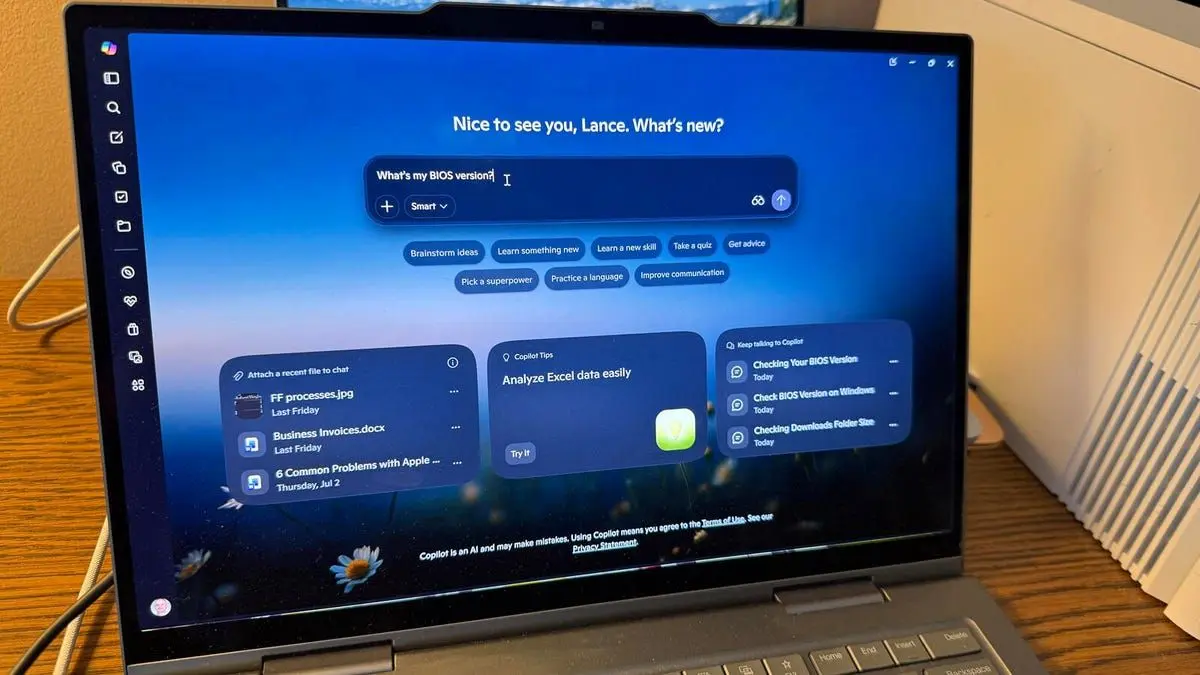
Users can ask natural language prompts such as "How is my battery health?" "What's my BIOS version?" "What's my current CPU usage?" or "Do I have enough storage for a large game or app?"
1
. The feature responds to inquiries about graphics cards, storage, antivirus status, and connected peripherals like printers2
. To deliver these answers, the Copilot on Windows app connects to Windows APIs to analyze system data and PC hardware and performance details3
.Microsoft has implemented strict privacy safeguards for this functionality. Before accessing system resources, Copilot requests user permission each time it needs to check system information or files
2
. Users can grant permission for a single request, always allow similar requests, or deny access for the current session1
. A session continues until the app closes or the computer restarts. Microsoft promises that Copilot won't store personal files or use them to train AI models, and permissions can be revoked anytime through privacy settings1
. The feature remains strictly opt-in, and granting access doesn't allow Copilot to read actual file contents—only metadata like file sizes for storage calculations3
.
Source: PC Gamer
While PC Insights can help users understand your device and identify potential issues, it cannot fix problems or make system changes independently
1
. The feature is purely informational at launch and won't automatically run specific troubleshooting steps1
. Microsoft acknowledges that Copilot "may not always provide complete or accurate information," especially during this testing phase . Once the AI identifies a problem area, users must resolve it themselves.Related Stories
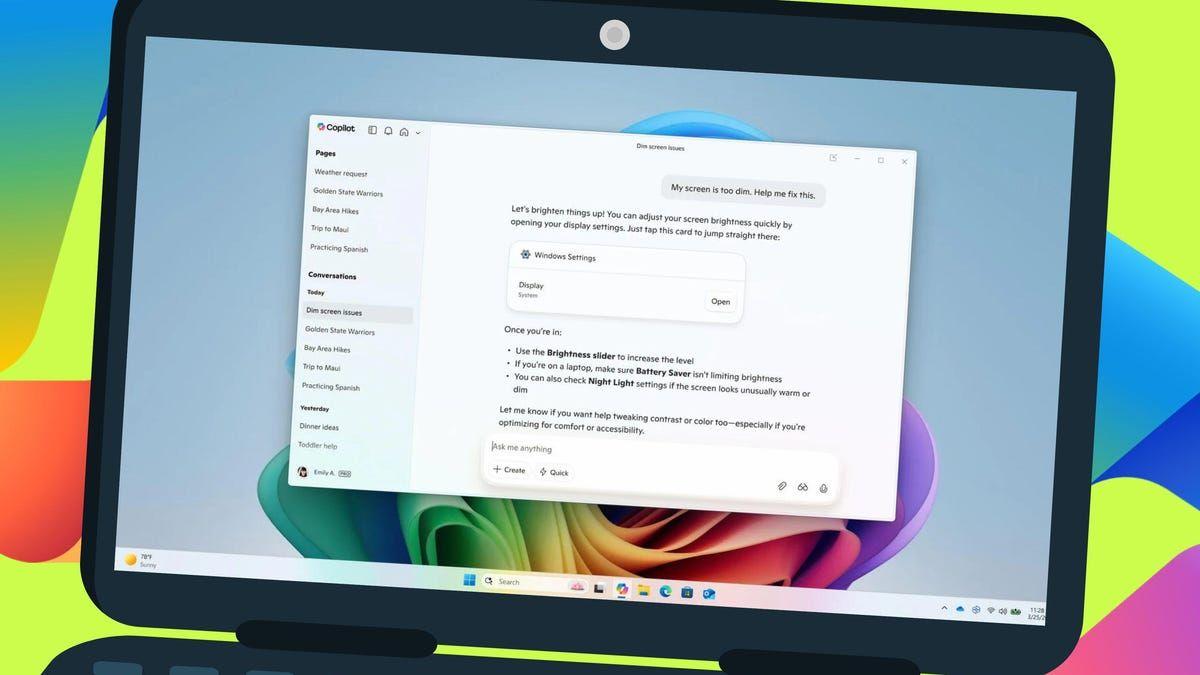
A significant irony accompanies this release: the Copilot app itself consumes substantial system memory. Testing revealed RAM usage of 791.7MB at idle, potentially reaching up to 1GB in total . This bloat stems from Microsoft's recent architectural change, transforming Copilot into a standalone spin-off of the Edge browser
3
. For users on RAM-limited machines investigating what might be slowing down their PC, the diagnostic tool itself may be a primary culprit4
. Critics note the contrast with Windows 11's lightweight Task Manager, which provides authoritative information without significant resource consumption3
. However, Microsoft designed this feature for less technically-informed PC owners who may find conversational queries more accessible than navigating system settings3
. The company indicates it will improve the experience over time and may add new capabilities in the future2
.

Source: TechRadar
Summarized by
Navi
1
Technology

2
Policy and Regulation

3
Business and Economy