NVIDIA, Nebius and Uber Drive Shift From Token Maxing to Value Maxing in AI Factory Economics


3 Sources
[1]
AI Agenda Live: From Token Maxing to Value maxing: Getting More From Every Unit of Compute
In AI circles, conversations about compute shortages are as common as talk of the weather. As agentic workflows threaten to multiply token consumption further, it's little wonder that talk has shifted from securing GPUs to optimizing them. At a recent panel, The Information's Phoebe Liu sat down
[2]
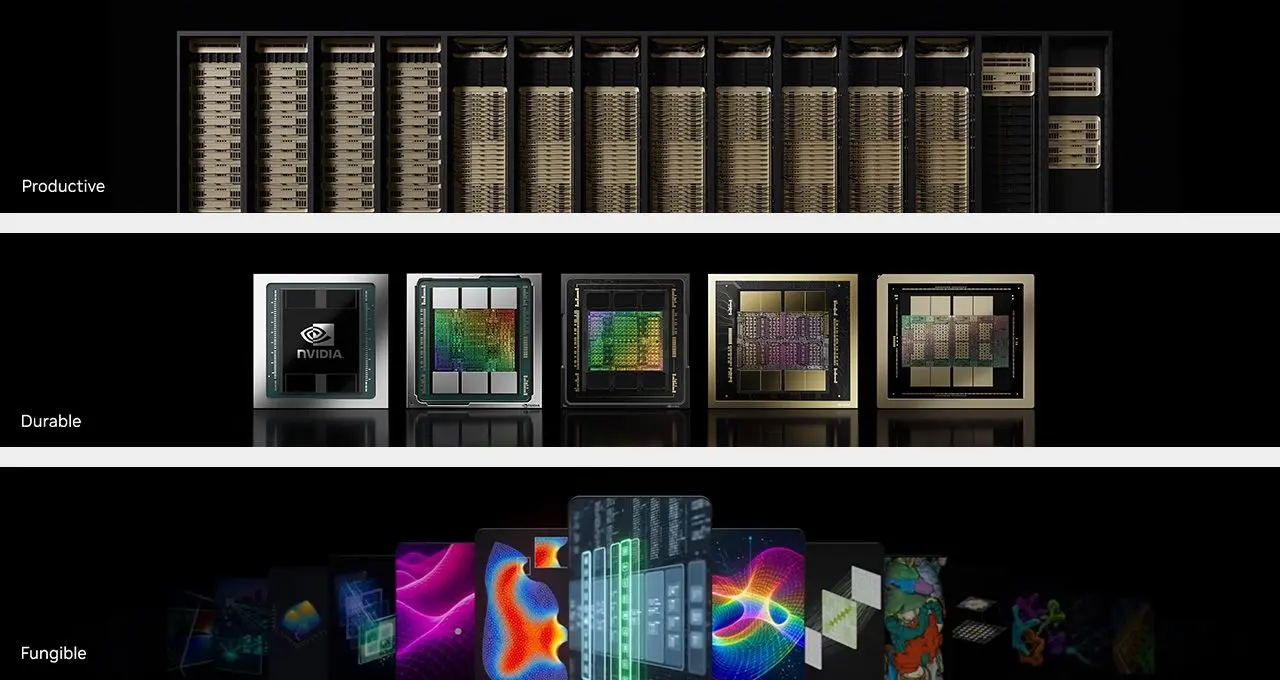
Productive, Durable, Fungible: How NVIDIA AI Factories Maximize Return on Investment
AI factories generating the strongest returns are the ones built to earn more, last longer and serve more kinds of work. AI factories are built by the megawatt, even by the gigawatt. Each megawatt factory costs roughly $60 million, and AI factory operators will only commit capital on that scale
[3]
Nvidia links AI factory economics to inference and efficiency
Nvidia ties AI factory economics to tokens and power efficiency AI factory economics increasingly depend on more than access to high-performance graphics processing units. As agentic systems draw on multiple models, databases and tools, the entire data center must work as one computing
Share
Copy Link
NVIDIA and cloud providers are redefining AI factory economics by prioritizing compute efficiency over raw GPU access. Industry leaders including Nebius and Uber reveal how speculative decoding, caching and system-level infrastructure optimization deliver 30x improvements in tokens per watt while cutting costs and extending hardware lifespan to nearly a decade.
NVIDIA and Partners Redefine AI Compute Efficiency Economics
AI factory economics are undergoing a transformation as industry leaders shift from securing GPUs to optimizing AI compute efficiency. At a recent panel discussion, executives from NVIDIA, Nebius and Uber outlined how they're getting more from every unit of compute while managing exploding token consumption from agentic workflows
1
. The conversation centered on maximizing return on investment through what Nebius Chief Revenue Officer Marc Boroditsky calls "value maxing" rather than "token maxing"—measuring how many agent turns, tokens and dollars it takes to reach an outcome1
.Ian Buck, NVIDIA's vice president of hyperscale and HPC, emphasized that AI factories now generate commercial output measured in tokens rather than traditional IT metrics. "These assets are not IT; they're not cost. They're actually appreciating, revenue-generating, fungible, durable, productive parts of an economy," Buck stated
3
. This fundamental shift in perspective reflects how system-level infrastructure optimization has become central to AI factory economics.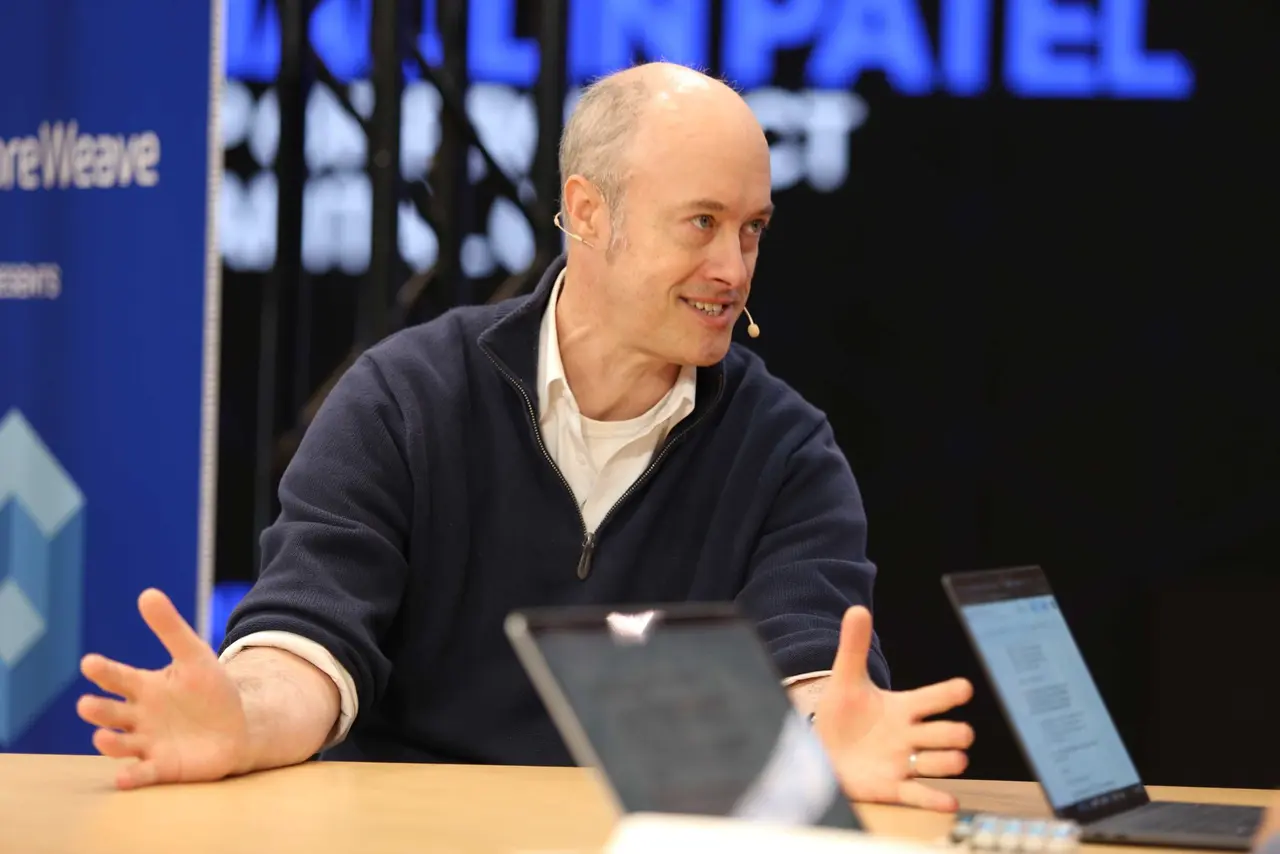
Source: SiliconANGLE
Extreme Codesign Delivers 30x Tokens Per Watt Improvement
NVIDIA's approach to AI compute efficiency relies on extreme codesign across the full stack, from models and workloads through software to compute, networking and memory. The company's Vera Rubin NVL72 systems deliver over 30x higher throughput per megawatt compared to previous generations, with up to 45x lower cost per million tokens on models like DeepSeek V4 Pro
2
. Buck confirmed that Blackwell architecture achieved a 30x improvement in tokens per watt, demonstrating how each hardware generation dramatically reduces the cost per token3
.Power capacity ultimately limits data center deployment, making tokens per watt a central measure of getting more from every unit of compute. "Data centers have a natural cap, and that cap is actually their power," Buck explained
3
. This constraint forces operators to prioritize productivity, durability and fungibility when building AI factories that cost roughly $60 million per megawatt2
.Nebius Achieves Platinum Rating Through Customer-Specific Optimization
Nebius recently earned Platinum status, the top tier in SemiAnalysis' ClusterMAX rating, reflecting its ability to deliver high performance at high efficiency
1
. The company tailors optimizations in its Nebius Token Factory inference platform to specific customer goals, whether speed, reliability, quality or price. One key technique is speculative decoding, which allows smaller models to predict likely next tokens that a larger model verifies in bulk, rather than generating one token at a time. Nebius uses each customer's own traffic to improve results1
.Boroditsky emphasized that optimizing AI compute requires moving beyond individual models to complete end-to-end solutions. "Models matter a lot, but by themselves, they don't solve a problem," he noted
1
. Nebius already runs capacity auctions and recently launched spot pricing, with plans to introduce more managed services that route workloads intelligently on customers' behalf. On outcome-based pricing, Boroditsky acknowledged the industry hasn't yet figured out the right economic model between suppliers and customers1
.Uber Stabilizes Token Costs Through Caching and Data Discipline
Uber has seen its token costs stabilize despite growing use of agentic workflows, according to VP of Infrastructure Mattie Toia. The company achieved this through caching pushed down to individual sub-agents and by giving engineers visibility into their own usage. "It starts by giving visibility to individual users—how many tokens they're spending, the relative cost of them. That gives people context to think about how they're optimizing," Toia explained
1
.Toia stressed the importance of data discipline in maximizing AI compute efficiency. Uber built an internal "context graph" comprising roughly 24 million nodes pulled from Jira tickets, system design docs and code reviews to feed its AI agents better context. This approach cut query times from 20 minutes to 30 seconds while using fewer tokens
1
. Boroditsky predicted that within five years, "the leading companies in the market will have taken control of their intelligence" through centralized resources1
.Related Stories

Hardware Durability Extends AI Factory Lifespan to Nearly a Decade
Durability has emerged as a critical factor in maximizing return on investment for AI factories. NVIDIA's A100 GPU, which shipped in 2020, remains in commercial service six years later, with CoreWeave recently extending bookings for units first introduced in 2020 through 2029
2
. Analysis from Barkr suggests useful life spans of five to six years for eight-GPU H100 systems and nine to 10 years for GB300 NVL72 systems based on resale values2
.Continuous software optimization keeps installed hardware productive years after deployment. NVIDIA's Dynamo platform includes features that locate already-computed data in a cluster's KV cache, helping teams avoid unnecessary compute. "We're seeing a lot of bang for the buck in terms of driving performance, efficiency and overall effectiveness," noted NVIDIA's Dion Harris, Senior Director of HPC & AI Hyperscale Infrastructure Solutions
1
. Silicon Data shows a six-year-old A100 GPU retains a quarter of its original value, where five-year depreciation schedules had it at zero more than a year ago2
.AI Inference and Fungibility Drive Long-Term Revenue Generation
AI inference has become the primary source of commercial output for AI factories, as deployed models process requests and produce tokens. Yet AI inference doesn't replace training, because organizations continually update deployed models as data and market conditions evolve. "It's not just fire and forget on all these services. As companies are using these models, they're refining them, they're aligning them, they're adding more data to them," Buck explained
3
.
Source: NVIDIA
Fungibility—the ability to run diverse workloads—extends hardware earning potential as AI applications evolve. NVIDIA AI factories run every type of AI model across language, vision, biology, physics and robotics, spanning every phase from data processing through pretraining, post-training and AI inference
2
. The CUDA platform runs across generations, ensuring nothing operators own becomes stranded when new architectures arrive. For time-sensitive workloads where faster reasoning delivers greater value, NVIDIA's Groq 3 LPX inference accelerator works with Vera Rubin platforms to boost per-user token rates in sectors like fintech3
.Harris emphasized that improving AI factory economics requires ecosystem-wide collaboration. "It takes a lot more than a chip to deliver AI at scale," he noted, pointing to compounding gains from pairing new hardware with better software, kernel tuning, smarter frameworks and tools built across NVIDIA's ecosystem. Over a chip's lifetime, this can drive 3-5x performance gains from day zero to year five
1
.References
Summarized by

Navi
[1]
[3]
Related Stories
AI Costs Spiral Out of Control as Token Economics Break Enterprise Budgets
22 Sept 2026•Business and Economy

Nvidia's $20B Groq bet and Vera Rubin platform reveal how AI inference is splitting the GPU era
03 Jan 2026•Technology
Nvidia DSX Platform Drives 40% Energy Efficiency Gains as Power Becomes AI Infrastructure's Biggest Constraint
16 Sept 2026•Technology
Recent Highlights



Recent Highlights
Today's Top Stories






Don’t drown in AI news. We cut through the noise - filtering, ranking and summarizing the most important AI news, breakthroughs and research daily. Follow topics that matter to you and stay ahead.


