7 Sources
[1]
Jensen Huang says he's found a 'brand new' $200B market for Nvidia | TechCrunch
Nvidia founder and CEO Jensen Huang is, perhaps, one of the greatest corporate hype men of all time when it comes to his company. He may even surpass Salesforce's Marc Benioff when it comes to relentless optimism in his company's future and revenues. Even so, he delivers on the hype, quarter after quarter. Instead of cautioning you to view the proclamation that he's found a "brand new $200 billion TAM for Nvidia" with skepticism, I'd argue he's earned a bit of trust. Huang positioned this massive new market at the feet of Nvidia's new CPU product, Vera, which was introduced in March. Speaking on Wednesday's earnings call -- after Nvidia posted another record-breaking quarter with $81.6 billion in revenue and forecast $91 billion for the next -- Huang pitched Vera as a potentially transformative product. And one that already has promising sales figures. But no matter how well Nvidia delivers, Wall Street harbors anxiety over what will knock Nvidia from its perch. Lately, such fears have centered on the CPU. Nvidia is the king of the GPU, whereas historically the CPU markets were owned by companies like Intel and AMD. (Nvidia has made CPUs previously, of course, but that's not its core business.) For example, last month Amazon Web Services crowed about a giant contract it signed with Meta for millions of Amazon's homegrown AI CPUs. Amazon CEO Andy Jassy has been clear that he thinks AWS can do AI chips, both GPUs and CPUs, at least as well, and possibly better than Nvidia. But now, with the Vera CPU, which is sold alone and bundled with its Rubin GPU, Huang believes he's unlocked "a major new growth driver" for his company because Vera is, he believes, "the world's first CPU, purpose-built for agentic AI," Huang said on the call. "Vera opens a brand new $200 billion TAM for Nvidia, a market we have never addressed before, and every major hyperscaler and system maker is partnering with us to deploy it. The world is rebuilding computing for agentic AI and robotic physical AI. Nvidia sits at the center of these transitions," hype man Huang said. He explained that while the "thinking" part of an AI model uses GPUs, agents mostly run on CPUs. They use CPUs to do their assigned tasks and will, he predicts, run their own form of CPU-driven PCs. Vera is for agents because it's specifically designed to process tokens as fast as possible. This is opposed to classic cloud architecture CPUs designed with "cores," or the ability to run multiple instances of apps as fast as possible. That sounds logical, but with the major cloud providers as well as startups pursuing AI chip development, what makes him think that Nvidia will be the go-to source for agentic CPUs? Because, Huang says, Nvidia has already sold $20 billion worth of standalone Vera CPUs this year and we're only at the beginning. "The world has a billion users, human users. My sense is that the world is going to have billions of agents, not today. I mean, we're going to grow into it, but we'll have billions of agents, and those billions of agents will all use tools. And those tools are going to be like PCs, just like us humans using using PCs today," he said.
[2]
Nvidia Exec Hand-Delivers First Vera CPU Systems to AI Heavy Hitters
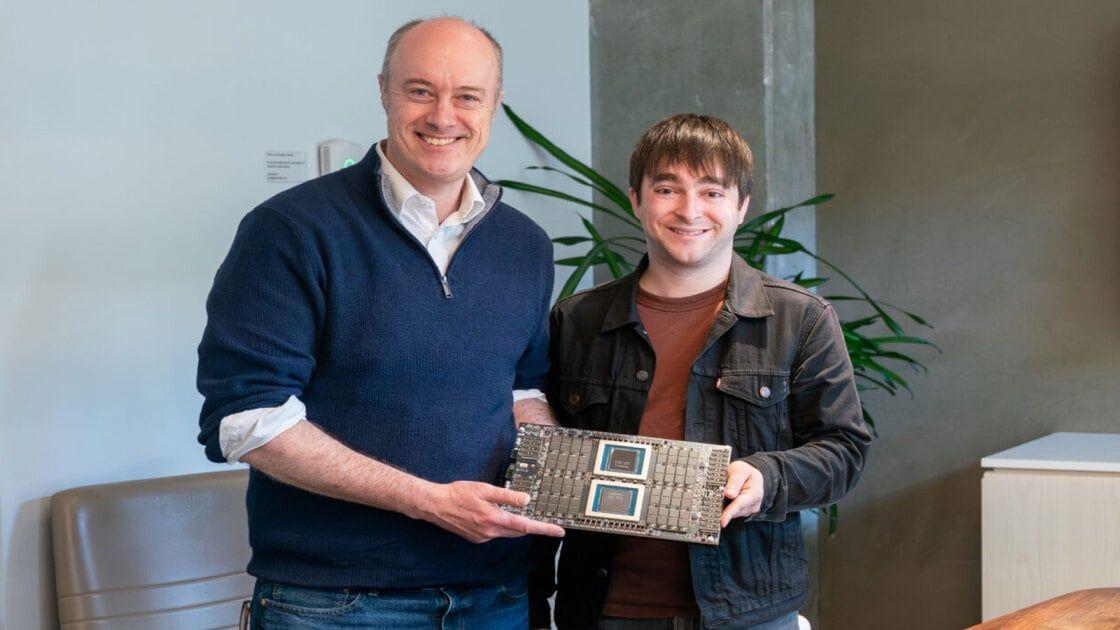
Nvidia had a special delivery for OpenAI, SpaceX, Anthropic, and Oracle Cloud recently: the first Vera CPU systems. Nvidia's Ian Buck, VP of hyperscale and performance computing, "hand-delivered the first-ever Nvidia Vera CPUs to our partners at Anthropic, OpenAI, SpaceX, and Oracle Cloud," Nvidia tweeted on Monday. "Vera is Nvidia's first custom CPU, purpose-built for the age of agentic AI. This is just the beginning. The road to Vera-powered systems starts here. Thank you to our partners for being on this journey with us. The best is yet to come." "Agentic AI is creating a new CPU moment in the AI factory -- as models move from answering to acting, Vera is purpose-built to keep that work moving at scale," Buck said in a statement. Vera is built from 88 Nvidia Olympus cores, each of which Nvidia claims can deliver up to 50% greater performance than the Grace CPU cores that Nvidia has used in its current-generation Blackwell GPU systems. Buck made the first delivery of a Vera CPU system to Anthropic, stopping off at its SoMa offices in San Francisco. Then it was off to OpenAI's Mission Bay headquarters, just a short 10-minute drive away, to hand over another Vera system to OpenAI's head of compute infrastructure, Sachi Katti, before an hour-long trip to SpaceX's xAI offices in Palo Alto. There, Buck met up with SpaceX CEO Elon Musk. SpaceX is reportedly considering Vera for building new reinforcement learning workloads into its training stack. The final outfit receiving the personal treatment from Nvidia was Oracle Cloud Infrastructure, which has already pledged to deploy hundreds of thousands of Nvidia Vera CPUs in 2026. Traveling to the Oracle AI Customer Excellence Center in Sydney, Australia, Buck met with product management lead Karan Batta and chief customer and partner success officer Gary Miller. Buck suggested Oracle will be able to offer customers "production-grade agentic AI infrastructure," at a scale no other cloud provider can match. Considering the Customer Excellence Center is designed to court Oracle AI customers, Vera will no doubt be a key exhibit for visitors. But Vera is only one-half of the ultimate Nvidia equation in 2026. As well as standalone deployments, Vera is the host processor for Nvidia's Vera Rubin NVL72 stack, which combines Nvidia's NVLink and twin Rubin GPUs together for a comprehensive, scalable AI solution. Those CPU and GPU systems are expected to go on sale later this year, completing another Nvidia annual hardware refresh. For gamers who have seen Nvidia and AMD release new chips at a near-annual cadence, I do wonder whether these companies are ready for how quickly this kit can become obsolete. For now, though, Nvidia is hyping its next CPU and further driving the AI FOMO that has been so prevalent over the past few years.
[3]
Nvidia on track to be worlds leading CPU supplier claims CFO
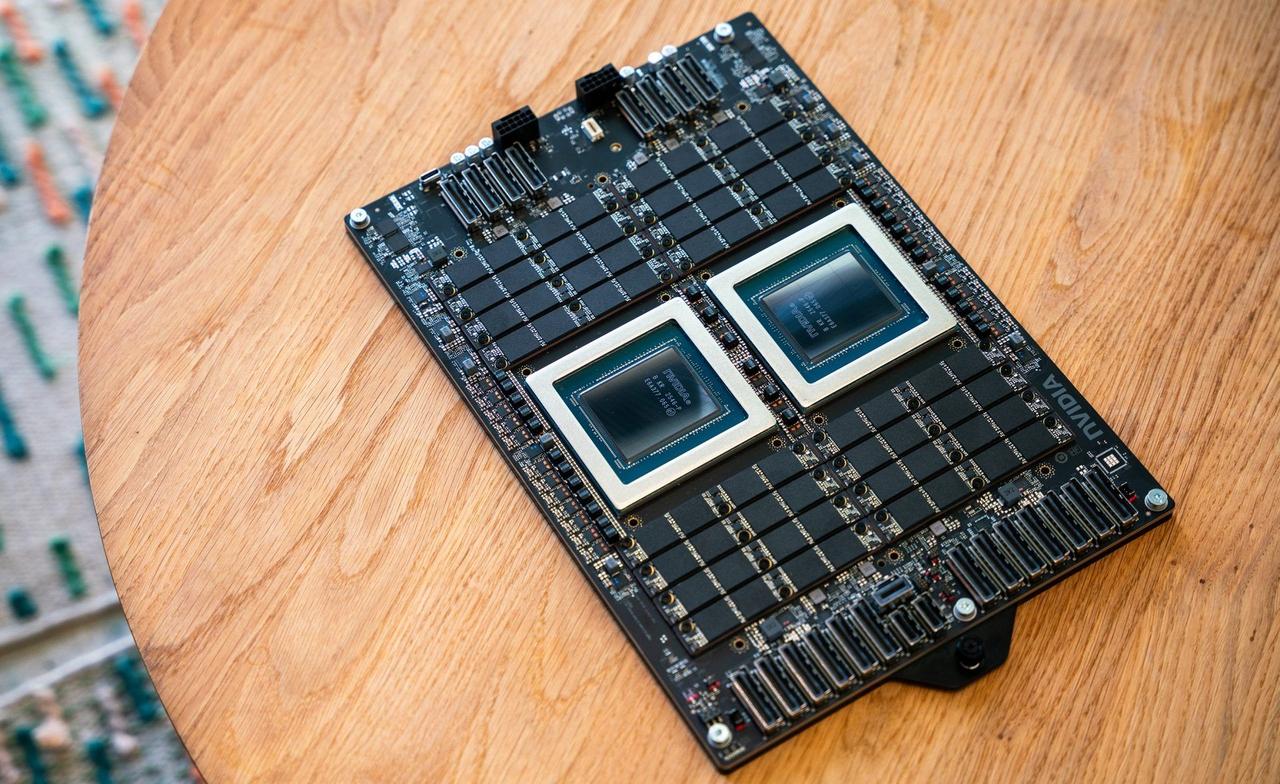
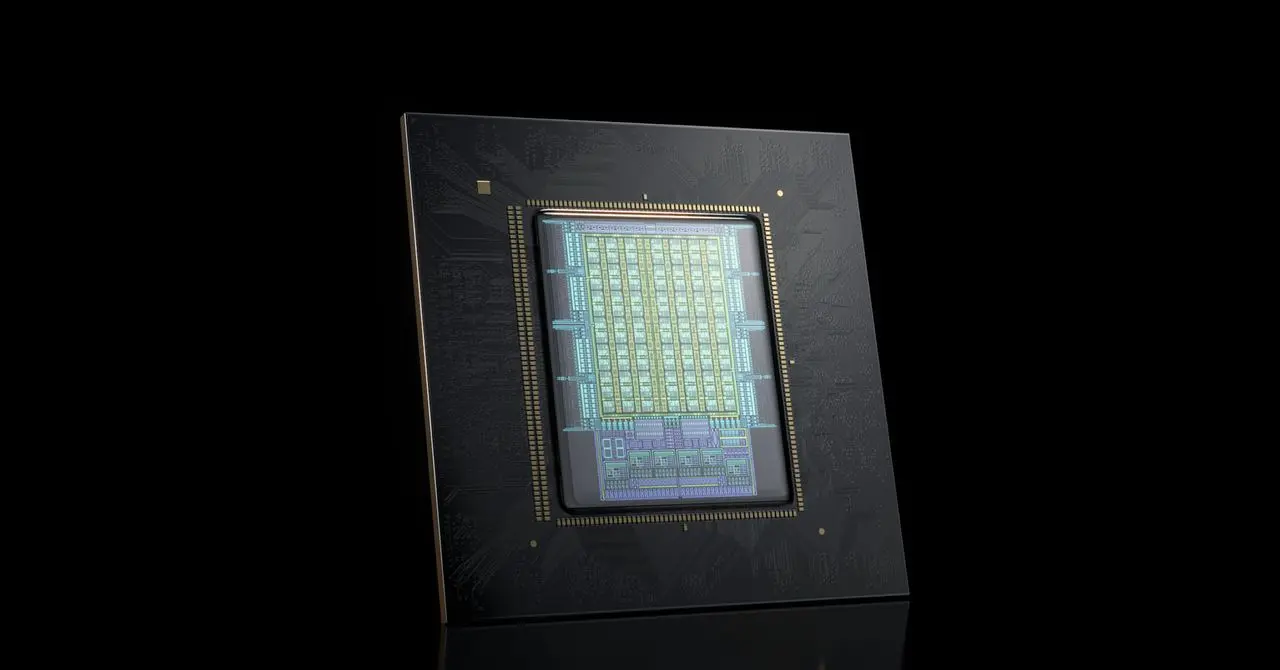
Already the planet's largest supplier of GPUs, Nvidia now intends to conquer the CPU market. "We have visibility to nearly $20 billion in total CPU revenue this year, setting us up to become the world's leading CPU supplier," Nvidia CFO Colette Kress said during the company's Q1 2027 earnings call on Wednesday. Nvidia is no stranger to CPUs having announced its first Arm datacenter chip, codenamed Grace, back in 2021. However until recently the company integrated most of these parts into GPU systems that users almost always deployed in AI datacenters and supercomputers. That changed in February when Nvidia revealed Meta was among the first hyperscalers now deploying standalone Grace CPU Superchips in its datacenters to power a variety of workloads including the Social Network's AI agents. At its GTC conference in March, Nvidia officially expanded its CPU line up to include a standalone Vera CPU system. Each chip features 88 custom Olympus Arm cores with support for simultaneous multi-threading (SMT) -- that's Hyperthreading in Intel speak -- along with confidential computing capabilities. Nvidia can equi[ each chip with up to 1.5 TB of LPDDR5x SOCAMM memory, which offers higher memory bandwidth at up to 1.2 TB/s and uses little power (which is why it's often used in laptops). "Vera will deliver up to 1.5x faster performance per core, 2x performance per watt, and 4x density per rack compared to x86-based alternatives," Kress claimed. Nvidia's reference designs pack up to two Vera CPUs onto a single board and via high-speed NVLink interconnects. Nvidia's Vera is also paired in a 2:1 ratio of Rubin GPUs to CPUs in its most powerful rack-scale AI compute platforms. Since the chip was detailed this spring, Kress claims nearly every major hyperscaler and system builder plans to deploy the chips. This week, several top AI labs and hyperscalers, including Anthropic, OpenAI, Oracle, and SpaceX took delivery of Nvidia's first Vera-based systems. "Vera CPU opens a brand new $200 billion TAM for Nvidia, a market we have never addressed before," she said. While Nvidia is expanding its addressable market to include standalone CPUs, it should be noted that much like the company's Ethernet networking products, they're designed primarily with AI and HPC applications in mind. The chips can't replace x86 processors in every application, yet. Kress' comments come as Nvidia caps off a strong end to the first quarter of its 2027 fiscal year. The GPU giant raked in $58.3 billion in profits on $81.6 billion in revenue for the quarter, the latter of which grew 85 percent YoY and 20 percent from the prior quarter. Kress attributed the sequential jump to an "inflection in inference demand." The quarter saw Nvidia change how it breaks out revenues. The company's business units have now been organized into a datacenter group which includes cloud, hyperscale, neocloud and enterprise sales, plus an edge group, which serves as a catchall for gaming, robotics, automotive, and vRAN products. Datacenter revenues accounted for the vast majority of revenues, at $75.2 billion. Of that $38 billion came from hyperscaler and public cloud customers, while neocloud, industrial, and enterprise customers paid the remaining $37 billion. Edge sales accounted for a mere $6.4 billion, with the company citing demand for Blackwell-based workstation gear as a key driver. Looking ahead to Q2, Nvidia forecast revenue will hit $91 billion plus or minus two percent. That prediction assumed no datacenter sales in China. Nvidia has been trying for months to reignite its GPU business in the Middle Kingdom since Uncle Sam gave the company the green light to sell its aging H200 processors to Chinese customers for the first time ever back in December. Despite receiving approval from the Trump administration and receiving billions of dollars worth of orders, shipments remain stuck in Beijing's red tape. ®
[4]
Vera Arrives: NVIDIA's First CPU Built for Agents Lands at Top AI Labs
Ian Buck hand-delivers the first NVIDIA Vera CPU systems to Anthropic, OpenAI, Oracle Cloud Infrastructure and SpaceXAI -- marking the moment agentic CPUs move from announcement to production. Agentic AI has always called for a different kind of CPU. NVIDIA CEO and founder Jensen Huang introduced the answer -- the standalone Vera CPU -- at GTC San Jose in March as NVIDIA's next multi-billion dollar business. On Friday, that CPU went from NVIDIA's labs into customer hands. The first NVIDIA Vera CPUs arrived at three of the world's leading AI labs on Friday -- Anthropic in San Francisco, OpenAI in Mission Bay, SpaceXAI in Palo Alto -- followed by a delivery to Oracle Cloud Infrastructure in Santa Clara on Monday. NVIDIA Vice President of Hyperscale and High-Performance Computing Ian Buck hand-delivered them. "Agentic AI is creating a new CPU moment in the AI factory -- as models move from answering to acting, Vera is purpose-built to keep that work moving at scale," Buck said. The big idea: imagine you could work 10x faster. Could your computer keep up? Agentic AI puts more demand than ever on the infrastructure we use to do all kinds of work -- from building slides to compiling and testing software, analyzing data, searching files or even running simulations. AI agents don't run on GPUs alone. Every agentic sandbox, every tool call, every orchestration layer, every long-context retrieval operation -- that's CPU work. Vera is a new class of CPU designed with that reality as its starting point. This gauntlet of concurrent, real-time tasks puts pressure on CPUs in ways traditional core-density focused designs were never built to prioritize. Vera packs 88 custom NVIDIA-designed Olympus cores, 1.2 TB/s of memory bandwidth and 50% faster per-core performance. Under constant load, work completes more quickly -- increasing the efficiency of the entire AI factory and helping users get their work done with faster responses. Vera Heads to San Francisco and Anthropic The first delivery landed at Anthropic's sleek SoMa offices in San Francisco. James Bradbury, Anthropic's head of compute, took the handoff from their conference room near the Bay.
[5]
NVIDIA hand-delivers the first Vera CPU systems to Anthropic, OpenAI, SpaceXAI, and more
NVIDIA has begun hand-delivering its first custom CPU designed for Agentic AI. The Vera CPU featured 88 custom Olympus cores, an impressive 1.2 TB/s of memory bandwidth, and 50% faster per-core performance under full load. And with that, NVIDIA Vice President of Hyperscale and High-Performance Computing, Ian Buck, personally hand-delivered the first Vera CPUs to the biggest AI companies in California: Anthropic, OpenAI, SpaceXAI, and Oracle Cloud Infrastructure. Although NVIDIA is synonymous with generative AI thanks to its GPUs, Agentic AI still requires a powerful CPU to handle tasks such as long-context retrieval. "Vera is a new class of CPU designed with that reality as its starting point," NVIDIA explains. "This gauntlet of concurrent, real-time tasks puts pressure on CPUs in ways traditional core-density focused designs were never built to prioritize." As the successor to Grace, Vera underscores the growing importance of CPUs in AI, and the Vera CPU is the first data center CPU to use LPDDR5X memory, delivering 1.2 TB/s of memory bandwidth. And with that, even though it will ship as part of the Vera Rubin platform that combines CPU and GPU technology, it's also set to be made available as a standalone CPU solution. NVIDIA's hand-delivery of the first Vera CPUs signals that Vera and Rubin are entering their respective full production phases for a global rollout in the coming months. "Agentic AI is creating a new CPU moment in the AI factory - as models move from answering to acting, Vera is purpose-built to keep that work moving at scale," NVIDIA's Ian Buck said. "When AI models are posed a question, the answer, often, isn't already prepped and ready to go. The models actually have to generate some Python code to arrive at the correct answer. A task at which the Vera CPU excels. That's why we are seeing the demand for CPUs skyrocket."
[6]
NVIDIA's Next Gold Mine? Jensen Huang Sees 'Brand New' $200 Billion Opportunity In Vera CPUs - Intel (NAS
Jensen Huang, CEO of NVIDIA Corporation (NASDAQ:NVDA), has unveiled a new $200 billion market for the company, courtesy of its latest product, the Vera CPU. "Vera opens a brand new $200 billion TAM for Nvidia," Huang said. The CEO expressed that Vera has tapped into a "never addressed before" market. The company is collaborating with every major hyperscaler and system maker to deploy it. He stressed that NVIDIA is at the core of the shift towards agentic AI and robotic physical AI. Huang explained that the company's Vera CPU platform will be deployed in multiple configurations, including alongside Rubin GPUs, as a standalone CPU, and integrated with ConnectX-9 networking for storage and security workloads. He added that millions of Rubin systems paired with Vera CPUs are expected to ship, with additional use cases focused on confidential computing, compute isolation, and infrastructure software. While AI models use GPUs for "thinking," agents primarily run on CPUs to perform their assigned tasks. Huang anticipates that these agents will operate their own form of CPU-driven PCs. He said NVIDIA has already sold $20 billion worth of standalone Vera CPUs this year, calling it the beginning of a new era. With billions of agents predicted to use tools similar to PCs, Huang believes the world will "need a lot more CPUs," presenting a massive opportunity for NVIDIA. AI Inference Fuels CPU Demand This news comes on the heels of NVIDIA's announcement that its first Vera CPU systems were delivered to leading AI companies, including SpaceX, Anthropic, and OpenAI. This move is part of NVIDIA's broader push into next-generation infrastructure designed for "agentic AI" workloads. According to Benzinga Edge Stock Rankings, Nvidia has a growth score of 98.25% and a momentum rating of 85.05%. Benzinga's screener allows you to compare NVDA's performance with its peers. NVDA Price Action: On a year-to-date basis, Nvidia stock climbed 18.33%, as per Benzinga Pro. On Wednesday, it closed 1.30% higher at $223.47. Disclaimer: This content was partially produced with the help of AI tools and was reviewed and published by Benzinga editors. Image via Shutterstock Market News and Data brought to you by Benzinga APIs To add Benzinga News as your preferred source on Google, click here.
[7]
NVIDIA Hand-Delivers First Vera CPUs to Anthropic, OpenAI, SpaceX and Oracle as Grace's Successor Powers the Agentic AI Era
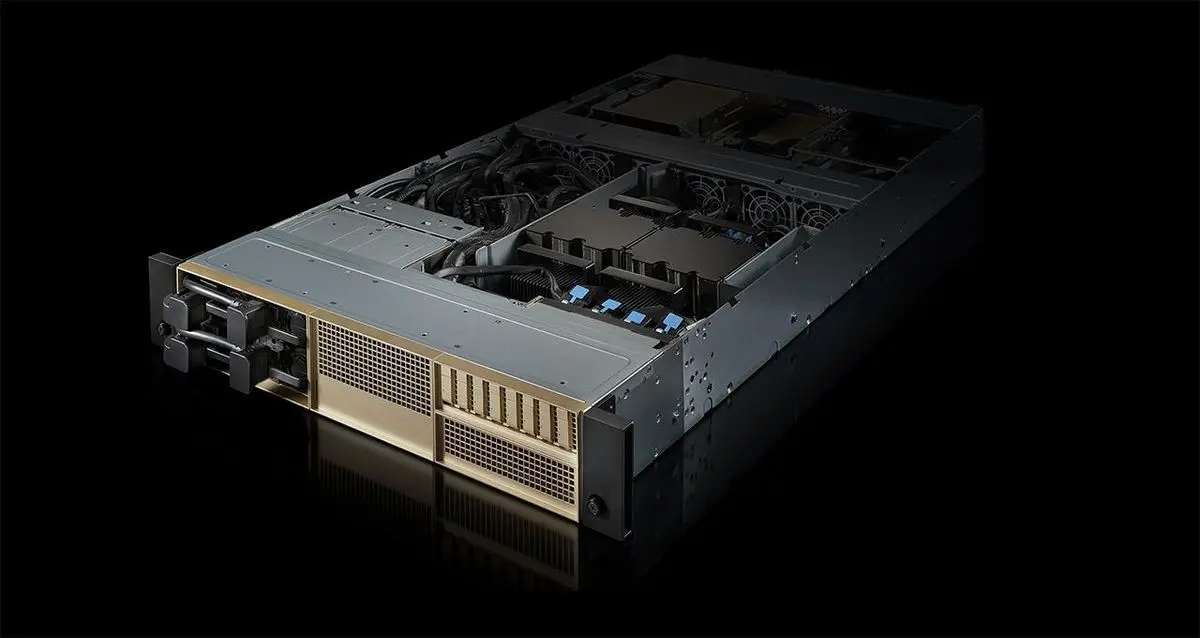
NVIDIA has started shipping the very first Vera CPUs to major AI firms, marking the official beginning of production to accelerate Agentic AI forward. The Vera CPU is the next chapter for NVIDIA's Agentic AI ecosystem, setting the stage for its next multi-billion dollar frontier. Today, NVIDIA's Vice President of Hyperscale and High-Performance Computing, Ian Buck, hand-delivered the first Vera CPUs to four major AI firms who are accelerating Agentic AI forward, these include OpenAI, SpaceX, Anthropic, and Oracle Cloud. This marks the first time that the Vera CPU left NVIDIA's labs and landed in the hands of its first customers. Ian shares his journey in delivering the Vera CPUs. The first Vera CPUs landed at Anthropic's SoMa offices in San Francisco. Next stop, OpenAI's Mission Bay HQ, where the second rack featuring Vera CPUs was delivered. And lastly, SpaceXAI, where Elon Musk himself was handed Vera at the Palo Alto office. All three Vera racks were delivered on Friday. On Monday, Ian made a visit to Oracle's AI Customer Excellence Center, where he delivered the last Vera CPU rack. These deliveries are just a tiny portion of what NVIDIA will be shipping in the coming quarters. Agentic AI firms are showing massive interest in CPUs these days, and Vera, being built for it, is driving crazy traction. Just last week, we reported that Vera CPUs were going to be adopted by CoreWeave, Meta, and Alibaba as early buyers. Oracle was also mentioned, and as you can see, they have already received the first chips. According to NVIDIA, the Vera CPU offers extremely high single-threaded core performance, incredibly high data output, and extreme levels of energy efficiency. Vera is the world's first and only data center CPU to utilize LPDDR5 memory and offers unrivaled performance per watt. NVIDIA is not just integrating Vera CPUs into its Vera Rubin platform; these will also be shipped standalone, & the company expects this to open another multi-billion-dollar business front for it. For the Vera CPU, NVIDIA has designed its next-gen custom Arm architecture codenamed Olympus, and the chip packs 88 cores, 176 threads (with NVIDIA Spatial Multi-Threading), 1.8 TB/s NVLink-C2C coherent memory interconnect, 1.5 TB of system memory (3x Grace), 1.2 TB/s of memory bandwidth with SOCAMM LPDDR5X, and Rack-scale confidential compute. These combine to offer 2x data processing, compression & CI/CD performance versus Grace. With Vera, we will also see demand for LPDDR5X DRAM swell as the platform features support for up to 1.5 TB of memory, and given the amount of Vera CPUs that will be required to meet compute demands, the supply chain is going to see increased constraints. NVIDIA's Vera Rubin platform is set for launch in the second half of this week, with mass production of the first racks commencing real soon. Vera will be used in both standalone LPX servers and as a host processor in the Vera Rubin NVL72 racks. With Vera now entering the full production phase, and Rubin all set for launch in the coming months, the extreme co-design platform that NVIDIA has come up with is going to propel agentic AI workflows to the next level.
Share
Copy Link
Nvidia hand-delivered its first Vera CPU systems to OpenAI, Anthropic, SpaceX, and Oracle Cloud, marking a major push into the CPU market. CEO Jensen Huang claims the chip opens a $200 billion opportunity in agentic AI, with the company already generating $20 billion in CPU revenue this year.
Nvidia has begun delivering its first custom CPU designed specifically for agentic AI, marking a strategic expansion beyond its GPU dominance. The Vera CPU, introduced in March at GTC, represents what CEO Jensen Huang calls "a brand new $200 billion TAM for Nvidia, a market we have never addressed before"
1
. This move positions Nvidia to compete directly in the AI hardware market traditionally dominated by Intel and AMD, while addressing the specific computational needs of AI agents that differ fundamentally from traditional cloud workloads.
Source: Benzinga
The company's CFO Colette Kress revealed during the Q1 2027 earnings call that Nvidia has "visibility to nearly $20 billion in total CPU revenue this year, setting us up to become the world's leading CPU supplier"
3
. This aggressive forecast comes as Nvidia reported $81.6 billion in revenue for the quarter, with datacenter sales accounting for $75.2 billion of that total3
. The company projects $91 billion in revenue for the next quarter, attributing sequential growth to an "inflection in inference demand"3
.Nvidia's Vice President of Hyperscale and High-Performance Computing Ian Buck personally hand-delivered the first Vera CPU systems to four major partners: Anthropic, OpenAI, SpaceX, and Oracle Cloud Infrastructure
2
. The deliveries began with a stop at Anthropic's SoMa offices in San Francisco, followed by OpenAI's Mission Bay headquarters, then SpaceX's xAI offices in Palo Alto, and finally Oracle Cloud Infrastructure in Sydney, Australia2
.
Source: PC Magazine
"Agentic AI is creating a new CPU moment in the AI factory -- as models move from answering to acting, Vera is purpose-built to keep that work moving at scale," Buck stated
4
. Oracle Cloud has already committed to deploying hundreds of thousands of Nvidia Vera CPUs in 2026, with Buck suggesting the company will offer "production-grade agentic AI infrastructure" at a scale unmatched by other cloud providers2
. SpaceX is reportedly considering the Vera CPU for building new reinforcement learning workloads into its training stack2
.The Vera CPU features 88 custom Olympus cores, each delivering up to 50% greater performance than the Grace CPU cores used in Nvidia's current-generation Blackwell GPU systems
2
. The chip supports up to 1.5 TB of LPDDR5x SOCAMM memory with 1.2 TB/s of memory bandwidth, making it the first datacenter CPU to use LPDDR5X memory5
. According to Kress, "Vera will deliver up to 1.5x faster performance per core, 2x performance per watt, and 4x density per rack compared to x86-based alternatives"3
.
Source: Wccftech
Jensen Huang explained the architectural rationale: while the "thinking" part of an AI model uses GPUs, AI agents primarily run on CPUs for executing assigned tasks
1
. Vera is optimized to process tokens as rapidly as possible, contrasting with traditional cloud architecture CPUs designed with "cores" for running multiple application instances1
. Every agentic sandbox, tool call, orchestration layer, and long-context retrieval operation represents CPU work that Vera is specifically engineered to handle4
.Related Stories
Nvidia's expansion into standalone CPUs represents a calculated response to growing competition from hyperscalers developing their own AI chips. Last month, Amazon Web Services announced a major contract with Meta for millions of Amazon's homegrown AI CPUs, with AWS CEO Andy Jassy expressing confidence that the company can match or exceed Nvidia's capabilities in both GPUs and CPUs
1
. The Vera CPU can be sold as a standalone product or bundled with Nvidia's Rubin GPU in the Vera Rubin platform, providing flexibility for different deployment scenarios1
.Huang projects that billions of agents will eventually populate AI factories, each requiring dedicated computational resources similar to how humans use PCs today. "The world has a billion users, human users. My sense is that the world is going to have billions of agents, not today. I mean, we're going to grow into it, but we'll have billions of agents, and those billions of agents will all use tools," he stated during the earnings call
1
. This vision positions the Vera CPU as infrastructure for a future where AI agents become ubiquitous across enterprise and consumer applications, fundamentally reshaping the AI hardware market and datacenter sales strategies for years to come.Summarized by
Navi
[3]
26 Jan 2026•Technology
07 Jan 2025•Technology

26 Feb 2026•Technology