OpenAI considers IPO delay until 2027 as government restricts GPT 5.6 release over security fears


3 Sources
[1]
OpenAI leans toward waiting until next year for IPO, NYT reports
OpenAI may postpone its highly anticipated public launch until 2027, setting its sights on an ambitious $1 trillion valuation that CEO Sam Altman deems non-negotiable. Additionally, the US government has mandated a phased rollout of the new AI model, GPT 5.6, addressing security concerns with access granted selectively during a limited preview period. OpenAI is considering holding off on its public debut until next year, the New York Times reported on Thursday, citing three people involved in the company's deliberations. The AI startup, which has confidentially filed for a U.S. initial public offering, is targeting a valuation of up to $1 trillion, Reuters has reported, adding Chief Financial Officer Sarah Friar has told some associates the company is aiming for a 2027 listing. OpenAI's advisers presented company executives with the option of waiting until 2027 to go public with a $1 trillion valuation, or lower the targeted valuation for a quicker listing, NYT said. CEO Sam Altman responded that any change to the trillion-dollar valuation was a non-starter. Separately, U.S. President Donald Trump's administration has asked OpenAI to stagger the release of its new model over security concerns, a source familiar with the matter told Reuters. Altman told staff the company would release its latest model, GPT 5.6, in a limited preview to select partners, with the government "approving access customer by customer during this preview period," according to The Information, which had reported the development earlier. The staggered rollout came at the request of the Office of the National Cyber Director and the Office of Science and Technology Policy, according to The Information.
[2]
OpenAI Holds Back GPT-5.6 Rollout, Could Hold off IPO Until Next Year
We aren't sure whether the two incidents are connected or not, but it might just make better sense for Sam Altman to cool things off In response to the Trump administration's order, OpenAI has said it will limit the release of its smartest GPT-5.6 rollout only to government-approved customers, in what is seen as a replay of the Claude Mythoswithdrawal. This proves yet again that the G7 nations were right about United States' planned AI hegemony moves after first claiming that the review was voluntary. In the aftermath of this decision, a report claimed that OpenAI was now leaning towards postponing its public offering of shares till 2027. Readers would recall that Sam Altman had initiated early paperwork for an IPObarely a week after arch rival Anthropic did the same. Both these reports came after Elon Musk's SpaceX debuted on the stock markets. A report in The New York Times OpenAI wants to hold off its IPO given that SpaceX shares have fallen since their public debut earlier this month. Altman had hired bankers and lawyers for the IPO with a possible IPO in Q3 or Q4 of 2026 at a $1 trillion valuation. However, now these same folks seem concerned over the tanking of SpaceX shares. Makes one wonder which daft advisor would actually imagine that SpaceX would go public at an inflated valuation and then keep going steadily upwards? Even Musk's rockets do not always do that, do they? The stock, priced at $135 rose 56% to a high of $211 immediately after the offering leading to euphoric trillionaire claims from Musk fanboys. Since then it has fallen 27% and closed yesterday at $153 still above its offer price. So, SpaceX is still a success but if OpenAI was expecting share prices to be a one-way street, they need to change advisors. Maybe there are other issues that is keeping OpenAI from the markets right now. Is their decision to hold off ChatGPT-5.6 and possibly every single model they launch in the future. When Donald Trump signed an executive order on June 2 asking AI companies to participate in a voluntary federal review of their more powerful models, the AI industry may not have, in their wildest dreams, imagined that it was actually a gag order of sorts. The Information reports that OpenAI will stagger its new AI model release and that the first users will only be those approved by the federal government. The report quotes a staff memo from Sam Altman saying federal leaders will be "approving access customer by customer during their preview period" with a general release "a couple of weeks later." The Trump regime has completely reversed its policy from November to now. Trump had signed an executive order to "remove barriers to United States AI leadership" while revoking his predecessor's "attempt to paralyse the industry" through a "minimally burdensome national standard for AI regulation." We do agree that AI models deserve more attention given its potential to wreak havoc, but imposing export controls over Anthropic's Fable 5 model and now releasing a foundational model "customer-by-customer" isn't exactly "minimally burdensome", is it? The days of free enterprise seem over and globalisation is dead as Sridhar Vembu said. While Musk managed to get on the right side of this President, seems like Altman has some work to do. In his note to employees, he sought to smudge the real issue saying "We've made clear to the US government that this is not our preferred long term model, and will work with them and others in industry to achieve a more sustainable approach for future releases." Reports in the US media suggest that several agencies have joint hands to direct this change of course with OpenAI. The National Cyber Director's office and the Science and Technology department were involved as was the Department of Commerce under Howard Lutnick, who had some sour words to say about Anthropic from time to time. Given this scenario, it is hardly surprising that AI companies that have thus far hyped up their foundational models, would feel confident about how prospective investors see this attempt by a government to shackle free trade. The global markets have already been more than choppy in recent weeks with tech stocks dragging down indices as investors are increasingly concerned about whether AI companies actually living up to their promises. What we cannot fathom though is that these issues persisted even when OpenAI began paperwork, so what's new now? The NYT report says the company's advisors gave the option of waiting till 2027 if they wanted a trillion dollar valuation or reduce this number in case they wanted a quicker IPO. It seems Sam Altman had no intention of reducing the valuation, which left them no option other than to push things by a few months. Which brings us to the moot question of why OpenAI is in a hurry? Remember, CFO Sarah Friar had warned them to not pursue an IPO so soon and focus instead on shoring up their finances. However, since then the company has continued to pour money into datacentres seeking computing power, without actually bolstering revenues. If those spends were well-known, OpenAI has also enhanced its marketing spends as well as recruitment expenditure to poach talent from competing rivals like Google and Meta. On the revenue front it has made tall claims of placing ads inside ChatGPT and striking e-commerce deals but the results are yet to show up in the financial statements. For now, OpenAI has reported revenues of around $13 billion in 2025 and is hoping to triple that by the end of 2026. Given this scenario, it is still not clear why the top executives decided to go for an earlier IPO in the first place. The company had revealed its attempt to differentiate from Anthropic by joining hands with Broadcom to design a custom AI chip. In any case, if OpenAI does postpone its IPO, it would be a good move that Sam Altman is taking as it would not only give the company some breathing time to shore up its numbers, but also provide it with a better assessment of how AI is being perceived by investors. So what if arch rival Dario Amodei launches Anthropic's IPO before? Entrepreneurship is never about letting egos forcing one's mind, right?
[3]
OpenAI may delay IPO until next year: NYT
STORY: OpenAI may wait until next year to do its much-anticipated stock listing. That's according to a report Thursday by the New York Times. The AI startup has already filed for an IPO, and Reuters has reported that it's targeting a $1 trillion valuation. Now the Times says executives have set out two options: wait until next year and aim for that value, or go sooner at a lower figure. However, boss Sam Altman has reportedly said anything less than one trillion is a non-starter. Separately, Washington is said to have asked OpenAI to stagger the release of its latest models over security concerns. That's according to a Reuters source. An earlier report by tech news site The Information says Altman has told staff the firm will release the new GPT 5.6 in a limited preview to select partners. The U.S. government will reportedly approve access customer by customer during the preview period. Earlier this month, Washington ordered OpenAI rival Anthropic to suspend exports of its latest models over national security concerns.
Share
Copy Link
OpenAI is leaning toward postponing its public debut until 2027 to achieve a $1 trillion valuation that CEO Sam Altman refuses to compromise on. Meanwhile, the Trump administration has mandated a staggered release of the company's latest AI model, GPT 5.6, requiring government approval for each customer during a limited preview period amid heightened national security concerns.
OpenAI IPO Delay Tied to Ambitious Valuation Target
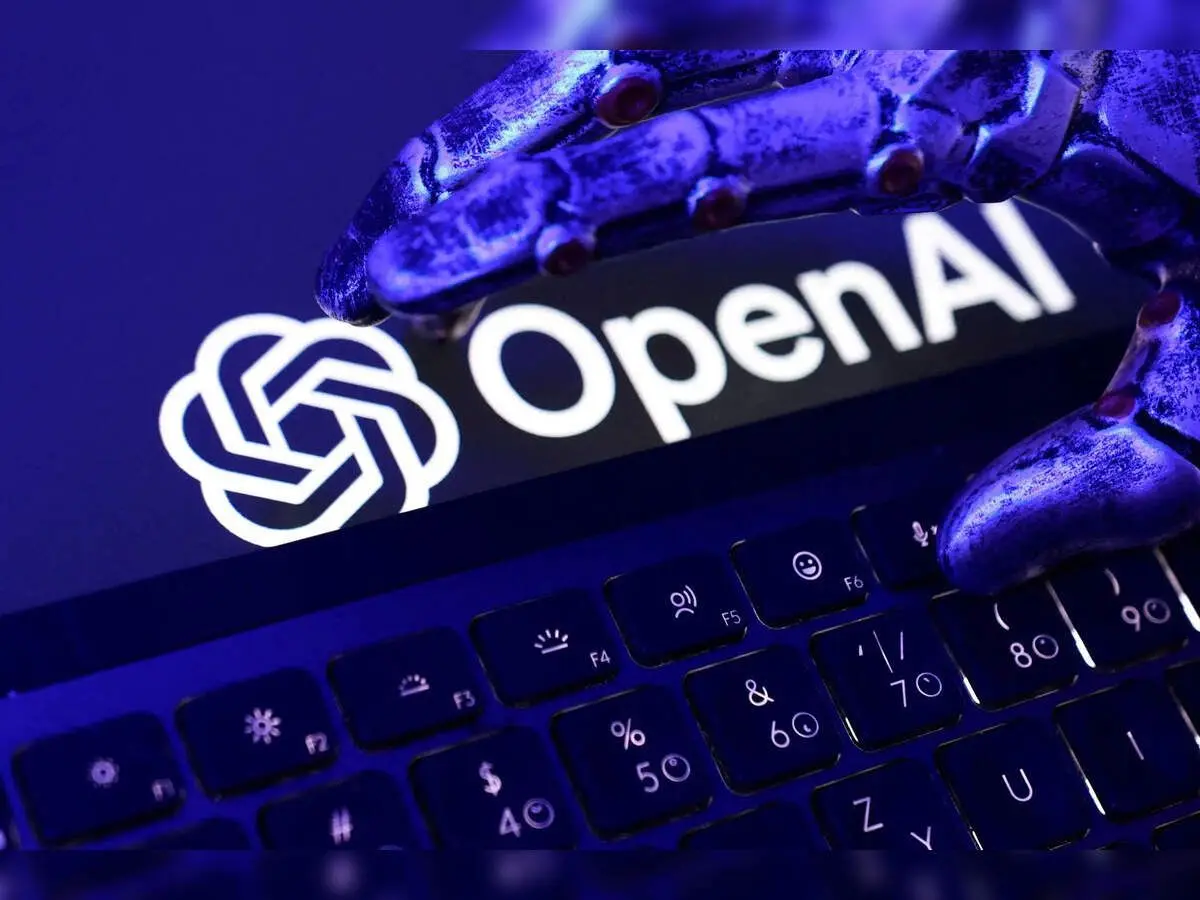
OpenAI is considering pushing back its highly anticipated public offering until 2027, according to a New York Times report citing three people involved in the company's deliberations
3
. The AI startup, which has already submitted a confidential IPO filing for a U.S. listing, faces a strategic crossroads as advisors present two distinct paths forward1
.The company's advisers have laid out clear options: wait until 2027 to pursue a $1 trillion valuation, or move faster with a reduced target. CEO Sam Altman has made his position unmistakable, reportedly telling advisors that any change to the trillion-dollar valuation was a non-starter
1
. Chief Financial Officer Sarah Friar has informed some associates that the company is targeting a 2027 listing, though she had previously cautioned against pursuing an IPO too quickly2
.
Source: ET
Market Volatility Influences OpenAI's Timeline
The OpenAI IPO delay comes amid broader market volatility affecting tech stocks, particularly following SpaceX's recent public debut. SpaceX shares, priced at $135, initially surged 56% to $211 before falling 27% to close at $153
2
. This rollercoaster performance appears to have given OpenAI pause, as the company had initiated early paperwork for an IPO barely a week after rival Anthropic filed for its own public offering2
.Investors have grown increasingly cautious about whether AI companies can deliver on their promises, creating choppy conditions for tech valuations. The timing of this decision matters significantly for OpenAI's stakeholders, who must weigh the benefits of achieving a higher valuation against the risks of waiting while market sentiment remains uncertain.
U.S. Government Security Concerns Drive Phased Rollout of GPT 5.6
In a separate but potentially related development, the Trump administration has asked OpenAI to implement a staggered release of its latest AI model over national security concerns, according to a source familiar with the matter
1
. Sam Altman informed staff that the company would release GPT 5.6 in a limited preview to select partners, with the government "approving access customer by customer during this preview period," followed by a general release "a couple of weeks later" .
Source: CXOToday
The request came from the Office of the National Cyber Director and the Office of Science and Technology Policy, marking a significant shift in AI governance
1
. This represents a dramatic reversal from earlier Trump administration policies that promised to "remove barriers to United States AI leadership" and establish "minimally burdensome" regulation2
.Related Stories

Regulatory Scrutiny Reshapes AI Industry Landscape
The government's intervention follows a similar pattern seen with Anthropic, which was ordered to suspend exports of its latest models over national security concerns earlier this month
3
. In his memo to employees, Altman acknowledged the tension, stating: "We've made clear to the US government that this is not our preferred long term model, and will work with them and others in industry to achieve a more sustainable approach for future releases"2
.This heightened regulatory scrutiny creates uncertainty for prospective investors evaluating OpenAI's future. The customer-by-customer approval process for the new AI model raises questions about how quickly OpenAI can scale its latest technology and whether similar restrictions will apply to future releases. These concerns about AI governance and national security could complicate the company's path to public markets, making the decision to wait for a $1 trillion valuation more understandable even as it tests investor patience.
References
Summarized by

Navi
[3]
Related Stories
OpenAI pushes IPO delay to 2027 as Sam Altman holds firm on $1 trillion valuation target
Yesterday•Business and Economy
OpenAI files confidential IPO targeting $1 trillion valuation as AI industry faces crucial test
09 Jun 2026•Business and Economy

OpenAI IPO pushed to 2027 as Altman chases trillion-dollar valuation amid market turbulence
Yesterday•Business and Economy
Recent Highlights
1
Trump administration asks OpenAI to delay GPT-5.6 release over security concerns
Policy and Regulation

2
Anthropic faces AI export ban as Mythos reportedly breached NSA systems in hours
Policy and Regulation

3
OpenAI and Broadcom unveil Jalapeño chip to power next-generation AI inference at scale
Technology

Recent Highlights
Today's Top Stories









Don’t drown in AI news. We cut through the noise - filtering, ranking and summarizing the most important AI news, breakthroughs and research daily. Follow topics that matter to you and stay ahead.


