10 Sources
10 Sources
[1]
Future Sony PlayStation games will use AI to imagine new frames
Mark Cerny, the lead architect of the PlayStation 5 and PS5 Pro, told Digital Foundry that ML-based frame generation tech is coming to "PlayStation platforms" in the future, letting the game console use AI to imagine new frames between the ones it's actually rendering, which can create smoother perceived image quality while (typically) introducing some amount of lag. At least, that's how it works on PCs, where critics call them "fake frames." It's not clear whether Cerny means he'll bring it to the PS5 Pro, which just got better AI upscaling with an upgraded PlayStation Spectral Super Resolution (PSSR) technique, or whether it'll have to wait for the possibly-delayed-due-to-RAM Sony PS6, which Sony already teased would include some next-gen dedicated ray tracing hardware called Radiance Cores. Cerny previously suggested the PS6 wouldn't arrive before 2027 at the earliest, and that's also true of this ML-based frame generation. "All I can say is that we have no more releases planned for this year. And that I look forward to discussing this more in the future," he told Digital Foundry. But if the PS6 is delayed, Sony might want to try to get more out of the existing PS5 Pro in the meanwhile. This won't be the first implementation of frame gen on console. The PS5 already offers AMD FSR3 frame generation in some games, but FSR3 doesn't have the machine learning support. It's interpolating between real frames, rather than AI imagining what should be between them. Nvidia and AMD typically warn that frame generation isn't a solve for low framerate, because you need a relatively stable framerate to begin with for the technique to work. I don't typically use it on gaming handhelds, where I might only get 30 to 40fps to begin with on a title, and on my desktop where I can easily get 90fps on higher settings, I usually prefer leaving it off. There are some edge cases where I enjoy it, though.
[2]
Sony's PS5 Pro AI Upscaling Comes to 14 More Games, Rollout Starts Today
With over a decade of experience reporting on consumer technology, James covers mobile phones, apps, operating systems, wearables, AI, and more. If you own the Sony PlayStation 5 Pro, you may soon spot improved AI upscaling on some of its best games. An upgraded version of Sony's PlayStation Spectral Super Resolution (PSSR) feature first arrived in Resident Evil Requiem last month, and now the brand has confirmed that 14 more games are getting the update over the coming weeks. PSSR is an AI-powered upscaling tech similar to AMD's FSR4 or Nvidia DLSS, but it's not strictly the same. Sony describes this new version of PSSR as "delivering enhanced image stability, improved clarity in fine details, and more consistent performance across supported titles." You'll get access to the new PSSR features through a PS5 Pro system software update, which began rolling out on March 17. Sony says it'll be available to all players in the coming days, so keep an eye out for an update on your console. New supported games include Alan Wake 2, Control, Dragon Age: The Veilguard, Dragon's Dogma 2, Final Fantasy VII Rebirth, Monster Hunter Wilds, Nioh 3, Rise of the Ronin, Senua's Saga: Hellblade II, Silent Hill 2, and Silent Hill f. There are three more games coming soon, with a patch expected for Assassin's Creed Shadows and Cyberpunk 2077 in the "coming weeks." The upcoming game Crimson Desert, launching on March 19, will also support the tech from launch. Digital Foundry tested an exclusive look at four of the upgraded titles, and found they delivery on Sony's promises. Digital Foundry said, "With the launch version of PSSR, the quality of the image quality upgrade varied on a per-title basis and could look worse than the original base PS5 game. That is no longer the case and that's simply great news."
[3]
Sony's updated PSSR upscaling tech is finally available for even more PS5 Pro games, including Crimson Desert, Silent Hill f, Dragon Age: The Veilguard, and more
"Moving forward, most new PS5 Pro titles will launch with support for this enhanced PSSR," says Sony * Sony's updated PSSR tech is now available for a collection of PS5 Pro-supported games * Some of those titles include Silent Hill f, Alan Wake 2, Final Fantasy 7 Rebirth, and more * More games, including Crimson Desert, Assassin's Creed Shadows, and Cyberpunk 2077, will also receive the update soon Sony has released a new PlayStation 5 software patch that introduces support for its upgraded version of PSSR (PlayStation Spectral Super Resolution) upscaling technology across a wide range of games. Late last month, we learned that Sony had finally released its brand new AI upscaling tech for the PS5 Pro version of Resident Evil Requiem, the first game to receive the update, and that more games were expected to receive the same treatment soon. Now, in a new PlayStation Blog post, Sony announced it has rolled out the new version of PSSR to several PS5 Pro games to deliver "enhanced image stability, improved clarity in fine details, and more consistent performance across supported titles." "The upgraded PSSR represents another step in our commitment to evolving the PS5 Pro experience," Sony said. "Moving forward, most new PS5 Pro titles will launch with support for this enhanced PSSR, ensuring players continue to see improvements in image quality and performance." The titles named include Silent Hill f, Monster Hunter Wilds, Dragon's Dogma 2, Dragon Age: The Veilguard, Control, Alan Wake 2, Senua's Saga: Hellblade 2, Final Fantasy 7 Rebirth, Nioh 3, and Rise of the Ronin. "With the latest PSSR update, Silent Hill f now delivers an even smoother gameplay experience than before," said Konami about Silent Hill f's update. "Fine details - from swaying blades of grass to shadows cast across the ground - are rendered with greater clarity, deepening immersion in the fog-shrouded Japan of the 1960s." BioWare, the developer behind Dragon Age and Mass Effect, also commented on The Veilguard update, saying, "With the new PSSR, we're delivering a meaningful improvement in image quality while still maintaining stable framerates in Fidelity and Performance modes. Your adventures in Thedas will now feel smoother and more visually refined." Remedy Entertainment also commented on the improvements to image stability and motion clarity in both its titles, Control and Alan Wake 2, with graphics technical director, Tatu Aalto, praising the upgrade. "The upgraded PSSR improves image upscaling quality and stability," Aalto said. "The improvements allow efficient stochastic sampling without sacrificing image stability. The new PSSR responds quickly to visibility changes in games, keeping motion clear while improving temporal stability." For Final Fantasy 7 Rebirth, director Naoki Hamaguchi praised the upgraded visuals, saying, "Compared to the original PSSR, fine details such as characters' hair are naturally restored, and the image processing is more stable due to less flickering and afterimage feeling. Overall, we feel it allows us to create a more immersive gameplay experience with improved graphical quality and stability." Sony has confirmed that PSSR 2 will also be available in more titles soon, including Crimson Desert, which launches this week, Assassin's Creed Shadows, and Cyberpunk 2077. Follow TechRadar on Google News and add us as a preferred source to get our expert news, reviews, and opinion in your feeds. Make sure to click the Follow button! And of course you can also follow TechRadar on TikTok for news, reviews, unboxings in video form, and get regular updates from us on WhatsApp too.
[4]
AI frame generation is coming to the PS5 Pro
Sony is preparing to take its PlayStation graphics technology a step further, with AI-powered frame generation now confirmed as a future feature for PlayStation platforms. While details remain limited, the update could significantly improve visual smoothness and performance -- especially on hardware like the PS5 Pro. A New Step Beyond Upscaling In a recent interview with Digital Foundry, PlayStation lead system architect Mark Cerny confirmed that machine learning-based frame generation is in development and "should be seen at some point on PlayStation platforms." Recommended Videos Frame generation works by using AI to create entirely new frames between rendered ones, effectively increasing the perceived frame rate without requiring additional raw GPU power. This technology is already widely used on PC through solutions like Nvidia DLSS and AMD FSR. Sony has already introduced AI into its ecosystem through PlayStation Spectral Super Resolution (PSSR) - an upscaling technology that enhances image clarity on the PS5 Pro. The addition of frame generation would take this a step further, focusing not just on sharper visuals but also smoother gameplay. Why This Matters For Gaming Performance Frame generation represents a major shift in how performance gains are achieved. Instead of relying solely on more powerful hardware, AI can fill in the gaps by intelligently predicting motion and generating intermediate frames. This could allow games to appear smoother - potentially mimicking higher frame rates like 60fps or even 120fps - without requiring the console to render every frame natively. For developers, this opens up new possibilities. They could push graphical fidelity higher while still maintaining fluid performance. For players, it means a more responsive and visually immersive experience, particularly in fast-paced games. However, the technology is not without trade-offs. Experts note that AI-generated frames can introduce input latency, meaning there could be a slight delay between player actions and on-screen responses. What It Means For PS5 Pro Users While Sony has not explicitly confirmed that frame generation will arrive on the PS5 Pro, the console is currently the most likely candidate. The PS5 Pro already features enhanced GPU performance and AI-driven technologies, making it better suited for advanced rendering techniques. If implemented, frame generation could significantly extend the lifespan of the console by enabling higher performance without requiring new hardware. It could also help bridge the gap between console and high-end PC gaming experiences. That said, the rollout timeline remains uncertain. Cerny has indicated that no additional releases are planned in the immediate future, suggesting the feature may not arrive until 2027 or later. What Comes Next Sony's collaboration with AMD on projects like "Project Amethyst" suggests that AI-driven rendering will play a central role in future PlayStation systems. Frame generation could eventually become a standard feature across the PlayStation ecosystem, potentially debuting fully in next-generation hardware such as the PlayStation 6. For now, the confirmation signals a clear direction: AI is becoming the backbone of console graphics evolution. Whether it arrives on the PS5 Pro or the next console generation, frame generation is poised to redefine how games look and feel in the years ahead.
[5]
Sony confirms AI frame generation for future PlayStations
Sony confirmed AI-powered frame generation is in development for future PlayStation platforms, according to Mark Cerny, lead system architect. This technology could significantly enhance visual smoothness and performance, particularly for hardware like the PlayStation 5 Pro, by generating new frames between rendered ones. Cerny confirmed machine learning-based frame generation is coming "at some point on PlayStation platforms" in an interview with Digital Foundry. Frame generation uses AI to create intermediate frames, increasing perceived frame rates without additional raw GPU power. This method is common on PC with Nvidia DLSS and AMD FSR. Sony previously incorporated AI with PlayStation Spectral Super Resolution (PSSR) for image clarity on the PS5 Pro. This technology allows for smoother gameplay by mimicking higher frame rates like 60fps or 120fps without the console rendering every frame natively. The system could enable developers to push graphical fidelity while maintaining fluid performance. Experts note a potential trade-off: AI-generated frames may introduce input latency, causing slight delays between player actions and on-screen responses. While not explicitly confirmed for the PS5 Pro, the console's enhanced GPU and AI-driven technologies make it a probable candidate for implementation. Frame generation could extend the PS5 Pro's lifespan by enabling higher performance without new hardware, narrowing the gap with high-end PC gaming. Cerny indicated no immediate releases are planned, suggesting the feature may arrive in 2027 or later. Sony's collaboration with AMD on projects such as "Project Amethyst" indicates a future focus on AI-driven rendering for PlayStation systems. Frame generation could become a standard feature across the PlayStation ecosystem, potentially debuting fully in next-generation hardware like the PlayStation 6.
[6]
Sony confirms PlayStation systems will be getting AI frame generation for 'fake frames'
TL;DR: PlayStation lead architect Mark Cerny revealed that future PlayStation consoles will feature AI-based frame generation, enhancing frame rates by creating new frames between native ones. This technology builds on existing upscaling like PSSR and aims to boost performance and visual quality, potentially debuting with the PS6. PlayStation lead system architect Mark Cerny has sat down for an interview with Digital Foundry, where Sony's next-generation graphics technology was discussed, and it involves AI. During the interview, Cerny said that PlayStation platforms will eventually get some form of machine learning-based frame generation, which involves an AI scanning the frames within the frame pipeline and creating entirely new frames between the natively rendered frames, boosting the total perceived frames in-game. The technology, while still quite controversial among the PC community for these AI-generated frames being "fake" frames, undoubtedly provides extra performance headroom and enables developers more creative freedom when it comes to performance and visual fidelity. The technology already exists in its infancy on the PlayStation, with PlayStation Spectral Super Resolution (PSSR), Sony's version of NVIDIA's DLSS, or AMD's FSR. This upscaling technology is currently used on the PlayStation 5 Pro, with the difference between PSSR and AI-powered frame generation being that PSSR upscales natively rendered frames, while frame generation creates entirely new frames based on past and future frames. Enabling frame generation improves motion performance by artificially increasing the frame rate. "Just to clarify a few things about the collaboration with AMD, the new PSSR uses the same core co-developed algorithm as FSR Redstone's Upscaling (to avoid confusion, I'll use the new names today rather than FSR4). FSR Frame Generation is also based on co-developed technology (or as my good friend Jack Huynh puts it, 'co-engineered technology'). I'm very happy with how that work is progressing, and an equivalent frame generation library should be seen at some point on PlayStation platforms," said Cerny When could we see frame generation? Unfortunately, that is anyone's guess, but if I were Sony, I would debut it with the PS6, giving customers a clear value proposition for the next-generation console, particularly showing frame generation working in Rockstar's Grand Theft Auto 6, and how much of a performance increase it can offer. I think this is a relatively strong theory as we are approaching the end of the lifecycle for the PS5, and releasing frame generation on the current-generation console may negatively impact PS6 sales, as PS5 owners would have just gotten a significant performance increase, possibly making them reconsider if they need the PS6 to enjoy their favorite titles.
[7]
PSSR 2 is finally here, and the tech that made Resident Evil Requiem look so good promises a big PS5 Pro upgrade for Crimson Desert this week
Patches for Assassin's Creed Shadows and Cyberpunk 2077 are on the way We got a preview of PSSR 2 with the launch of Resident Evil Requiem a few weeks ago, but today marks the wider launch of the improved upscaling tech on PS5 Pro. The upgrade lands as part of a system-level update that can apply to all games, but some specific titles - including the likes of Silent Hill 2, Final Fantasy 7 Rebirth, and Monster Hunter Wilds - are getting their own special patches, and arguably the tech's most notable test will be the launch of Crimson Desert later this week. "PSSR is an AI library that analyzes each frame pixel by pixel as it upscales game visuals," as Sony explains in its announcement. "With this latest evolution, image reconstruction is more precise, motion stability is improved, and developers have greater flexibility to balance performance and fidelity on PS5 Pro." The original version of PSSR often did provide major visual upgrades for certain titles on PS5 Pro, but the machine learning-based upscaler sometimes introduced distracting graphical artifacts in certain games. PSSR 2 - simply the "new" or "improved" PSSR, as Sony prefers to call it - builds on an upgraded algorithm that should both eliminate those sorts of artifacts and offer better results across the board. A new Digital Foundry analysis breaks down some of the big improvements to existing games. Silent Hill f, for example, no longer has the shimmering, pulsing visual noise it once displayed on PS5 Pro. Final Fantasy 7 Rebirth offered one of the better PSSR 1 implementations out there, but it's also been improved, cutting out the soft film grain-like effect that once overlaid the screen. It's not all perfect, as DF highlights that Dragon Age: The Veilguard sometimes showcases odd, dot-shaped artifacts with PSSR 2 on certain textures. But all the games tested are definitively better under the new tech. "This is a big improvement over PSSR 1," Digital Foundry's Oliver Mackenzie believes. "So big that it justifies the existence of PS5 Pro almost on its own." Silent Hill f, Silent Hill 2, Dragon Age: The Veilguard, Control, Alan Wake 2, Senua's Saga: Hellblade 2, Final Fantasy 7 Rebirth, Nioh 3, Rise of the Ronin, Monster Hunter Wilds, and Dragon's Dogma 2 have all been specifically upgraded for PSSR 2. The new PS5 Pro update, which launches today, also introduces a system-level setting to enable or disable the feature across all games on the console, though we don't yet know what sort of improvements - or flaws - may be introduced with this more general setting. "Moving forward, most new PS5 Pro titles will launch with support for this enhanced PSSR, ensuring players continue to see improvements in image quality and performance," Sony explains in its announcement. One of the key upcoming PS5 games with PSSR 2 support is Crimson Desert. The long-awaited open-world RPG looks so visually impressive that console players had begun to grow skeptical of how it would run at launch, but the devs finally released some PS5 Pro footage last week that looked darned impressive - and that was without the new PSSR. In theory, it should be even better with PSSR 2. Sony has also confirmed two other notable PSSR 2 patches arriving "in the coming weeks": Assassin's Creed Shadows and Cyberpunk 2077. PS5 Pro's impact was greatly diminished by a number of games - I'm looking at you, Silent Hill 2 - that straight-up looked worse than they did on the base console thanks to poor PSSR implementations. While I wish things had been different at launch, I'm glad Sony is finally making efforts to set things right. These are the best PS5 games you can play in 2026.
[8]
AMD's FSR 4.1 for RDNA 4 is based on the same tech as Sony's new PSSR for the PS5 Pro
TL;DR: Sony's updated PlayStation Spectral Super Resolution enhances image quality, motion stability, and developer tools on PS5 Pro, matching AMD's AI-driven FSR 4.1 technology. This collaboration, known as Project Amethyst, enables 4K cinematic visuals with smooth performance and signals future AI advancements for PlayStation and Radeon GPUs. Recently, Sony released an updated version of its PlayStation Spectral Super Resolution (PSSR) that improves image quality and detail, motion stability, while also offering more tools and options for developers to push performance and resolution on the PlayStation 5 Pro. It's an impressive update, and one that works on all existing PSSR-supported titles as it's handled by the console's software, similar to how AMD's Radeon drivers override games to run the latest version of FSR 4. It's available in a wide range of games, including Final Fantasy VII Rebirth, SILENT HILL f, Dragon Age: The Veilguard, Control, and Alan Wake 2. After its debut in Capcom's Resident Evil Requiem, the consensus is that the latest version of PSSR is now comparable to AMD's AI-powered FSR 4, exclusive to its RDNA 4 GPUs like the Radeon RX 9070 XT. Which is literally true, because Mark Cerny, the Lead System Architect of the PS4 and PS5, has taken to social media to confirm that AMD's new FSR 4.1, which launched today, is "based on the same neural network as the upgraded PSSR we released for PS5 Pro." Sony's partnership with AMD, dubbed Project Amethyst, appears to be moving toward parity in features between PC and console. Naturally, as this new technology requires powerful, dedicated AI hardware, it's currently limited to the PlayStation 5 Pro on consoles and the Radeon RX 9000 Series on PCs. Still, moving forward, we should expect to see a similar suite of AI rendering technologies power the upcoming PlayStation 6 as well as what's next for Radeon. For the PS5 Pro, PSSR allows the console to render impressive cinematic visuals with or without ray-tracing in 4K with smooth performance, something that wouldn't have been possible otherwise, or without concessions being made to fidelity or resolution. AMD's Senior Vice President and General Manager of Computing and Graphics, Jack Huynh, responded to Mark Cerny's post with, "Thrilled to see AMD FSR Upscaling 4.1 delivering stunning results in PC games, built on the same neural network foundation as the upgraded PSSR for PS5 Pro. Project Amethyst has been an absolute pleasure and a true co-engineering success with you and the PlayStation team." Naturally, there will be more AI tech from this relationship that will make its way to the PS5 Pro and PS6, presumably AMD's new Ray Regeneration technology, AI-powered Frame Generation, and Neural Radiance Caching.
[9]
Sony develops an AI-based frame generation technology for PlayStation platforms
The goal for all of this is pretty simple: to improve the frame refresh rate of games without requiring significantly more powerful hardware. In this frame generation technology, artificial intelligence creates intermediate images between the actual rendered frames, and this can increase the perceived performance. As we know, Nvidia's DLSS follows the same basic principle. The technology is based on Sony's and AMD's joint Project Amethyst, which focuses on a graphics solution that utilizes machine learning for the PlayStation platform. AMD's upcoming FSR Redstone package serves as a basis, and it includes image enhancement, frame generation, and ray tracing related reconstruction techniques. But what are these "Playstation platforms", then? About that Cerny was rather cryptic, but one thing is clear: Nothing is planned for this year.
[10]
Sony Confirms PlayStation 5 Pro PSSR Upgrades for Cyberpunk 2077, Final Fantasy 7 Rebirth and Even Former Xbox Console Exclusive Hellblade 2 - IGN
Sony has confirmed an array of games set to benefit from PlayStation 5 Pro's upgraded PSSR visual boost, which launches more broadly via a new system software update available later today. Supported titles include a range of third-party blockbusters, including Cyberpunk 2077, Final Fantasy 7 Rebirth, Monster Hunter Wilds, Assassin's Creed Shadows and Silent Hill 2. Notably, the visually impressive Senua's Saga: Hellblade 2 -- a game that was previously an Xbox console exclusive -- will also support the upgraded PSSR, refining the game's appearance even further for PS5 Pro. PSSR, or PlayStation Spectral Super Resolution, uses AI capabilities to analyze and upscale the console's base output for a better and more stable visuals. Sony first announced the upgraded version of PSSR last month, and confirmed it would be available from launch for the excellent Resident Evil Requiem. Now, Sony has announced a list of further games set to benefit from the enhanced PSSR boost, both now and in the near future. These include: Exactly when these upgrades will arrive is going to depend from game to game, though Cyberpunk 2077 developer CD Projekt Red said today that its "technological update for the PS5 version of the game is coming in the not-too-distant future" and to keep an eye out for more details "in the coming weeks." In a post on social media, video game technical wizards Digital Foundry showed a side-by-side comparison of how the upgraded PSSR improves Silent Hill f, which you can see below. "We were excited to collaborate with Sony Interactive Entertainment on this advancement to their upscaling technology for the PlayStation 5 Pro, offering players the opportunity to experience Senua's Saga: Hellblade 2 with improved PSSR, while preserving our creative vision for the game," said Ninja Theory studio head Dom Matthews in a statement. "In particular, we have been impressed by the quality of particle effects with this latest update, helping to bring key gameplay moments to life through enhanced visuals. At Ninja Theory our mission is to craft life-changing art with game-changing tech. Finding smart optimisations like this to sink players deeper into our worlds, characters and stories is core to how we make games." Today's PS5 Pro system update will begin rolling out from 10pm Pacific in phases, so don't be surprised if you're waiting a little while for it start downloading. What are you looking forward to playing again first?
Share
Share
Copy Link
Sony's Mark Cerny confirmed that machine learning-based frame generation is coming to PlayStation platforms, while 14 games receive upgraded PSSR AI upscaling technology starting March 17. The new tech could significantly enhance visual smoothness on PS5 Pro, though experts warn of potential input latency trade-offs.
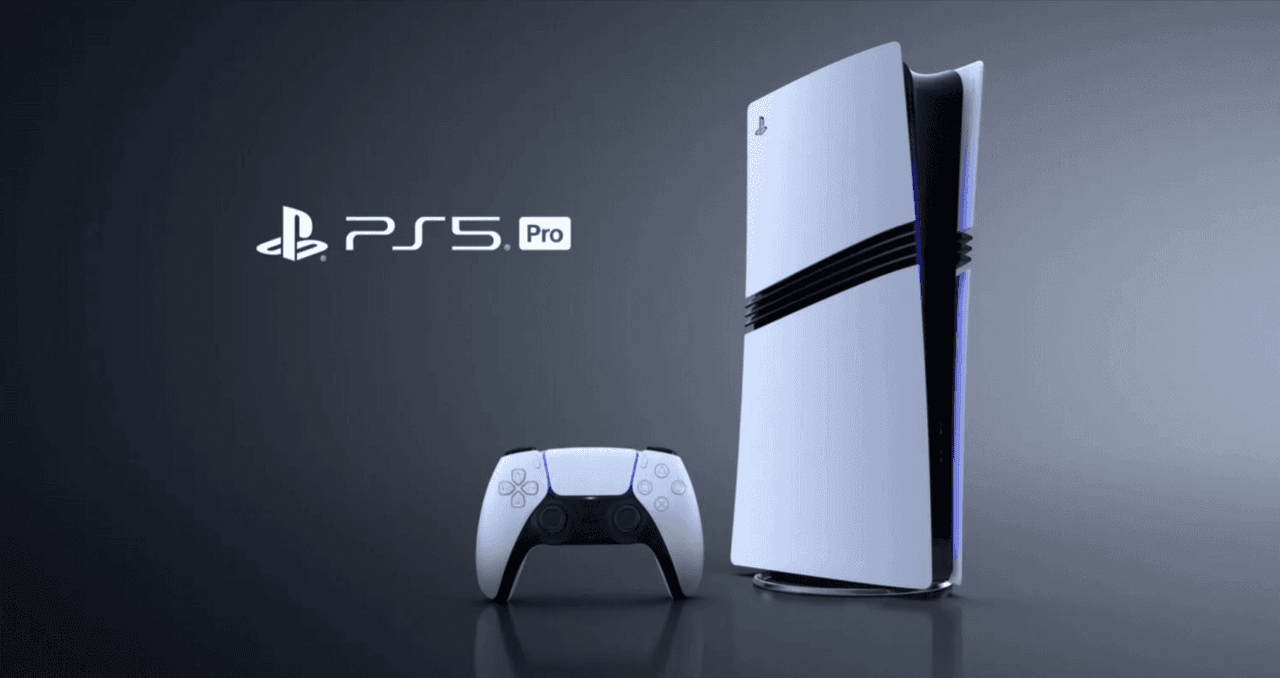
Sony has confirmed that AI frame generation is coming to future PlayStation platforms, marking a significant step in console graphics evolution. Mark Cerny, the lead architect of the PlayStation 5 and PS5 Pro, revealed to Digital Foundry that ML-based frame generation technology will arrive "at some point on PlayStation platforms"
1
. This technique allows the console to use AI to imagine new frames between the ones it's actually rendering, which can enhance visual smoothness and create smoother perceived image quality while typically introducing some amount of lag1
.The announcement comes as Sony simultaneously rolls out an upgraded version of its PlayStation Spectral Super Resolution technology to 14 more games, with the system software update beginning on March 17
2
. The timing suggests Sony is aggressively pushing AI-driven rendering techniques across its ecosystem, though it remains unclear whether frame generation will debut on the PS5 Pro or wait for the PlayStation 6.
Source: TweakTown
AI frame generation represents a fundamental shift in how performance gains are achieved on gaming hardware. Instead of relying solely on raw GPU power, the technology uses machine learning to create entirely new frames between rendered ones, effectively increasing perceived frame rates without requiring the console to render every frame natively
4
. This approach is already widely used on PC through solutions like Nvidia DLSS and AMD FSR4
.For developers, this opens up new possibilities to push higher graphical fidelity while maintaining fluid performance. Players could experience games that appear to run at 60fps or even 120fps without the console bearing the full computational burden
5
. The PS5 already offers AMD FSR3 frame generation in some games, but FSR3 doesn't have machine learning support and instead interpolates between real frames rather than AI imagining what should be between them1
.While frame generation promises smoother visuals, experts note potential drawbacks. The technology can introduce input latency, meaning there could be a slight delay between player actions and on-screen responses
4
. Both Nvidia and AMD typically warn that frame generation isn't a solution for low frame rates, as you need a relatively stable framerate to begin with for the technique to work effectively1
.Cerny indicated that no additional releases are planned for this year, suggesting the feature may not arrive until 2027 or later
1
. However, if the PlayStation 6 faces delays, Sony might attempt to extract more performance from the existing PS5 Pro in the meantime1
.Related Stories
Meanwhile, Sony's upgraded AI upscaling technology is already delivering tangible improvements. The new version of PSSR delivers enhanced image stability, improved clarity in fine details, and more consistent performance across supported titles
2
. Games receiving the update include Alan Wake 2, Control, Dragon Age: The Veilguard, Dragon's Dogma 2, Final Fantasy VII Rebirth, Monster Hunter Wilds, Nioh 3, Rise of the Ronin, Senua's Saga: Hellblade II, and Silent Hill 22
.
Source: IGN
Additional games including Crimson Desert, launching on March 19, Assassin's Creed Shadows, and Cyberpunk 2077 will receive patches in the coming weeks
2
. Digital Foundry tested an exclusive look at four upgraded titles and found they deliver on Sony's promises, noting that with the launch version of PSSR, image quality varied per title and could sometimes look worse than the original base PS5 game, but "that is no longer the case"2
.

Source: TechRadar
Developers have praised the improvements. Remedy Entertainment's graphics technical director Tatu Aalto noted that the upgraded PSSR improves image upscaling quality and stability, allowing efficient stochastic sampling without sacrificing image stability
3
. Final Fantasy 7 Rebirth director Naoki Hamaguchi stated that compared to the original PSSR, fine details such as characters' hair are naturally restored with less flickering and afterimage feeling3
.Sony confirmed that "moving forward, most new PS5 Pro titles will launch with support for this enhanced PSSR, ensuring players continue to see improvements in improve image quality and performance"
3
. Sony's collaboration with AMD on projects like "Project Amethyst" suggests that AI-driven rendering techniques will play a central role in future PlayStation systems, with frame generation potentially becoming a standard feature across the ecosystem5
.Summarized by
Navi
[4]
23 Mar 2026•Technology
11 Mar 2025•Technology

19 Dec 2024•Technology

1
Policy and Regulation

2
Policy and Regulation

3
Technology