Standard Chartered plans to cut 7,800 jobs by 2030 as AI automation reshapes banking workforce


16 Sources
[1]
Standard Chartered plans to cut 7,000 jobs in AI push -- lender wants to replace 'lower-value human capital' and focus on automation
British multinational bank Standard Chartered just announced that it will cut 15% of corporate roles through 2030 and replace 'lower-value human capital' with AI. According to a Reuters estimate, this accounts for about 7,000 positions across the bank's 52,000 employees executing corporate
[2]
StanChart CEO apologises for 'upset caused' by AI comments
LONDON, May 22 (Reuters) - Standard Chartered (STAN.L), opens new tab CEO Bill Winters apologised for the upset caused to staff by his remarks about artificial intelligence replacing "lower value" human workers, but stopped short of retracting the comments on Friday. Bank bosses in recent weeks
[3]
Bank boss sorry after describing workers as 'lower value human capital'
The boss of Standard Chartered has apologised after describing employees whose jobs are vulnerable to being replaced by Artificial Intelligence (AI) as "lower value human capital". Discussing how automation was likely to lead to thousands of job cuts at the bank at a recent conference, Bill
[4]
Standard Chartered will cut 7,800 back-office jobs to 'the machines' by 2030
Bill Winters told investors in Hong Kong that the bank's HR, risk and compliance functions will shrink by more than 15% over five years, with the headcount efficiency aimed at lifting income-per-employee 20% by 2028. Standard Chartered will cut more than 15% of its back-office roles by 2030, chief
[5]
Don't fight AI, HSBC CEO tells staff as banks begin job cuts
LONDON/HONG KONG, May 20 (Reuters) - HSBC appealed to staff not to fight AI on Wednesday, saying it would destroy jobs while creating new ones, as banking rival Standard Chartered sought to calm workers over comments that the technology would replace "lower-value human capital". The predictions
[6]
Standard Chartered to cut thousands of roles as AI use increases
Banking giant Standard Chartered has become the latest major company to announce job cuts as it increases its adoption of artificial intelligence (AI). The firm, which has its headquarters in the UK, said it will cut more than 15%, or around 7,800, back-office roles by 2030. The BBC understands
[7]

Standard Chartered boss apologises for 'lower-value human capital' comments amid job cuts
Bill Winters faced backlash over remarks about some of near 80,000 staff set to lose roles to AI The chief executive of Standard Chartered has apologised for referring to some of the almost 8,000 staff that are set to lose their jobs to artificial intelligence as "lower-value human capital". Bill
[8]
HSBC CEO says AI will destroy and create new jobs, urges staff to embrace change
HONG KONG, May 20 (Reuters) - HSBC (HSBA.L), opens new tab, Chief Executive Georges Elhedery said on Wednesday AI would destroy and create certain jobs in the financial industry, and the bank was retraining its workforce to meet the challenge. Elhedery told an HSBC investor day event that staff
[9]

StanChart CEO apologises for 'upset caused' by AI comments
Standard Chartered CEO Bill Winters has apologized for comments about artificial intelligence replacing workers. He stated that the bank is investing in AI technology. This move is expected to lead to job cuts. Winters clarified his remarks, emphasizing the bank's commitment to its employees.
[10]
StanChart CEO seeks to reassure staff over AI-linked job cuts
HONG KONG: Standard Chartered CEO Bill Winters sought to assuage staff concerns on Wednesday, a day after saying that the bank will cut thousands of jobs over the next four years as it moves to replace "lower-value human capital" with technology. "Many of you will have seen media coverage
[11]

Standard Chartered Cutting 8,000 Jobs as AI Focus Accelerates | PYMNTS.com
The global bank announced a growth plan Tuesday (May 19) that included plans for a "reduction in corporate functions roles" of more than 15%. Standard Chartered's most recent annual report showed it employing a little more than 52,000 people in support services, putting the cuts at around 8,000
[12]

Standard Chartered to Cut Over 7,000 Jobs by 2030 as AI Drives Efficiency
Standard Chartered Job Reductions and Corporate Function Cuts The bank will reduce 15% of its corporate function workforce, translating to about 7,800 positions. These roles include human resources, corporate affairs, and supply chain management. nearly 82,000 staff globally, with about 52,000 in
[13]

Standard Chartered to cut 15% of support staff by 2030 amid growing AI use By Investing.com
Investing.com -- Standard Chartered Plc plans to cut more than 15% of its support staff by 2030 through increased use of artificial intelligence to streamline operations, with CEO Bill Winters saying the bank is replacing "lower-value human capital" with technology. The bank unveiled the plan on
[14]

StanChart CEO seeks to reassure staff over 'lower value human capital' comment
HONG KONG, May 20 (Reuters) - Standard Chartered CEO Bill Winters sought to assuage staff concerns on Wednesday, a day after saying that the bank will cut thousands of jobs over the next four years as it moves to replace "lower-value human capital" with technology. "Many of you will have seen
[15]
StanChart to cut over 7,000 jobs, boost AI to replace 'lower-value human capital'
HONG KONG, May 19 (Reuters) - Standard Chartered will eliminate more than 7,000 jobs over the next four years as it seeks to replace "lower-value human capital" with technology, becoming one of the top names in finance to target headcount cuts using artificial intelligence. The
[16]
StanChart to cut more than 7,000 jobs as bank steps up AI adoption
HONG KONG, May 19 (Reuters) - Standard Chartered plans to cut more than 7,000 jobs over the next four years as it boosts adoption of artificial intelligence while targeting growth. The London-headquartered lender is one of the first major global banks to lay out official plans to cut thousands of
Share
Copy Link
British multinational bank Standard Chartered announced plans to eliminate 7,800 back-office roles by 2030 through AI automation, representing a 15% reduction in corporate functions. CEO Bill Winters sparked controversy by describing affected positions as 'lower-value human capital,' later apologizing for the upset caused. The move signals a broader shift across the banking sector as major lenders increasingly link AI deployment to specific workforce reductions.
Standard Chartered Announces Major Workforce Reduction Through AI Automation
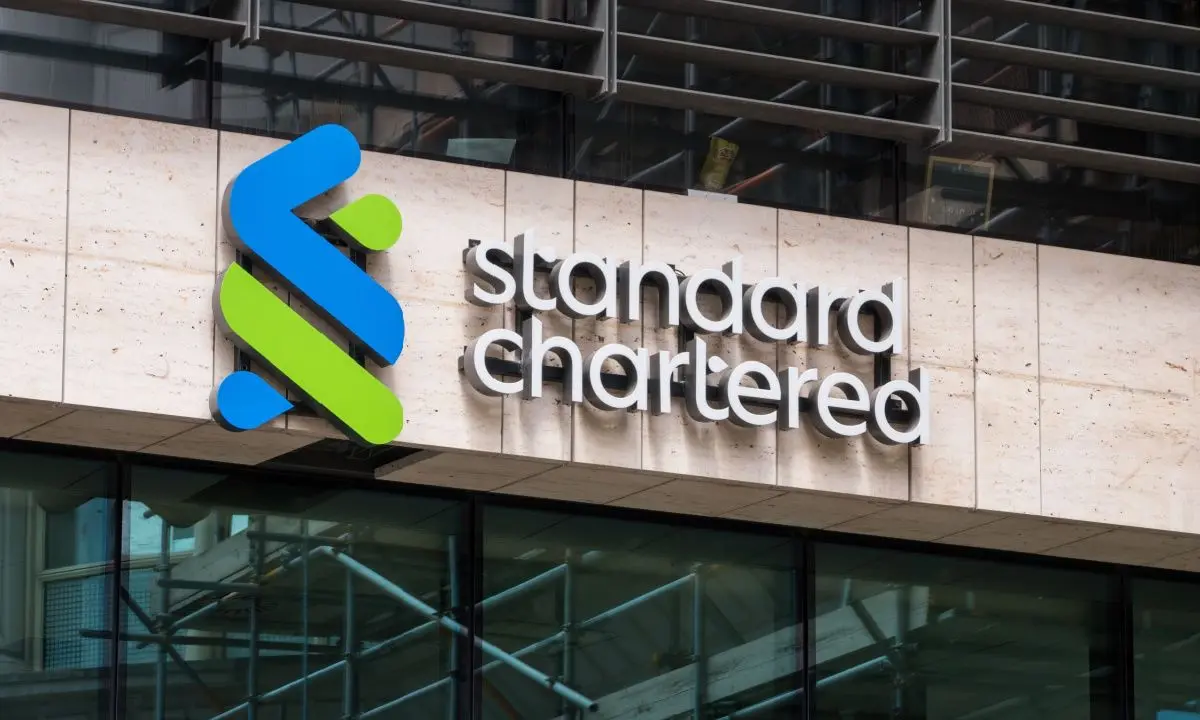
British multinational bank Standard Chartered has announced plans to cut approximately 7,800 jobs by 2030, representing a 15% reduction in corporate function roles across its global workforce of 82,000 employees
1
. The AI job cuts will primarily target back-office positions in human resources, risk and compliance functions located in Chennai, India; Bengaluru, India; Kuala Lumpur, Malaysia; and Warsaw, Poland4
. CEO Bill Winters framed the decision as part of the bank's strategy to increase its return on tangible equity to 18% by 2030, a 6% increase from 2025 levels1
.
Source: PYMNTS
Controversial Remarks Spark Backlash and Apology
The announcement drew immediate criticism after Winters described the initiative as replacing "lower-value human capital" with financial and investment capital during an investor conference in Hong Kong
2
. The phrasing prompted Hong Kong and Singapore regulators to seek clarification from the bank2
. Following the backlash, Winters issued two separate statements on LinkedIn apologizing for the upset caused to colleagues, though he stopped short of retracting his comments3
. In his clarification, he emphasized that Standard Chartered is "giving every opportunity" to at-risk employees who want to learn new skills and that the bank has a strong track record in supporting internal transitions3
.
Source: Market Screener
AI in Banking Sector Drives Workforce Reductions
Standard Chartered is part of a growing trend of financial institutions publicly linking AI automation to specific headcount targets. The bank aims to raise income per employee by approximately 20% by 2028 through these efficiency measures
4
. HSBC CEO Georges Elhedery told staff that "generative AI will destroy certain jobs and will create new jobs," urging employees not to resist the change . Major institutions including JPMorgan, Citi, HSBC, and Wells Fargo have all signaled that AI-driven job displacement is now built into their multi-year operating targets4
. Morgan Stanley analysts found that companies in banking, technology, and professional services had shed one in 20 staff in the past year as a result of AI replacing human workers .Related Stories

AI Impact on Employment Raises Broader Concerns
The scale of back-office job cuts through AI automation has intensified debates about the societal implications of the technology. An MIT study found that AI can replace 11.7% of all U.S. workers, impacting every industry in every state
1
. The tech industry alone cut nearly 80,000 positions during the first quarter of 2026, with almost half reportedly made redundant because of AI1
. However, competing narratives exist about AI's employment effects. Reports from Europe suggest that companies properly deploying AI tools and investing heavily in them are more likely to hire new people as productivity gains drive expansion1
. Microsoft's "Transformation Paradox" study found that only 20% of companies deploying AI are doing so effectively1
.
Source: Analytics Insight
What Lies Ahead for Banking Workforce
Standard Chartered's specific commitment to reduce corporate functions by 15% over five years represents roughly a 3% annual run-off rate, which the bank says will be partly absorbed through natural attrition and partly through redeployment into other roles
4
. Winters emphasized that staff who want to reskill will be given opportunities to reposition themselves within the organization1
. Academics warn that organizations should be cautious about laying off too many staff, as the point may come sooner than expected where AI's productivity potential is fully realized and those workers are needed . Research from the Institute for Artificial Intelligence at King's College London found that six in 10 people in Britain think AI will eliminate more jobs than it creates, with one in five believing it will create civil unrest . As regulators and unions increase scrutiny of how major institutions manage AI-driven workforce transitions, the banking sector faces mounting pressure to balance operational efficiency with responsible employment practices.References
Summarized by

Navi
[1]
Related Stories
NatWest CEO warns AI will take some banking jobs as automation reshapes financial sector
20 Jun 2026•Business and Economy

Banks prepare mass workforce reductions as AI adoption reshapes finance industry careers
08 Jun 2026•Business and Economy

Jamie Dimon signals JPMorgan will hire more AI specialists and fewer traditional bankers
21 May 2026•Business and Economy

Recent Highlights
1
Microsoft and Nvidia Launch Surface Laptop Ultra: A $2,599 AI-Ready PC With RTX Spark Chip
Technology

2
OpenAI Releases 722 AI-Generated Math Papers on GitHub, Igniting Fury Among Mathematicians
Science and Research

3
Trump Consulted Grok AI Before Ordering Venezuela Invasion and Capture of Nicolás Maduro
Policy and Regulation

Recent Highlights
Today's Top Stories









Don’t drown in AI news. We cut through the noise - filtering, ranking and summarizing the most important AI news, breakthroughs and research daily. Follow topics that matter to you and stay ahead.


