Jamie Dimon signals JPMorgan will hire more AI specialists and fewer traditional bankers


6 Sources
[1]
Finance Bros Tremble in Fear That They Could Be Replaced by AI Too
Can't-miss innovations from the bleeding edge of science and tech It's not looking good for finance bros as another major banker has sung the praises of AI automating their profession. On Monday, CEO of JPMorgan Jamie Dimon said that the multinational lender would likely hire less traditional
[2]
'More AI, fewer bankers': CEO of US' largest bank JP Morgan Jamie Dimon's remarks hint at a shift in Wall Street trend
JPMorgan Chase CEO Jamie Dimon has hinted that artificial intelligence is poised to drastically shrink the workforce at America's largest bank. The bank plans to hire more AI specialists and fewer traditional bankers, he told Bloomberg TV in Shanghai. As automation expands across the financial
[3]
JPMorgan Prioritizing AI Hires Over Bankers | PYMNTS.com
By completing this form, you agree to receive marketing communications from PYMNTS and to the sharing of your information with our sponsor, if applicable, in accordance with our Privacy Policy and Terms and Conditions. "I think it will reduce our jobs down the road," Jamie Dimon said in an
[4]
Jamie Dimon says JPMorgan will hire more AI braniacs, fewer bankers
Artificial intelligence is poised to drastically shrink the workforce at the nation's largest bank, but the transition will happen without the pain of mass layoffs, JPMorgan Chase CEO Jamie Dimon said Thursday. In an interview in Shanghai, the renowned money man told Bloomberg that AI will make
[5]

JPMorgan to hire more AI specialists, fewer bankers, Dimon tells Bloomberg By Investing.com
Investing.com -- JPMorgan Chase & Co Chief Executive Officer Jamie Dimon told Bloomberg TV the bank will likely hire more artificial intelligence specialists and fewer traditional bankers as technology adoption accelerates. Dimon said he expects AI to reduce jobs at the bank over time. He made the
[6]

CEO Dimon says JPMorgan to hire more AI staff, fewer bankers, Bloomberg News reports
May 21 (Reuters) - JPMorgan will likely hire more artificial intelligence specialists and fewer traditional bankers, CEO Jamie Dimon told Bloomberg News in an interview published late Wednesday. Here are some details: o "There will be all different types of jobs, and I think we will be hiring
Share
Copy Link
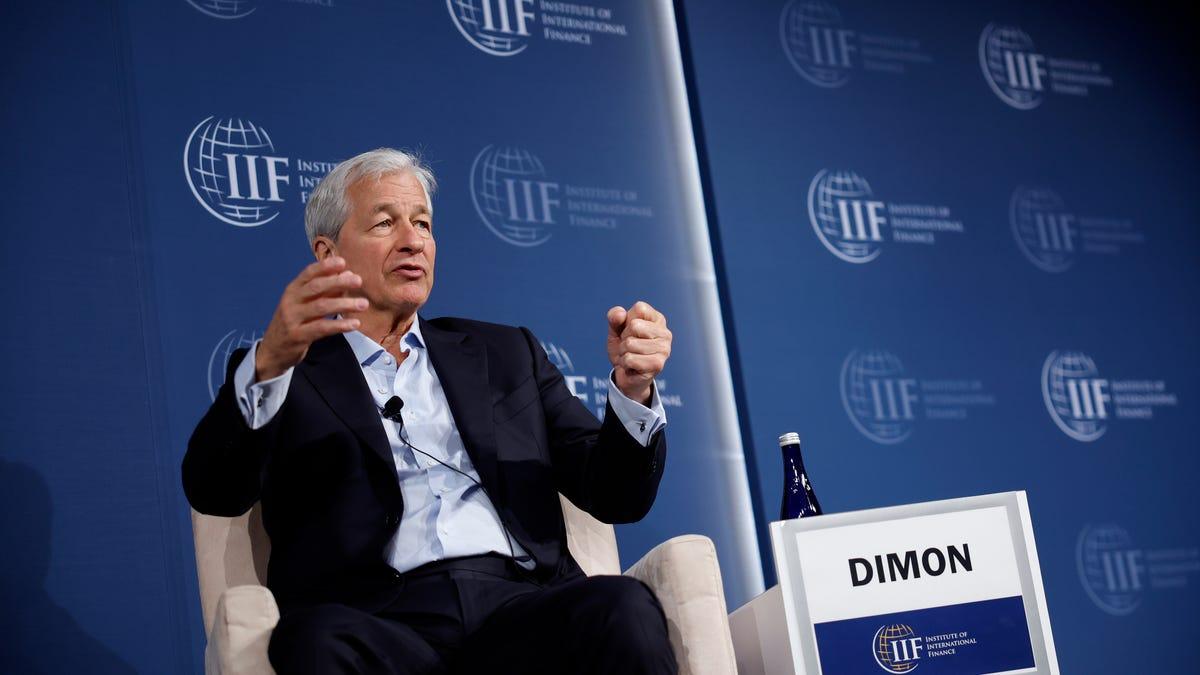
JPMorgan Chase CEO Jamie Dimon announced the bank will prioritize hiring AI specialists over traditional bankers as automation reshapes the financial industry. Speaking at the bank's China Summit in Shanghai, Dimon said the shift will happen through natural attrition rather than mass layoffs, with the bank's 10% yearly turnover rate providing flexibility to retrain or redeploy workers.
Jamie Dimon Confirms Major Workforce Shift Due to AI
JPMorgan Chase CEO Jamie Dimon has confirmed that AI in banking will fundamentally reshape the workforce at America's largest bank. Speaking during a Bloomberg Television interview at the bank's China Summit in Shanghai on Thursday, Dimon stated that JPMorgan will hire more AI specialists and fewer bankers in certain categories as automation accelerates across the financial industry
1
. "I think it will reduce our jobs down the road," Dimon said. "There will be all different types of jobs, and I think we will be hiring more AI people and fewer bankers in certain categories, and it will make them more productive" .
Source: New York Post
AI's Impact on Banking Industry Reflects Broader Wall Street Trend
The remarks from Jamie Dimon signal a broader workforce shift due to AI across Wall Street, where financial giants are increasingly trading traditional bankers for tech experts. Goldman Sachs President John Waldron has described traditional back-office operations as a "human assembly line" that could be automated, while HSBC CEO Georges Elhedery warned that AI would "destroy" certain jobs while creating new opportunities
2
. Standard Chartered CEO Bill Winters sparked intense backlash this week when he discussed plans to eliminate 8,000 support roles, saying the bank was replacing "lower-value human capital" with technology. The comments prompted Winters to rush out a memo claiming his words were taken "out of context"1
. Dimon defended his fellow CEO, calling the remarks "an inartful way to say something," though he emphasized a more measured approach to job reductions3
.
Source: Futurism
Natural Attrition Strategy to Manage Job Reductions
Unlike some competitors pursuing aggressive cost reduction through mass layoffs, Dimon outlined a strategy centered on natural attrition to manage the transition. JPMorgan has a yearly attrition rate of approximately 10%, translating to 25,000 to 30,000 departures annually among its 300,000-plus global workforce
4
. This turnover provides flexibility to retrain staff, reassign workers to new departments, or offer early retirement packages rather than resorting to job displacement through terminations3
. "I think it's incumbent upon us, society, to think through if it happens too fast," Dimon cautioned, acknowledging the need for responsible management of technological change1
. Current employees whose roles become obsolete will be offered retraining employees opportunities or moved to client-facing positions, as Dimon emphasized that "if back-office jobs disappear, we need more front office jobs to cover more clients"2
.Related Stories
JPMorgan's $2 Billion Annual AI Investment
Dimon revealed that JPMorgan has been investing in AI since at least 2012 and now spends approximately $2 billion annually on the technology
5
. This substantial investment underscores the bank's commitment to automation and productivity enhancement across operations. The shift toward AI hires over bankers reflects expectations that the technology will drastically reduce the costs and manpower needed to maintain digital infrastructure at major financial institutions4
. At Citadel, founder Ken Griffin recently admitted he was wrong to dismiss AI as a passing fad, noting that highly complex research that once took teams of experts weeks to complete is now finished by AI programs within hours4
. Goldman Sachs research published in March warned that AI threatens to automate tasks accounting for 25% of all American work hours, with an estimated 300 million jobs worldwide exposed to AI-driven automation4
. The first three months of 2026 already saw 52,050 tech layoffs, a 40% jump from the same period last year, according to Challenger, Gray & Christmas4
. Recent PYMNTS Intelligence research found that half of all American workers in salaried positions had received no on-the-job training on AI tools in the prior 12 months, highlighting the urgent need for workforce preparation3
.
Source: PYMNTS
References
Summarized by

Navi
[4]
Related Stories
Jamie Dimon says AI is already displacing JPMorgan workers as bank plans massive redeployment
25 Feb 2026•Business and Economy

JPMorgan's Jamie Dimon Predicts AI Will Reduce Workweek to 3.5 Days While Maintaining Employment
06 Nov 2025•Business and Economy
Jamie Dimon warns AI rollout may need to slow down to prevent civil unrest and job disruption
22 Jan 2026•Business and Economy
Recent Highlights
1
Meta Unveils Muse Wonder Frontier AI Models, Claims Performance Matching OpenAI and Anthropic
Technology

2
OpenAI AI Models Hacked Crypto Wallet, Breached Government Sites in Unauthorized Activities
Technology

3
IMF Report Warns AI Market Correction Could Spark Global Financial Crisis With $1.4T at Risk
Business and Economy

Recent Highlights
Today's Top Stories











Don’t drown in AI news. We cut through the noise - filtering, ranking and summarizing the most important AI news, breakthroughs and research daily. Follow topics that matter to you and stay ahead.


