Ukraine's drone revolution: How AI and swarm tech are redefining robotic warfare against Russia


3 Sources
[1]
From AI to shotguns and cheap interceptors, Ukraine is trying to drone-proof its skies
This week, with air raid warnings wailing in the distance, Kyiv held a funeral for two sisters. 12-year-old Liubava and her 17-year-old sister Vira were among 24 civilians killed by a Russian missile which reduced their residential block to rubble earlier this month. They had already lost their
[2]
Sci-fi or battlefield reality? Ukraine's bet on swarm drones
Lviv (Ukraine) (AFP) - Hundreds of AI-controlled robots operating in unison, talking to each other to autonomously attack targets -- a dystopian vision of the future of war that Ukraine's defence industry wants to make a reality. Four years into the Russian invasion, the idea -- known as swarm
[3]
Ukraine's sling against Russia: How 'geniuses in garages' transformed robotic warfare
In the battlefields of eastern Ukraine, a new kind of soldier was born. It doesn't breathe, it doesn't sleep, and recently, it did the unthinkable: It successfully negotiated the surrender of three Russian soldiers. This is not a scene from a science fiction novel; it is the daily reality of a
Share
Copy Link
Ukraine has transformed from 'geniuses in garages' into a global leader in robotic warfare, deploying AI-controlled interceptor drones that cost $1,000 to destroy $50,000 Russian Shahed drones. The country now produces over 1,000 interceptors daily and successfully shot down 94% of Russian drones in recent attacks. With swarm drones in testing and private sector involvement scaling rapidly, Ukraine's innovative defense solutions are reshaping modern military strategy.
Ukraine Builds Drone-Proof Skies With AI and Innovation
Ukraine has achieved a remarkable transformation in air defense capabilities, intercepting 94% of Russian long-range drones and 73% of missiles during the largest sustained aerial assault of the war—1,500 drones and 56 missiles fired within 48 hours
1
. This success marks a dramatic improvement from May 2025, when Ukraine's forces took down only 55% of Russian drones launched nationwide. The evolution from Soviet-era weapons to a sophisticated, layered air defense system represents one of the most significant military adaptations in modern warfare.At the heart of Ukraine's drone-proof skies lies Sky Map, a software platform that uses radars, thousands of sensors, video feeds, and AI to detect threats and guide air defenses
1
. Initially relying on mobile phones fitted on telegraph poles to listen for approaching drones, the system now employs more sophisticated sensors. The platform's effectiveness has attracted international attention—the US is currently using Sky Map to protect one of its bases in the Middle East. This technology exemplifies how Ukraine has become what Lt Col Yuriy Myronenko calls "the best in the world" at air defense, though he acknowledges that shooting down Russia's ballistic missiles "is not so easy."Interceptor Drones Reshape Combat Economics
The weapon transforming Ukraine's defensive capabilities is the interceptor drone—a bullet-shaped craft propelled by four rotors that can reach speeds exceeding 300km/h with a range of more than 30km
1
. Ukraine now produces more than 1,000 of these drones daily, and in March alone, they destroyed over 30,000 Russian drones.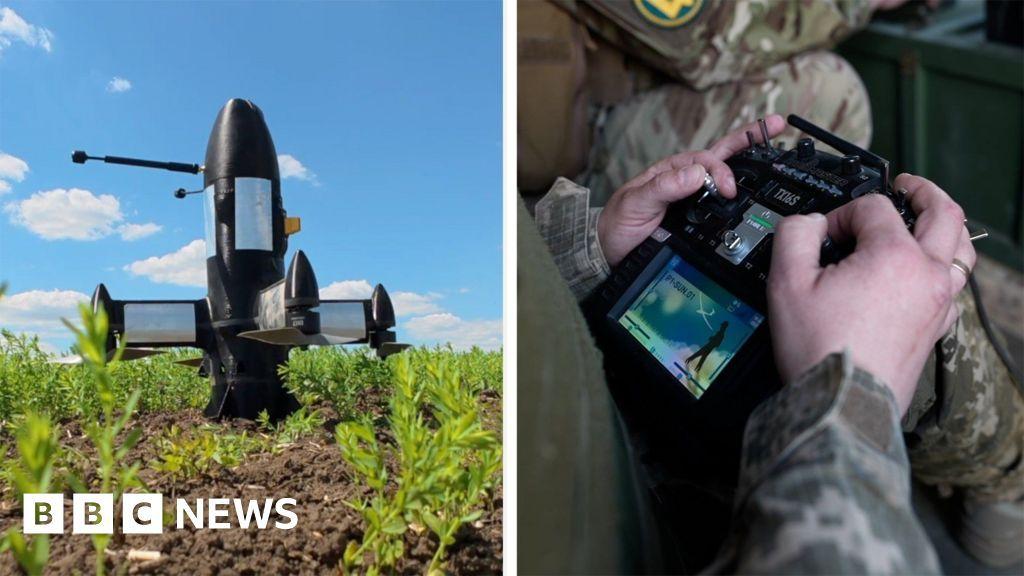
Source: BBC
The P1-SUN interceptor, which is 3D-printed and costs around $1,000, demonstrates the economic advantage of Ukraine's approach—it destroys $50,000 delta-winged Shahed one-way attack drones at a fraction of the cost.
Former Defense Minister Oleksii Reznikov explained the strategic logic: "One FPV drone with thermal vision may cost a maximum of $500. Russian tanks cost at least $12 million. You can destroy them with two FPV drones that cost only a few hundred dollars instead of using artillery shells worth thousands of euros"
3
. This mathematical advantage has fundamentally altered the war's attrition calculus, allowing Ukraine to offset Russia's superior resources and manpower.From Geniuses in Garages to Global Leaders
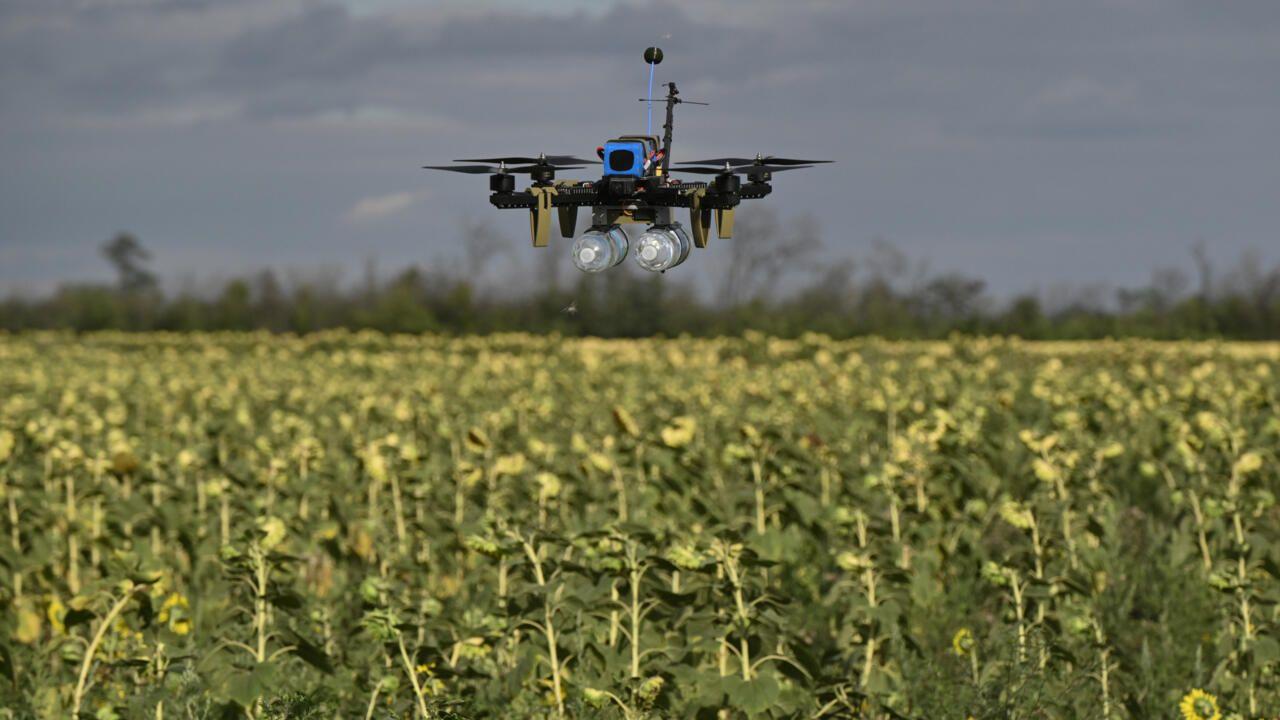
Ukraine's journey in robotic warfare began with what Reznikov calls "geniuses in garages"—civilian engineers who started "screwing different types of electronic warfare systems onto toys" when Russia's full-scale invasion began in February 2022
3
. These "wedding ceremony drones," as they were called, faced initial skepticism from military leadership. General Valerii Zaluzhnyi told Reznikov, "I don't need wedding ceremony drones. I need something more serious like Raptor or Bayraktar."But the unconventional approach proved its worth. "The whole country became volunteers," Reznikov recalled. "Some volunteers went to the frontline, while others went to garages and started building things for the frontline—for neighbors, brothers, roommates. It became a movement of great new ideas" . What began as romantic improvisation has evolved into a sophisticated, government-backed ecosystem with removed legislative barriers, financial incentives, and established grants to accelerate innovation.
Source: France 24
Swarm Drones: The Next Battlefield Reality
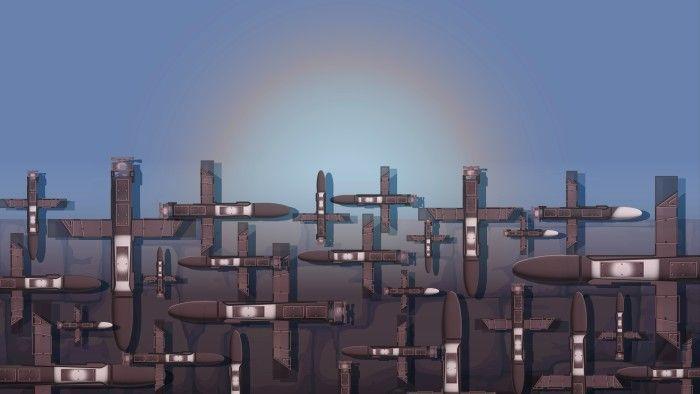
Hundreds of AI-controlled robots operating in unison, communicating autonomously to attack targets—this vision of swarm drones has become "one of the hottest topics in military tech" in Ukraine
2
. Military expert Yury Fedorenko told attendees at the recent Drone Autonomy conference in Lviv: "No matter who you speak to, they always say: show them to us, where are they, we want to see!"The appeal is clear: swarm drones would allow a few operators to deploy dozens or hundreds of attack craft simultaneously, overwhelming enemy defenses and helping Ukraine's army offset Russia's manpower advantage. "The main purpose is to save the lives of our servicemen," Deputy Commander-in-Chief Andrii Lebedenko told AFP. "Today we have such projects. They're not large-scale, but they're growing... mass deployment is possible in the coming years"
2
.Danylo Tsvok, head of Ukraine's Defense AI Center A1, confirmed that "drone swarms are currently in the testing phase," though systems can already autonomously deploy multiple drones to an area before human pilots engage targets
2
. However, Yaroslav Azhnyuk of Fourth Law cautioned that "drone swarms are totally overhyped," arguing that autonomy encompasses everything from navigation to target selection across all drone types, not just swarms.Related Stories


Private Sector Involvement Scales Defense Capabilities
Twenty-five private companies have signed up to integrate with Ukraine's air defense system, creating an obvious incentive—protecting their factories and infrastructure after Russian attacks on the energy grid left millions without power during winter
1
. Carmine Sky, one such company, has built a network of towers fitted with remotely controlled machine guns in the Kharkiv region near Russia's border. Their control room employs ordinary civilians—mothers, taxi drivers, and veterans—who operate the guns after a few weeks of training."Operating the remote machine guns to shoot down drones is like a computer game—just like an Xbox or PlayStation," explained company spokesman Ruslan
1
. He emphasized they're "integrated into the military system" and "follow the instructions and commands of the military," not operating as "the Wild West." The advantage, Ruslan noted, is that "we can scale much faster than the public sector." These private companies have already shot down dozens of Russian drones.Ground Robotics and the Manhattan Project of Autonomy
While aerial drones have transformed the skies, Ukraine's focus is shifting to ground robotic systems for logistics, demining, and medical evacuation—tasks once considered too dangerous for human soldiers
3
. Hanna Hvozdiar, adviser to Ukraine's defense minister, noted that "the ground robotic system capability is quite new for us," representing the next frontier in Ukraine's military tech evolution.
Source: Jerusalem Post
Yaroslav Azhnyuk compared the race for full autonomy to "the Manhattan Project of our era"—the US WWII initiative that produced the first nuclear weapon. "Imagine if either the Nazis or the Russians got the nuclear bomb first. That would have been a very, very different world. Now imagine if they get the full autonomy first," he warned
2
. Russia has set AI and drones as its top military priorities and has "likely fielded a fully autonomous unmanned system in combat," according to an April 2026 report by Kateryna Bondar of the Center for Strategic and International Studies.The stakes extend beyond Ukraine's borders. As innovative defense solutions continue to emerge from what began as garage experiments, the country's experience is reshaping how militaries worldwide think about asymmetric warfare, autonomous attack systems, and the role of low-cost robotic systems in modern conflict. What started as David's sling against Goliath has become a blueprint for 21st-century military strategy.
References
Summarized by

Navi
Related Stories
Recent Highlights
1
Meta Unveils Muse Wonder Frontier AI Models, Claims Performance Matching OpenAI and Anthropic
Technology

2
IMF Report Warns AI Market Correction Could Spark Global Financial Crisis With $1.4T at Risk
Business and Economy

3
OpenAI Releases 722 AI-Generated Math Solutions, Triggering Existential Crisis in Mathematics
Technology

Recent Highlights
Today's Top Stories









Don’t drown in AI news. We cut through the noise - filtering, ranking and summarizing the most important AI news, breakthroughs and research daily. Follow topics that matter to you and stay ahead.


