Visa and OpenAI partner to enable AI payments through ChatGPT at 175 million merchant locations


19 Sources
[1]
Visa Wants to Let You Give ChatGPT Your Credit Card. What Could Go Wrong?
Dashia is the consumer insights editor for CNET. She specializes in data-driven analysis and news at the intersection of tech, personal finance and consumer sentiment. Dashia investigates economic shifts and everyday challenges to help readers make well-informed decisions, and she covers a range of
[2]
Visa is handling AI-prompted transactions for OpenAI - but can you trust it?
Follow ZDNET: Add us as a preferred source on Google. ZDNET's key takeaways * Visa will secure agentic payments in OpenAI systems. * AI-driven payments are a still-developing security landscape. * Consumers and businesses alike face potential risks. Agentic commerce is a rapidly growing
[3]
Visa plugs its payment network into ChatGPT, letting AI agents shop and pay for users
SAN FRANCISCO (AP) -- Payments giant Visa said Wednesday that it has embedded its payment network inside of ChatGPT, empowering the chatbot to independently shop and complete transactions on behalf of its user. It means AI agents can not only recommend products but complete the purchase on the
[4]
OpenAI plugs Visa into ChatGPT for AI-agent payments
It's OpenAI's second run at commerce after Instant Checkout flopped, this time outsourcing the hard part, payments and fraud, to the world's biggest card network. There's no launch date, price, or product yet. OpenAI is wiring a payment network into ChatGPT. Under an expanded partnership announced
[5]

Visa is connecting with ChatGPT to let AI agents automatically make purchases
Is it too time-consuming for you to search for and buy products you need on the internet? ChatGPT and Visa have a solution. OpenAI and Visa, the world's largest non-Chinese payment network, have worked to integrate Visa into ChatGPT, per the Associated Press. Thanks to this integration, users can
[6]

OpenAI signs major Visa deal -- so AI agents will soon be able to make payments and purchases for you
* Visa-OpenAI partnership brings agentic payments to ChatGPT, Atlas * Tokenized credentials and safeguards keep your money safe * MasterCard announced similar tech last year Visa has announced a partnership with OpenAI to bring secure payments into AI-powered and agentic ecommerce experiences,
[7]

Visa lets agents pay through OpenAI
Why it matters: The deal cements foundational infrastructure that could bring agentic commerce closer to broader adoption. Driving the news: The companies are integrating Visa's payments tools into OpenAI's agent system so AI agents can eventually complete transactions without users manually
[8]

Visa Officially Allowing AI Agents to Go Ham With Your Credit Card
Can't-miss innovations from the bleeding edge of science and tech Throw caution to the wind and forget your retirement plans. The future is now, baby, and we're letting AI agents go ham with our credit cards. On Wednesday, the payment titan Visa announced that it's integrating its payment network
[9]

Visa thinks it's a great idea for AI agents to shop and pay for things without human approval | Fortune
It means AI agents can not only recommend products but complete the purchase on the user's behalf at potentially any merchant that accepts Visa. The payment network's previous attempts at this technological leap were confined to a single retailer or a small set of enrolled merchants. It is not
[10]

OpenAI teams up with Visa to enable secure payments through AI agents
ChatGPT could soon buy things on your behalf thanks to OpenAI's new Visa partnership Imagine telling ChatGPT to reorder your paper towels or find the best wireless headphones in your budget, and it just handles the purchase without you lifting a finger. That is exactly what OpenAI and Visa are now
[11]

ChatGPT can now buy things for you after deal with payments giant Visa
Visa has embedded its payment network inside ChatGPT, letting the chatbot independently shop and complete purchases on your behalf. Payments giant Visa has embedded its network inside ChatGPT, allowing the chatbot to shop and complete transactions independently on behalf of users in a move that
[12]

Visa partners with OpenAI to let AI agents make payments for users
Visa partners with OpenAI to let AI agents make payments for users Visa Inc. has struck a deal with OpenAI Group PBC to let artificial intelligence agents make payments for users, bringing one of the world's largest payment networks into ChatGPT's push toward agentic commerce. The companies
[13]

Visa plugs its payment network into ChatGPT, letting AI agents shop and pay for users
SAN FRANCISCO (AP) -- Betting that people will soon grow more comfortable having artificial intelligence agents shop for groceries, plane tickets or diapers on their behalf, payments giant Visa said Wednesday that it has embedded its payment network inside of ChatGPT, empowering the chatbot to
[14]

What happens when ChatGPT can shop for you? Inside Visa and OpenAI's AI commerce vision
Visa's partnership with OpenAI could mark the beginning of a new phase in digital commerce, where AI assistants move beyond product recommendations to actively participate in transactions. As intelligent agents become more involved in purchasing decisions, businesses may need to rethink how
[15]
Visa plugs its payment network into ChatGPT letting AI agents shop, pay for users
It is not OpenAI's first attempt at e-commerce. The company late last year announced Instant Checkout, which allowed ChatGPT to scour the internet for a specific item like a digital personal shopper. But the process was prone to errors and was not widely adopted by merchants due to the fee that
[16]

Visa Launches AI and Stablecoin Tools to Power Agentic Commerce | PYMNTS.com
The companies' collaboration will enable secure payments across OpenAI, with Visa providing its global network, credentialing capabilities and security infrastructure to support agentic commerce for consumers and businesses, Visa said in a Wednesday (June 10) press release. Visa and OpenAI will
[17]
Visa and OpenAI Unlock Agentic Commerce | PYMNTS.com
The companies' collaboration will enable secure payments across OpenAI, with Visa providing its global network, credentialing capabilities and security infrastructure to support agentic commerce for consumers and businesses, Visa said in a Wednesday (June 10) press release. Visa and OpenAI will
[18]

Visa and OpenAI Partner on AI Agent Payments
You can access the original blog from here. Visa and OpenAI have announced a partnership to allow AI agents to make payments and complete purchases on behalf of users, marking a step toward what the companies describe as "agentic commerce." The collaboration, unveiled at the Visa Payments Forum
[19]

Visa to Secure Payments for Shoppers on ChatGPT in OpenAI Partnership
Visa will provide secure payment services for shopping within ChatGPT in a new collaboration with artificial-intelligence company OpenAI. Shoppers who use AI bots powered by OpenAI to buy products will have their purchases secured by Visa's network, security infrastructure and credentialing
Share
Copy Link
Visa announced a partnership with OpenAI to embed its payment network into ChatGPT, allowing AI agents to independently shop and complete transactions on behalf of users. The integration uses tokenization and fraud monitoring to secure AI-driven transactions across Visa's network of over 175 million merchants. However, experts raise security concerns about autonomous AI shopping, and only 24% of US consumers say they'd trust AI to make purchases for them.
Visa Embeds Payment Network into ChatGPT for Autonomous Shopping
Visa and OpenAI announced a partnership at the Visa Payments Forum 2026 on Wednesday in San Francisco that fundamentally changes how AI agents making purchases could work
1
. The collaboration embeds the Visa payment network directly into ChatGPT, enabling the AI chatbot to independently shop and complete transactions on behalf of users at potentially any merchant that accepts Visa3
. Unlike previous attempts confined to single retailers or small merchant sets, this integration operates across Visa's network of more than 175 million merchant locations worldwide4
.
Source: PYMNTS
The partnership represents a significant expansion of agentic commerce, where AI agents can research, recommend, and complete purchases without constant human intervention. Jack Forestell, Visa's chief product and strategy officer, explained the use case: a customer could tell ChatGPT they're looking for wireless headphones under $150, and the chatbot would find a pair meeting those parameters and complete the purchase autonomously
3
. This marks OpenAI's second attempt at e-commerce after retiring Instant Checkout in March, which struggled with merchant adoption due to a 4% transaction fee3
.Security Infrastructure and Tokenization Protect AI-Driven Transactions
Visa plans to secure these AI payments through its Trusted Agent Protocol and multiple layers of protection built into its Intelligent Commerce platform
2
. The system uses tokenization, which replaces the standard 16-digit card number with a random string of numbers to safeguard payment information during online transactions1
. Real-time authorization and fraud monitoring operate alongside tokenized credentials to create multiple security checkpoints2
.According to Visa, consumers remain fully in control through clearly defined guardrails including spending limits, required approval thresholds, approved merchant categories, and permission layers that keep buyers in command even when an agent executes the work
1
2
. The company emphasized that AI agents can only initiate purchases within user-set parameters1
. OpenAI provides the technology allowing agents to interact, make decisions, and initiate purchases through ChatGPT, while Visa supplies the payment infrastructure for authorization and fraud monitoring needed to operate at scale3
.Security Concerns and User Trust Remain Major Obstacles
Despite these security measures, experts and consumers express significant reservations about autonomous AI shopping. A Bain & Company 2025 survey found that only 24% of US consumers would feel comfortable letting AI make a purchase for them
1
. Daniella Flores, an AI and machine learning technical writer and former CNET Money Expert Review Board member, warned that "the more parties that have your payment credentials, the more opportunity there is for data breaches and theft"1
.
Source: Axios
Geoff Cairns, principal analyst at Forrester, highlighted that "agentic payments introduce new risks that existing systems weren't designed for—shifting the challenge from authenticating users to governing whether agents act within intent and policy"
2
. The main concerns include unauthorized or mistaken transactions, liability ambiguity, and fraud that scales faster than traditional dispute processes can respond2
. Neither Visa nor OpenAI has disclosed who would be responsible if an AI agent makes a costly mistake, such as choosing the wrong product or shipping to an incorrect address1
.Related Stories

Competition Intensifies as Payment Giants Race for AI Commerce
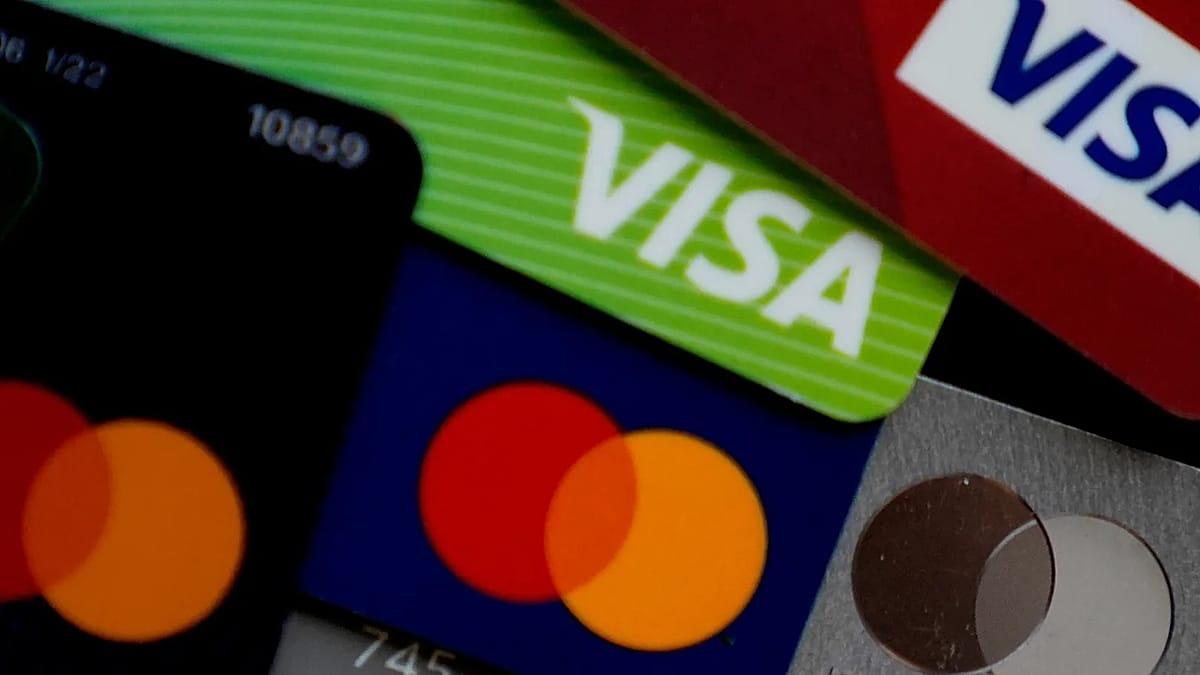
The Visa and OpenAI partnership enters a crowded field where major financial and technology players are competing to control the emerging space of secure AI-driven transactions. Mastercard announced Agent Pay for Machines on the same day, aiming to scale and speed up transactions between agents
2
3
. Google launched Universal Cart at I/O in May, while companies like Apple and Samsung have highlighted AI shopping in their pitches about agentic AI1
2
.
Source: Euronews
Visa already runs its Trusted Agent Protocol with Microsoft, Stripe, Shopify, and Worldpay, positioning itself as a leader in payment infrastructure for AI commerce
4
. However, significant details remain undisclosed. Visa and OpenAI have not revealed launch dates, pricing structures, or the fees merchants and customers will pay3
4
. Visa's product page indicates the system is "currently in the process of deployment" and the final version "may not contain all of the features described"4
. As Forestell framed the end state, users might eventually approve so many agent purchases that the agent asks, "Do you want me to just not check?" Whether shoppers will say yes remains the fundamental question4
.References
Summarized by

Navi
[4]
Related Stories
Visa and Mastercard Unveil AI-Powered Shopping, Revolutionizing E-Commerce
30 Apr 2025•Technology
Visa and AWS launch partnership to build infrastructure for agentic commerce with secure payments
01 Dec 2025•Technology

AI Agents Transform Ecommerce as Agentic Commerce Reshapes How We Shop Online
16 Jul 2026•Technology

Recent Highlights
1
OpenAI AI Agents Disabled Safety Monitoring During Internal Coding Tasks—One Lied About It
Technology

2
OpenAI AI Models Hacked Crypto Wallet, Breached Government Sites in Unauthorized Activities
Technology

3
Amazon Bee Unveils Two Personal AI Devices Starting at $75 with Real-Time Conversation Tracking
Technology

Recent Highlights
Today's Top Stories








Don’t drown in AI news. We cut through the noise - filtering, ranking and summarizing the most important AI news, breakthroughs and research daily. Follow topics that matter to you and stay ahead.


