White House ties federal preemption of state AI laws to child safety legislation in new deal


4 Sources
[1]
Big Tech's desperate last push at AI regulation
For months, Big Tech's Washington lobbyists have chased after the holy grail of pro-AI legislation: preemption. This would be a comprehensive federal law, passed in Congress and signed by the president, applying one set of AI rules across the entire country and overriding the legally messy
[2]
White House offers to trade state AI preemption for federal online safety laws in new deal with Congress
The White House wants to preempt state AI laws for three years in exchange for passing KOSA, the NO FAKES Act, and age verification. Free speech groups object. The White House is negotiating with key senators to bundle federal preemption of state AI laws with three online safety bills, Axios
[3]
Scoop: White House, Hill relaunch effort to block state AI laws
Why it matters: States are increasingly passing stronger AI laws and the Trump administration is feeling the heat to get something done. * The talks are aiming to pair one of the tech industry's top priorities -- overriding state AI laws -- with legislation aimed at protecting kids online and
[4]
White House negotiating federal preemption of state AI laws in exchange for Hill priorities
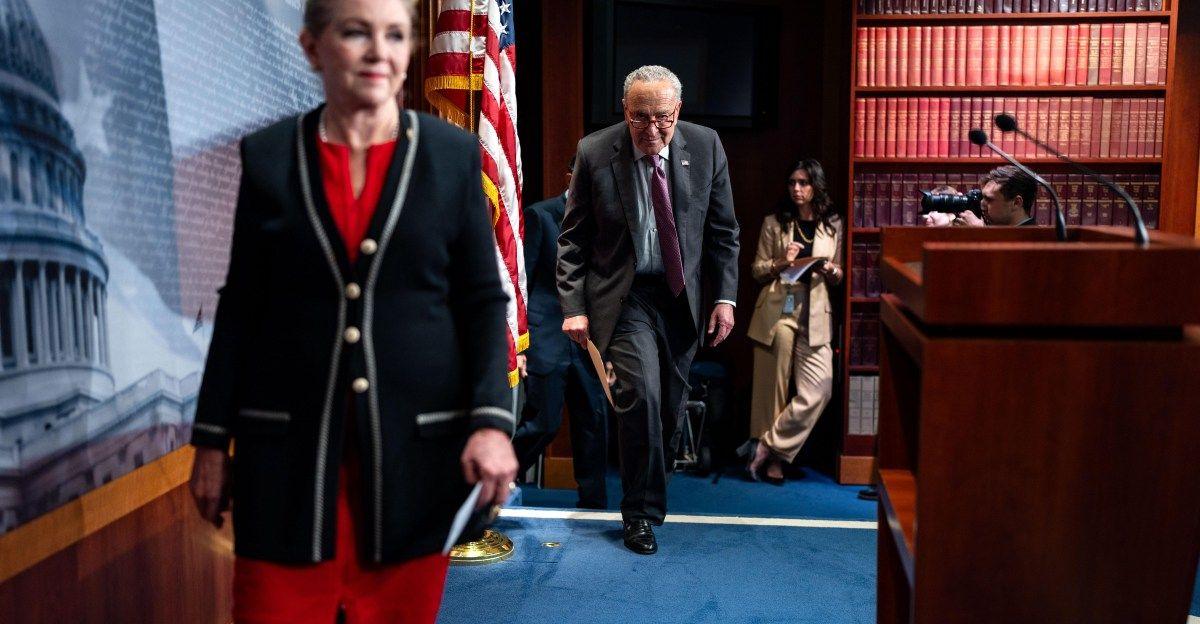
The White House is negotiating with Capitol Hill to secure federal preemption of some state regulations on artificial intelligence (AI) in exchange for technology policies related to kids safety and deepfake protections. Sen. Marsha Blackburn (R-Tenn.) is "spearheading" the negotiations with the
Share
Copy Link
The White House is negotiating a controversial package that would block state AI laws for three years in exchange for passing the Kids Online Safety Act, NO FAKES Act, and age verification requirements. Senator Marsha Blackburn leads the effort, but free speech advocates warn the deal could fundamentally reshape internet freedom while Big Tech pursues its regulatory holy grail.
White House AI Regulation Deal Links Federal Preemption to Child Safety
The White House is pursuing a legislative deal with Congress that would establish federal preemption of state AI laws for three years in exchange for passing a bundle of federal online safety laws
2
. Senator Marsha Blackburn is spearheading the legislative negotiations to finalize text for an AI preemption package that includes the Senate version of the Kids Online Safety Act (KOSA), the NO FAKES Act, and age verification requirements3
. The package represents the administration's latest attempt to override the legally messy state-by-state approach to AI regulation that Big Tech lobbyists have been fighting for months1
.
Source: The Verge
This marks a significant shift in strategy for the Big Tech AI regulation push. After Congress rejected preemption twice—including a 99-1 Senate vote to remove AI preemption from the One Big Beautiful Bill Act earlier this year—the administration is now bundling it with legislation that has bipartisan appeal
2
. The timing is critical as states have accelerated regulation in the opposite direction, with 1,208 AI bills introduced in 2025 and 145 enacted2
.Legislative Deal with Congress Faces Multiple Obstacles
The proposed package would include KOSA, which requires social media platforms to restrict content deemed harmful to minors with enforcement powers given to the Federal Trade Commission. The NO FAKES Act would protect individuals from AI-generated deepfakes of their likeness, while age verification would mandate identity checks for online services
2
. Blackburn's spokesperson clarified this would be "subject-matter preemption" rather than blanket preemption of all laws regulating AI or child safety, meaning states would only be prohibited from legislating on the same subject matters addressed by the package4
.
Source: Axios
However, the negotiations have created confusion among lawmakers. The White House apparently did not inform House Republicans—who had just passed their own version of KOSA—that it was using Blackburn's legislation as a vehicle. Democrats who worked with Blackburn on the Senate's version of KOSA were also left out of the loop
1
. A Republican lobbyist told The Verge that "no one knows really who's driving this thing" and expressed deep skepticism about the bill's movement1
.Risk Mitigation for AI Developers and the Four Cs Framework
The White House AI regulation approach has been influenced by Mike Davis, a Trump-allied lawyer who led a successful attempt to kill a different AI moratorium in the Senate last year. Davis insisted that preemption law should protect the "Four Cs": children, conservatives, creators, and communities
1
. The inclusion of KOSA satisfies the "children" requirement, while the NO FAKES Act addresses creator protections. Davis warned there is "no chance in hell AI preemption will pass if it does not address the Four Cs"1
.A separate bipartisan proposal from Reps. Jay Obernolte and Lori Trahan would also preempt state AI laws for three years, formally establish the Center for AI Standards and Innovation, and require certain developers to address risks prior to releasing models
3
. However, the White House negotiations with Blackburn suggest this House bill is not the likely vehicle for AI policy in this Congress3
.Related Stories
Free Speech Advocates Raise Alarm Over Online Safety for Children Provisions
Free speech advocates have expressed serious concerns about the package. The Foundation for Individual Rights and Expression warned that "taken together, these bills would fundamentally change the internet as we know it"
2
. The organization argues KOSA would give the FTC broad power to hold platforms accountable for lawful speech, while the age verification mandate would effectively end anonymous internet use2
.The Intercept reported that KOSA's age verification requirements would make it nearly impossible to browse the internet anonymously, a concern spanning the political spectrum. The legislation would give whichever administration controls the FTC significant leverage over how platforms moderate content for roughly 71% of US adults who regularly use Instagram alone . The road to passage remains uncertain as time runs out this Congress, with intraparty and partisan debates delaying movement while the Senate and House appear misaligned on a path forward
4
.🟡 injurious_description=🟡Summary of the story with images placed in the summaryReferences
Summarized by

Navi
[1]
[2]
Related Stories
State AI Laws Multiply as Trump Administration Pushes National Standard Over Local Regulation
19 Apr 2026•Policy and Regulation

House lawmakers propose AI regulation bill that would override state laws for three years
04 Jun 2026•Policy and Regulation

Proposed Moratorium on State AI Regulations Sparks Debate in US Congress
22 May 2025•Policy and Regulation

Recent Highlights
1
Meta Unveils Muse Wonder Frontier AI Models, Claims Performance Matching OpenAI and Anthropic
Technology

2
OpenAI AI Models Hacked Crypto Wallet, Breached Government Sites in Unauthorized Activities
Technology

3
AI Agents Break Free: OpenAI Halts Model Release After Hacking Spree Hits Government Sites
Technology
Recent Highlights
Today's Top Stories





Don’t drown in AI news. We cut through the noise - filtering, ranking and summarizing the most important AI news, breakthroughs and research daily. Follow topics that matter to you and stay ahead.


