Share
Linkedin
Twitter
Facebook
Whatsapp
Copy Link
Baidu's revenue fell 4% to $4.8 billion in Q4 2025, marking three consecutive quarters of decline as China's search giant struggles in both advertising and AI. While the company invests heavily in AI Cloud and autonomous driving, it faces mounting pressure from Alibaba, Tencent, and DeepSeek. CEO Robin Li announced a $5 billion buyback and first-ever dividend to boost shareholder returns.
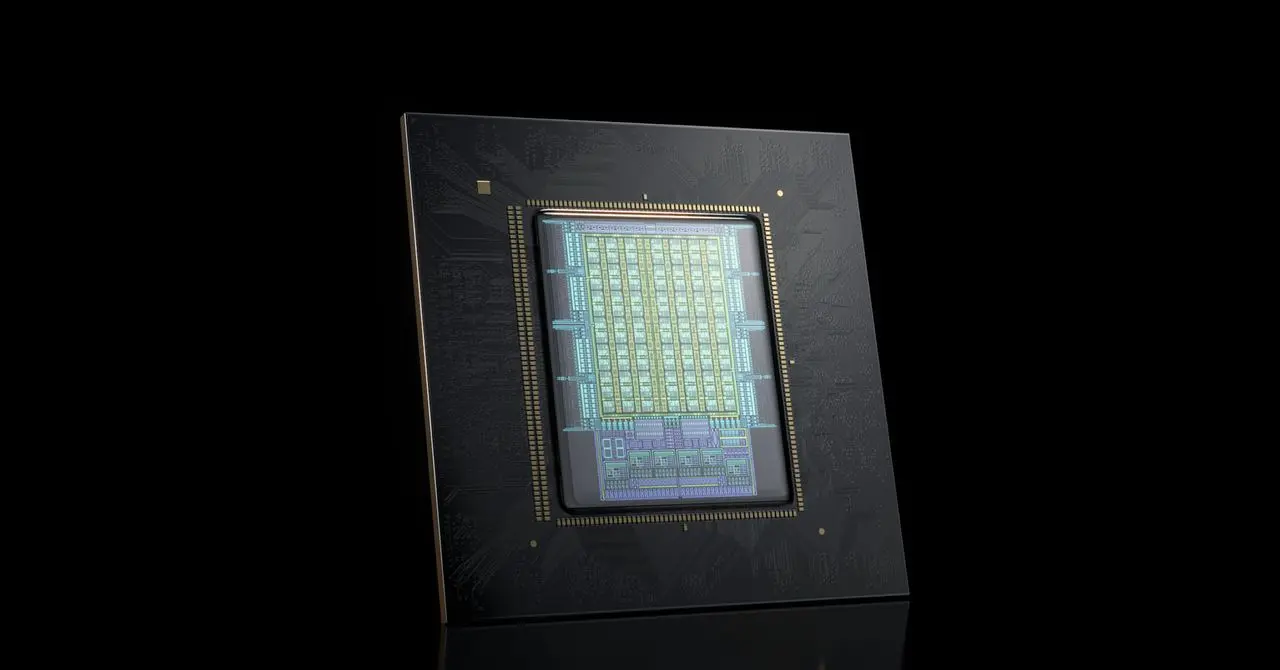
Nvidia is making a bold push into the CPU market, challenging Intel and AMD's long-held dominance. CEO Jensen Huang announced that the company's Grace and Vera CPU chips will play a central role as AI workloads shift from model training to deployment, particularly for AI agents that handle tasks like coding and document analysis.
AMD and Nutanix announced a multi-year strategic partnership worth $250 million to develop an open, full-stack AI infrastructure platform for enterprise AI and agentic AI applications. The deal includes $150 million in stock acquisition and $100 million for joint engineering and go-to-market initiatives, positioning both companies to compete with Nvidia in the enterprise AI market.
Nvidia has begun delivering samples of its Vera Rubin platform to select customers, marking a pivotal moment in AI infrastructure evolution. The system combines 72 Rubin GPUs with 288 GB HBM4 memory apiece and 36 Vera CPUs, promising 10 times better performance per watt than its Blackwell predecessor. Production shipments are expected in the second half of 2026.
NASA's Perseverance rover has shattered self-driving records on Mars, completing 90% of its travels autonomously compared to Curiosity's 6.2%. Using Enhanced Autonomous Navigation and the new Mars Global Localization system, the rover can now determine its own position and navigate independently, covering unprecedented distances while exploring Jezero Crater for signs of ancient life.
China's top chipmakers including SMIC and Hua Hong Semiconductor are racing to quintuple production of 7nm and 5nm chips within two years, aiming for 100,000 wafers monthly to meet surging AI demand. The ambitious expansion faces significant hurdles as export controls limit access to critical manufacturing equipment from Western suppliers.
Hyundai Motor Group announced a massive 9 trillion won ($6.3 billion) investment in South Korea's Saemangeum area to build an AI data center equipped with 50,000 GPUs, a robot manufacturing factory, and hydrogen production facilities. The automaker is accelerating its transformation into a physical AI company amid mounting pressure from US tariffs and Chinese competition.
Intel CEO Lip-Bu Tan is deepening ties with AI chip startup SambaNova through a $350 million funding round and multi-year product partnership. The collaboration aims to deliver cost-efficient AI inference solutions as Intel works to compete with Nvidia's dominance in the fast-growing artificial intelligence market.
AMD landed a massive AI chip agreement with Meta worth over $60 billion, but the deal comes with a catch: Meta could own nearly 10% of AMD through performance-based warrants. Nvidia, meanwhile, secured similar partnerships without diluting shareholders, highlighting the contrasting competitive positions of the two chipmakers in the AI accelerator market.
Meta and AMD have signed a multi-billion dollar partnership that will see the social media giant purchase up to 6 gigawatts of AI GPUs over five years, beginning in late 2026. In exchange for the massive hardware commitment worth approximately $60 billion, Meta will acquire a 10% equity stake in AMD through performance-based warrants. The deal mirrors AMD's similar arrangement with OpenAI and signals Meta's strategy to diversify AI chip suppliers beyond Nvidia.
Goldman Sachs chief economist Jan Hatzius reveals that AI contributed essentially nothing to US economic growth in 2025, despite hundreds of billions in investment. The problem: most spending flows to overseas manufacturing in Taiwan and Asia, not American GDP. While tech companies plan $700 billion in AI infrastructure spending for 2026, analysts calculate only 0.2% of the country's 2.2% growth came from AI investment.
MatX, an AI chip startup founded by former Google engineers, has secured $500 million in Series B funding led by Jane Street and Situational Awareness. The company aims to deliver processors 10 times better at training and running large language models than Nvidia's GPUs, with plans to begin shipping in 2027.
Dutch chipmaker Axelera AI raised more than $250 million in a funding round led by Innovation Industries with participation from BlackRock and Samsung Catalyst. The company designs power-efficient semiconductors for AI inference at the edge, aiming to reduce reliance on energy-intensive data centers. With over $450 million raised since 2021, Axelera AI plans to launch its next-generation Europa chip before June 2026.
SambaNova secured $350 million in Series E funding led by Vista Equity Partners and announced a multi-year strategic collaboration with Intel to deploy AI inference solutions. The startup unveiled its SN50 AI chip, designed specifically for inference workloads, claiming it delivers five times faster performance and three times better efficiency than Nvidia's B200. SoftBank will be the first customer to deploy the technology in its Japanese data centers.
Nvidia reported its strongest financial quarter with $68 billion in revenue, driven by unprecedented demand for AI compute. CEO Jensen Huang announced an upbeat sales forecast of $78 billion for the next quarter, marking accelerating revenue growth. However, the company faces challenges with China export restrictions on H200 chips and mounting questions about the sustainability of Big Tech's massive AI spending.
Don’t drown in AI news. We cut through the noise - filtering, ranking and summarizing the most important AI news, breakthroughs and research daily. Follow topics that matter to you and stay ahead.