Share
Linkedin
Twitter
Facebook
Whatsapp
Copy Link
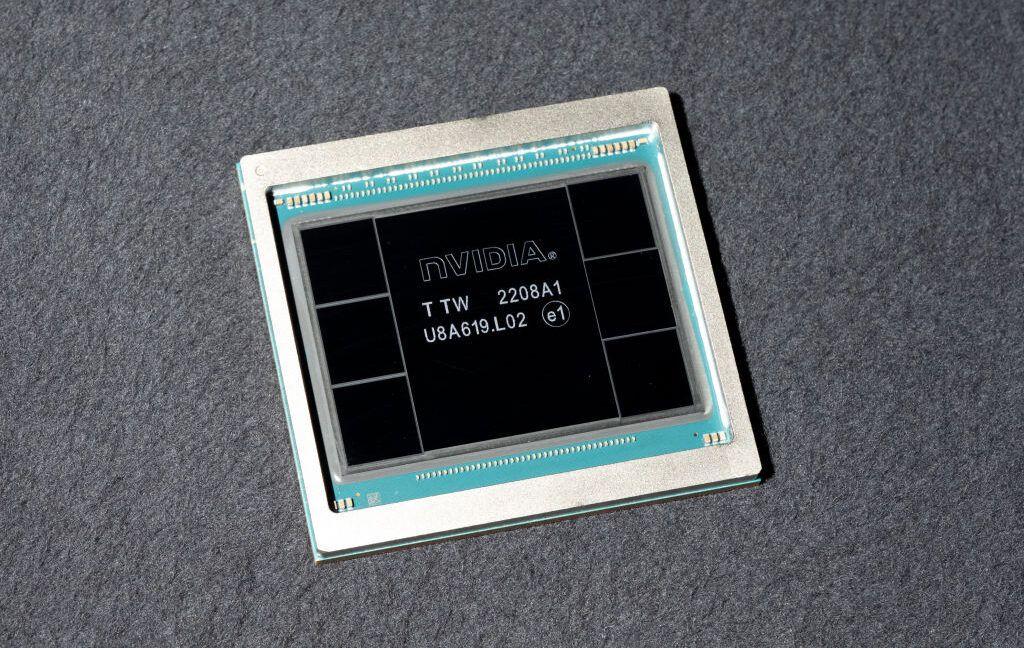
Nvidia's market share in China's AI chips market is projected to collapse from 40% to just 8% this year, while Huawei surges to 50% dominance. Despite Jensen Huang's celebrity status during his Beijing visit, U.S. export controls and China's push for semiconductor self-sufficiency have fundamentally altered the competitive landscape, even as smuggling operations reveal persistent demand for Nvidia's technology.
South Korea's government and tech giants including Samsung and SK Hynix are committing $1 trillion to expand memory chip production, build AI data centers, and deploy humanoid robots by 2028. The initiative aims to double DRAM production within five years as the AI boom drives global memory chip shortages and higher consumer electronics prices.
OpenAI and Broadcom have announced Jalapeño, a custom AI processor designed specifically for large language model inference in data centers. The chip promises better performance per watt than current options and marks OpenAI's push toward vertical integration. With deployment planned by year-end, this move signals OpenAI's strategy to reduce dependence on Nvidia while controlling its entire AI infrastructure stack.
Taiwan and South Korea are experiencing explosive growth as global AI-driven demand for semiconductors pushes exports to record highs. Yet behind the headline numbers, workers outside the chip sector face stagnant wages, soaring housing costs, and mounting household debt. The AI riches are concentrating wealth in a narrow industry, creating a K-shaped economy where the semiconductor elite thrive while most struggle.
Qualcomm is negotiating with ByteDance to provide custom chip-design services, marking a strategic shift away from its smartphone-dominated revenue model. The discussions involve designing video processing units based on AlphaWave Semi technology, with potential mass production by year-end. The talks underscore continued US-China tech business engagement despite escalating geopolitical tensions over AI chips.
Nvidia's banned DGX B300 AI server now sells for over $1.1 million on China's black market—nearly triple its US retail price. The surge follows intensified US export restrictions and a customs freeze that's choking off both legal and illegal supply routes. Even five-year-old A100 servers have tripled in price as Chinese tech firms scramble for alternatives.
China's LineShine supercomputer has seized first place on the TOP500 list, achieving 2.198 ExaFLOPS using only CPUs and domestically designed chips. Built at the National Supercomputing Centre in Shenzhen, it dethroned US El Capitan but ranked fourth on AI-specific benchmarks. Experts say the achievement highlights China's push for self-sufficiency in computing rather than dominance in AI workloads.
Wall Street futures tumbled Tuesday with Nasdaq futures falling over 2% as investors grapple with dual pressures: mounting concerns about debt-funded AI spending and expectations of a more hawkish Federal Reserve. Semiconductor stocks led the decline, with major chipmakers dropping between 3.8% and 9%. The selloff threatens to erase over $1 trillion in Nasdaq 100 market value if losses hold.
The Netherlands has formally joined the US-led Pax Silica initiative to secure AI supply chains, marking a strategic victory for US tech diplomacy. However, tensions remain over the MATCH Act, which could restrict ASML from servicing chip equipment in China. Dutch Trade Minister Sjoerd Sjoerdsma expressed concerns that forced cooperation could undermine national security interests.
Memory chip giants Micron, Samsung, and SK Hynix are forging long-term supply agreements worth billions to escape decades of volatility. Micron announced $22 billion in customer commitments, including deals with Nvidia, as high-bandwidth memory becomes the defining bottleneck in AI infrastructure. The shift treats memory as strategic necessity rather than commodity, with experts arguing AI has evolved from a compute race to a memory race.
Cerebras Systems delivered strong 92% revenue growth in its first earnings report since going public, but investor concerns over shrinking gross margins sent shares tumbling 17%. The AI chipmaker forecast full-year margins of 38-41%, significantly below rivals like Nvidia, highlighting the financial pressures of manufacturing wafer-scale AI chips despite securing major deals with OpenAI and Amazon.
Samsung Electronics achieved over $1 billion in HBM4 sales just four months after launching mass production in February, becoming the first company globally to ship sixth-generation high bandwidth memory chips. The rapid revenue growth signals accelerating demand for next-generation hardware tailored for AI applications, particularly for platforms like Nvidia's Vera Rubin that power generative AI workloads.
Qualcomm announced a $4 billion all-stock acquisition of AI infrastructure startup Modular, gaining software that runs AI models across different chips without custom coding. The deal positions Qualcomm to challenge Nvidia's CUDA platform while expanding its presence in the booming data center market as it reduces reliance on smartphone chips.
AI chipmaker Groq confirmed a $650 million funding round led by Disruptive and Infinitum, six months after Nvidia licensed its chip technology for $20 billion and hired away founder Jonathan Ross. The company is pivoting to its neocloud business, operating 13 data centers serving over five million developers and processing trillions of tokens weekly, while planning to quadruple capacity to 200 megawatts by 2027.
Micron Technology has invested in Anthropic's Series H funding round and signed a multi-year supply agreement to provide memory and storage products for AI workloads. The partnership deepens collaboration on next-generation AI infrastructure design while Micron expands its deployment of Claude AI across engineering and manufacturing operations.
Don’t drown in AI news. We cut through the noise - filtering, ranking and summarizing the most important AI news, breakthroughs and research daily. Follow topics that matter to you and stay ahead.