Subscribe to our newsletter
Get the latest updates delivered to your inbox every day, and stay up-to-date for free 🧠📈
Share
Linkedin
Twitter
Facebook
Whatsapp
Copy Link
Apple briefly surpassed Nvidia on Friday with a market valuation of $4.88 trillion versus Nvidia's $4.86 trillion, reclaiming the top spot for the first time since April last year. The shift signals changing investor sentiment as Apple's lower capital expenditure approach to artificial intelligence gains favor over Nvidia's infrastructure-heavy model, despite the chipmaker's dominance in generative AI hardware.
South Korea's $4 trillion equity market has transformed from a peripheral investment destination into a critical bellwether for global AI sentiment. Fund managers in London, New York, and Tokyo now start their day by checking Korean stocks, as swings in Samsung Electronics and SK Hynix ripple through chip markets worldwide. But the influence comes with extreme volatility driven by leveraged trading.
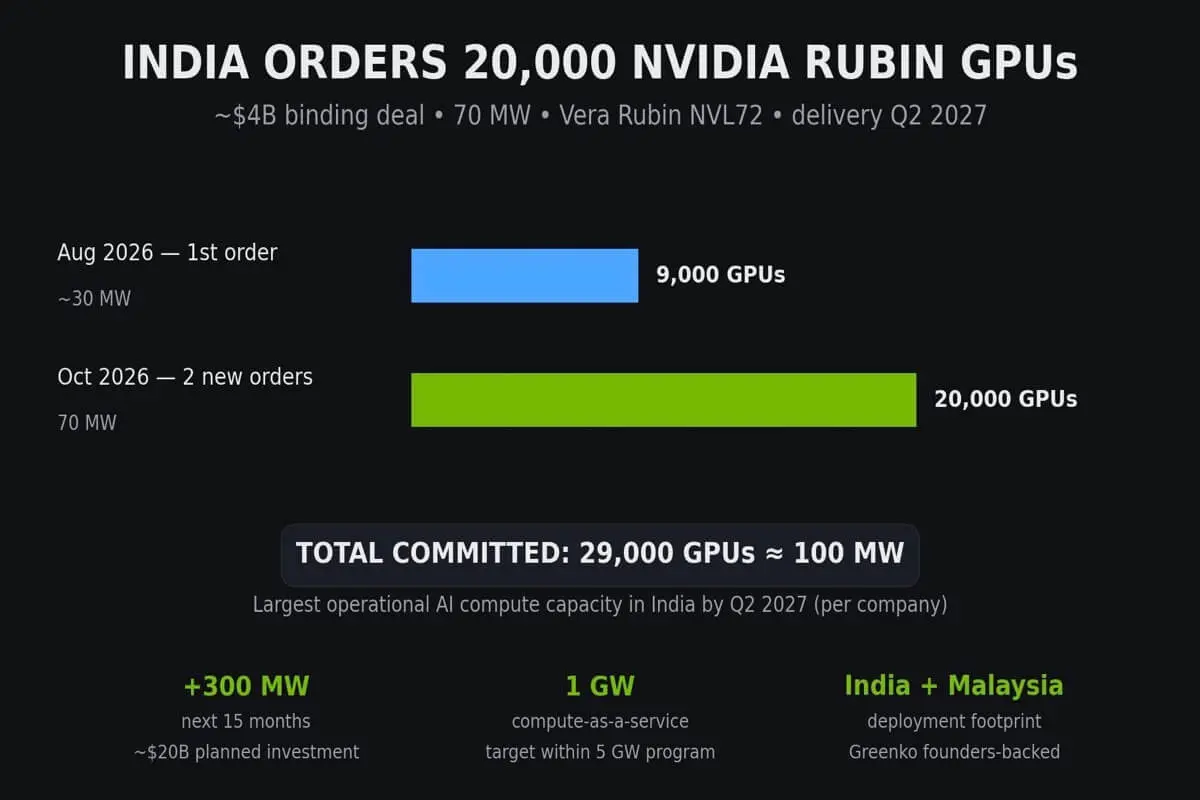
Nvidia's Vera Rubin platform has reached full production, with CoreWeave reporting 10 times more tokens per watt compared to the previous GB200 NVL72 system. Major customers including OpenAI, Microsoft Azure, Google Cloud, and Meta are deploying the next-generation AI infrastructure, which combines 72 Rubin GPUs with custom Vera CPUs to handle agentic AI workloads more efficiently.
Chief Minister Yogi Adityanath unveiled plans to transform Uttar Pradesh into a global deep tech manufacturing hub with PRAGATI, India's first integrated robotics and advanced manufacturing cluster spanning 75 acres in Noida. The initiative targets over one lakh jobs and Rs 2,000 crore in value addition over five years while reducing import dependence.
China-based Montage Technology forecasts first-half net profit growth of up to 81% driven by strong AI demand for memory interface chips and interconnect chips. But the semiconductor company faces regulatory scrutiny after Korean prosecutors raided its Seoul office over suspected price-fixing, sending shares plummeting over 20% and prompting a share buyback plan to restore investor confidence.
Intel is expanding its long-running partnership with Google Cloud by deploying Gemini Enterprise across its global workforce to accelerate chip design and automate workflows. The chipmaker will use AI agents for engineering, supply chain, and marketing operations while leveraging Google Cloud's C4 and N4 instances to run multiple high-performance computing simulations concurrently and dramatically speed up semiconductor development timelines.
Xi Jinping presided over the World Artificial Intelligence Conference in Shanghai, where 29 countries signed up to join the World Artificial Intelligence Cooperation Organization. The Chinese president announced 5,000 AI training opportunities for developing nations while criticizing what he called the overstretching of national security concerns—a veiled reference to US export controls that have blocked China's access to advanced chips.
Xpeng unveiled the L03 across 65 markets, marking the first Chinese EV to ship proprietary AI driving chips in every trim. The coupe-SUV features up to three Turing AI chips delivering 2,250 TOPS and runs the company's VLA 2.0 system. With Level 4 autonomy planned by 2028 and Volkswagen already licensing the technology, Xpeng is positioning itself as a serious challenger to Tesla's FSD dominance.
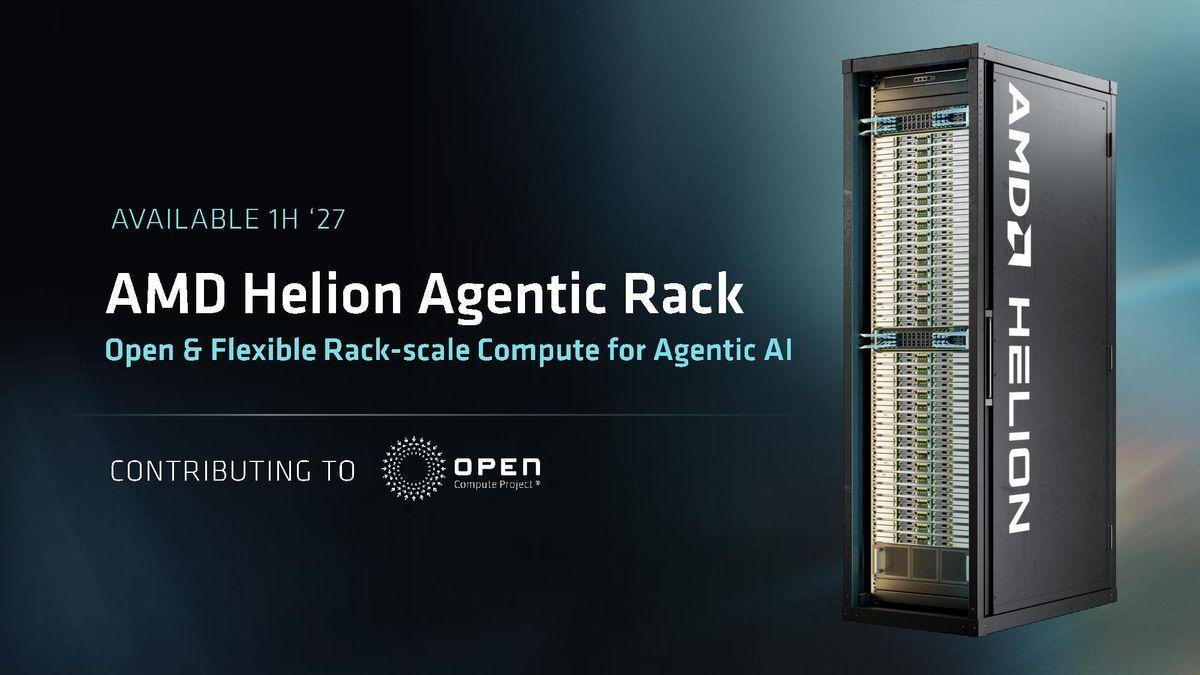
AMD launched a suite of AI hardware including Helios server racks and EPYC Venice CPUs at its Advancing AI event in San Francisco, directly challenging Nvidia's dominance. The chipmaker secured major deals with Microsoft, Anthropic, and OpenAI, potentially bringing in tens of billions in revenue as the AI chip market shifts focus from GPUs to server CPUs and throughput optimization.
European companies are set for their strongest earnings season since late 2022, with second-quarter profits expected to grow 15.3% on average. But energy sector gains mask a deeper challenge: Europe Inc lacks the AI-powered growth engines driving US corporate performance, where earnings are forecast to surge 23.7%.
AMD has released ROCm 7.14 as a new production release, introducing support for the upcoming Ryzen AI MAX PRO 400 series processors. The update transforms ROCm into a modular AI software platform built on TheRock infrastructure, enabling faster innovation while improving software quality for developers working across Ryzen AI workstations and AMD Instinct clusters.
NVIDIA introduced two new Blackwell-powered modules—Jetson Thor T3000 and T2000—designed to advance mainstream robotics and edge AI applications. The T3000 delivers 865 teraflops in a compact, power-efficient design, while the T2000 offers an entry point with 400 teraflops. Leading companies including Boston Dynamics, Amazon Robotics, and Agility are already building on the platform, with both modules scheduled for Q1 2027 launch.
Apple is shopping for AI chip companies after its M2 Ultra-powered servers proved insufficient for advanced AI tasks. The company has approached semiconductor startups and investment bankers about potential acquisitions to bolster its AI server capabilities. With the Gemini-powered Siri running on NVIDIA chips via Google Cloud and delays in its next-generation Baltra chip, Apple appears ready to break its pattern of modest spending to secure its AI infrastructure future.
AI cloud company CoreWeave is exploring financial derivatives like put options to protect against falling memory chip prices after signing long-term supply agreements with price floors. The move highlights how deeply AI infrastructure demand has entangled cloud providers with volatile chip markets, as memory prices have nearly doubled this year but historically collapse when new manufacturing capacity comes online.
Prediction market platform Kalshi has developed a forward curve tracking the future price of computing power, using weekly and monthly event contracts to predict GPU rental costs up to a year ahead. The move positions Kalshi alongside CME and ICE in the race to transform AI infrastructure into a tradable commodity, as GPU capacity becomes increasingly constrained and expensive.
Don’t drown in AI news. We cut through the noise - filtering, ranking and summarizing the most important AI news, breakthroughs and research daily. Follow topics that matter to you and stay ahead.