Share
Linkedin
Twitter
Facebook
Whatsapp
Copy Link
Eric Demers, the GPU architect who designed ATI's legendary Radeon GPUs and led Qualcomm's Adreno development for 14 years, has joined Intel to lead GPU engineering with a focus on AI. The move signals Intel's commitment to competing in the datacenter AI chip market, where Nvidia and AMD currently dominate.
Jensen Huang confirmed that Nvidia has dethroned Apple as TSMC's largest customer, marking a significant shift in the semiconductor industry. The change reflects explosive AI demand, with enterprise customers pouring billions into AI GPUs while Apple faces unprecedented competition for advanced chip supply and potentially higher silicon costs.
Major memory manufacturers including Kioxia, Micron, and SK Hynix report sold-out capacity through 2026 as AI infrastructure consumes available supply. The memory chip shortage is driving prices up by as much as 30%, affecting everything from consumer SSDs to smartphones. Micron calls the shortage unprecedented, while industry executives warn that affordable storage options may be gone for good.
Taiwan and the United States have finalized a trade agreement that slashes tariffs from 20% to 15% in exchange for $250 billion in Taiwanese investment in semiconductors, energy, and AI operations. The deal includes another $250 billion in credit guarantees and offers zero tariffs within manufacturing quotas, aiming to reshape America's semiconductor sector while preserving Taiwan's vital chip industry.
SiFive has become the first maker of RISC-V chip designs to integrate Nvidia NVLink Fusion interconnect technology. The partnership enables RISC-V CPU cores to connect with Nvidia's AI chips at speeds matching Intel and Arm implementations. Products featuring this integration won't reach the market until 2027 or later, but the move signals a multi-generational commitment between both companies.
Mountain View-based Aeva announced a new semiconductor optical amplifier delivering over 28 dBm optical output power with greater than 20% wall-plug efficiencies at temperatures up to 50 degrees Celsius. The technology addresses mounting power efficiency and thermal management challenges as AI workloads scale rapidly in data centers. Aeva stock surged 8% following the announcement, as the company expands beyond its LiDAR sensing roots into the AI infrastructure market.
OpenAI is developing AI-powered earbuds codenamed Sweetpea that will feature Samsung's 2nm Exynos application processor for on-device processing. The partnership marks OpenAI's push into consumer hardware, with projected first-year shipments of 40-50 million units. Meanwhile, OpenAI continues work on its Titan AI ASIC with Broadcom to reduce dependence on NVIDIA GPUs.
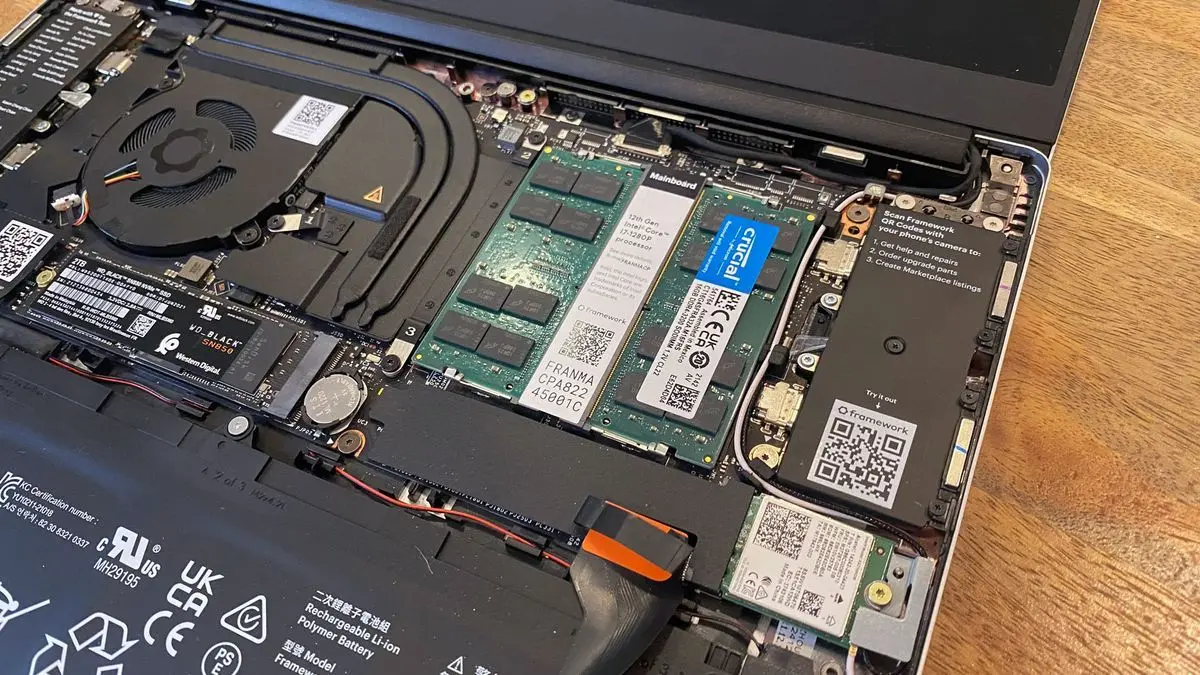
Micron defends its exit from the Crucial brand while SK hynix commits to consumer business amid intensifying memory shortages. Enterprise requirements now consume 50-60% of overall memory supply, forcing manufacturers to balance AI infrastructure demands against consumer needs. Production increases won't materialize until 2028, signaling prolonged supply constraints.
OpenAI has issued requests for proposals from US-based manufacturers as it prepares to expand into robotics and consumer devices, alongside a massive data center buildout. The ChatGPT maker is seeking components including silicon, motors, and cooling equipment, signaling an aggressive push into hardware that aligns with the Trump administration's reindustrialization priorities.
Raspberry Pi launched the AI HAT+ 2, a $130 add-on board that equips the Raspberry Pi 5 with a 40 TOPS Hailo 10H chip and 8GB of dedicated RAM. The module enables local processing of generative AI models like Llama 3.2 and Qwen2, though early tests show mixed performance results compared to simply upgrading the base Pi's memory.
The Trump administration has formalized a 25% tariff on advanced AI semiconductors from Nvidia and AMD shipped to China. The move converts previous export restrictions into a government revenue stream while allowing chip sales to resume. Nvidia's H200 and AMD's MI325X processors face the levy when imported to the US before reexport, though domestic AI infrastructure remains exempt.
Chinese AI firm Z.ai has released GLM-Image, an open-source image generation AI model trained completely on Huawei's Ascend chips without any Nvidia GPUs. The 16-billion parameter model demonstrates accurate text rendering and complex prompt understanding, proving that domestic Chinese hardware can now sustain large-scale AI training independently.
OpenAI has signed a multi-year agreement with AI chipmaker Cerebras worth over $10 billion to deliver 750 megawatts of computing power through 2028. The deal aims to accelerate ChatGPT's response times and support real-time AI applications, while reducing OpenAI's reliance on Nvidia's GPU-based systems. Cerebras will build and lease dedicated datacenters featuring its wafer-scale accelerators.
Nvidia faces a dramatic decline in China as its market share plummets from 66% in 2024 to just 8% this year. The collapse stems from tightening US export restrictions on high-end AI chips and rapid advances by homegrown Chinese AI hardware makers like Huawei and Moore Threads. While the Trump administration has opened limited sales of Nvidia H200 chips with a 25% surcharge, Beijing is drafting its own purchase rules as domestic suppliers now meet 80% of local demand.
The global memory shortage has pushed RAM prices beyond $400 for 32GB kits, with AI data centers claiming 70% of high-end memory chips in 2026. Major manufacturers like Samsung, Micron, and SK Hynix have pivoted to serving OpenAI and other AI firms, leaving consumers facing a crisis that analysts predict will extend through 2028. The shortage threatens not just PCs, but the entire consumer electronics ecosystem.
Don’t drown in AI news. We cut through the noise - filtering, ranking and summarizing the most important AI news, breakthroughs and research daily. Follow topics that matter to you and stay ahead.