Subscribe to our newsletter
Get the latest updates delivered to your inbox every day, and stay up-to-date for free 🧠📈
Share
Linkedin
Twitter
Facebook
Whatsapp
Copy Link
Scientists at Lawrence Berkeley National Laboratory have demonstrated that thermodynamic computing could generate AI images using one ten-billionth the energy of current tools like DALL-E and Midjourney. The breakthrough research shows promise for addressing the high energy consumption of generative AI, though significant hardware development challenges remain before the technology can rival existing models.
OpenAI unveiled Prism, a free AI workspace for scientists that integrates GPT-5.2 with LaTeX editing. Built on acquired platform Crixet, it aims to streamline drafting research papers and managing citations. The company receives 8.4 million weekly science queries on ChatGPT, but concerns about AI-generated research quality persist as studies show human-led work remains superior.
Researchers at the European Space Agency developed an AI tool called AnomalyMatch that scanned 35 years of Hubble Space Telescope data in just two and a half days. The neural network discovered more than 1,300 cosmic anomalies, including 800 never-before-documented objects. Among them were galaxy mergers, gravitational lenses, and dozens of objects that defy existing classification schemes entirely.
The Allen Institute for AI launched SERA, the first in its Open Coding Agents family, challenging proprietary AI coding tools. Built with just 32 GPUs by a small team, SERA solves over 55% of tough real-world coding problems on SWE-Bench while costing only $400 to reproduce—100 times cheaper than existing approaches.
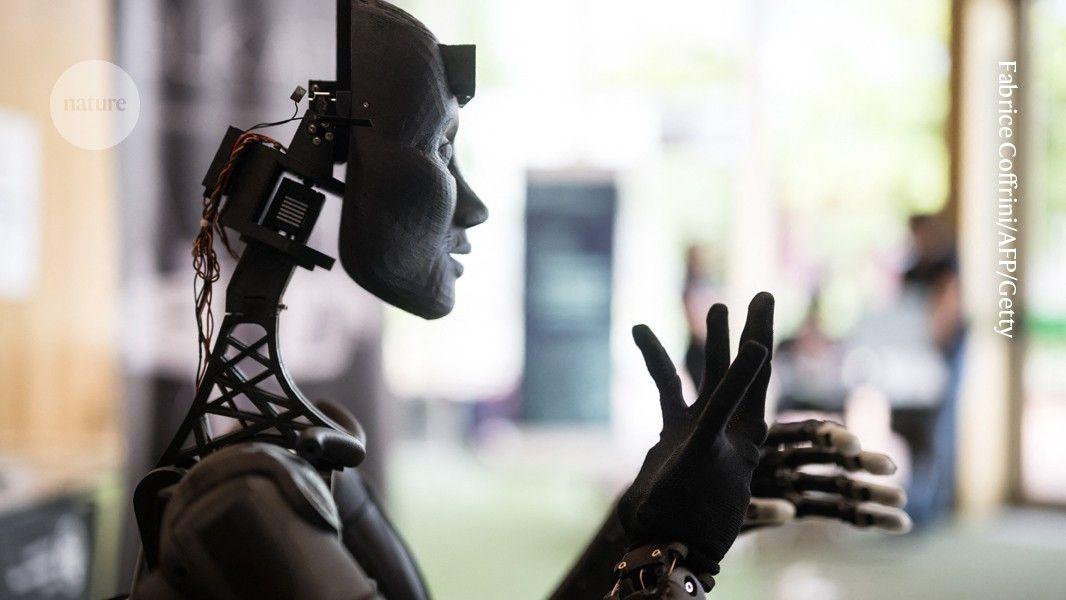
Fauna Robotics has launched Sprout, a 3.5-foot humanoid robot priced at $50,000, designed as an approachable alternative to industrial robots. Unlike Tesla's Optimus or Boston Dynamics' Atlas, Sprout targets hospitality, research, and entertainment with foam padding, expressive features, and AI-powered autonomous navigation. Early customers include Disney and Boston Dynamics, signaling a shift toward consumer-friendly humanoids for social spaces.
Researchers from Helmholtz-Zentrum Berlin and the University of Edinburgh have developed DinoTracker, a free AI-powered app that can identify which dinosaur made a footprint by analyzing its shape. The system matches human expert classifications about 90% of the time and has already uncovered intriguing clues about bird evolution that could push back their origins by tens of millions of years.
OpenAI has established a new AI for Science team led by Kevin Weil to help scientists accelerate research across mathematics, physics, chemistry, and biology. The company reports that 1.3 million weekly users now send 8.4 million messages on advanced science topics, representing 47% growth over the past year. GPT-5.2 achieves 92% accuracy on graduate-level benchmarks, though questions remain about long-term validation.
A paper by former SAP CTO Vishal Sikka and his son mathematically proves that LLMs powering AI agents cannot reliably execute tasks beyond a certain complexity threshold. The research challenges industry promises about autonomous AI systems, showing that transformer-based language models have fundamental limitations that even reasoning models can't overcome.
Princeton Plasma Physics Laboratory unveiled STELLAR-AI, a computing platform that combines artificial intelligence with high-performance computing to eliminate simulation bottlenecks in fusion energy research. The system connects directly to experimental devices like NSTX-U, enabling real-time data analysis instead of months-long waits for results.
Anthropic has been forced to repeatedly revise its technical interview test since 2024 as its own AI models have grown powerful enough to outperform human applicants. Claude Opus 4.5 now matches even the strongest candidates, creating a serious challenge for distinguishing genuine talent from AI-assisted submissions in take-home assessments.
Karnataka government approved the establishment of CATS, an AI Centre of Excellence with ₹20 crore funding over four years. Located at HSR Layout in Bengaluru, the facility will support startups, MSMEs, and research institutions in AI adoption, robotics, automation, and digital transformation through advanced laboratories and industry collaborations.
A January 2026 study by researchers Arend Hintze, Frida Proschinger Åström and Jory Schossau reveals that generative AI systems naturally drift toward bland, generic outputs when allowed to iterate autonomously. The findings show AI homogenization happens before retraining even begins, raising concerns about AI-induced cultural stagnation across creative industries.
Pocket FM has appointed Vasu Sharma, a former scientist at Meta's Facebook AI Research (FAIR), as its head of AI. Sharma will lead AI research and innovation across narrative generation, production intelligence and large-scale localisation. His work will focus on developing models that understand story structure and dramatic flow while maintaining creator control over content quality.
Ubisoft announced major restructuring plans including layoffs and seven project cancellations while accelerating investments in player-facing generative AI. The publisher intends to integrate AI-powered NPCs directly into gameplay experiences, particularly in open-world games, despite growing industry backlash against generative AI technology.
GPTZero scanned 4,841 papers from NeurIPS, one of AI's most prestigious conferences, and found 100 hallucinated citations across 51 accepted papers. The discovery highlights how AI-generated references are infiltrating scientific papers despite rigorous peer review, raising concerns about research integrity as submission volumes surge 220% since 2020.
Don’t drown in AI news. We cut through the noise - filtering, ranking and summarizing the most important AI news, breakthroughs and research daily. Follow topics that matter to you and stay ahead.