Share
Linkedin
Twitter
Facebook
Whatsapp
Copy Link
Nvidia's venture arm has invested in Harmonic, an AI math startup developing Aristotle, a mathematical reasoning engine that formally verifies accuracy. The $120 million Series C round valued Harmonic at $1.45 billion. The company is expanding beyond mathematics into coding and chip design, achieving 96.8% on verifiable code generation benchmarks.
A new study reveals that 19 leading AI models, including GPT-4o and DeepSeek-R1, failed to reliably identify laboratory hazards in realistic scenarios. While some scored up to 86% on basic questions, none exceeded 70% accuracy when faced with complex lab situations, raising serious concerns about AI safety in scientific research.
Yoshua Bengio, one of AI's founding figures, says his optimism about humanity's future with AI has risen "by a big margin" after years of warnings about existential threats. His nonprofit LawZero has developed Scientist AI, a technical approach that strips AI systems of goals and hidden agendas, focusing instead on truthful, transparent reasoning to mitigate AI's biggest risks.
South Korea eliminated Naver Cloud and NC AI from its sovereign AI competition, narrowing the field to LG AI Research, SK Telecom, and Upstage. The Ministry of Science and ICT's decision to allow a wild card entry has triggered industry criticism over fairness and rule changes in the multiyear national AI foundation model project.
Thinking Machines Lab, the AI startup founded by former OpenAI CTO Mira Murati, is losing two of its co-founders—Barret Zoph and Luke Metz—who are returning to OpenAI. The departures come amid allegations of unethical conduct and reveal deeper challenges facing new AI labs trying to compete with established players in Silicon Valley's increasingly fierce AI talent wars.
MIT CSAIL researchers developed MechStyle, a generative AI system that creates personalized 3D printable objects without compromising structural integrity. The tool uses physics simulations to ensure AI-modified designs remain durable, addressing a critical gap where only 26% of AI-stylized models were previously structurally viable.
The U.S. Food and Drug Administration and European Medicines Agency have jointly issued principles for Good AI Practice in drug development. These regulatory principles aim to guide the safe and responsible use of AI across the entire drug lifecycle while speeding up innovation and reducing animal testing.
A groundbreaking analysis of over 41 million academic papers reveals a stark paradox: while artificial intelligence tools help scientists publish three times more papers and gain nearly five times more citations, they're simultaneously narrowing the breadth of scientific inquiry. The study, published in Nature, shows AI-driven research clusters around popular, data-rich problems, creating a tension between individual career advancement and collective scientific progress.
Security researchers uncovered vulnerabilities in popular Python libraries used across AI and ML models with millions of downloads. The flaws allow attackers to hide malicious code in model metadata that executes automatically when loaded. Nvidia NeMo, Salesforce Uni2TS, and Apple FlexTok were all affected, with patches now released following responsible disclosure.
AstraZeneca has completed the first acquisition of an AI company by a major pharmaceutical firm, buying Boston-based Modella AI. The deal integrates foundation models and AI agents into oncology research to enhance biomarker discovery and patient selection for drug trials, aiming to reduce development costs and accelerate the development of new cancer treatments.
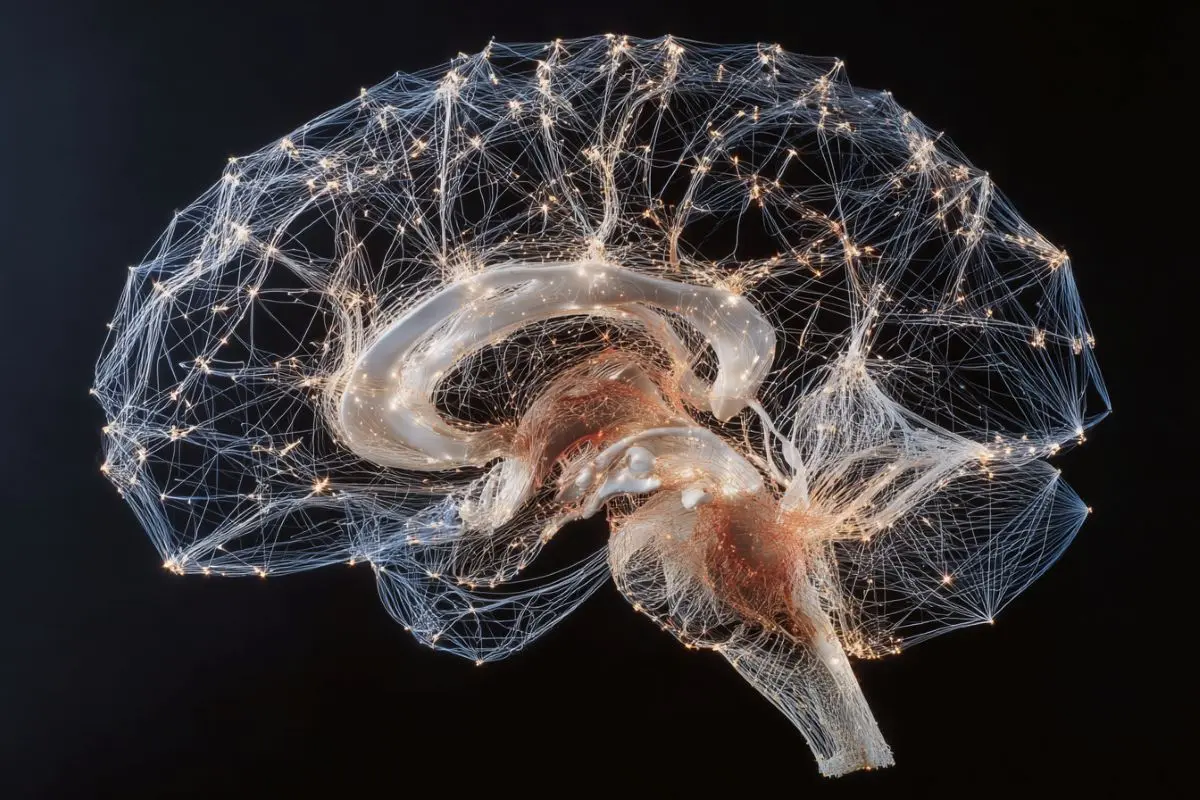
Researchers at OpenAI, Anthropic, and Google DeepMind are treating large language models less like software and more like alien life forms. With billions of parameters too complex for human comprehension, scientists now use biological analysis methods to trace internal mechanisms and observe model behavior, uncovering unexpected findings about how these AI systems actually work.
Tamil Nadu signed an MoU with Sarvam AI to establish India's first full-stack Sovereign AI Park with an initial investment of ₹10,000 crore. The project aims to create a state-controlled AI ecosystem in Chennai where data, models, and computing infrastructure remain within trusted boundaries, generating around 1,000 high-skilled jobs in AI research and infrastructure engineering.
Researchers discovered that AI models experience optical illusions the same way humans do when shown the rotating snakes illusion. The breakthrough suggests both artificial and biological vision systems rely on predictive coding—a mechanism that anticipates future visual input rather than passively processing images. This finding could finally explain why our brains get tricked by certain patterns.
Despite raising over $1 billion through IPOs in Hong Kong, China's top AI executives admit the country faces a widening gap with US counterparts. Alibaba's Qwen chief puts the odds of leapfrogging OpenAI and Anthropic at less than 20% over the next three to five years, citing compute shortages and US export controls as critical bottlenecks that fresh capital cannot solve.
At CES 2025, humanoid robots showcased impressive feats like dancing and playing ping-pong, but industry insiders are pushing for real-world utility. Experts warn that achieving true autonomy will take years, as current AI struggles with embodied learning. The robotics industry projects a $179 billion market by 2030, with factories leading adoption.
Don’t drown in AI news. We cut through the noise - filtering, ranking and summarizing the most important AI news, breakthroughs and research daily. Follow topics that matter to you and stay ahead.