Share
Linkedin
Twitter
Facebook
Whatsapp
Copy Link
The European Union and Canada unveiled a strategic alliance at a Montreal summit, deepening cooperation on AI, critical minerals, and digital trade. European Commission President Ursula von der Leyen announced Europe would open its supercomputing infrastructure to Canadian researchers while Canada invested CAN$1.6 billion in AI firm Cohere.
Nvidia is in talks to provide billions in credit guarantees backing Nscale's debt financing for a West Virginia AI data center. The facility will serve Anthropic under a $45 billion computing capacity agreement, with another potential $45 billion deal in discussion for additional AI capacity.
Turkey launched the Antalya AI Pledge at COP31, positioning AI as a tool to combat climate change despite rising data centers' fossil fuel emissions. The voluntary commitment requires energy disclosure and clean power for data centers, though accountability mechanisms remain unclear.
The AI boom has created an unprecedented energy crisis as data centers compete for scarce grid capacity. Industry leaders are turning to microgrids, on-site power generation, and grid optimization to meet AI's voracious energy needs while utilities warn of multiyear waits for new connections.
Elon Musk's xAI is buying out an entire Mississippi neighborhood near its AI data center, offering to purchase 418 homes—but only if owners agree not to join a class-action lawsuit over relentless noise from gas turbines. Residents report sleepless nights from constant aircraft-like roaring, while renters face displacement as landlords sell.
L&T's Vyoma.AI has begun construction on a 52 MW AI-ready data centre in Chennai, featuring direct-to-chip liquid cooling technology. The facility is part of a gigawatt-scale AI Factory campus and supports the company's plan to build over 250 MW of data centre capacity across India.
Anthropic disclosed in its SEC filing that AI data centers increasingly rely on natural gas turbines as grid connection backlogs grow. The company faces rising fuel costs driven by competition with hyperscalers and Middle East conflicts, while climate change simultaneously increases operating expenses—creating a costly paradox for the AI boom.
Luxor Technology secured $16 million in strategic funding led by CMT Digital to expand its AI compute operations. The round included mining-hardware makers Canaan and MicroBT, signaling the convergence of Bitcoin mining infrastructure with AI computing markets as miners pivot their power and hardware capabilities.
The UK government met 137 businesses while developing AI Growth Zones but held zero meetings with environmental groups. Now facing public backlash, ministers consider requiring data centre developers to invest in local communities through a proposed covenant.
Honeywell Technologies unveiled Forge Plant Cognition, an industrial AI platform built with NVIDIA AI and Dell Technologies infrastructure, at Dangote Petroleum Refinery in Lagos, Nigeria. The platform could deliver more than $60 million in gross operational benefits annually at full capacity by optimizing refining and petrochemical operations through digital twins, anomaly detection and real-time decision-making.
US hyperscalers racing to build AI data centers are turning to fuel cells as grid constraints delay power access by up to six years. Rystad Energy projects fuel-cell investments will surge from $2.8 billion in 2025 to $30 billion by 2030, with 40% of data-center capacity pursuing on-site power solutions.
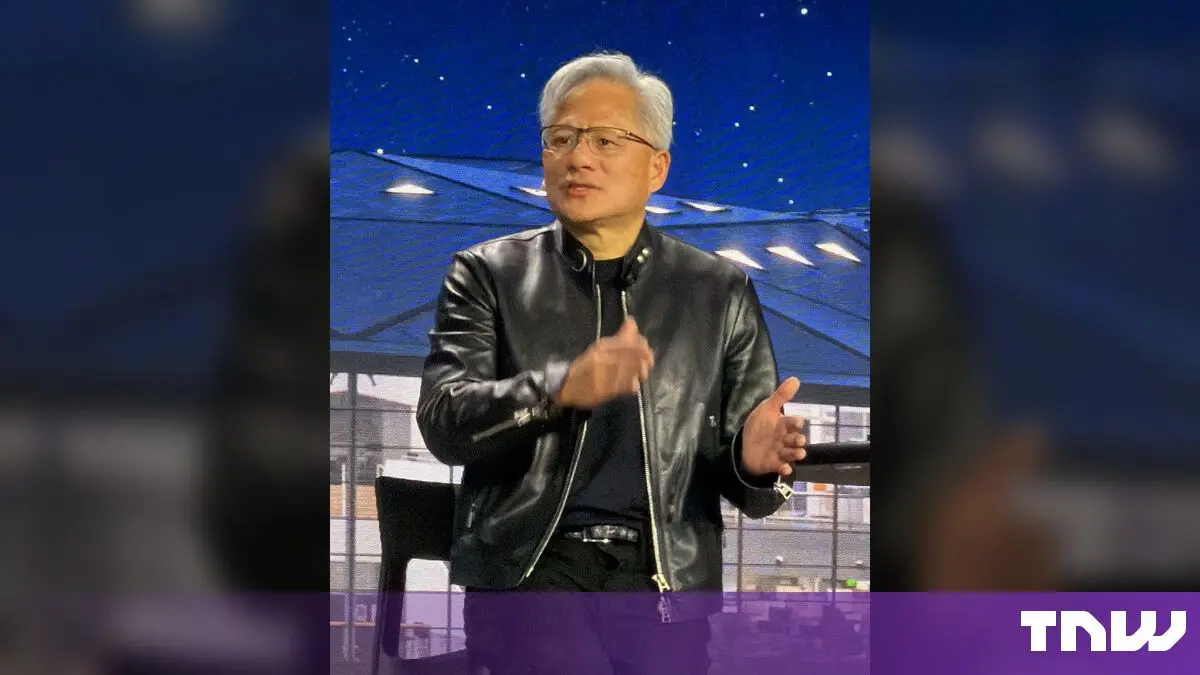
Jensen Huang told CNBC that neocloud demand is extraordinary but scarce capital limits growth. Nvidia has committed over $170bn in guarantees and investments to support AI cloud services, including backing struggling providers like Firmus as the sector faces investor skepticism.
Tesla launched production of its Optimus humanoid robot at its Fremont, California factory, marking a shift from electric vehicle manufacturing to AI-driven robotics. The company's Q3 2026 earnings revealed a 43% profit decline to $787 million as operating expenses surged 39% to fund AI research, autonomous driving, and robot development despite flat revenue of $28.04 billion.
University of Surrey researchers built a 28-composition materials library to train AI models for designing sodium-ion batteries. Testing sodium manganese oxide variants with iron, titanium and vanadium revealed how small compositional changes impact energy storage, charging speed and cycle life—with some compositions retaining over 90% capacity after 100 cycles.
General Motors announced a sweeping technology overhaul at its GM Forward event, introducing OnStar AI assistant, hands-off autonomous driving by 2028, and AI-powered development tools that slash vehicle creation timelines from four to five years down to just over two. The move positions GM to compete directly with Tesla and fast-moving Chinese automakers.
Don’t drown in AI news. We cut through the noise - filtering, ranking and summarizing the most important AI news, breakthroughs and research daily. Follow topics that matter to you and stay ahead.