Subscribe to our newsletter
Get the latest updates delivered to your inbox every day, and stay up-to-date for free π§ π
Donβt drown in AI news. We cut through the noise - filtering, ranking and summarizing the most important AI news, breakthroughs and research daily. Follow topics that matter to you and stay ahead.
Category
Year
Month
04 Jun 2026
US tech companies eliminated 38,242 jobs in May 2026, marking the highest monthly job cuts in two years. For the third consecutive month, artificial intelligence was cited as the leading reason for layoffs, even as major firms like Google, Amazon, Microsoft, and Meta plan $725 billion in combined AI infrastructure spending this year.
5 Sources
Munich-based gas engine manufacturer Innio made a strong Nasdaq debut, with shares closing up 23% at $33.30, valuing the company at $25 billion. The IPO raised $2.43 billion as investors pile into companies addressing AI's massive energy requirements. Innio's data center equipment orders surged to $1 billion as of March 31 from $309 million a year earlier.
Pinterest announced a $4 billion commitment to Amazon Web Services through 2031, marking its largest infrastructure agreement ever. The social media platform will leverage AWS custom chips including Graviton and Trainium to scale AI-powered visual search and personalized discovery for over 600 million monthly users. The deal extends a partnership dating back to 2010 and aims to close the gap between user inspiration and transaction.
Major tech companies are slamming the brakes on AI spending after burning through entire annual budgets in just months. Uber capped engineers at $1,500 monthly after exhausting its 2026 AI budget by April, while Microsoft revoked Claude Code licenses. Even OpenAI CEO Sam Altman admits AI costs have become 'a huge issue' as agentic workflows drive token consumption to unsustainable levels.
11 Sources
Taiwan Semiconductor Manufacturing Company's CEO C.C. Wei told shareholders that global chip supply will fall short of AI-fueled demand for years, even as the company expands production with $165 billion in U.S. investments. The chipmaker forecasts over 30% sales growth this year but says production capacity bottlenecks remain a critical constraint in building global AI infrastructure.
4 Sources
Nvidia has purchased Kumo AI, a four-year-old startup specializing in predictive enterprise AI software, for more than $400 million. The acquisition brings foundation models designed for structured business data analysis into Nvidia's portfolio. Kumo's three co-founders have already transitioned to Nvidia, signaling the chip giant's continued expansion into full-stack AI solutions.
3 Sources
03 Jun 2026
Broadcom's stock dropped 12% after missing Q2 revenue expectations for the first time since December 2024. Yet the chipmaker revealed a strategic shift: partnering with Apollo and Blackstone on a $35 billion financing platform to fund custom AI chips for Anthropic and OpenAI. The move signals that AI infrastructure buildout now requires massive capital engineering beyond traditional semiconductor sales.
10 Sources
Incoming Apple CEO John Ternus has overhauled the company's head-mounted hardware roadmap, canceling the Vision Pro 2 and Vision Air to focus exclusively on smart glasses. The shift redirects resources toward AI-powered glasses similar to Meta Ray-Bans launching in 2027, followed by display-equipped AR smart glasses in 2029, marking a dramatic pivot in Apple's wearable future.
6 Sources
Anthropic introduced a three-tier Services Track and Partner Hub for its Claude Partner Network, establishing clear benchmarks for consulting firms deploying its AI model. Since launching in March with $100 million in support, over 40,000 firms have applied and more than 10,000 consultants earned Claude certification. Major firms like Accenture, Deloitte, and PwC are integrating Claude across hundreds of thousands of workers.
2 Sources
SpaceX is set for the largest IPO in history, raising $75 billion at a $1.77 trillion valuation. The company's ambitious plan centers on orbital AI computing infrastructure, with demonstrations planned for late 2027. Elon Musk claims the technology largely exists through Starlink satellites, but analysts value the company significantly lower, viewing the space data center vision as a high-risk bet on unproven technology.
12 Sources
Smart lighting company Nanoleaf has been acquired by OneRobotics, SwitchBot's parent company, in a $40 million deal spanning two years. The Nanoleaf acquisition positions the Toronto-based firm to expand beyond smart lighting into AI and robotics, leveraging OneRobotics' manufacturing capabilities and supply chain to scale production and reduce costs while maintaining operational independence.
Developer platform GitLab has laid off approximately 350 employees, representing 14% of its workforce, while exiting 22 countries as part of a major restructuring effort. The company is investing heavily in rebuilding its infrastructure to handle AI workloads and agentic systems that are pushing developer platforms to their limits, despite reporting strong Q1 revenue growth of 23%.
Australian networking company Megaport secured four new AI infrastructure contracts worth $329M with US technology providers and launched a $594M capital raise to pivot from network plumbing to compute. The company plans to build a globally distributed AI inference cloud using Nvidia GPUs across its existing footprint of over 1,100 data centers in 31 countries.
SK Hynix announced plans to double its wafer capacity over the next five years, driven by surging demand for high-bandwidth memory chips used in AI systems. Chairman Chey Tae-won warned that memory supply bottlenecks could persist through 2030, while expressing hopes to become a major HBM supplier for Nvidia's upcoming Vera Rubin system.
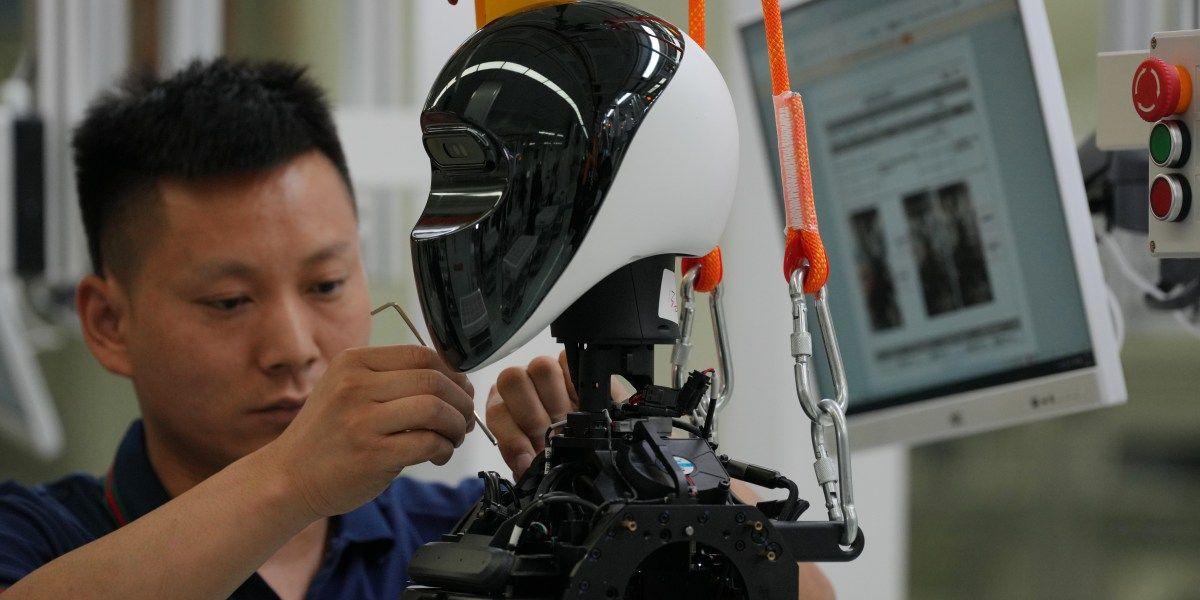
China accounts for 85% of humanoid robot installations worldwide, producing machines at roughly half the cost of Western competitors. Yet despite thousands of orders and over 140 manufacturers, experts warn that market demand may not match the country's massive production capacity. The tension between China's manufacturing dominance and actual commercial viability highlights critical questions about the $5 trillion humanoid robots market.
Get all updates into your inbox π, Stay Up-to-date for Free π₯³