5 Sources
[1]
AI boom heats up Bay Area housing market as wealthy buyers drive demand for high-end homes across US
LOS ANGELES (AP) -- Here's another place the AI frenzy is making itself felt: the market for luxury homes. High-income earners, many of them employees at AI companies, are snapping up multimillion-dollar houses in the San Francisco Bay Area, undaunted by the higher mortgage rates and rising home prices that have prevented many would-be buyers from affording a home. The Bay Area buying spree is the clearest manifestation of a nationwide trend of sales of upper-end properties largely holding up better than sales of less expensive homes. Metro areas such as San Diego, Miami, Detroit, Nashville and Tampa, Florida, are also seeing upper-market homes sell at a faster pace. The hotter market for luxury properties comes at a time when the broader housing market remains stuck in a yearslong rut. Sales of previously occupied U.S. homes were essentially flat last year, moored at a 30-year low. Most recently, they slowed again in July. Sales of newly built homes, which make up a far smaller part of the housing market, are also down this year. Underpinning the luxury market are affluent home shoppers who can afford to shrug off rising mortgage rates and often pay all cash for a home or come up with a large down payment by raising funds through sales of stocks or other investments. Stock market gains powered by the artificial intelligence boom have helped boost investors' portfolios. The benchmark S&P 500 is up solidly this year and remains near its most recent all-time high. "These people have lots of money and they're just not going to be very sensitive to things like mortgage rates or home prices," said Daryl Fairweather, chief economist at Redfin. "They want the home they want and they have the money to buy it." The trend is the housing market version of the "K-shaped" economy, where wealthier households pull ahead of middle- and lower-income ones. In this case, many would-be homebuyers remain on the sideline while affluent buyers drive sales of luxury homes. Sales of pricier homes are holding up better Nationally, sales of luxury homes, defined as properties in the top 5% of a metro area by price, rose 2% in the first half of this year, compared to the same period in 2025, according to data from Redfin. Sales of middle-of-the-market homes, or properties closest to an area's median price, rose 1.9% in the same period. The dichotomy in the market can better be seen in price appreciation. The median sales price of a luxury home nationally between January and June was roughly $1.37 million, a 4.3% increase from a year earlier. For homes in the middle of the market, the median sales price rose 1.4% to $377,245. In the San Francisco metro area, sales of luxury homes soared 39.3% in the first half of this year compared to a year earlier, while middle-market home sales surged 15.1%. And across the bay in Oakland, sales of upper-market homes jumped 13.3%, while sales of middle-market properties rose 3.9%. Several other metro areas not plugged into the AI boom are also seeing sales and price growth for luxury homes. Among the most notable examples: in the Tampa metro area, luxury home sales surged 35.5% in the January-June period, while sales of middle-market homes fell 5.1%. In Nashville, sales of upper-market homes jumped 10.8%, while sales of middle-market properties rose only 1.7%. And in Detroit, sales of higher-end properties vaulted 8.7% compared to a 6% decline in sales of middle-market homes. All told, sales of luxury homes so far this year are outpacing or have declined less than those of middle-market homes in 44% of the nation's 50 largest metro areas. Urgency to buy a home before potential AI IPOs In the Bay Area, tech companies bent on winning the race to develop artificial intelligence into a profitable business have juiced compensation to recruit talented executives and software engineers, widening the pool of high-income earners. Many of these employees have been buying homes, often outdoing rival buyers by offering well above the asking price, real estate agents say. The Bay Area housing market could get even hotter should two of the biggest names in AI follow through on their intent to become publicly traded companies. OpenAI, creator of ChatGPT, and Anthropic, home to Claude, filed preliminary paperwork in June for initial public offerings. Neither has yet decided on the timing. An analysis by Redfin that looked at how much employees at both companies stand to gain potentially from the companies going public estimated that the combined IPO earnings would be enough to buy nearly one-third of all homes in San Francisco. Just the possibility of these two blockbuster IPOs is building pressure on some home shoppers in the Bay Area to buy sooner, rather than later. They worry they'll face a flood of newly minted millionaires ready to pounce, further ratcheting up competition in the San Francisco housing market. Julio Bermudez, an AI data infrastructure company executive in the Bay Area, had been looking to buy his first home for about a year, but his search took on new urgency. "So, you start taking a look at that and you take a look at your own position -- both from just a diversification standpoint, as well as the fact that we're trying to set roots here, kids are in school, all that good stuff," said Bermudez, 41. "And it's like we don't want to be priced out, so we need to buy now." Recently, Bermudez entered into a contract to buy a five-bedroom, four-bath house in Orinda, about 17 miles northeast of San Francisco. The seller was asking $3.5 million, but agreed to sell for $3.3 million. "I felt like this was sort of an interesting time and location to try to strike before it really does get crazy," he said.
[2]
AI wealth fuels San Francisco's housing boom while tech layoffs weigh down Seattle
While a fresh wave of AI-generated wealth is pouring fuel on San Francisco's housing market, Seattle's real estate scene is getting left out in the cold, stuck in a slump driven by ongoing local tech layoffs, soaring costs, and persistent worker anxiety. A new report published Wednesday by Seattle-based Redfin illustrates just how dramatically the housing markets in the West Coast's top two tech hubs have split. In July, San Francisco's median home-sale price jumped 6% year-over-year to $1.6 million as home sales rose 8.5%, fueled by an 18.4% drop in active listings -- the largest inventory contraction in the country. By contrast, Seattle's median sale price dropped 3.6% to $809,479 as home sales fell 9.1% and active listings surged 16.7%, the nation's steepest inventory increase, leaving local sellers outnumbering buyers by 65%. Redfin detailed the drop in pending sales in the city in an earlier report. San Francisco's resurgence is fueled by a concentrated wave of AI wealth. Driven by big salaries, six-figure signing bonuses, and anticipation of massive IPOs for Bay Area giants OpenAI and Anthropic, affluent buyers are aggressively bidding up homes, frequently paying hundreds of thousands over asking price. The frenzy mirrors findings from The New York Times, which reported in May that cash-flush AI startup employees and secondary stock sales are fueling hyper-concentrated bidding wars across the Bay Area. In Seattle, the dynamic is reversed. While local tech giants pour billions into AI infrastructure, corporate belt-tightening and lingering layoff fears at companies like Amazon and Microsoft have squelched buyer confidence, leaving prospective buyers cautious, job mobility low, and listings piling up. Ground-level real estate agents in the Seattle area are feeling that buyer hesitation firsthand. "Layoffs in the tech world are dampening homebuying demand in the entire area," said Sheryl Wingate, a Redfin Premier agent, noting that return-to-office policies are further squeezing demand in outlying suburbs as tech workers avoid long commutes amidst job uncertainty. Seattle-area real estate isn't just feeling the squeeze from the heavyweights. Job cuts have hit nearly every tier of the regional tech ecosystem this year, sweeping through engineering hubs for Meta, Google, and Salesforce, consumer brands like Zillow, T-Mobile, and Starbucks, corporate divisions at Expedia and TikTok, and startups including Qualtrics and Amperity. The chill is hitting the region's high-end neighborhoods hardest. According to Bloomberg, pending luxury home sales in the Seattle area plummeted 15%, driven by a double hit of tech-sector layoffs and Washington state's higher taxes on top earners. Once-frenzied markets in Eastside suburbs like Bellevue and Sammamish have stalled, with homes priced over $2 million sitting for an average of 44 days as affluent tech buyers pull back. By comparison, high-end buyers in San Francisco are doubling their budgets as AI confidence surges. Redfin noted that luxury pending sales in the Bay Area jumped 46% year-over-year, with local agents reporting tech clients doubling their price points -- in some cases expanding from $2 million budgets to nearly $4 million -- and placing offers as much as $900,000 over asking price. The shift is also severing a key migration pipeline that long fueled Seattle's housing boom. While high-earning Bay Area transplants historically moved north to stretch their tech compensation, Redfin migration data shows the net inflow of home shoppers moving from San Francisco to Seattle plummeted to just 369 people in the first quarter -- down from over 5,100 five years ago. Looking ahead, Redfin economists expect these diverging trends to play out across other tech hubs as artificial intelligence reshapes the labor market. "AI is reorganizing the tech labor market, with San Francisco and Seattle representing two sides of that transition," said Chen Zhao, Redfin's head of economics research, adding that while AI creates rapid wealth in some markets, it drives corporate restructuring and caution in others.
[3]
AI boom heats up Bay Area housing market as wealthy buyers drive demand for high-end homes across US
High-income earners, many of them employees at AI companies, are snapping up multimillion-dollar houses in the San Francisco Bay Area, undaunted by the higher mortgage rates and rising home prices that have prevented many would-be buyers from affording a home. Here's another place the AI frenzy is making itself felt: the market for luxury homes. High-income earners, many of them employees at AI companies, are snapping up multimillion-dollar houses in the San Francisco Bay Area, undaunted by the higher mortgage rates and rising home prices that have prevented many would-be buyers from affording a home. The Bay Area buying spree is the clearest manifestation of a nationwide trend of sales of upper-end properties largely holding up better than sales of less expensive homes. Metro areas such as San Diego, Miami, Detroit, Nashville and Tampa, Florida, are also seeing upper-market homes sell at a faster pace. The hotter market for luxury properties comes at a time when the broader housing market remains stuck in a yearslong rut. Sales of previously occupied U.S. homes were essentially flat last year, moored at a 30-year low. Most recently, they slowed again in July. Sales of newly built homes, which make up a far smaller part of the housing market, are also down this year. Underpinning the luxury market are affluent home shoppers who can afford to shrug off rising mortgage rates and often pay all cash for a home or come up with a large down payment by raising funds through sales of stocks or other investments. Stock market gains powered by the artificial intelligence boom have helped boost investors' portfolios. The benchmark S&P 500 is up solidly this year and remains near its most recent all-time high. "These people have lots of money and they're just not going to be very sensitive to things like mortgage rates or home prices," said Daryl Fairweather, chief economist at Redfin. "They want the home they want and they have the money to buy it." The trend is the housing market version of the "K-shaped" economy, where wealthier households pull ahead of middle- and lower-income ones. In this case, many would-be homebuyers remain on the sideline while affluent buyers drive sales of luxury homes. Sales of pricier homes are holding up better Nationally, sales of luxury homes, defined as properties in the top 5% of a metro area by price, rose 2% in the first half of this year, compared to the same period in 2025, according to data from Redfin. Sales of middle-of-the-market homes, or properties closest to an area's median price, rose 1.9% in the same period. The dichotomy in the market can better be seen in price appreciation. The median sales price of a luxury home nationally between January and June was roughly $1.37 million, a 4.3% increase from a year earlier. For homes in the middle of the market, the median sales price rose 1.4% to $377,245. In the San Francisco metro area, sales of luxury homes soared 39.3% in the first half of this year compared to a year earlier, while middle-market home sales surged 15.1%. And across the bay in Oakland, sales of upper-market homes jumped 13.3%, while sales of middle-market properties rose 3.9%. Several other metro areas not plugged into the AI boom are also seeing sales and price growth for luxury homes. Among the most notable examples: in the Tampa metro area, luxury home sales surged 35.5% in the January-June period, while sales of middle-market homes fell 5.1%. In Nashville, sales of upper-market homes jumped 10.8%, while sales of middle-market properties rose only 1.7%. And in Detroit, sales of higher-end properties vaulted 8.7% compared to a 6% decline in sales of middle-market homes. All told, sales of luxury homes so far this year are outpacing or have declined less than those of middle-market homes in 44% of the nation's 50 largest metro areas. Urgency to buy a home before potential AI IPOs In the Bay Area, tech companies bent on winning the race to develop artificial intelligence into a profitable business have juiced compensation to recruit talented executives and software engineers, widening the pool of high-income earners. Many of these employees have been buying homes, often outdoing rival buyers by offering well above the asking price, real estate agents say. The Bay Area housing market could get even hotter should two of the biggest names in AI follow through on their intent to become publicly traded companies. OpenAI, creator of ChatGPT, and Anthropic, home to Claude, filed preliminary paperwork in June for initial public offerings. Neither has yet decided on the timing. An analysis by Redfin that looked at how much employees at both companies stand to gain potentially from the companies going public estimated that the combined IPO earnings would be enough to buy nearly one-third of all homes in San Francisco. Just the possibility of these two blockbuster IPOs is building pressure on some home shoppers in the Bay Area to buy sooner, rather than later. They worry they'll face a flood of newly minted millionaires ready to pounce, further ratcheting up competition in the San Francisco housing market. Julio Bermudez, an AI data infrastructure company executive in the Bay Area, had been looking to buy his first home for about a year, but his search took on new urgency. "So, you start taking a look at that and you take a look at your own position - both from just a diversification standpoint, as well as the fact that we're trying to set roots here, kids are in school, all that good stuff," said Bermudez, 41. "And it's like we don't want to be priced out, so we need to buy now." Recently, Bermudez entered into a contract to buy a five-bedroom, four-bath house in Orinda, about 17 miles northeast of San Francisco. The seller was asking $3.5 million, but agreed to sell for $3.3 million. "I felt like this was sort of an interesting time and location to try to strike before it really does get crazy," he said.
[4]
Surging AI wealth is creating a 'mansion shortage' in San Francisco
Artificial intelligence is minting a new class of millionaires in San Francisco -- and they're running out of mansions to buy. A wave of wealth tied to the city's booming AI industry is sending home prices soaring, triggering bidding wars with as many as 50 offers and leaving even buyers armed with $25 million in cash out in the cold, NPR reported. The frenzy marks a stunning turnaround for a city whose housing market slumped during the pandemic as tech workers scattered and offices emptied. Now, AI companies are rapidly expanding, employees are returning to their desks and startups including OpenAI and Anthropic are generating enormous paper wealth for workers and investors -- with potentially even larger windfalls ahead. That said, the median home sale price in San Francisco has jumped 25% from a year ago, according to Compass data cited by NPR. Compass agent Paul Kitchen told NPR that some listings have attracted as many as 50 offers. At the very top of the market, buyers offering $25 million or more in cash have still been outbid. "You have to laugh just because it is so ridiculous and so beyond the pale," Kitchen said. In June alone, 44 homes sold for at least $1 million above their asking prices, Compass chief economist Mike Simonsen told NPR. The collision of newly wealthy buyers and a limited supply of large, move-in-ready properties has produced what industry insiders are calling a "mansion shortage." Many of those buyers are AI executives in their 30s and early 40s who need homes quickly as their children reach school age, Simonsen said. Their urgency, combined with their ability to make enormous cash offers, is intensifying competition in San Francisco's most affluent neighborhoods. The mansion frenzy is an extreme expression of San Francisco's broader housing shortage, which is squeezing buyers at nearly every income level. Only 2.1% of the city's listings in March 2026 were affordable to a household earning about $75,000, leaving a deficit of approximately 2,475 homes within reach of those buyers, according to a May 2026 analysis from Realtor.com and the National Association of Realtors. San Francisco received a listing-to-income alignment score of just 66%, meaning the distribution of homes for sale remains badly mismatched with what residents at different income levels can afford. The score improved by 4.5 points from March 2025 and 8.3 points from March 2019, but remained well below a balanced market. Renters are feeling the same supply pressure. NPR reported that highly paid young tech workers who can afford rents as high as $10,000 a month are flooding the market, with some apartments receiving hundreds of inquiries within hours. One couple took a $5,200-per-month apartment sight unseen after repeatedly watching other listings disappear, while another prospective renter encountered bidding that raised an apartment's monthly price by $1,000 before he had even toured it. The surge has renewed fears of displacement in a city where previous tech booms already drove out residents who could no longer afford to stay. Whether it is a $25 million mansion or a modest starter home, the underlying problem is the same: San Francisco has too many buyers chasing too few properties -- and the AI boom is raising the stakes.
[5]
AI boom heats up Bay Area housing market as wealthy buyers drive demand for high-end homes across U.S.
AI boom heats up Bay Area housing market as wealthy buyers drive demand for high-end homes across US -- Here's another place the AI frenzy is making itself felt: the market for luxury homes. High-income earners, many of them employees at AI companies, are snapping up multimillion-dollar houses in the San Francisco Bay Area, undaunted by the higher mortgage rates and rising home prices that have prevented many would-be buyers from affording a home. The Bay Area buying spree is the clearest manifestation of a nationwide trend of sales of upper-end properties largely holding up better than sales of less expensive homes. Metro areas such as San Diego, Miami, Detroit, Nashville and Tampa, Florida, are also seeing upper-market homes sell at a faster pace. The hotter market for luxury properties comes at a time when the broader housing market remains stuck in a yearslong rut. Sales of previously occupied U.S. homes were essentially flat last year, moored at a 30-year low. Most recently, they slowed again in July. Sales of newly built homes, which make up a far smaller part of the housing market, are also down this year. Underpinning the luxury market are affluent home shoppers who can afford to shrug off rising mortgage rates and often pay all cash for a home or come up with a large down payment by raising funds through sales of stocks or other investments. * Most real estate news from BNNBloomberg.ca Stock market gains powered by the artificial intelligence boom have helped boost investors' portfolios. The benchmark S&P 500 is up solidly this year and remains near its most recent all-time high. "These people have lots of money and they're just not going to be very sensitive to things like mortgage rates or home prices," said Daryl Fairweather, chief economist at Redfin. "They want the home they want and they have the money to buy it." The trend is the housing market version of the "K-shaped" economy, where wealthier households pull ahead of middle- and lower-income ones. In this case, many would-be homebuyers remain on the sideline while affluent buyers drive sales of luxury homes. Sales of pricier homes are holding up better Nationally, sales of luxury homes, defined as properties in the top 5 per cent of a metro area by price, rose 2 per cent in the first half of this year, compared to the same period in 2025, according to data from Redfin. Sales of middle-of-the-market homes, or properties closest to an area's median price, rose 1.9 per cent in the same period. The dichotomy in the market can better be seen in price appreciation. The median sales price of a luxury home nationally between January and June was roughly $1.37 million, a 4.3 per cent increase from a year earlier. For homes in the middle of the market, the median sales price rose 1.4 per cent to $377,245. In the San Francisco metro area, sales of luxury homes soared 39.3 per cent in the first half of this year compared to a year earlier, while middle-market home sales surged 15.1 per cent. And across the bay in Oakland, sales of upper-market homes jumped 13.3 per cent, while sales of middle-market properties rose 3.9 per cent. Several other metro areas not plugged into the AI boom are also seeing sales and price growth for luxury homes. Among the most notable examples: in the Tampa metro area, luxury home sales surged 35.5 per cent in the January-June period, while sales of middle-market homes fell 5.1 per cent. In Nashville, sales of upper-market homes jumped 10.8 per cent, while sales of middle-market properties rose only 1.7 per cent. And in Detroit, sales of higher-end properties vaulted 8.7 per cent compared to a 6 per cent decline in sales of middle-market homes. All told, sales of luxury homes so far this year are outpacing or have declined less than those of middle-market homes in 44 per cent of the nation's 50 largest metro areas. Urgency to buy a home before potential AI IPOs In the Bay Area, tech companies bent on winning the race to develop artificial intelligence into a profitable business have juiced compensation to recruit talented executives and software engineers, widening the pool of high-income earners. Many of these employees have been buying homes, often outdoing rival buyers by offering well above the asking price, real estate agents say. The Bay Area housing market could get even hotter should two of the biggest names in AI follow through on their intent to become publicly traded companies. OpenAI, creator of ChatGPT, and Anthropic, home to Claude, filed preliminary paperwork in June for initial public offerings. Neither has yet decided on the timing. An analysis by Redfin that looked at how much employees at both companies stand to gain potentially from the companies going public estimated that the combined IPO earnings would be enough to buy nearly one-third of all homes in San Francisco. Just the possibility of these two blockbuster IPOs is building pressure on some home shoppers in the Bay Area to buy sooner, rather than later. They worry they'll face a flood of newly minted millionaires ready to pounce, further ratcheting up competition in the San Francisco housing market. Julio Bermudez, an AI data infrastructure company executive in the Bay Area, had been looking to buy his first home for about a year, but his search took on new urgency. "So, you start taking a look at that and you take a look at your own position -- both from just a diversification standpoint, as well as the fact that we're trying to set roots here, kids are in school, all that good stuff," said Bermudez, 41. "And it's like we don't want to be priced out, so we need to buy now." Recently, Bermudez entered into a contract to buy a five-bedroom, four-bath house in Orinda, about 17 miles northeast of San Francisco. The seller was asking $3.5 million, but agreed to sell for $3.3 million. "I felt like this was sort of an interesting time and location to try to strike before it really does get crazy," he said.
Share
Copy Link
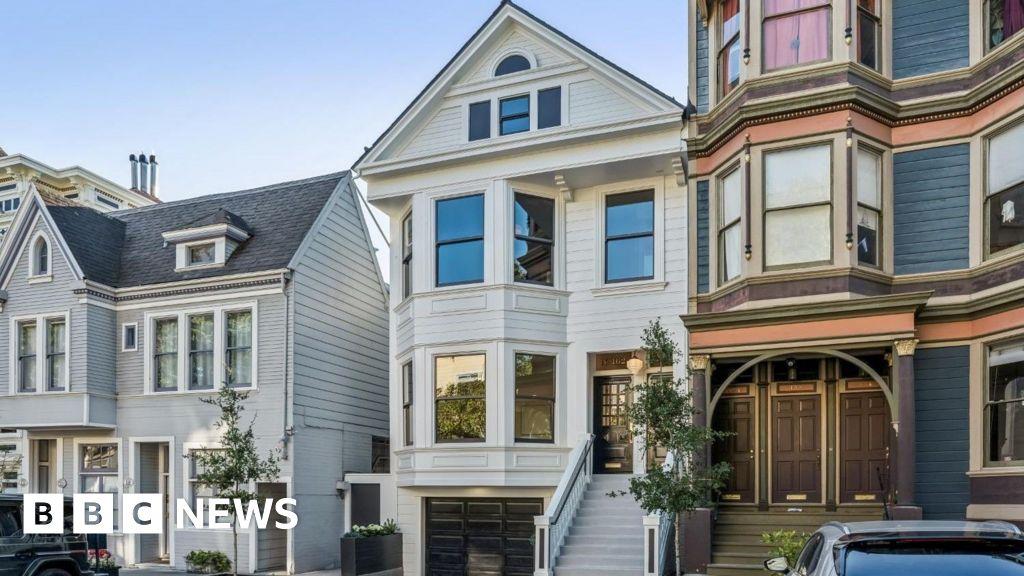
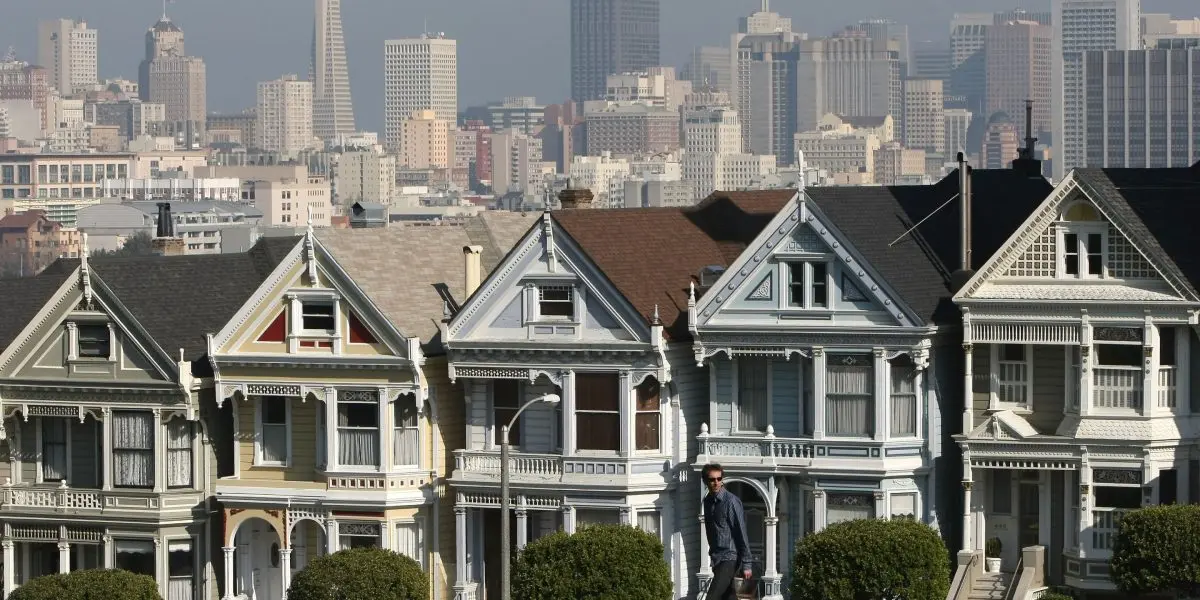
The AI boom is reshaping San Francisco's housing market as high-income earners snap up luxury homes at record pace. Sales of high-end homes jumped 39.3% in the first half of 2026, with some properties attracting 50 offers and buyers paying $900,000 over asking price. Meanwhile, Seattle's market slumps amid tech layoffs.
The AI boom is creating a dramatic shift in the housing market, with affluent buyers driving unprecedented demand for high-end homes across the San Francisco Bay Area
1
. High-income earners, many employed at AI companies, are snapping up multimillion-dollar properties undeterred by higher mortgage rates that have sidelined most homebuyers. Sales of luxury homes in the San Francisco metro area soared 39.3% in the first half of 2026 compared to a year earlier, while middle-market home sales surged 15.1%1
. This surge marks a stunning reversal for a city whose housing market slumped during the pandemic as tech workers scattered and offices emptied4
.
Source: New York Post
The Bay Area buying spree represents the clearest manifestation of a nationwide trend where upper-end properties are outperforming sales of less expensive homes. Median home prices in San Francisco jumped 25% from a year ago, with July alone seeing the median home-sale price reach $1.6 million—a 6% year-over-year increase—as home sales rose 8.5%
2
4
. Across the bay in Oakland, sales of upper-market homes jumped 13.3%, while sales of middle-market properties rose just 3.9%1
.The collision of newly wealthy buyers and limited supply has produced what industry insiders are calling a mansion shortage
4
. Compass agent Paul Kitchen reported that some listings have attracted as many as 50 offers, with buyers at the very top of the market offering $25 million or more in cash still being outbid4
. Real estate agents describe tech clients doubling their price points—expanding from $2 million budgets to nearly $4 million—and placing offers as much as $900,000 over asking price2
. In June 2026 alone, 44 homes sold for at least $1 million above their asking prices4
.Many of these affluent buyers are AI executives in their 30s and early 40s who need homes quickly as their children reach school age, creating urgency that intensifies competition in San Francisco's most affluent neighborhoods
4
. Active listings in San Francisco dropped 18.4% in July—the largest inventory contraction in the country—leaving sellers outnumbered by eager buyers2
.The Bay Area housing market could get even hotter should two of the biggest names in AI follow through on their intent to become publicly traded companies. OpenAI, creator of ChatGPT, and Anthropic, home to Claude, filed preliminary paperwork in June for initial public offerings, though neither has decided on timing
1
. A Redfin analysis estimated that the combined IPO earnings would be enough to buy nearly one-third of all homes in San Francisco1
. This possibility is building pressure on home shoppers to buy sooner rather than later, as they worry about facing a flood of newly minted millionaires ready to pounce1
.
Source: AP
Tech companies racing to develop artificial intelligence into profitable businesses have juiced compensation to recruit talented executives and software engineers, widening the pool of high-income earners who can afford to pay all cash or make large down payments by liquidating stock holdings
1
. Stock market gains powered by the AI boom have helped boost investors' portfolios, with the benchmark S&P 500 remaining near its all-time high1
.The trend exemplifies a K-shaped economy in the housing market, where wealthier households pull ahead of middle- and lower-income ones
1
. Daryl Fairweather, chief economist at Redfin, explained: "These people have lots of money and they're just not going to be very sensitive to things like mortgage rates or home prices. They want the home they want and they have the money to buy it"1
. Nationally, sales of luxury homes—defined as properties in the top 5% of a metro area by price—rose 2% in the first half of 2026, while sales of middle-of-the-market homes rose 1.9%1
.The median sales price of a luxury home nationally between January and June was roughly $1.37 million, a 4.3% increase from a year earlier, while the median sales price for middle-market homes rose just 1.4% to $377,245
1
. Only 2.1% of San Francisco's listings in March 2026 were affordable to a household earning about $75,000, leaving a deficit of approximately 2,475 homes within reach of those buyers4
.Related Stories
Several metro areas not directly plugged into the AI boom are also experiencing robust demand for high-end homes. In Tampa, luxury home sales surged 35.5% in the January-June period, while sales of middle-market homes fell 5.1%
1
. Nashville saw sales of upper-market homes jump 10.8%, while sales of middle-market properties rose only 1.7%1
. In Detroit, sales of higher-end properties vaulted 8.7% compared to a 6% decline in sales of middle-market homes1
. Sales of luxury homes are outpacing or declining less than middle-market homes in 44% of the nation's 50 largest metro areas1
.While AI wealth fuels San Francisco's housing boom, Seattle's real estate scene faces a contrasting reality driven by ongoing tech layoffs and worker anxiety
2
. Seattle's median home prices dropped 3.6% to $809,479 as home sales fell 9.1% and active listings surged 16.7%—the nation's steepest inventory increase—leaving sellers outnumbering buyers by 65%2
. Corporate belt-tightening and lingering layoff fears at companies like Amazon and Microsoft have squelched buyer confidence2
. Sheryl Wingate, a Redfin Premier agent, noted that "layoffs in the tech world are dampening homebuying demand in the entire area"2
.
Source: GeekWire
Pending luxury home sales in the Seattle area plummeted 15%, with homes priced over $2 million sitting for an average of 44 days as affluent tech buyers pull back
2
. The net inflow of home shoppers moving from San Francisco to Seattle plummeted to just 369 people in the first quarter—down from over 5,100 five years ago2
. Chen Zhao, Redfin's head of economics research, observed: "AI is reorganizing the tech labor market, with San Francisco and Seattle representing two sides of that transition"2
.Summarized by
Navi
[1]
[3]
[4]
08 Jul 2026•Business and Economy

11 Jun 2026•Business and Economy
07 May 2026•Business and Economy