Imec revives camera tech to break AI memory wall with 3D CCD architecture


2 Sources
[1]
New 3D memory architecture revives old camera technology to smash through AI memory wall - NAND + DRAM hybrid promises to make memory cheaper, faster and with 'unlimited endurance'
Researchers have found a way to combine NAND and DRAM technologies * Researchers have created a NAND-DRAM hybrid, inspired by legacy camera tech * Indium Gallium Zinc Oxide also promises benefits over silicon * For now, this is just a prototype that needs further work Belgian semiconductor
[2]
Imec reimagines CCD technology as high-density AI memory
Researchers at the Belgian semiconductor research hub imec have introduced a NAND-DRAM hybrid memory architecture, reportedly the first three-dimensional (3D) implementation of charge-coupled device (CCD) technology designed for memory applications. This development aims to address the current
Share
Copy Link
Belgian research hub imec has unveiled the first 3D implementation of charge-coupled device memory architecture, combining NAND and DRAM technologies. The hybrid design addresses AI computing's memory wall by stacking memory cells vertically and using IGZO instead of silicon, promising improved speed, density, and unlimited endurance for AI workloads.
Imec Unveils Breakthrough 3D Memory Architecture for AI Computing
Belgian semiconductor research hub imec has introduced what it claims to be the first three-dimensional implementation of charge-coupled device memory, repurposing legacy camera technology to tackle one of artificial intelligence's most pressing challenges
1
2
. The innovative 3D memory architecture addresses the memory wall in AI computing, where GPUs and accelerators spend more time waiting for data than actually processing it due to inadequate memory bandwidth and power efficiency1
. This bottleneck has become increasingly critical as AI models grow larger and more demanding.NAND DRAM Hybrid Combines Best of Both Technologies
The new design merges the speed and rewritability of DRAM with the density and efficiency of NAND storage, creating a NAND DRAM hybrid that could transform AI memory solutions
2
. While CCD technology has long been used in digital cameras, broadcast video equipment, scientific imaging, and astronomy sensors before being replaced by CMOS image sensors, imec's research applies the same principle of physically moving electrical charges between semiconductor gates to enable highly efficient memory movement1
. Instead of arranging memory cells side-by-side on a flat plane like conventional DRAM, the design employs vertical stacking similar to 3D NAND, addressing DRAM's limitations including leakage, higher manufacturing costs, and slowing density improvements1
.IGZO Material Promises Enhanced Performance
The chips replace silicon with Indium Gallium Zinc Oxide, or IGZO, which offers lower leakage, longer data retention, easier low-temperature processing, and strong compatibility with dense 3D stacking
1
. Imec has already demonstrated successful charge transfer at speeds exceeding 4MHz with its prototype, though it currently uses only a small number of stacked layers2
. In theory, the architecture should scale as well as NAND technology, where commercial chips now surpass 200 layers1
. The CCD technology architecture promises reduced wear mechanisms and unlimited endurance that could even exceed NAND, making it ideal for AI training clusters and inference servers1
.Related Stories
Designed for Modern AI Workloads
Maarten Rosmeulen, Program Director for Storage Memory at imec, explained that the device provides block-level data access rather than byte-addressable DRAM, making it better suited to modern AI workloads
1
. "The potential of this CCD device to be used as a buffer memory lies in its ability to be integrated in a 3D NAND Flash string architecture - the most cost-effective way to achieve a scalable, high bit density estimated to go far beyond the DRAM limit," Rosmeulen stated1
. Imec plans to position the architecture as a CXL Type-3 device, complying with industry standards to connect GPUs, CPUs, and accelerators2
. This consideration matters as hyperscalers now turn to CXL as AI models become too large for local GPUs alone1
.Challenges Remain Before Commercial Deployment
As a prototype, the technology faces several hurdles including thermal behavior management, layer count scaling, and real-world system integration
2
. However, if successful, the hybrid architecture could significantly reduce AI infrastructure costs, particularly the substantial expenses associated with DRAM in AI systems1
. Looking ahead, imec proposes that the next phase may involve a totally new class of memory architecture rather than simply evolving existing designs further1
. For organizations deploying large-scale AI systems, this development signals potential relief from memory bottlenecks that currently limit performance and drive up operational costs.References
Summarized by

Navi
[2]
Related Stories
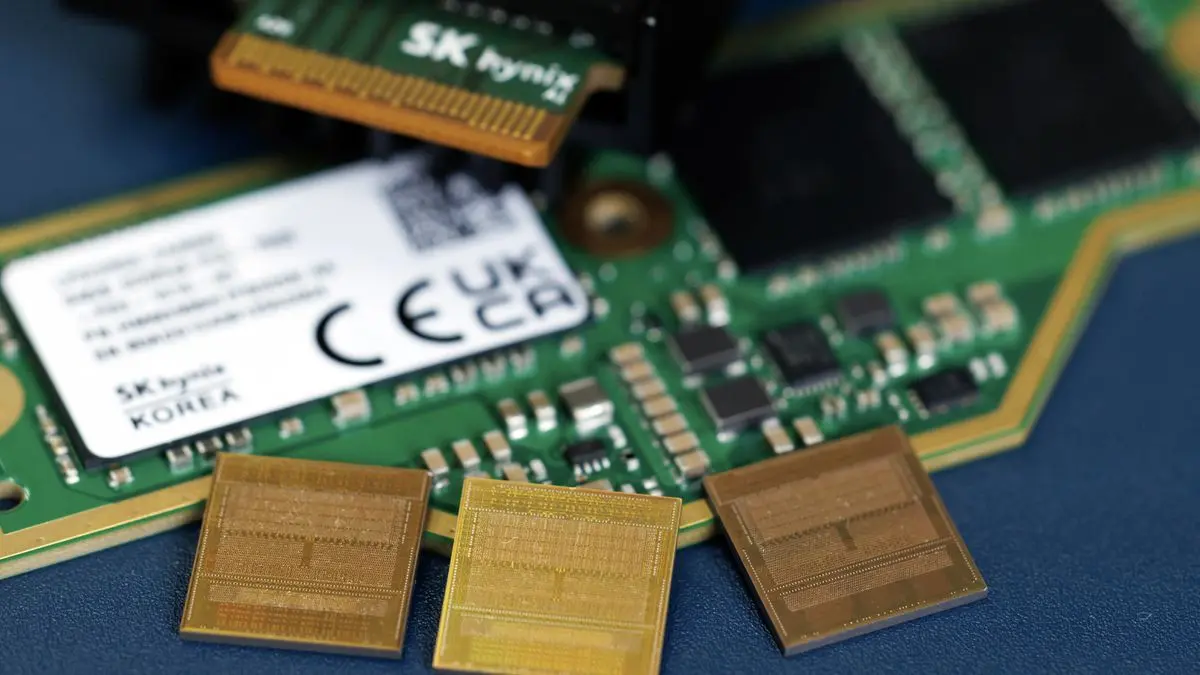
SK hynix and TetraMem unveil in-memory computing chip that processes AI directly inside memory
09 Jul 2026•Technology
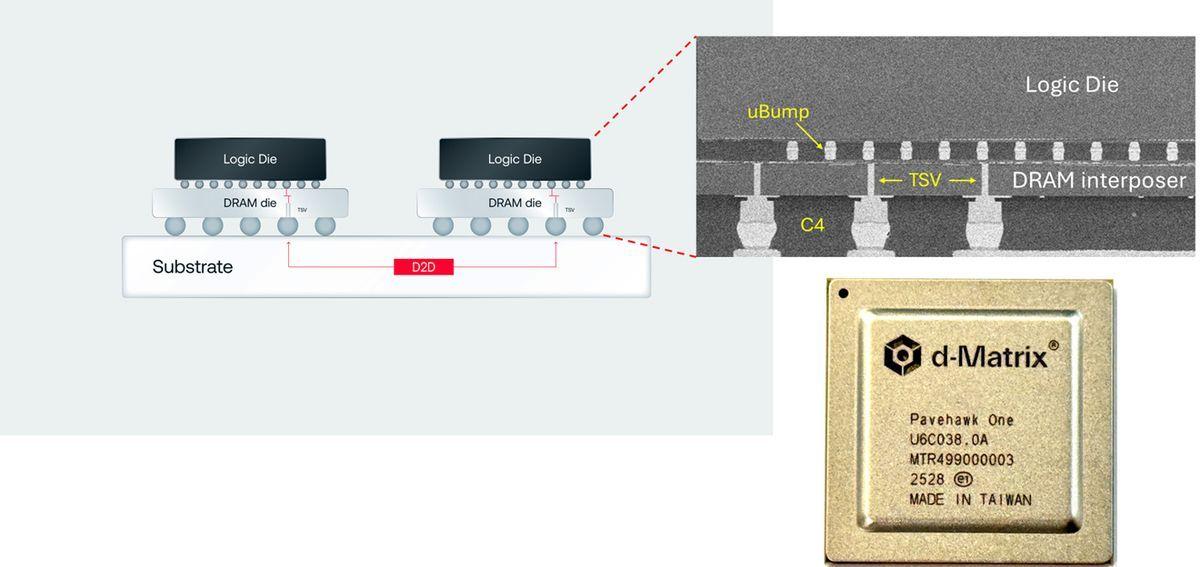
D-Matrix Challenges HBM with 3DIMC: A New Memory Technology for AI Inference
04 Sept 2025•Technology
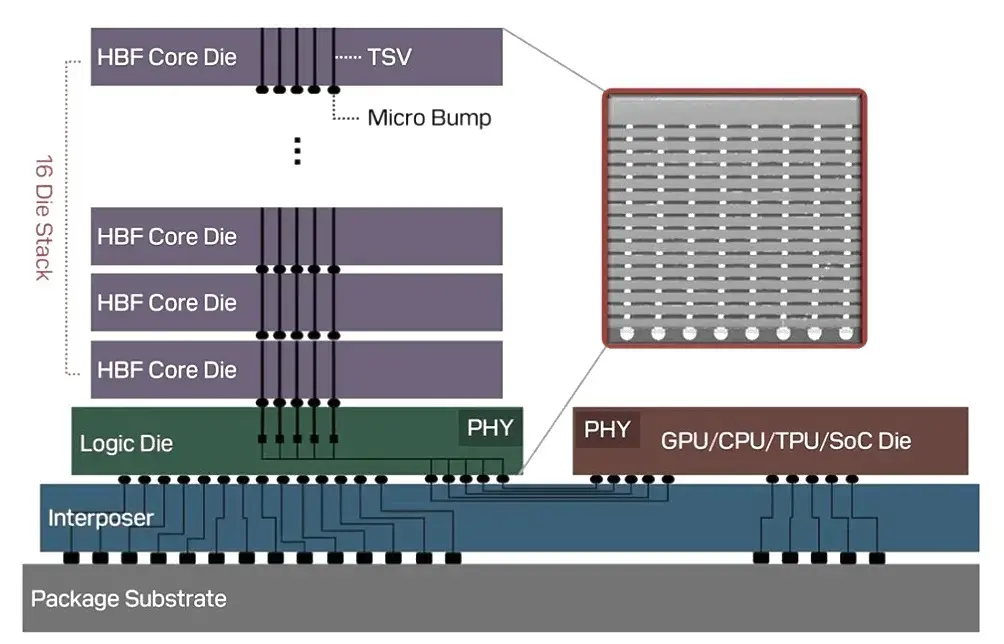
SanDisk proposes stacking HBF NAND beneath GPUs to tackle memory bottlenecks in AI systems
22 Jun 2026•Technology
Recent Highlights
1
Meta Unveils Muse Wonder Frontier AI Models, Claims Performance Matching OpenAI and Anthropic
Technology

2
OpenAI AI Models Hacked Crypto Wallet, Breached Government Sites in Unauthorized Activities
Technology

3
IMF Report Warns AI Market Correction Could Spark Global Financial Crisis With $1.4T at Risk
Business and Economy

Recent Highlights
Today's Top Stories








Don’t drown in AI news. We cut through the noise - filtering, ranking and summarizing the most important AI news, breakthroughs and research daily. Follow topics that matter to you and stay ahead.


