Nvidia and Microsoft are widening a partnership that spans the cloud, the office and the desk


2 Sources
[1]
NVIDIA and Microsoft Expand Accelerated Computing From Azure to Windows PCs
NVIDIA and Microsoft expand tools for enterprises to customize AI models and deploy applications across cloud and local infrastructure. NVIDIA and Microsoft are extending their full-stack collaboration to help organizations build, customize and deploy intelligent applications -- from
[2]
NVIDIA Fuels Accelerated Computing at Microsoft With Vera Rubin Deployments at Azure, RTX Blackwell & Open Models For Windows PCs
NVIDIA and Microsoft are bringing accelerated computing across Azure and Windows PCs, powered by next-gen infrastructure. NVIDIA Vera Rubin NVL72 Now Available at Azure, While Nemotron Open AI Models & RTX Blackwell Power On-Premises Windows PCs As accelerated compute and AI demand continue to
Share
Copy Link
Nvidia and Microsoft announced an expanded computing partnership at Microsoft Ignite, and the scope is the story: it covers Azure's data centers, Microsoft's enterprise AI tools, on-premises systems and Windows PCs
1
2
.
Source: NVIDIA
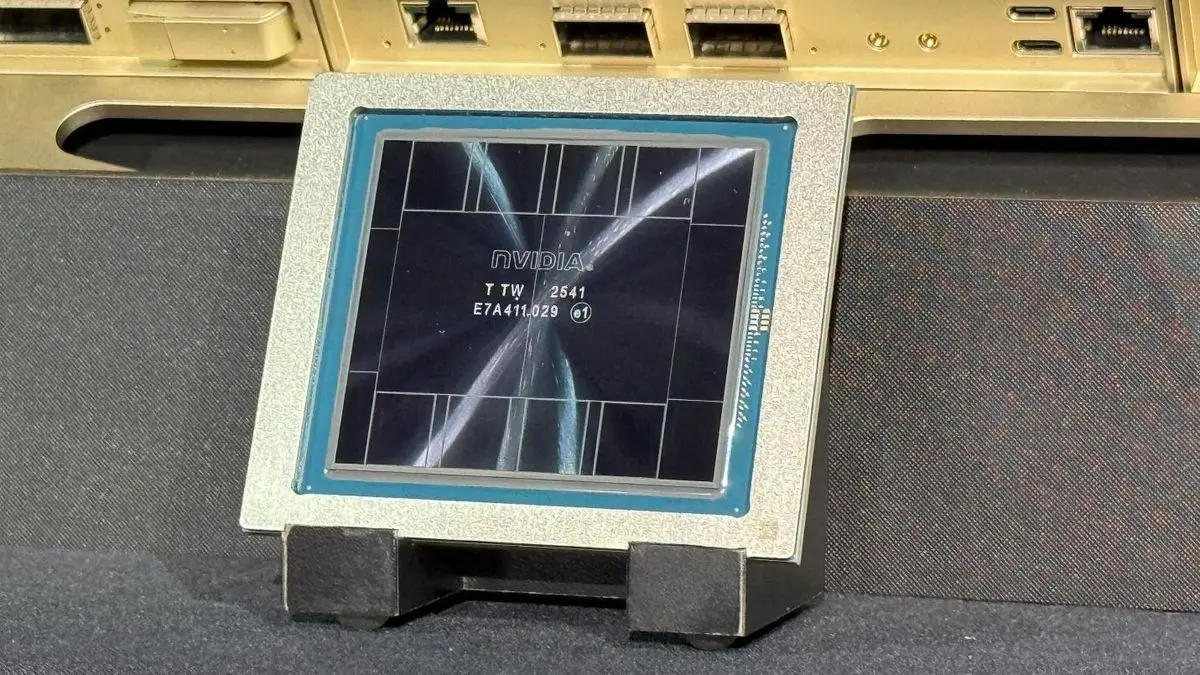
The newest hardware is already in Azure
The headline item, per the companies, is that Nvidia's Vera Rubin NVL72, its newest rack-scale system, is running in Azure data centers. The companies frame the systems as built for demanding work: reasoning models, AI agents that act on their own, and large-scale training and inference
1
2
.Two benchmark results back that up. In MLPerf Training v6.1, a standard industry test of how fast AI systems can be trained, Azure scaled to 10,240 Blackwell GPUs running at once for one test on the DeepSeek-V3 model
1
2
. That was the largest scale any company submitted in this round of the benchmark1
2
. On a separate inference test, Azure's Blackwell-based systems beat every other cloud submission on one measure of DeepSeek-R1 throughput by more than 10%, according to analysis firm Signal651
2
. The companies cite the benchmark results as evidence of the joint engineering behind the Vera Rubin rollout1
2
.The two are also working on confidential computing at rack scale, which would let a customer verify its computing environment before handing over sensitive models, data or encryption keys. That is work in progress rather than a shipped feature
1
2
.Open models for enterprises
The second strand is Nvidia's Nemotron 3.5 open model family arriving more widely on Microsoft Foundry, Microsoft's platform for building AI applications. New Foundry features let developers run their own model customization while Microsoft manages the infrastructure, and deploy custom model weights
1
.The lineup is growing: a Super version for long-running agents, a Lightning version for fast responses and tool use, plus models for search ranking, document parsing and content safety. Two more, Bolt for fast reasoning and Transcribe for speech, are still coming
1
2
.Consulting firm Ernst & Young is the named customer example. It used Foundry's training tools to tune Nemotron models to sort corporate purchasing records. On its own test dataset, accuracy improved by 55% and costs fell 15-fold compared with proprietary frontier models, per the companies
1
2
. Ernst & Young's project is the companies' demonstration that open models can be adapted to specialized business work.Related Stories
Down to the desktop
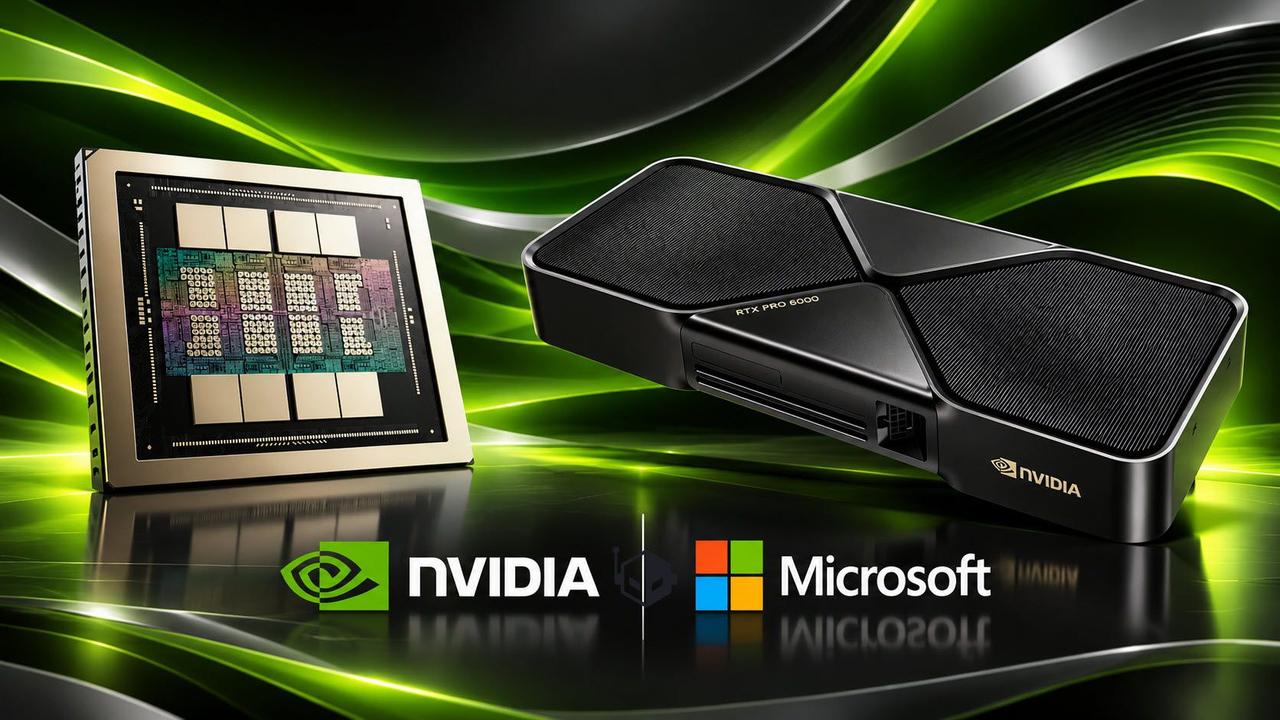
The third strand pushes the same stack onto devices. Nvidia's Nemotron models are coming to Foundry Local and Azure Local, its on-premises platform. That platform will also support Nvidia's Blackwell workstation GPUs and, later, Jetson edge boards for factory uses like machine vision and robotics
1
2
.
Source: Wccftech
On Windows PCs running Nvidia's Spark graphics, the companies plan to show local AI model demos at Ignite. Direct Stream, a feature for GPU-accelerated Windows 365 Cloud PCs, is in a limited preview now. It can handle as many as two 4K streams at 60 frames a second, with low latency, and a public preview is planned
1
2
. The companies frame the device push as running AI closer to where data is generated, so applications can run directly on the machine.Microsoft is also a customer of its partner's. It uses Nvidia's Dynamo software for inference during its own model training, and Blackwell GPUs for Bing search, as Nvidia's blog describes
1
.Many of the announced items are available now; the edge and desktop pieces are partly still roadmap. That Direct Stream preview is scheduled for early 2027
1
2
.References
Summarized by

Navi
Related Stories
NVIDIA and Microsoft Collaborate to Accelerate AI Development on Windows PCs
20 May 2025•Technology
Microsoft Unveils NVIDIA Blackwell-Based Azure AI Platform and AMD EPYC HPC Solutions
20 Nov 2024•Technology

NVIDIA and Google Cloud Build Massive AI Infrastructure Scaling to Nearly 1 Million GPUs
22 Apr 2026•Technology

Recent Highlights



Recent Highlights
Today's Top Stories





Don’t drown in AI news. We cut through the noise - filtering, ranking and summarizing the most important AI news, breakthroughs and research daily. Follow topics that matter to you and stay ahead.


