Qualcomm enters data center market with Dragonfly chips, eyes smartphone integration


2 Sources
[1]
Qualcomm Darts Into the Data Center Business With Dragonfly
The company behind the processors in many of the smallest computers people use is making a bid to enter some of the largest computers in operation today. Qualcomm used its investor day event in New York this week to unwrap a new family of components for data centers. "We have a comprehensive portfolio to enter the next phase of the data center market," CEO Cristiano Amon said near the start of the roughly 3-hour event. "We're going to become a full-stack player in physical AI, compute, everywhere." The San Diego company's new data-center portfolio includes multiple new processors -- the Dragonfly C1000 CPU and the Dragonfly AI300 "interfence accelerator," following the already-announced AI200 and AI200 accelerators -- plus a proprietary High-Bandwidth Compute (HBC) architecture, new electric and optical connectivity products, and custom silicon options for customers. Tony Pialis, Qualcomm's EVP and GM for data center, said the company will bring the connectivity portfolio to market this year, followed next year by the new AI accelerator and custom silicon products, and then the new CPU in 2028. He spent much of his time on stage outlining how HBC's tight coupling of memory and processing could fix what he called the "memory bottleneck" in data-center architectures that separate processors from optimized memory technologies such as HBM (high-bandwidth memory) and SRAM (static RAM). "We can deploy multiple HBC stacks within a single compute device using standard packaging," Pialis said before ticking off such performance advantages as a 200x increase in capacity per watt compared with SRAM and a 6x increase in bandwidth per watt on large workloads compared with HBM. Another Push for 'Superintelligence' Qualcomm announced two top-tier data-center partners, Microsoft and Meta. "HBC implements an innovative architecture, with high memory bandwidth and integrated compute, that unlocks significant improvements in cost and performance for the next generation of AI infrastructure, and there is so much more to come," Microsoft CEO Satya Nadella said in a video clip. "We are excited about your innovation in the data center, especially around high-bandwidth compute, and...we look forward to our continued partnership as we build the next generation of computing together." Meta CEO Mark Zuckerberg provided a similar plug for Qualcomm in his own video clip, saying the company has "spent decades figuring out how to get the most performance out of every watt." He called Meta's partnership "a multigenerational collaboration" that "will help put personal superintelligence into billions of people's hands." (Zuckerberg began touting "superintelligence" as a goal even before Meta gave up on its "metaverse" aspirations, but it's still not clear what that will mean in the real world beyond putting 10% of Meta's employees out of a job.) "I have not had to push my way into hyperscale customers," Qualcomm's Pialis said. "They've been pulling us in." 'Very Strategic' Partnerships Data centers have become a booming business but also an unpopular one, as people have increasingly objected to their current and future effects on the environment and utility costs. Soaring data-center demand for memory and processors has already driven up costs for consumer hardware; just Thursday, Apple and Microsoft separately announced price hikes. But those concerns were nowhere in sight at Qualcomm's presentation. Qualcomm also announced multiple deals to accelerate its data-center ambitions. It plans to acquire, at an unannounced price, the AI-development startup Modular, and Amon closed out the event by revealing a "very strategic" partnership with the high-profile AI-software firm Hugging Face. Amon said that this collaboration would enable AI firms to deploy new models on Qualcomm's hardware with "zero manual integration work." Hugging Face Co-Founder and CEO Clément Delangue backed that up in a video clip: "You'll be able to take any model, big or small, deploy it optimized on any Qualcomm platform with agents running on device and orchestrating across the cloud." Akash Palkhiwala, Qualcomm's CFO, COO, and EVP, underscored its data-center goals when he said the company sees a total addressable market there of more than a trillion dollars and wants to secure more than 5% of that market in five to seven years. Beyond data-center dreams, Qualcomm's investor day featured updates on its ventures into smart glasses and other wearables, connected cars, and the still-nascent notion of 6G. All of these moves by Qualcomm into new markets -- see also its earlier expansion into laptop processors -- reflect the company's steadily rising confidence. "When people ask about if it's late to enter the data center, you should think about scale and execution," Amon said. "Our engineering capabilities, our operations and supply chain, it's one of the leading scale and execution machines in the semiconductor industry."
[2]
Qualcomm plans to bring data center chip tech to smartphones By Investing.com
Investing.com -- Qualcomm said it plans to use new chip technology developed for data centers in smartphones, which would improve how artificial intelligence runs on mobile devices. Executive Vice President Durga Malladi shared the information in an interview with Semafor. The chipmaker, which supplies smartphones and wearable devices, entered the data center chip industry this week with its announcement of new data center chips. The sector faces supply shortages and strong competition. "What starts in data centers is not going to end there," Malladi said. Stay ahead of every breaking move with real-time news on InvestingPro -- now 50% off. Qualcomm is talking with manufacturers of smartphones, personal computers, and cars about its new data center technology portfolio, Malladi said. The company's High Bandwidth Compute architecture stacks chips vertically instead of placing them side by side, which puts memory and compute closer together. This design improves data speed and flow. The first generation of the new architecture will launch in data centers next year, with commercial availability expected in 2028. Malladi did not say when Qualcomm will add the new technology to other devices. Chip stacking technology exists mainly in data centers rather than smartphones. When it reaches handheld devices, users will be able to run more AI models locally and operate agents in an "always on" mode without draining the battery. Qualcomm had fallen behind in data center technology for several years but holds a strong position due to its long history with smartphone chips.
Share
Copy Link
Qualcomm unveiled its data center portfolio including Dragonfly processors and High Bandwidth Compute architecture at its investor day, securing partnerships with Microsoft and Meta. The company plans to bring the technology to smartphones, enabling more powerful on-device AI capabilities while targeting over 5% of the trillion-dollar data center market within five to seven years.
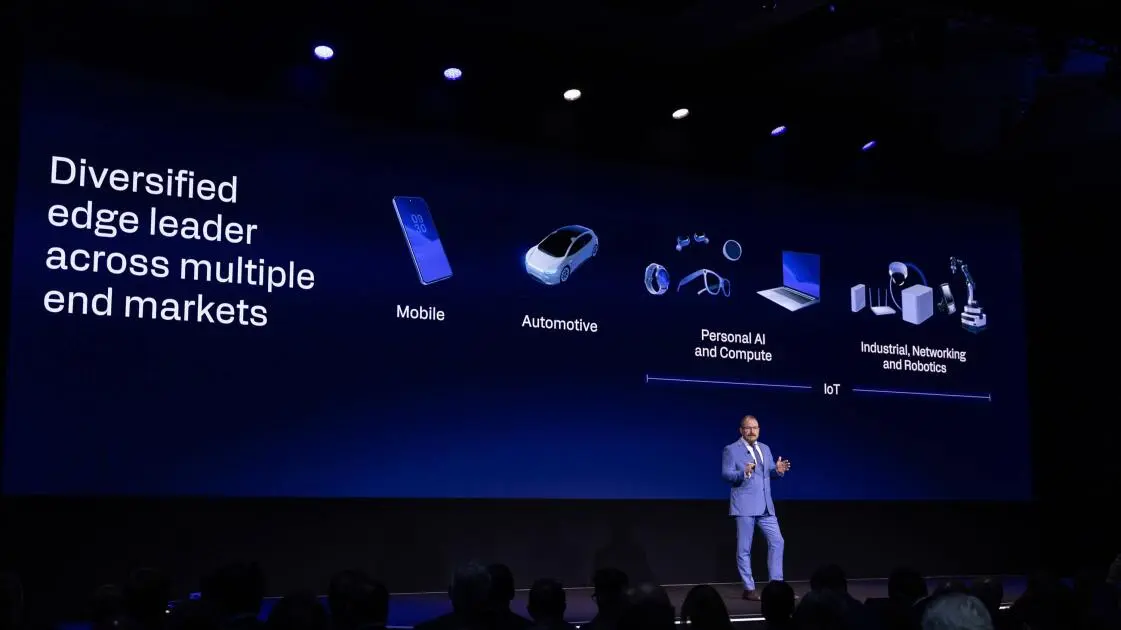
Qualcomm Unveils Comprehensive Data Center Portfolio
Qualcomm made a major push into the data center business this week, announcing a comprehensive portfolio of components designed to compete in AI infrastructure. At its investor day event in New York, CEO Cristiano Amon declared the company's ambition to "become a full-stack player in physical AI, compute, everywhere"
1
. The San Diego-based chipmaker, known primarily for powering smartphones and wearable devices, is now targeting some of the largest computing operations in the world.The new portfolio includes multiple processors under the Dragonfly brand, featuring the Dragonfly C1000 CPU and the Dragonfly AI300 inference accelerator, alongside previously announced AI200 and AI200 accelerators. Tony Pialis, Qualcomm's EVP and GM for data center, outlined an aggressive rollout schedule: connectivity products launch this year, followed by the new AI accelerator and custom silicon products in 2026, with the CPU arriving in 2028
1
.High Bandwidth Compute Architecture Tackles Memory Bottlenecks
At the heart of Qualcomm's data center strategy sits its proprietary High Bandwidth Compute architecture, which addresses critical performance limitations in current AI workloads. The technology vertically stacks chips instead of placing them side by side, positioning memory and compute closer together to improve data speed and flow
2
. This tight coupling of memory and processing aims to solve what Pialis called the "memory bottleneck" in data center architectures that separate processors from optimized memory technologies like HBM and SRAM.The performance advantages appear substantial. Pialis claimed that "we can deploy multiple HBC stacks within a single compute device using standard packaging," delivering a 200x increase in capacity per watt compared with SRAM and a 6x increase in bandwidth per watt on large workloads compared with HBM
1
. These metrics could position Qualcomm's Qualcomm data center chip offerings as competitive alternatives in a market dominated by established players.Microsoft and Meta Back Qualcomm's AI Infrastructure Play
Qualcomm secured two heavyweight partners for its data center ambitions: Microsoft and Meta. Microsoft CEO Satya Nadella praised the approach in a video statement, saying "HBC implements an innovative architecture, with high memory bandwidth and integrated compute, that unlocks significant improvements in cost and performance for the next generation of AI infrastructure"
1
. Meta CEO Mark Zuckerberg called the collaboration "a multigenerational partnership" that will help deliver what he termed "personal superintelligence" to billions of users.Pialis noted that hyperscale customers have actively sought Qualcomm's participation: "I have not had to push my way into hyperscale customers. They've been pulling us in"
1
. This customer demand suggests the company's engineering capabilities and supply chain expertise translate effectively to data center requirements, even as it enters a market facing supply shortages and intense competition.Related Stories

Strategic Acquisitions and Partnerships Accelerate AI Deployment
To strengthen its position, Qualcomm announced plans to acquire AI-development startup Modular at an undisclosed price and formed what Amon called a "very strategic" partnership with Hugging Face. This collaboration aims to enable AI firms to deploy new models on Qualcomm's hardware with "zero manual integration work"
1
. Hugging Face Co-Founder and CEO Clément Delangue confirmed that users "will be able to take any model, big or small, deploy it optimized on any Qualcomm platform with AI agents running on device and orchestrating across the cloud."Qualcomm's CFO Akash Palkhiwala set ambitious financial targets, stating the company sees a total addressable market exceeding one trillion dollars and aims to capture more than 5% of that market within five to seven years
1
. This would represent a significant revenue stream for a company expanding aggressively beyond its traditional smartphone business.Data Center Technology Coming to Smartphones and Beyond
Executive Vice President Durga Malladi revealed that Qualcomm plans to bring its data center chip technology to smartphones, potentially transforming on-device AI performance. "What starts in data centers is not going to end there," Malladi told Semafor
2
. The company is already in discussions with manufacturers of smartphones, personal computers, and cars about integrating the new technology portfolio.When chip stacking technology reaches handheld devices, users will be able to run more AI models locally and operate agents in an "always on" mode without draining the battery
2
. While the first generation launches in data centers next year with commercial availability in 2028, Malladi did not specify when Qualcomm will integrate the technology into other devices. This cross-platform strategy could give Qualcomm a unique advantage, leveraging its dominant position in mobile chips to create synergies with its nascent data center business and deliver consistent AI performance across edge and cloud computing environments.References
Summarized by

Navi
[1]
Related Stories
Qualcomm unveils Dragonfly C1000 CPU for data centers, signs Meta and Microsoft as customers
24 Jun 2026•Technology

Qualcomm Announces Return to Data Center Market with AI-Focused CPUs Compatible with Nvidia Technology
19 May 2025•Technology
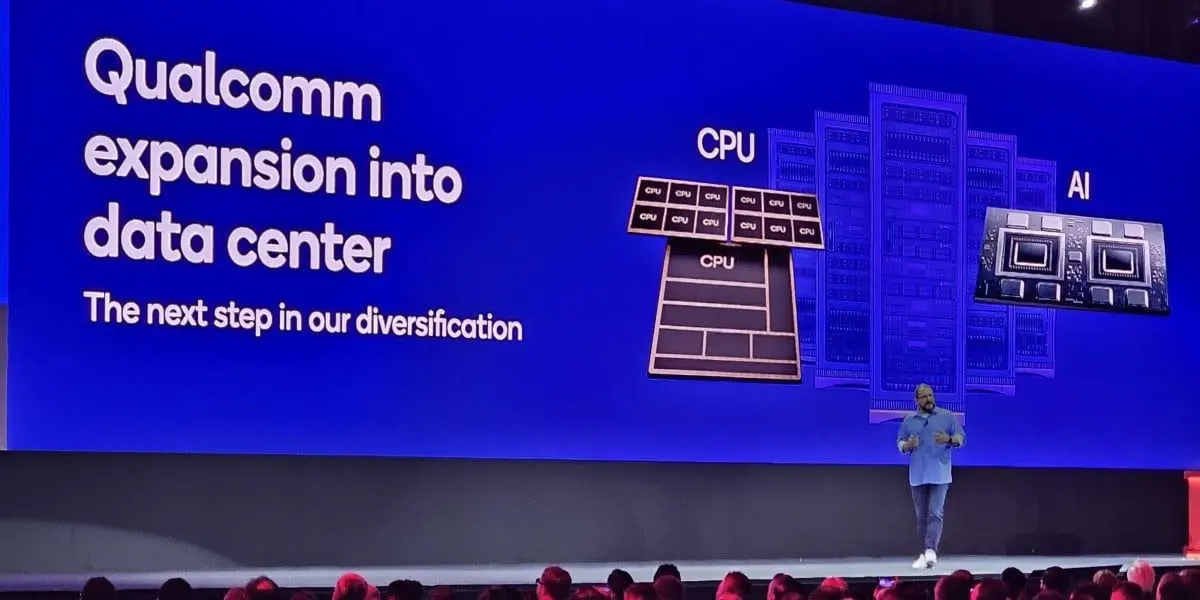
Qualcomm Challenges Nvidia with New AI Chips for Data Centers
27 Oct 2025•Technology
Recent Highlights
1
Trump administration asks OpenAI to delay GPT-5.6 release over security concerns
Policy and Regulation

2
Anthropic faces AI export ban as Mythos reportedly breached NSA systems in hours
Policy and Regulation

3
OpenAI and Broadcom unveil Jalapeño chip to power next-generation AI inference at scale
Technology

Recent Highlights
Today's Top Stories









Don’t drown in AI news. We cut through the noise - filtering, ranking and summarizing the most important AI news, breakthroughs and research daily. Follow topics that matter to you and stay ahead.


