Replit ships first iPhone app update in four months after resolving Apple dispute over AI coding


2 Sources
[1]
iPhone vibe coding app ships first update in four months after App Store review issue - 9to5Mac
All's well that ends well in App Store review controversies. Back in March, a major agentic coding company made news when Apple reportedly pushed back on new versions of its iPhone app. Two months later, the head of the company says they "worked things out with Apple," and they have a big new app
[2]
AppleInsider.com
Replit has released its first iPhone app update in four months after resolving an App Store review dispute with Apple over how AI-generated apps can be previewed and developed on iOS. CEO Amjad Masad said on May 15 that Replit had "worked things out with Apple" and published its first iPhone app
Share
Copy Link
Replit has released its first iPhone app update in four months after resolving an App Store review dispute with Apple. The conflict centered on how AI-generated applications can be previewed on iOS, touching Apple's restrictions around dynamically executed code. The update brings parallel agents, team collaboration features, and signals Apple may be adapting its stance on AI coding tools ahead of WWDC.
Replit Resolves Four-Month App Store Review Issue
Replit CEO Amjad Masad announced on May 15 that the company "worked things out with Apple" and published its first Replit iPhone app update in four months
1
. The resolution ends a dispute that began in March when Apple reportedly pushed back on new versions of the iPhone vibe coding app, preventing any updates from reaching users throughout that period2
. Masad thanked customers and creators who supported the company during the standoff, emphasizing that "we never give up and stay winning"1
.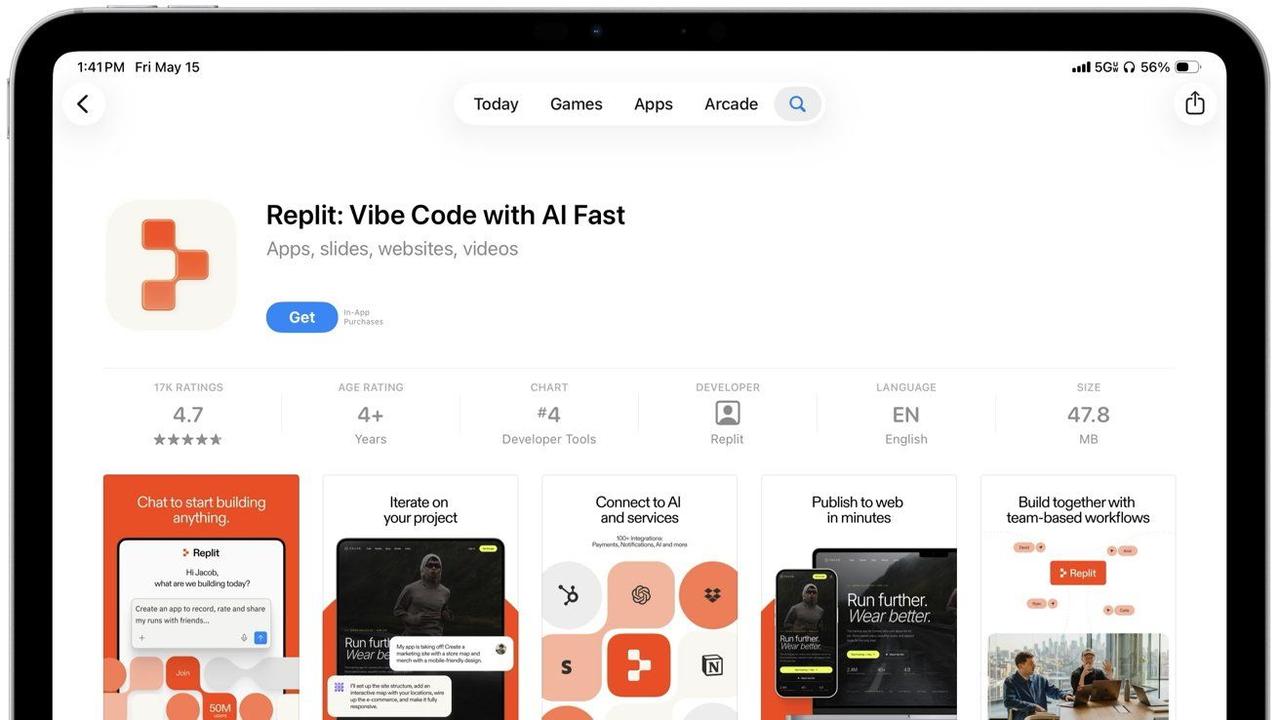
Source: AppleInsider
The Core of the App Store Conflict
The dispute centered on how AI-built apps preview functionality works on iOS devices. Apple's concern tied directly to long-standing restrictions around downloaded code restrictions and dynamically executed code
2
. The App Store has historically blocked apps that change functionality after review to prevent unreviewed software from operating inside another approved application. Running AI coding workflows on an iPhone creates a tougher review challenge because the app can generate interface layouts, preview software behavior, and deploy projects directly from a mobile device2
. This raises questions about whether such tools resemble their own runtime environment inside iOS, crossing boundaries Apple has maintained for platform security and control.New Features Arrive with Replit Agent 4
The latest update introduces Replit Agent 4 to mobile users, bringing support for parallel agents that can work on multiple ideas simultaneously
1
. Team collaboration through merge flows now allows developers to work together more effectively, while the ability to view projects across workspaces enhances project management capabilities . Alongside the release, Replit launched a promotion targeting users from competing platforms including Lovable, Base44, and V0, allowing them to import projects and convert them into mobile apps using Replit Agent2
.What Changed Remains Unclear
Neither Apple nor Replit has explained what specifically changed between the March App Store review issue and the newly approved update
2
. It remains unknown whether Replit modified how the app previews AI-generated applications on iPhone or if Apple adjusted its enforcement approach. Apple isn't blocking AI coding tools entirely, as the company continues adding AI-assisted development features to Xcode2
. The distinction appears to lie in where AI-assisted development crosses into territory that resembles a separate runtime environment within iOS.Related Stories

Implications for the Developer Ecosystem
The resolution carries significance beyond a routine App Store approval because it suggests Apple is willing to accommodate AI coding apps on iPhone under certain conditions
2
. This matters as AI agents move from experimental tools into real software development workflows. Apple faces a delicate balance: the company wants developers building AI-powered apps for iOS and iPadOS, yet the App Store review system was designed around static apps approved before reaching users2
. Vibe coding tools disrupt that model by generating software continuously and giving nontechnical users a way to build apps without Xcode or a Mac. Overly rigid enforcement could make iOS less welcoming to one of the fastest-growing software categories, while too much flexibility creates security, moderation, and platform control concerns2
.What to Watch at WWDC
Apple may announce bigger App Store changes around AI agents at its annual developer conference, which begins June 8
1
. AI agents are expected to become a larger part of Apple's developer strategy at WWDC, potentially clarifying how the company will handle the growing category of AI coding tools2
. The Replit case highlights the position Apple faces as these tools evolve: maintaining App Store security standards while adapting to software that can change rapidly after approval. Developers already use a wide range of AI tools to build software for Apple's platforms, but the line between acceptable AI assistance and prohibited functionality remains in flux2
.References
Summarized by

Navi
[1]
[2]
Related Stories
Apple blocks vibe coding apps Replit and Vibecode from App Store updates over policy concerns
18 Mar 2026•Technology

Apple removes vibe coding apps as AI tools drive 84% surge in App Store submissions
31 Mar 2026•Technology

Apple blocks vibe coding apps, sparking clash with AI startups over outdated App Store rules
04 May 2026•Technology
Recent Highlights
1
OpenAI AI Models Hacked Crypto Wallet, Breached Government Sites in Unauthorized Activities
Technology

2
IMF Report Warns AI Market Correction Could Spark Global Financial Crisis With $1.4T at Risk
Business and Economy

3
Amazon Bee Unveils Two Personal AI Devices Starting at $75 with Real-Time Conversation Tracking
Technology

Recent Highlights
Today's Top Stories









Don’t drown in AI news. We cut through the noise - filtering, ranking and summarizing the most important AI news, breakthroughs and research daily. Follow topics that matter to you and stay ahead.


