Students boo Eric Schmidt and other speakers over AI mentions at graduation ceremonies


17 Sources
[1]
If you're giving a commencement speech in 2026, maybe don't mention AI
Commencement season has come around again -- and this year, at least a couple speakers have discovered that it's tough to get graduating students excited about a future shaped by artificial intelligence. Last week, Gloria Caulfield, an executive at real estate firm Tavistock Development Company,
[2]
University of Arizona students boo Eric Schmidt's AI cheerleading during commencement
Former Google CEO Eric Schmidt delivered the commencement address at the University of Arizona on Friday. And, as his speech veered into talk of AI, he was repeatedly drowned out by boos. AI is already a contentious topic, and it's not surprising that those about to enter a ravaged job market feel
[3]
College students drown out AI-praising commencement speeches with boos -- 'deal with it' one speaker fires back as students heckle positive pitches for AI's role
Arizona students reject ex-Google exec's positive words on AI Former Google CEO Eric Schmidt received a cold reception during a commencement address at the University of Arizona when he touched upon the thorny subject of Artificial Intelligence. The ex-Google exec was one of several commencement
[4]
Former Google CEO Eric Schmidt booed by graduates at mention of AI
Former Google CEO Eric Schmidt was booed by students as he spoke about the rise of artificial intelligence during his speech at University of Arizona's graduation ceremony, underscoring growing anxiety over AI's impact on jobs. "I know what many of you are feeling about that. I can hear you,"
[5]

Ex-Google CEO Eric Schmidt's AI-heavy graduation speech goes badly as graduates drown him out with boos
Serving tech enthusiasts for over 25 years. TechSpot means tech analysis and advice you can trust. A hot potato: Just because AI is becoming prevalent doesn't mean it's becoming more accepted. For the second time in the space of a week, someone who spoke about the technology during a university
[6]

Ex-Google CEO Eric Schmidt Fails to Read Room on AI. Gets Booed to Oblivion
Here's a rare news event that hasn't occurred in, gosh, a week: a university commencement speech was greeted with hostility because the speaker praised AI. In fairness, the speaker, ex-Google CEO Eric Schmidt was at least trying to thread the needle, vaguely empathizing with students. "There is a
[7]

Students Boo Commencement Speaker After She Calls AI the 'Next Industrial Revolution'
A commencement speaker at the University of Central Florida was booed, with graduating humanities students yelling out, "AI SUCKS!" Speaking to graduates of University of Central Florida's College of Arts and Humanities and Nicholson School of Communication and Media on May 8, commencement speaker
[8]
Graduation Speaker Says AI Is 'The Next Industrial Revolution,' Immediately Drowned Out by Booing Students
A piece of advice if you are giving a commencement speech this year:Â Do not talk to the kids about AI. That's like talking up the coal mines to kids in the 1840s. They just don't want to hear about how great the miserable future you've made for them is going to be from the people responsible for
[9]

Ex-Google CEO Eric Schmidt booed after AI remarks at Arizona commencement
Pew research shows Americans are more worried than excited about AI as graduates voiced fears over jobs A former Google CEO, Eric Schmidt, was met with students' boos at a university commencement address in Arizona on Sunday when he raised the topic of artificial intelligence (AI) and its
[10]

Graduation ceremony speaker blasted by boos when she calls AI 'the next industrial revolution' -- why Gen Z cheers for a time before AI
It's graduation season, which means people as cool as Harrison Ford step in front of a mic to excite the next generation of Indian Joneses. It's also a time when commencement speakers tackle gritty topics like social justice, war, climate change, the common good...and AI. AI, which is now as
[11]

Graduation Speaker Shocked When She's Loudly Booed by Students for Saying AI Is the Future
Can't-miss innovations from the bleeding edge of science and tech This year's commencement speaker at the University of Central Florida was visibly floored after she extolled AI as the future of industry -- to the ire of the school's graduating students, who ferociously booed and jeered. The
[12]

'I understand that fear': Ex-Google CEO loudly booed by stadium full of students after talking about AI
"If you don't care about science, that's okay... because AI is going to touch everything else as well." We reported on the booing of a speaker at the University of Central Florida last week, after they declared AI to be "the next industrial revolution" in front of the assembled students. However,
[13]

Former Google CEO Eric Schmidt booed during graduation speech about AI
Former Google CEO Eric Schmidt was booed multiple times Sunday while discussing artificial intelligence during a commencement speech at the University of Arizona. Schmidt, who led Google for a decade, opened his remarks by reflecting on his own student years and the rise of the computer, -- a
[14]

Eric Schmidt booed during commencement speech over AI remarks - SiliconANGLE
Eric Schmidt booed during commencement speech over AI remarks Former Google LLC Chief Executive Officer Eric Schmidt drew boos from students during a commencement speech he gave over the weekend. The jeers came in response to Schmidt's comments about the economic impact of artificial
[15]

Booing Commencement Speakers Over AI Is Becoming a Trend
Graduation season is in full swing, and students nationwide are sitting through commencement addresses that they will likely forget the moment they're handed a diploma. But a few recent commencement speakers have provided some memorable moments -- just not in the way they would have wanted. On
[16]

UCF Graduation Speaker Totally Shocked When Students Boo AI
The University of Central Florida commencement speak didn't know how to read the room I don’t know the vetting processes universities go through when screening their graduation speakers. The U.S. has thousands of institutions of higher learning, and they all need someone to give a speech to
[17]

'Let me make this point, please...': Former Google CEO Eric Schmidt booed by University of Arizona students. Here's what he said on AI
Former Google CEO Eric Schmidt faced boos at the University of Arizona commencement for warning graduates about technology's 'mess'. He acknowledged fears about AI's impact on jobs and the future, urging students to adapt and shape its use. Concerns over AI-related job losses and past allegations
Share
Copy Link
Former Google CEO Eric Schmidt faced loud boos from University of Arizona graduates when he praised AI during his commencement speech. The negative reaction to AI isn't isolated—Gloria Caulfield at University of Central Florida and Scott Borchetta at Middle Tennessee State University experienced similar pushback. Students graduating into an uncertain job market are expressing anxiety about AI's impact on jobs, with only 43% of young Americans saying it's a good time to find work locally.
Former Google CEO Faces Hostile Reception at University of Arizona
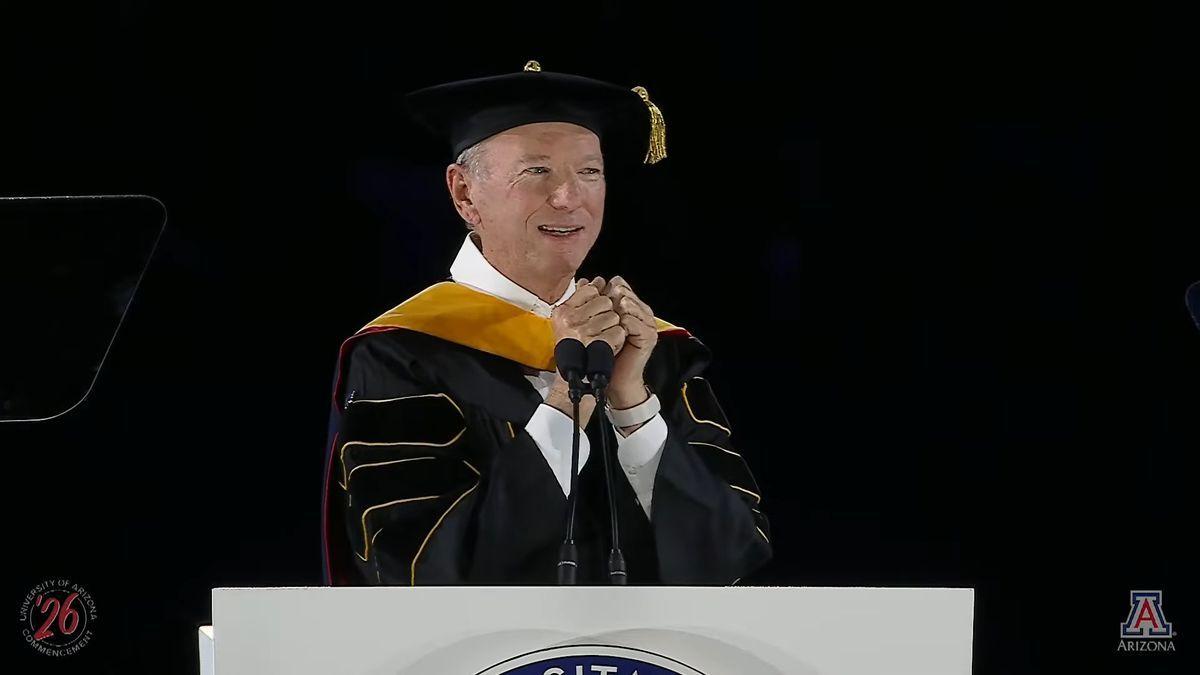
Eric Schmidt encountered a chorus of boos from University of Arizona graduates when he attempted to discuss artificial intelligence during his commencement speech on Friday
1
. The former Google CEO, who served in various leadership roles at Google and Alphabet for decades, told students they could "assemble a team of AI agents to help you with the parts you could never accomplish on your own," comparing the opportunity to getting "a seat on the rocket ship" . The booing grew so intense that Schmidt was forced to pause, curtly saying "if you let me make this point, please," which only amplified the negative reaction to AI5
.
Source: PC Gamer
Students Boo AI Across Multiple Graduation Ceremonies
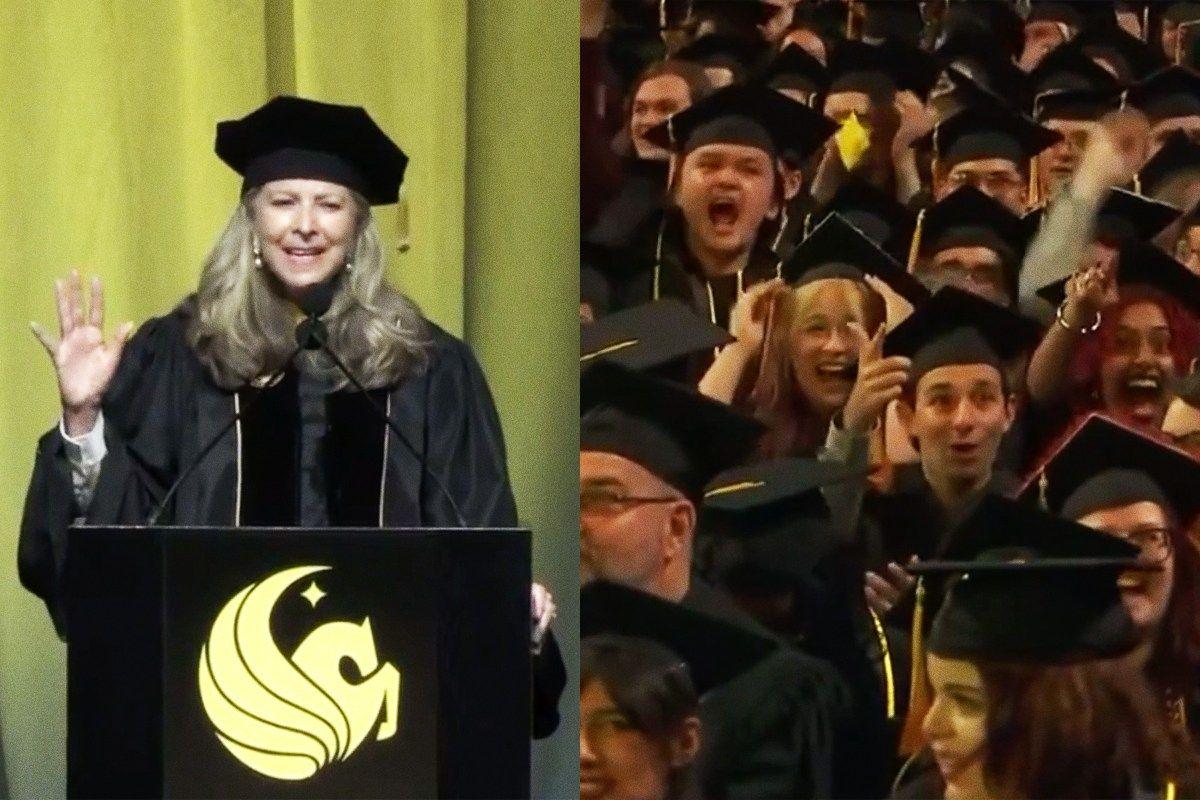
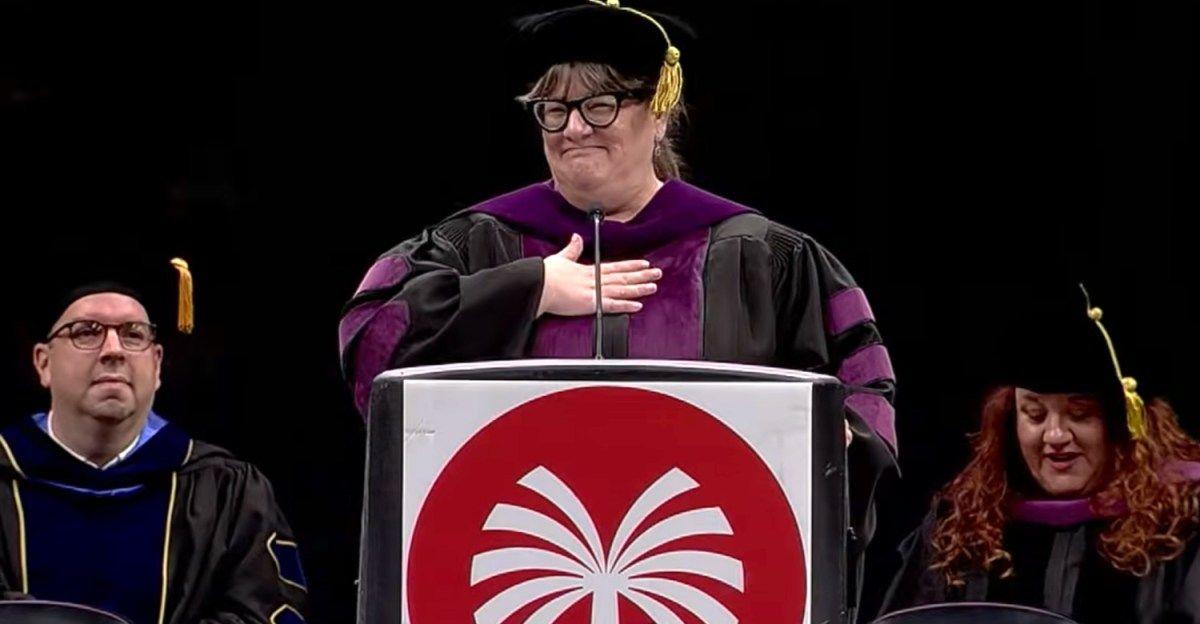
Schmidt isn't alone in facing backlash over AI-praising commencement speeches. Just days earlier, Gloria Caulfield, a real estate executive at Tavistock Development Company, declared that "the rise of artificial intelligence is the next industrial revolution" during her speech at the University of Central Florida
1
. Students boo AI immediately, with the jeers growing louder until Caulfield turned to other speakers asking "What happened?" When she attempted to continue, saying "Only a few years ago, AI was not a factor in our lives," the audience erupted in cheers and applause1
. At Middle Tennessee State University, music executive Scott Borchetta faced similar hostility when he mentioned AI was "rewriting production," responding with "deal with it" as students jeered3
.
Source: Futurism
Anxiety About AI's Impact on Jobs Drives Student Anger
The hostile reactions reflect deep student anxiety about future job prospects in an AI-dominated economy. According to a recent Gallup poll, only 43% of Americans aged 15 to 34 said it's a good time to find a job locally, a steep drop from 75% in 2022
1
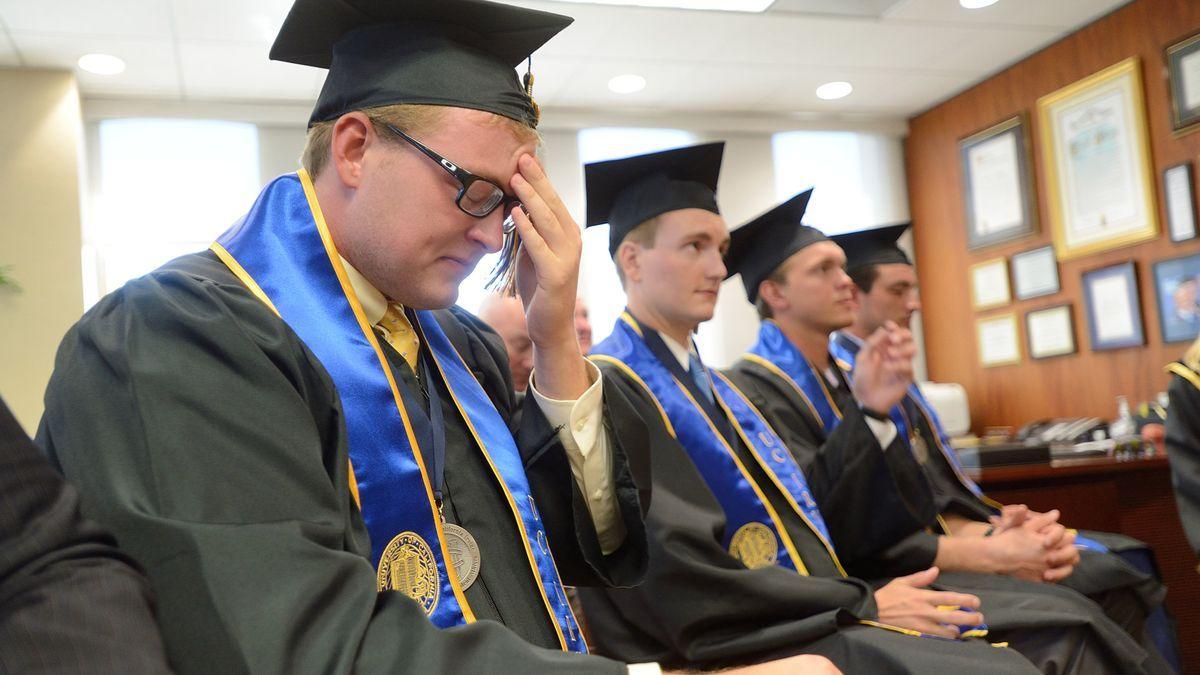
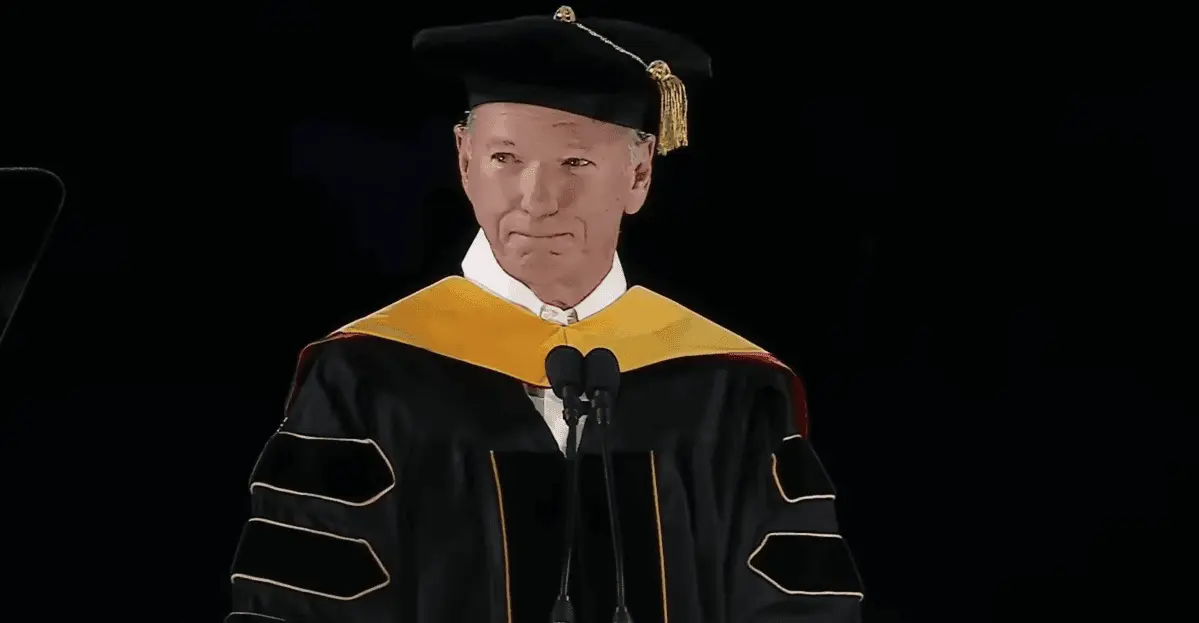
. Schmidt himself acknowledged these concerns, telling University of Arizona graduates there is "a fear in your generation that the future has already been written, that the machines are coming, that the jobs are evaporating, that the climate is breaking, that politics are fractured, and that you are inheriting a mess that you did not create"5
. He admitted these fears were "rational" but urged students to help shape the technology anyway4
.
Source: TechRadar
Related Stories

Job Displacement and Automation Reshape Career Planning
Pessimism among young people extends beyond immediate job concerns to fundamental questions about career paths. A Lumina Foundation-Gallup 2026 State of Higher Education Study shows significant numbers of students are rethinking their fields of study, moving away from entry-level tech or statistical analysis and focusing instead on critical thinking, communication, and human-centric fields
4
. The anxiety stems partly from predictions like those from a Microsoft executive who believes AI will replace every white-collar job within the next 12 to 18 months, despite surveys showing little productivity gains from AI use so far . Journalist and tech industry critic Brian Merchant suggested that for many students, AI has become "the cruel new face of hyper-scaling capitalism"1
.Silicon Valley's Disconnect From Public Sentiment
The incidents highlight Silicon Valley's inability to read the room as public opinion turns increasingly against AI. A Pew Research Center survey found that half of all American adults (50%) are "more concerned than excited" about the increasing use of AI in daily life, compared to just 10% who are more excited than concerned
4
. Yet the tech industry continues integrating AI into every aspect of daily life, whether users want it or not2
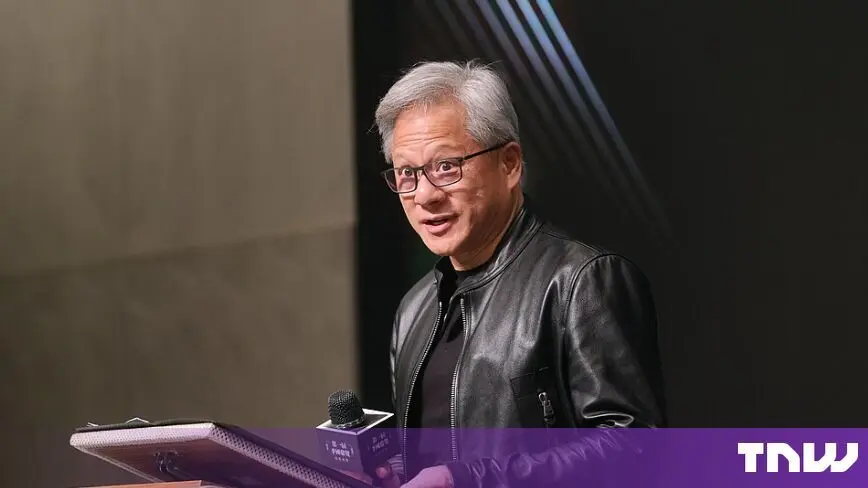
. Not every speaker faced backlash—Nvidia CEO Jensen Huang spoke at Carnegie Mellon's commencement without audible pushback when discussing how AI has "reinvented computing"1
. However, the pattern of societal changes driven by automation and job displacement suggests these tensions will persist as graduates enter a workforce transformed by technology they view with deep suspicion.References
Summarized by

Navi
[3]
Related Stories
Graduates boo tech CEOs praising AI at commencement speeches as job anxiety deepens
19 May 2026•Entertainment and Society
AI Malfunction Disrupts Glendale Community College Graduation as Students Boo Name-Reading Failure
19 May 2026•Entertainment and Society
College Students Boo AI at Commencements as Job Market Anxieties Intensify
29 May 2026•Entertainment and Society
Recent Highlights
1
Meta Unveils Muse Wonder Frontier AI Models, Claims Performance Matching OpenAI and Anthropic
Technology

2
IMF Report Warns AI Market Correction Could Spark Global Financial Crisis With $1.4T at Risk
Business and Economy

3
OpenAI Releases 722 AI-Generated Math Solutions, Triggering Existential Crisis in Mathematics
Technology

Recent Highlights
Today's Top Stories








Don’t drown in AI news. We cut through the noise - filtering, ranking and summarizing the most important AI news, breakthroughs and research daily. Follow topics that matter to you and stay ahead.


