AI Malfunction Disrupts Glendale Community College Graduation as Students Boo Name-Reading Failure


4 Sources
[1]
An AI announcer mispronounced and skipped names during a graduation
The use of AI-powered tools to announce students as they walk on stage during graduation and commencement ceremonies has grown in popularity over the past few years, but it's not always succeeding at the one job it's there for. Many schools have switched to these systems as a way to ensure names
[2]
Students Boo and Jeer as AI Name-Reader Flops Spectacularly at College Graduation Ceremony
Can't-miss innovations from the bleeding edge of science and tech The president of Glendale Community College was pelted with a chorus of furious boos after an AI tool tasked with reading graduating students' names completely and totally flunked the assignment. As local outlet AZFamily reported,
[3]
An AI speaker messed up and skipped the names of students at a college commencement ceremony and yes, there were many boos
Well, it's been a hell of a few weeks for AI interfering with educational ceremonies, after two speakers at separate events (including ex-Google CEO Eric Schmidt) were roundly booed for calling it the future. This instance, though, is slightly different. Glendale Community College used an AI
[4]
Arizona college skips over several graduates after an AI malfunction at commencement ceremony
The president of Glendale Community College in Arizona was met with loud booing by students after she admitted the artificial intelligence that was being used to read names skipped over some graduates at the commencement ceremony last week. Tiffany Hernandez, the college president, addressed the
Share
Copy Link
An AI system designed to announce names at Glendale Community College's graduation ceremony in Arizona failed spectacularly, mispronouncing and skipping graduates entirely. College president Tiffany Hernandez faced loud boos after revealing the AI malfunction, which caused names on the jumbotron to mismatch students crossing the stage. After backlash, affected students received a do-over with a human announcer reading their names.
AI Name-Reader Flops at Glendale Community College Graduation Ceremony
What should have been a celebratory milestone turned chaotic when an AI malfunction disrupted the Glendale Community College commencement ceremony in Phoenix, Arizona. The AI announcer mispronounced names and skipped graduates entirely, prompting widespread frustration from students and families who had gathered to celebrate years of hard work
1
2
.The AI system malfunction caused names displayed on the jumbotron to stop changing and fail to match the students actually walking across the stage. Graduating student Grace Reimer told local media she heard her own name announced while watching another student receive their diploma, creating a disorienting experience during what should have been a defining moment
2
. The ceremony was paused at least twice as officials attempted to resolve the technical issues1
.
Source: Futurism
Students Boo and Jeer as College President Addresses AI Speaker Messed Up
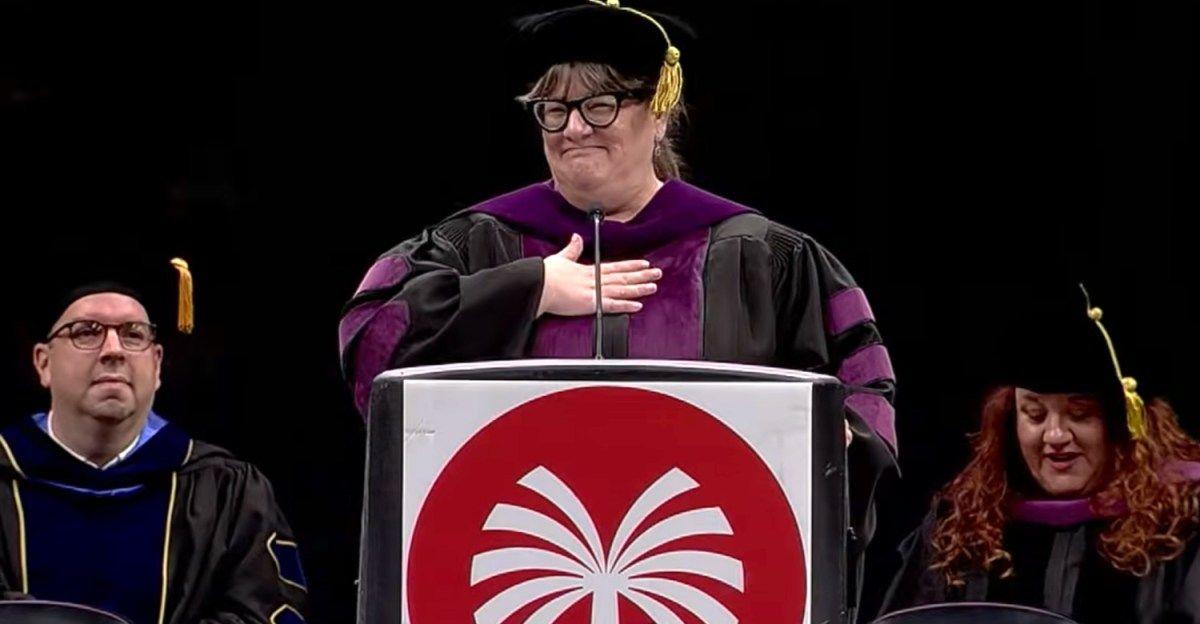
College president Tiffany Hernandez faced an overwhelming chorus of boos when she took to the podium to explain the situation. "We're using a new AI system as our reader," Hernandez told the disgruntled crowd, immediately met with jeers. "That is a lesson learned for us," she continued, attempting to salvage the moment by noting that students "were able to walk the stage and get a picture, which is what I would hope is the most meaningful"
2
3
.
Source: The Verge
Her comments drew more jeers, as many felt the photo wasn't the most meaningful part of graduation. The entire point of a commencement ceremony is for each student to be recognized individually for their achievement, which involves hearing their name read aloud as loved ones cheer from the stands
2
. Initially, Hernandez told affected graduates they would not be able to walk across the stage again, but after significant backlash, those graduates were eventually given a do-over with an actual human announcer reading their names1
.Growing Apprehension Towards AI at Significant Life Events
The incident at Glendale Community College reflects broader tensions around AI deployment at significant life events. AI-powered tools to announce students during graduation ceremonies have grown in popularity over the past few years, with schools adopting them to ensure names are pronounced correctly
1
. Popular platforms like Tassel allow students to confirm how their names are pronounced and generate AI-powered previews for corrections before the ceremony, with announcements created from models trained on voice actors1
.However, this approach can make important moments feel impersonal and automated. Alternative tools such as StageClip's NameCheck share correct pronunciations with a human announcer who can practice ahead of time, offering a hybrid approach that prevents timing and mispronunciation issues while maintaining human connection
1
. June Prakash, president of the teachers' union in Arlington, Virginia, addressed concerns last month, stating: "When spoken by someone who knows the student or has taken the time to learn their name, it reflects respect and belonging. Outsourcing that responsibility can unintentionally send the message that efficiency matters more than identity"1
. Following similar concerns, Arlington's Washington-Liberty High School canceled plans to use Tassel at a graduation ceremony next month1
.Related Stories
Broader Pattern of AI Backlash at Commencements
The Glendale Community College incident occurred amid a wave of AI-related disruptions at commencement ceremonies nationwide. Multiple speakers across the country were booed for bringing up AI in their speeches this year
4
. At the nearby University of Arizona, former Google CEO Eric Schmidt was booed while drawing parallels between the rise of computers and AI. "There is a fear in your generation that the future has already been written, that the machines are coming, that the jobs are evaporating," Schmidt acknowledged amid jeers4
. Similar boos resounded at the University of Central Florida commencement when real estate executive Gloria Caulfield called AI the "next industrial revolution"4
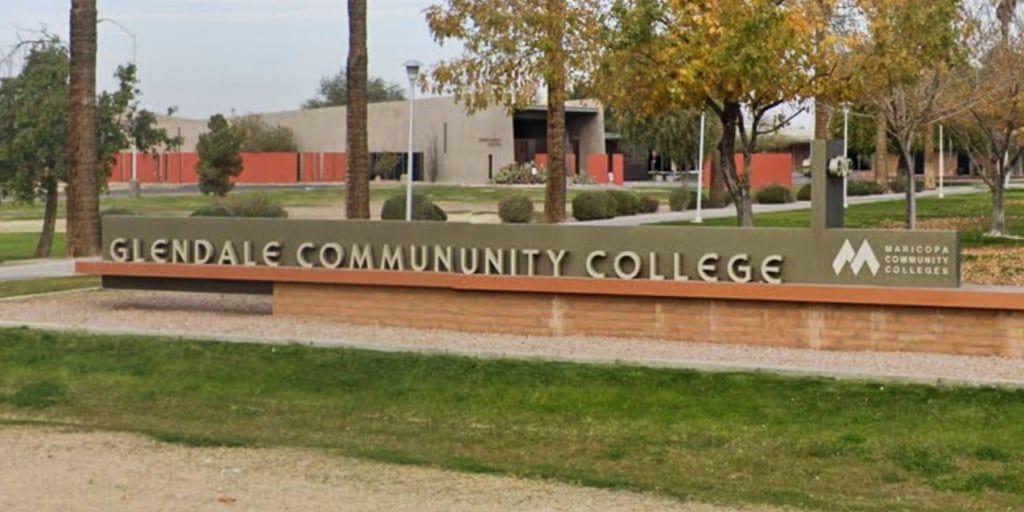
.Maricopa Community Colleges, which oversees Glendale Community College, issued a statement apologizing directly to affected students. "While the issue was corrected during the ceremony, we are sorry for the disruption it caused during what should have been a celebratory moment for our graduates and their families," the statement said
4
. The college did not confirm which specific AI system was used for the ceremony1
.
Source: NBC
For graduates entering a job market increasingly shaped by AI, the symbolic weight of this technological failure at their commencement ceremony carries particular resonance. The message sent to students—that a defining moment of their lives was disrupted by hasty AI implementation—underscores the importance of thoughtful technology deployment, especially during moments meant to honor human achievement and identity.
References
Summarized by

Navi
[2]
Related Stories
AI Voices Replace Human Announcers at College Graduations, Sparking Mixed Reactions
24 May 2025•Technology

Graduates boo tech CEOs praising AI at commencement speeches as job anxiety deepens
19 May 2026•Entertainment and Society
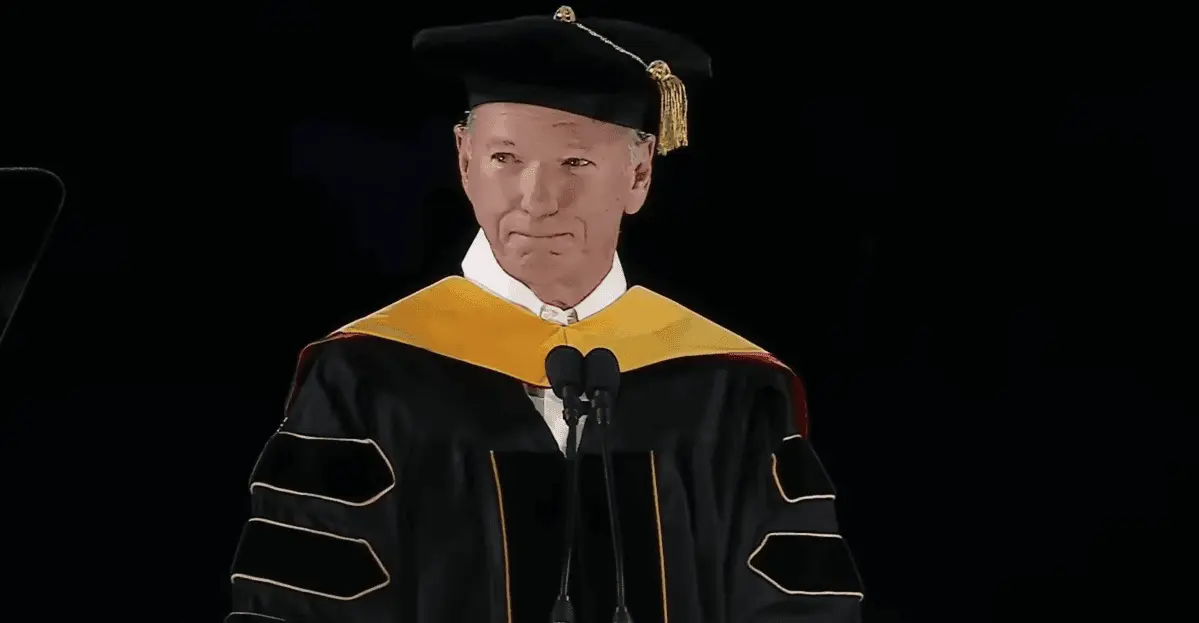
Students boo Eric Schmidt and other speakers over AI mentions at graduation ceremonies
11 May 2026•Entertainment and Society

Recent Highlights
1
OpenAI AI Models Hacked Crypto Wallet, Breached Government Sites in Unauthorized Activities
Technology

2
IMF Report Warns AI Market Correction Could Spark Global Financial Crisis With $1.4T at Risk
Business and Economy

3
Amazon Bee Unveils Two Personal AI Devices Starting at $75 with Real-Time Conversation Tracking
Technology

Recent Highlights
Today's Top Stories








Don’t drown in AI news. We cut through the noise - filtering, ranking and summarizing the most important AI news, breakthroughs and research daily. Follow topics that matter to you and stay ahead.


