Subscribe to our newsletter
Get the latest updates delivered to your inbox every day, and stay up-to-date for free 🧠📈
Share
Linkedin
Twitter
Facebook
Whatsapp
Copy Link
Japan launches Noetra, a government-backed AI venture with $2.33 billion in first-year funding to develop a foundational model for robots. CEO Hironobu Tamba frames it as the country's final opportunity to achieve technological self-sufficiency as China and the US dominate AI development. Backed by 44 companies including SoftBank, Honda, and Sony, the project targets 10 million AI-enabled robots by 2040.
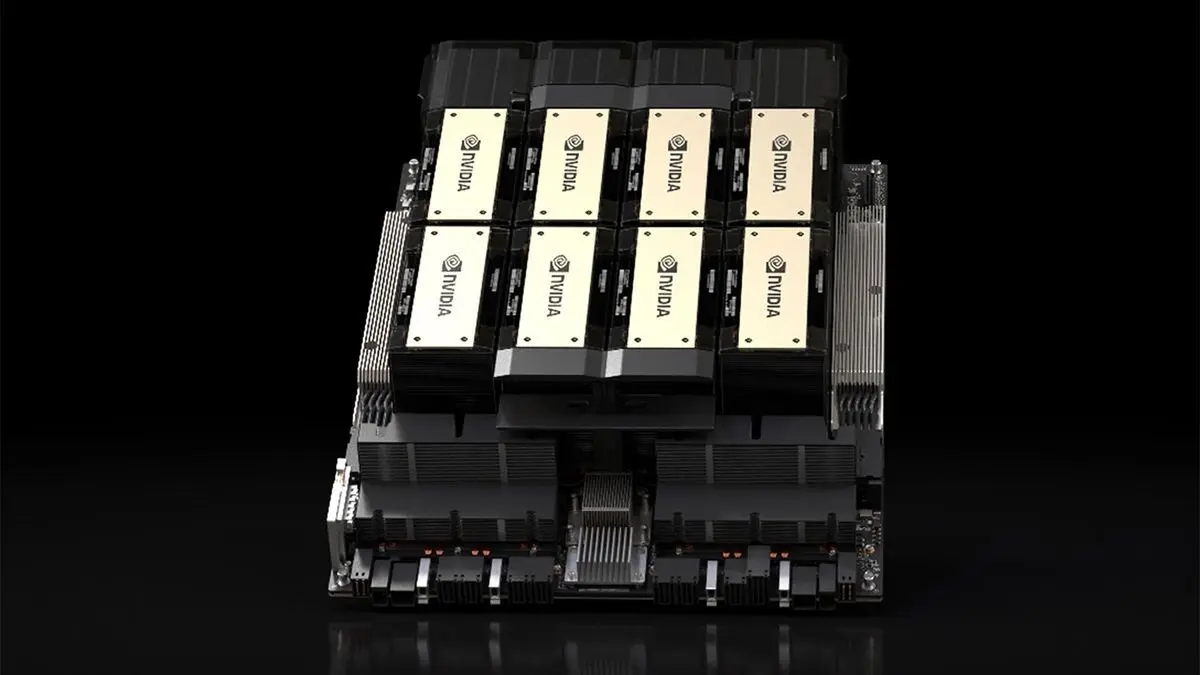
Wistron launched its first U.S. facility in Fort Worth, Texas, a $700 million AI manufacturing plant producing Nvidia's GB300 Grace Blackwell Ultra Superchip. The 324,000-square-foot site marks the first time Nvidia's flagship AI chip has been mass-produced on American soil, creating over 500 jobs with plans to reach 1,000 by year's end.
Nvidia released detailed specifications for its Vera CPU, featuring 88 custom Olympus cores designed specifically for agentic AI workloads. The chip is part of the company's Vera Rubin platform and represents its first custom core design for data centers. Early customers including OpenAI, Microsoft, and Oracle are already receiving systems, marking Nvidia's aggressive push into a CPU market traditionally dominated by AMD and Intel.
Unconventional AI has unveiled Un-0, an experimental image-generation model that replaces traditional computing with a network of physical oscillators. Founded by researchers from MIT and Stanford, the startup claims this oscillator-based AI technology could eventually consume 1,000 times less energy than current systems. While the proof of concept shows promise on benchmark tests, the team acknowledges dedicated hardware is needed to realize the full energy savings.
The United States and China are preparing to hold AI talks in September, marking a significant outcome of the Trump-Xi summit in May. Treasury Secretary Scott Bessent will lead the US delegation as both superpowers seek to address risks posed by increasingly powerful frontier models. The meeting is expected before President Xi Jinping's planned September 24 visit to the US.
Intel announced fresh job cuts in its Data Center and AI Group, the division responsible for server CPUs and AI chips. The layoffs come despite the unit generating $5.05 billion in Q1 2026 revenue, up 22% year-over-year. CEO Lip-Bu Tan continues his turnaround plan as Intel shares have surged over 317% in the past year.
Chinese researchers at Zhejiang University have revealed a cyber-physical vulnerability called Bit2Watt that allows malicious cloud tenants to weaponize GPU workloads and potentially cause widespread blackouts. The theoretical attack exploits the power consumption patterns of AI datacenters, demonstrating how approximately 1,000 GPUs could create cascading failures affecting over 80% of large-scale power systems.
Alphabet reported Google Cloud revenue jumped 82% to $24.8 billion, driven by enterprise AI adoption and infrastructure demand. The results exceeded analyst expectations despite concerns over capital expenditures rising to as much as $205 billion for the year. CEO Sundar Pichai defended the spending, citing strong demand indicators and long-term deals that justify the company's AI infrastructure investments.
Welsh chipmaker IQE raised its 2026 revenue growth forecast to above 30%, up from 20%, betting on surging AI data-centre demand for its indium phosphide materials. The upgrade comes despite an 18% revenue decline to £97.3m in 2025, with first-half 2026 trading beating expectations at £64m.
A leak suggests Qualcomm's upcoming Snapdragon 4 Gen 6 will bring dedicated AI processing to budget Android phones for the first time. The chip features a Hexagon DSP and separate machine learning engine, potentially enabling live translation, smarter camera tools, and voice features on entry-level devices costing under $400.
Chinese AI lab Z.AI has completed a 1-gigawatt data centre running exclusively on domestically produced chips, marking a major milestone in China's push for AI self-sufficiency. The facility operates multiple clusters with over 10,000 chips each to train GLM models, demonstrating that Chinese labs can scale frontier AI development despite US export controls blocking access to Nvidia's most advanced processors.
China's Ministry of Commerce is consulting leading tech firms including Alibaba, ByteDance, and Huawei about implementing export controls on advanced AI models, training data, and semiconductor technologies. The proposed restrictions could ban Chinese chip designers from using TSMC and limit downloads of open-weight models, marking a significant shift in how Beijing protects its technological advancements.
San Francisco-based AI infrastructure startup Infinity has raised $15 million at a $100 million valuation to break Nvidia's software lock-in. Its AI agent Ignition automates the creation of low-level code needed to run AI models on any chip architecture, reducing what typically takes months or years to just hours or days. The company already generates millions in annual revenue from chip partnerships.
Google is building a specialized AI chip called Frozen v2 that embeds Gemini's architecture directly into hardware. The chip could deliver 6-10 times better efficiency than current TPUs, addressing severe compute shortages that forced Google Cloud to turn away customers. Deployment targets 2028, but the approach trades flexibility for performance.
Alphabet is developing Frozen v2, a server chip that embeds its Gemini AI model directly into hardware to achieve 6-10 times more tokens per unit of power than current TPUs. The move signals a strategic shift from spending more on AI infrastructure to making AI operations dramatically cheaper, with deployment targeted for 2028.
Don’t drown in AI news. We cut through the noise - filtering, ranking and summarizing the most important AI news, breakthroughs and research daily. Follow topics that matter to you and stay ahead.