Subscribe to our newsletter
Get the latest updates delivered to your inbox every day, and stay up-to-date for free 🧠📈
Share
Linkedin
Twitter
Facebook
Whatsapp
Copy Link
Major semiconductor stocks plunged even after Samsung reported a 1,800% profit jump, signaling investor expectations for AI demand have reached unsustainable levels. Micron and Intel fell up to 8% as concerns mount over whether the AI-driven rally has overextended valuations across the chip sector.
Researchers at the National University of Singapore developed spintronic computing hardware that solves complex optimization problems faster and more efficiently than tested quantum annealers. The probabilistic computing system achieved a 3.2-fold speedup with 58.3% energy savings compared to CPUs, while consistently outperforming D-Wave quantum systems as problem complexity increased.
Singapore authorities have charged four individuals with fraud and money laundering in connection with an alleged scheme to smuggle Nvidia AI GPUs to China. Police seized a $42 million mansion and froze $772,000 in bank accounts, revealing Singapore's role as a transit hub for bypassing US export controls on advanced AI chips.
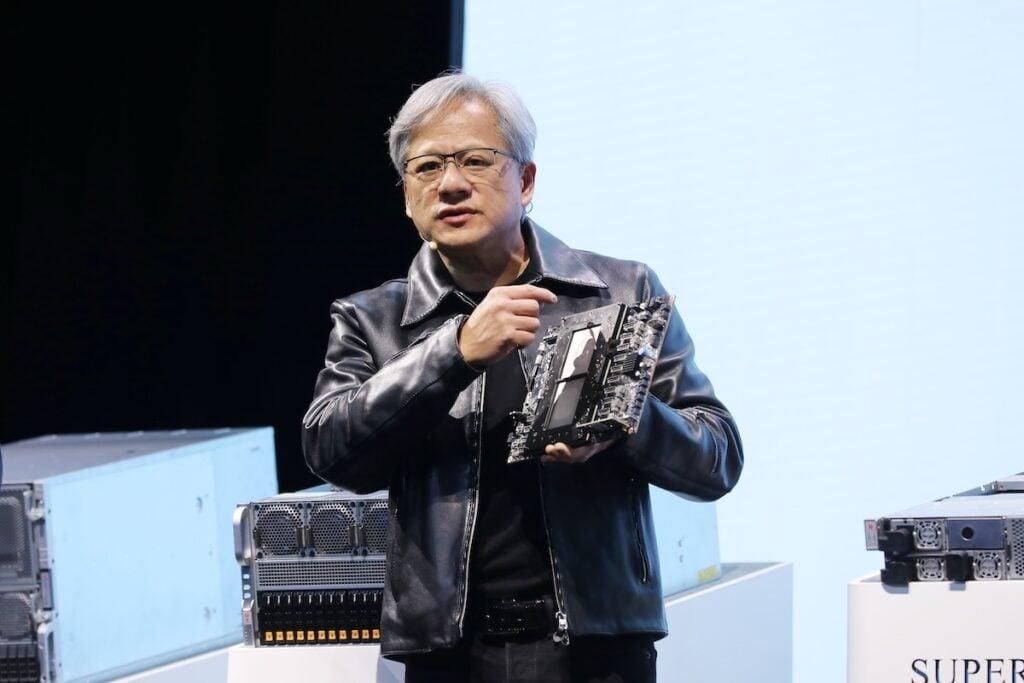
Nvidia unveiled a new revenue sharing program that lets AI startups access expensive GPU infrastructure today by trading a percentage of their future earnings. The chip giant will collect standard hardware sales revenue plus an ongoing cut of cloud income generated on that capacity. Sharon AI and Firmus are the first partners, deploying a combined total of up to 210,000 GPUs.
Amazon is manufacturing its own AI chips for Echo Show and Fire TV devices while planning a new wave of mobile gadgets. The company's head of devices, Panos Panay, revealed the in-house semiconductor strategy aims to improve security and on-device AI processing. Amazon acquired wearables brand Bee in 2025 and is developing a roadmap of on-the-go devices that integrate with Alexa Plus.
SK Hynix announced a $64 billion investment to build new NAND flash memory and chip packaging facilities in South Korea by 2029. The move addresses a global memory shortage driven by AI datacentre demand, with the company spending $51 billion on a NAND factory and $13 billion on advanced packaging. The investment comes amid concerns about whether massive AI infrastructure spending can deliver returns.
Valar Atomics made history by activating its Ward 250 nuclear microreactor on stage to power an Nvidia Blackwell-powered desktop PC. The California startup partnered with Nvidia to build a 30MW AI factory in Utah that eliminates local water consumption. The demonstration addresses growing concerns about AI data centers' massive power demands and water usage.
The Wall Street Journal reports SpaceX demonstrated a sleeker-than-iPhone AI phone prototype to investors before its June IPO, featuring xAI technology and a proprietary OS. Elon Musk swiftly denied the claims as 'utterly false,' though the company is actively exploring Starlink-branded mobile services. The conflicting signals raise questions about SpaceX's hardware ambitions as it pours billions into AI infrastructure.
Oxmiq Labs, founded by veteran chip architect Raja Koduri, has closed a $35 million Series A to scale OxCore, a licensable GPU architecture that lets chipmakers build custom AI silicon without years of design work. The startup aims to become the 'Arm for AI GPUs,' licensing chip designs rather than selling finished chips, with backing from Samsung Catalyst Fund and legendary chip architect Jim Keller joining its board.
Multiple companies including Orbital Compute and SpaceX have filed FCC applications to launch up to 1 million satellites for space-based AI infrastructure. The startups promise to solve Earth's power grid constraints using solar energy and space cooling, but face significant challenges in thermal management, launch costs, and manufacturing capacity that could delay deployment for years.
Abu Dhabi's sovereign wealth fund MGX has closed a $49 billion AI fund, marking one of the largest investment vehicles ever focused on artificial intelligence. The technology investment firm attracted global institutional investors and plans to deploy up to $10 billion annually across the AI stack, from semiconductors to frontier models, with major backing already committed to OpenAI, Anthropic, and xAI.
China has implemented sweeping national security regulations governing overseas investments, marking a shift from technology absorption to stringent protection. The new rules grant authorities broad powers to review outbound investments in AI, semiconductors, and green technology, while extending restrictions to include technical expertise and training abroad. The move reflects Beijing's determination to protect domestic innovations amid escalating US-China tech competition.
AMD is reframing the AI infrastructure conversation by emphasizing that agentic AI workflows require diverse CPU capabilities, not just GPU power. The company's EPYC processor portfolio addresses different workflow stages—from orchestration to inference—with varying core counts and frequencies. As agents proliferate in enterprises, IT teams face a multiplier effect on existing infrastructure.
CNBC's Jim Cramer identifies a major shift in Wall Street's approach to AI investing. While the Magnificent Seven shed $2.3 trillion in June, AI infrastructure suppliers like Intel, Micron, and AMD are leading gains. Cramer calls Intel a 'national treasure' as memory chips and networking equipment shortages reward component makers over big tech spenders.
Microsoft eliminated 4,800 roles, representing 2.1% of its global workforce, with the deepest cuts hitting Xbox and commercial sales. The layoffs come as the company invests over $100 billion in AI infrastructure, marking the latest wave of tech industry job cuts that have affected 154,000 workers in the first half of 2026 alone.
Don’t drown in AI news. We cut through the noise - filtering, ranking and summarizing the most important AI news, breakthroughs and research daily. Follow topics that matter to you and stay ahead.