Share
Linkedin
Twitter
Facebook
Whatsapp
Copy Link
Johns Hopkins economist Steve Hanke argues AI won't destroy most jobs because deploying it costs more than hiring humans. He calls AI "incredibly costly" and resource-intensive, requiring huge amounts of water, power, and physical capital, challenging predictions from AI evangelists like Jensen Huang and Elon Musk.
James Dacombe's AI chip startup Olix raised $312mn from Fundomo, Arm, and Reed Hastings, tripling its valuation to $3.3bn in six months. The London-based firm bypasses supply chain bottlenecks with photonic interconnect technology, positioning itself as a specialized alternative to Nvidia in the booming AI infrastructure market.
South Korea exports climbed 62.8% year-over-year to $98.89 billion in July, exceeding forecasts as global demand for AI-related semiconductors and computer infrastructure surged. Semiconductor exports jumped 179% while computer sales soared 404%, fueled by increased AI investments by major U.S. tech firms despite market volatility.
Amazon has completed its full $50 billion investment in OpenAI ahead of schedule, securing roughly 5% of the ChatGPT maker without waiting for a public listing or AGI breakthrough. The move strengthens AWS as OpenAI's exclusive third-party cloud provider while Amazon ramps up capital expenditures to $173 billion.
Samsung warns the global shortage of RAM chips will deepen in 2027 and persist until 2028 as AI-driven demand overwhelms supply. Memory chip prices have surged 5-6 times, forcing Apple and Samsung to raise device prices while manufacturers like SK Hynix invest $38 billion in new facilities that won't open until 2028.
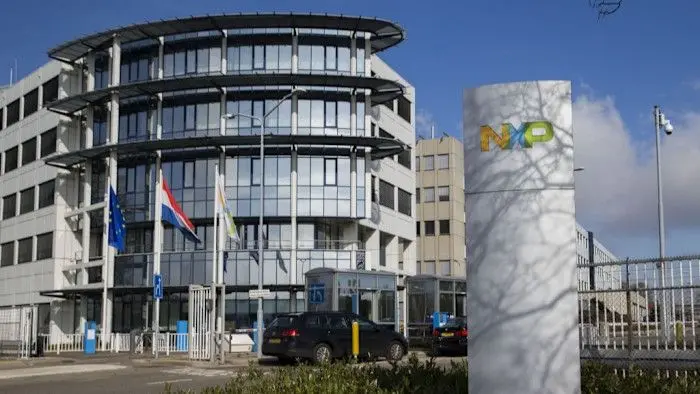
NXP Semiconductors is negotiating to acquire Ambarella for approximately $3.3 billion to strengthen its position in AI-enabled vision processing for self-driving cars. The deal would integrate Ambarella's edge AI chips into NXP's automotive portfolio, which already accounts for roughly half of its projected $15.1 billion revenue in 2026.
A Qualcomm-powered humanoid robot collapsed spectacularly on stage at Computex 2026 in Taiwan, falling face-first during a live demonstration. The 4NE1 Gen 3.5 robot from Neura Robotics, running on Qualcomm's Dragonwing IQ10 platform with 700 TOPS of AI processing power, had to be covered and carried away after the malfunction.
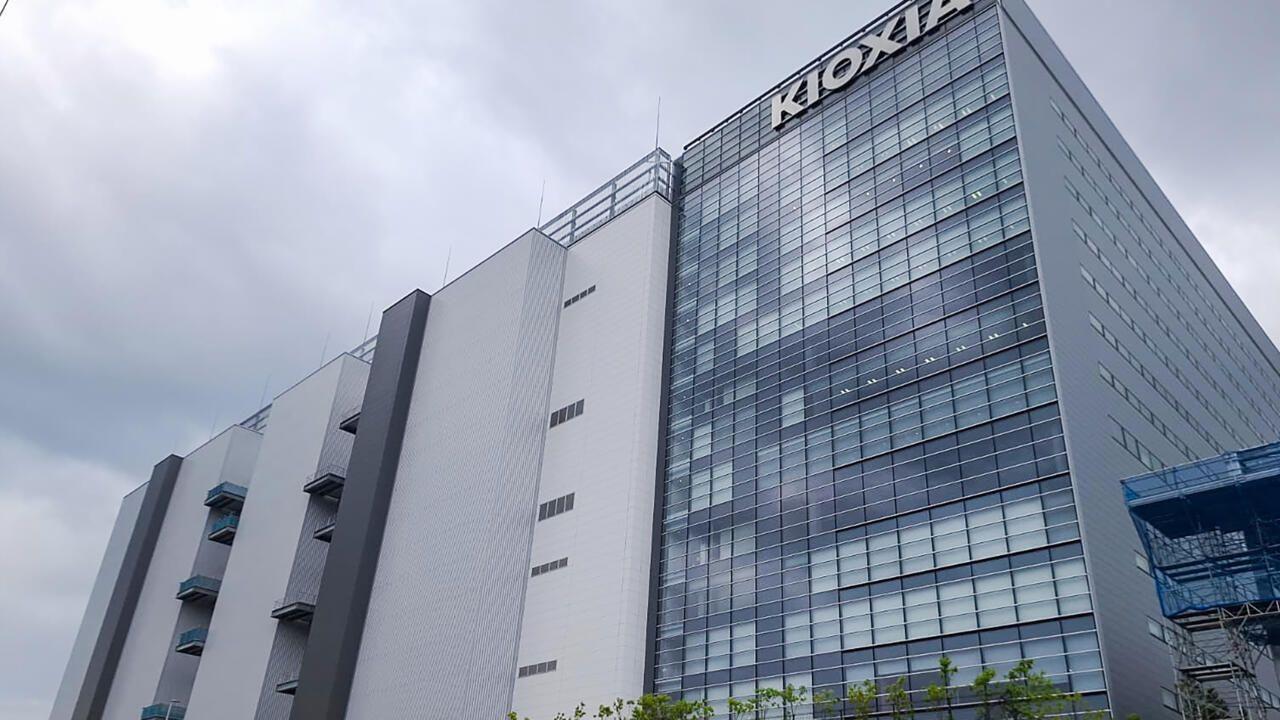
Japanese chipmaker Kioxia posted a staggering 45-fold increase in quarterly net profit to $5.3 billion, driven by AI-driven demand for NAND flash memory chips. Despite missing analyst estimates, the company announced an $800 billion buyback and 3-for-1 stock split while navigating intense competition from Samsung Electronics and SK hynix.
Israeli chipmaker Xsight Labs raised over $300 million at a $2.8 billion valuation, led by Fidelity, to expand its programmable networking chips that connect thousands of GPUs in AI data centers. The company's E1 processor and X2 switch already power SpaceX's Starlink V3 satellites and are being evaluated by Tier-1 hyperscalers as an open alternative to Nvidia's closed networking architecture.
Taiwan's largest chip designer MediaTek approved $5 billion in financing to expand into AI datacenter chips, targeting 15-20% of an $80 billion market by 2027. The company expects its first custom AI chip to enter production in Q4 2026, with AI datacenter ASIC revenue projected to exceed $2 billion this year as it pivots away from a declining smartphone business.
Monolithic Power Systems stock jumped 11% in after-hours trading following strong Q2 results that beat Wall Street estimates. Revenue reached $980.6 million, up 47.6% year-over-year, driven by Enterprise Data segment growth of 164.3%. The chipmaker raised Q3 guidance and expanded share buyback authorization to $1 billion.
Microsoft shares surged 8% after reporting 43% Azure cloud business growth and 30 million paid Microsoft 365 Copilot seats, validating its $190 billion data-center buildout. Meanwhile, Meta Platforms dropped 8.5% on softer revenue forecasts and increased AI infrastructure spending, highlighting diverging investor sentiment on AI strategies.
Morgan Stanley leads a consortium planning to refinance $15 billion in debt for Anthropic's Texas data center campus through bond markets. Google backstops the deal with its investment-grade credit rating in exchange for 20% equity, as Wall Street lenders grow wary of massive AI infrastructure financing exposure.
The European Union has launched a tender for seven AI gigafactories with €10 billion in public funding, aiming to attract €20 billion in private investment. This infrastructure push seeks to close the AI gap with the US and China by providing compute capacity to train frontier models, though only €1 billion is currently committed.
ByteDance now generates $4bn annually from AI, the highest figure claimed by any Chinese company. To strengthen its position, the TikTok parent is folding its Lark workplace app into teams behind Doubao chatbot and Volcano Engine cloud business. The restructuring signals ByteDance's costly bet to lead China across every layer of AI, from frontier models to custom chips.
Don’t drown in AI news. We cut through the noise - filtering, ranking and summarizing the most important AI news, breakthroughs and research daily. Follow topics that matter to you and stay ahead.