Share
Linkedin
Twitter
Facebook
Whatsapp
Copy Link
Nvidia CEO Jensen Huang dismissed reports that the chip giant's planned $100 billion investment in OpenAI has stalled, calling such claims 'nonsense.' Despite Wall Street Journal reports of friction and concerns about OpenAI's business discipline, Huang confirmed Nvidia will make its 'largest ever investment' in the AI company, though the final amount remains unspecified.
Chinese AI chipmaker Axera Semiconductor is seeking to raise $379.2 million through a Hong Kong IPO, offering 104.9 million shares at HK$28.20 each. The company, backed by Tencent and Qiming Venture Partners, claims to be the largest provider of mid-to-high-end visual on-device AI inference chips globally. The move reflects a broader trend of Chinese semiconductor firms turning to Hong Kong for capital-intensive chip development.
KLA Corp reported second-quarter revenue of $3.3 billion, surpassing Wall Street expectations as AI infrastructure demand accelerates investment in advanced logic chips and high-bandwidth memory. The semiconductor equipment maker saw net profit climb 39% to $1.15 billion, though supply constraints and rising DRAM costs present near-term challenges. Despite strong results, shares fell 7% as investors questioned whether growth momentum can sustain amid U.S. export restrictions on China.
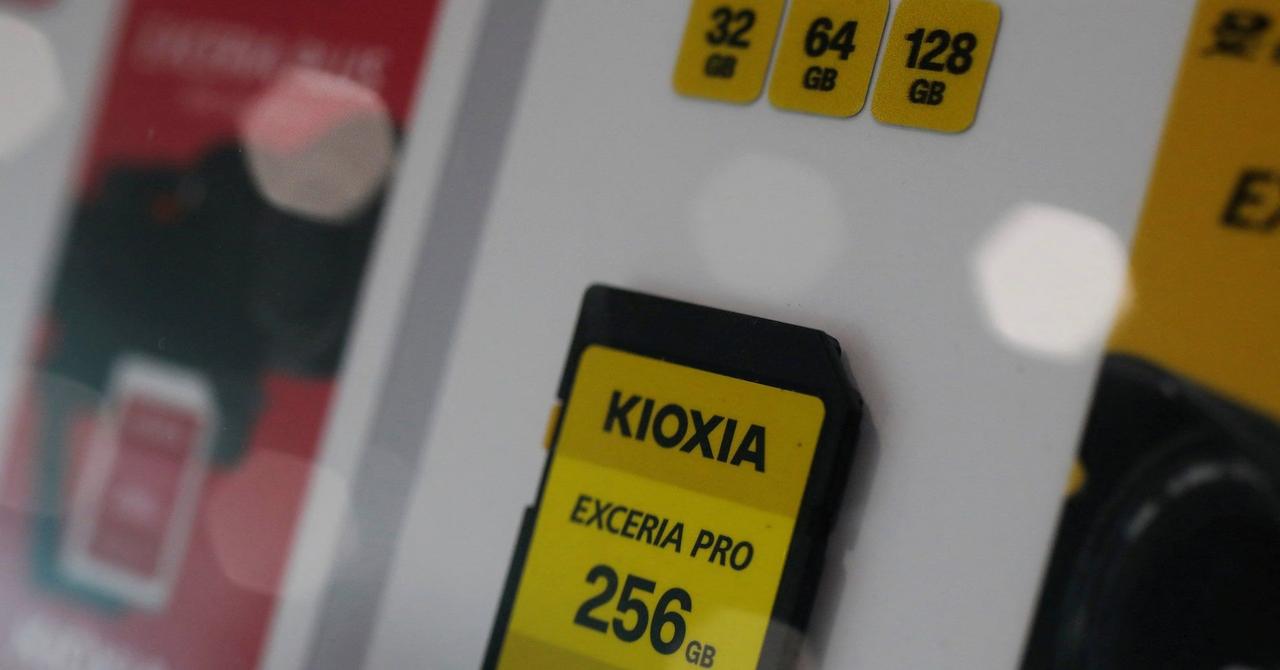
Japanese flash memory maker Kioxia is promoting Hiroo Oota to CEO as it positions itself to capitalize on surging demand for NAND storage in AI data centers. While competitors Samsung, SK Hynix, and Micron focus on high-bandwidth memory, Kioxia sees opportunity in high-density storage solutions. The company's shares have jumped more than 13 times since its late 2024 IPO, reflecting investor confidence in its strategic positioning.
Taiwan's economy expanded 8.6% in 2025, marking its fastest economic growth in 15 years as the global artificial intelligence boom powered record tech exports. The island's Q4 GDP surged 12.68%, far exceeding forecasts, driven by robust global demand for AI chips and semiconductors from companies like Nvidia and Apple.
A federal jury convicted former Google engineer Linwei Ding on 14 counts of economic espionage and theft of trade secrets. Between May 2022 and April 2023, he stole over 2,000 pages of confidential data about Google's AI infrastructure, including TPU and GPU specifications, while secretly founding AI startups in China. The case marks the first AI-related economic espionage conviction in U.S. history.
SK Hynix achieved a historic milestone by surpassing Samsung Electronics in annual operating profit for the first time in 2025, posting 47.2 trillion won compared to Samsung's 43.6 trillion won. The shift reflects SK Hynix's commanding lead in high-bandwidth memory (HBM) chips critical for AI applications, though intensifying competition from Samsung and Micron in the HBM4 market could reshape the landscape.
A US House committee chair alleges Nvidia provided extensive technical assistance to Chinese AI startup DeepSeek, helping achieve breakthrough training efficiency with just 2.788M H800 GPU hours. Documents suggest the AI models were later used by China's military, intensifying debate over US export controls and national security risks in the AI race with Beijing.
Samsung Electronics reported a record-breaking fourth quarter with operating profit surging over 200% year-over-year to 20.1 trillion won ($14.03 billion). The South Korean tech giant's memory business hit all-time highs as artificial intelligence server demand created a global memory chip shortage, pushing prices higher. The company plans to begin mass shipments of next-generation HBM4 chips to customers including Nvidia next month.
Nvidia is reportedly exploring Intel Foundry to manufacture portions of its 2028 Feynman AI chips, using Intel's 18A or 14A process nodes for I/O dies and EMIB packaging technology. The move signals a strategic shift to diversify supply chain beyond TSMC, driven by capacity constraints and political pressure to boost US manufacturing.
Scientists at Lawrence Berkeley National Laboratory have demonstrated that thermodynamic computing could generate AI images using one ten-billionth the energy of current tools like DALL-E and Midjourney. The breakthrough research shows promise for addressing the high energy consumption of generative AI, though significant hardware development challenges remain before the technology can rival existing models.
Intel launched XeSS 3 with multi-frame generation technology, enabling ultraportable laptops to achieve frame rates previously reserved for dedicated GPUs. Testing on the Asus Zenbook Duo showed Cyberpunk 2077 jumping from 67 FPS to 217 FPS with the AI-powered upscaling technology. The feature also works on MSI Claw handhelds, potentially reshaping the future of gaming laptops and portable gaming.
ASML has become Europe's most valuable company through its monopoly on extreme ultraviolet lithography systems that cost $250 million each. These massive machines are essential for manufacturing the most advanced semiconductors powering the AI boom, with TSMC using them to produce chips for Nvidia and other tech giants.
South Korean memory giant SK hynix is establishing a $10 billion AI solutions company in the U.S., restructuring its California-based Solidigm subsidiary in the process. The move comes as the chipmaker posts record quarterly profits, with operating income surging 137% year-over-year driven by explosive demand for high-bandwidth memory chips used in AI data centers.
China approved imports of Nvidia's H200 AI chips for ByteDance, Alibaba, and Tencent in January, totaling over 400,000 units. But nearly two months later, sales remain frozen as the US State Department pushes for tougher restrictions. Chinese customers aren't placing orders until licensing conditions become clear.
Don’t drown in AI news. We cut through the noise - filtering, ranking and summarizing the most important AI news, breakthroughs and research daily. Follow topics that matter to you and stay ahead.