Share
Linkedin
Twitter
Facebook
Whatsapp
Copy Link
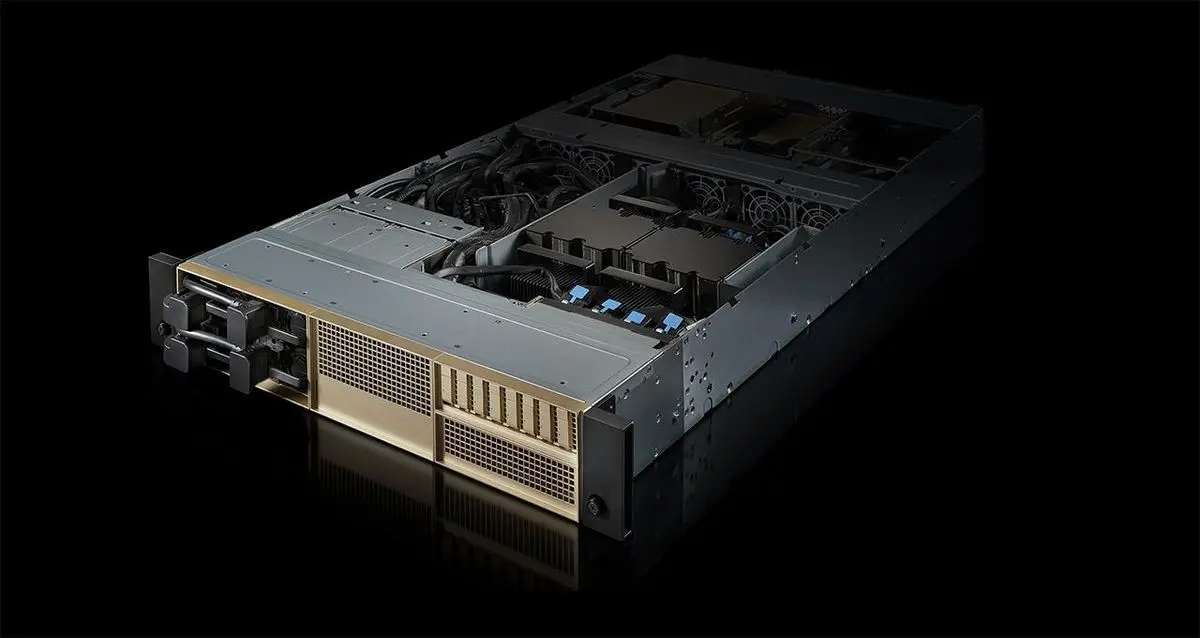
Commerce Secretary Howard Lutnick stated that Nvidia must comply with non-negotiable licensing terms for selling H200 AI chips to China, including Know-Your-Customer requirements to prevent military access. The chipmaker has not yet agreed to all proposed conditions, delaying shipments despite Trump administration approval. Chinese firms are turning to black-market hardware and domestic alternatives amid the uncertainty.
AI chipmaker Cerebras Systems secured $1 billion in fresh capital at a $23 billion valuation, nearly tripling its worth in just four months. The funding round, led by Tiger Global, included a massive $225 million commitment from early backer Benchmark Capital, which created special infrastructure funds specifically for the investment. The raise positions Cerebras to compete more aggressively with Nvidia following its recent $10 billion OpenAI partnership.
Deutsche Telekom, Nvidia, and SAP have launched one of Europe's largest AI computing facilities in Munich. The €1 billion Industrial AI Cloud aims to reduce European dependence on foreign digital infrastructure while boosting Germany's AI computing power by 50%. The facility operates at 30% capacity and represents the first step toward building AI gigafactories across Europe.
Semiconductor startup Positron has raised $230 million in Series B funding at over $1 billion valuation to accelerate development of energy-efficient AI chips. Backed by Qatar Investment Authority and Arm Holdings, the Reno-based company claims its upcoming Asimov chip will deliver five times more tokens per watt than Nvidia's Rubin GPU while offering six times more memory capacity for inference workloads.
German chipmaker Infineon is increasing its fiscal 2026 investment to €2.7 billion, up from €2.2 billion, to meet surging demand for AI data centers. The company expects AI business revenue to reach €2.5 billion in 2027, representing a tenfold increase within three years, as it navigates a weak automotive market.
Intel CEO Lip-Bu Tan confirmed the chipmaker is actively developing GPUs with newly hired chief architect Eric Demers from Qualcomm. The move signals Intel's commitment to compete in the lucrative AI and data center GPU market, where Nvidia currently dominates. Intel plans to manufacture these chips internally through its foundry business.
Supermicro delivered a stellar second quarter with revenue jumping 123% to $12.7 billion, fueled by surging demand for AI infrastructure. The company raised its annual revenue forecast to at least $40 billion as GPU-based systems accounted for 84% of quarterly revenue. Despite margin pressures, CEO Charles Liang sees strong growth ahead with Data Center Building Block Solutions.
AMD reported fourth-quarter earnings that beat Wall Street estimates with revenue rising 34% to $10.3 billion, driven by its data center business and AI chip sales. But the company's first-quarter revenue forecast of $9.8 billion, while above consensus, fell short of some investor expectations who sought bigger AI gains. Shares tumbled 13% as concerns emerged about AMD's ability to compete with Nvidia in the booming AI market.
Intel and SoftBank subsidiary Saimemory signed a collaborative agreement to develop Z-Angle Memory (ZAM), a vertically-stacked memory technology designed to compete with High Bandwidth Memory in AI data centers. The next-generation memory promises 2 to 3 times more capacity, greater bandwidth, and half the power consumption of HBM, with prototypes expected in 2027 and mass production targeted for 2029.
Five months after announcing plans for a $100 billion investment, Nvidia and OpenAI's mega-deal has stalled. The chipmaker now plans a $20 billion investment instead, while OpenAI quietly pursues alternative chip providers. The tension centers on inference performance issues, with OpenAI reportedly dissatisfied with Nvidia's GPU speed for coding tasks, prompting deals with Cerebras and AMD to reduce dependency.
Memory chip prices are experiencing their steepest increases in history, with DRAM contract prices jumping 90-95% in Q1 2026. TrendForce revised its forecasts upward as persistent AI and data center demands worsen the global memory supply and demand imbalance. PC memory prices are doubling while NAND flash surges 55-60%, forcing device makers to warn of higher costs ahead.
Nvidia CEO Jensen Huang has officially confirmed the company's next-gen N1X and N1 Arm-based processors developed with MediaTek for AI PCs and gaming laptops. The chips promise RTX 5070-level GPU performance with low power consumption, directly challenging Intel Core Ultra and AMD Ryzen AI processors in the AI PC CPU market.
A UAE-backed entity tied to Sheikh Tahnoon bin Zayed invested $500 million for 49% of World Liberty Financial four days before Trump's inauguration. The Trump family received $187 million from the deal, which preceded a U.S. policy shift granting the UAE access to 500,000 advanced AI chips annually—technology the Biden administration had blocked over national security concerns.
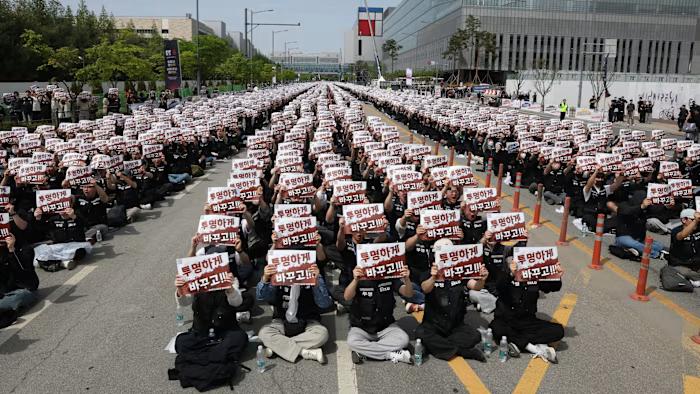
South Korea posted record January exports of $65.8 billion, marking a 33.9% year-on-year increase driven by booming demand for AI chips. Semiconductor exports more than doubled at 102.7%, reaching $20.5 billion as memory prices climbed on AI server demand. The milestone comes as Seoul navigates rising trade tensions with the U.S. over tariffs and ratification disputes.
Nvidia CEO Jensen Huang told reporters that TSMC needs to work very hard to meet soaring AI demand, warning the chipmaker may need to double production capacity over the next decade just to satisfy Nvidia's requirements alone. Speaking after a trillion-dollar dinner with key suppliers in Taiwan, Huang emphasized the unprecedented scale of capacity expansion needed as AI infrastructure buildout accelerates globally.
Don’t drown in AI news. We cut through the noise - filtering, ranking and summarizing the most important AI news, breakthroughs and research daily. Follow topics that matter to you and stay ahead.