Share
Linkedin
Twitter
Facebook
Whatsapp
Copy Link
Dutch semiconductor equipment giant ASML posted record fourth-quarter bookings of €13.2 billion, more than double analyst expectations and previous quarter results. The surge reflects chipmakers' growing confidence in sustained AI-related demand, with customers accelerating capacity plans for advanced logic and memory manufacturing. ASML projects revenue between €34-39 billion for 2026.
Senior US and Taiwanese officials held their sixth round of high-level tech and AI talks, signing agreements on AI and semiconductor supply chain security. The US State Department praised Taiwan as a vital partner whose advanced manufacturing sector fuels the AI revolution, while discussions covered drones, critical minerals, and economic security cooperation amid growing geopolitical tensions.
The global memory shortage driven by AI demand shows no signs of slowing, with forecasts predicting continued DRAM constraints through 2027. Yet smartphones are expected to increase RAM by 16% as manufacturers prioritize on-device AI capabilities, potentially pushing device prices higher as memory costs surge and production struggles to keep pace.
Shanghai Iluvatar CoreX has revealed a four-generation GPU architecture roadmap aimed at competing with Nvidia's next-gen platforms. The Chinese chipmaker claims its current Tianshu architecture already outperforms Nvidia Hopper, while its 2027 Tianquan design targets surpassing Rubin. The announcement highlights China's aggressive push to develop domestic alternatives in AI chips amid ongoing trade restrictions.
The European Union faces a steep challenge in the global AI race, producing only three foundation models compared to 40 from the US and 15 from China. Despite launching ambitious initiatives like the €200 billion InvestAI scheme and plans for AI gigafactories, Europe struggles with funding gaps, talent drain, and infrastructure shortfalls that threaten its competitiveness in artificial intelligence.
U.S. chipmaker Micron Technology announced a $24-billion wafer fabrication plant in Singapore to address acute memory chip shortages driven by AI infrastructure demand. The facility will add 700,000 square feet of cleanroom space with production starting in 2028, but analysts warn supply constraints may persist through late 2027.
Ricursive Intelligence raised $300 million at a $4 billion valuation just two months after launching. Founded by former Google researchers behind AlphaChip, the AI chip startup aims to use AI systems to design and automatically improve AI accelerators. The Series A round was led by Lightspeed Ventures with participation from NVIDIA's NVentures and DST Global.
Aggressive AI infrastructure spending is straining the global memory chip market, with industry leaders warning shortages will persist through at least 2027. Memory suppliers SK Hynix, Samsung, and Micron are redirecting production to high-bandwidth memory for AI servers, leaving consumer electronics markets undersupplied and driving sharp price increases across the industry.
Microsoft has begun deploying its second-generation Maia 200 AI chip in Azure data centers, claiming 30% better performance per dollar and superior specs compared to Amazon and Google's custom silicon. Despite this milestone, CEO Satya Nadella confirmed the company will continue purchasing AI hardware from Nvidia and AMD, emphasizing the value of multi-vendor partnerships in the rapidly evolving AI infrastructure landscape.
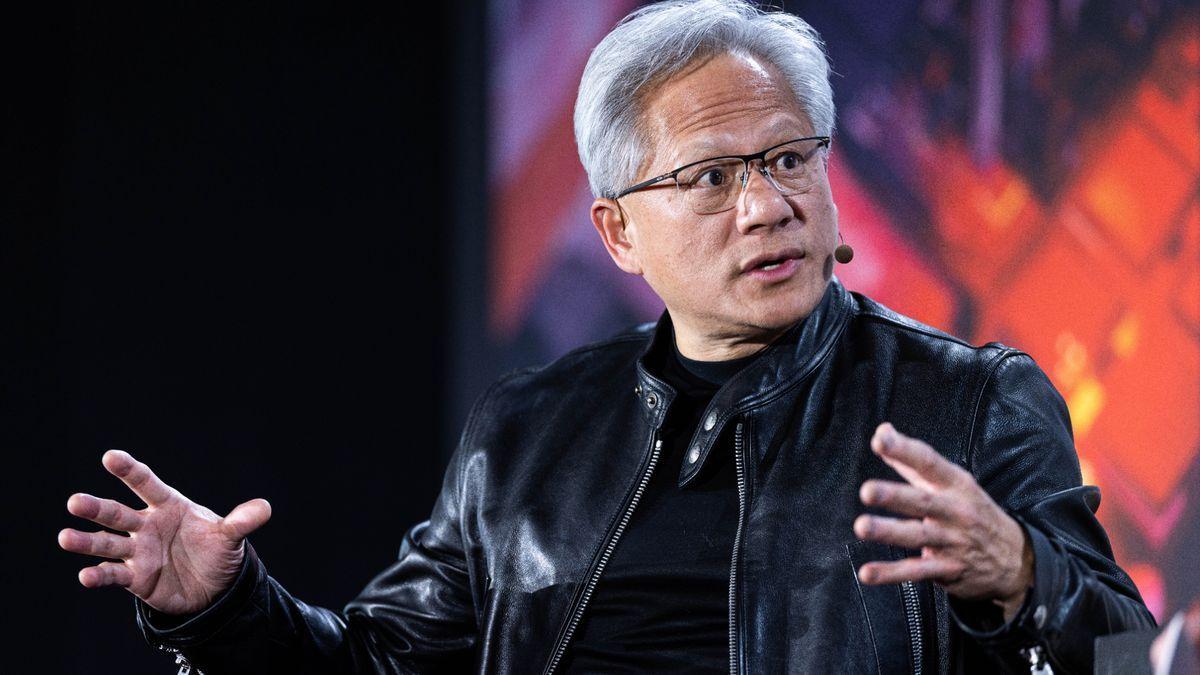
Nvidia CEO Jensen Huang announced the company will sell its Vera CPU as a standalone infrastructure product for the first time, directly competing with AMD and Intel in the data center market. CoreWeave will be the first to deploy Vera CPUs following a $2 billion strategic investment from Nvidia, marking a major shift in the company's strategy from GPU-only supplier to full-system silicon provider.
Samsung is close to securing Nvidia certification for its HBM4 AI memory chips, entering final qualification phases after supplying initial samples in September. The company prepares for mass production in February, aiming to debut alongside Nvidia's Rubin AI platform at GTC 2026. Meanwhile, SK Hynix reports significant progress in its own HBM4 tests, setting up an intense competition between South Korean rivals.
Google DeepMind CEO Demis Hassabis told the Financial Times that while the artificial intelligence industry isn't in a bubble, certain pockets show clear signs of excess. He specifically called out multi-billion-dollar seed rounds for early-stage AI companies without proven products as unsustainable, suggesting market corrections may be ahead.
AMD is reportedly developing the Ryzen AI MAX 400 Series, codenamed 'Gorgon Halo,' as a refresh of its Strix Halo processors. The new lineup features boosted CPU and GPU clock speeds, support for faster LPDDR5X-8533 memory, and the same Zen 5 architecture. The flagship Ryzen AI MAX+ 495 leads with 16 cores and clock speeds up to 5.2 GHz, targeting AI workloads and integrated graphics performance.
Intel is reallocating manufacturing resources from consumer processors to data center chips as unexpected AI infrastructure demand creates supply bottlenecks. The company admits hyperscaler customers caught it off guard with surging orders, forcing difficult choices that could impact PC availability and pricing through early 2026.
Austin-based Neurophos has raised $110 million in Series A funding led by Bill Gates' Gates Frontier to develop optical processing units that promise 100x better performance than current AI chips. The startup's breakthrough uses metamaterial optical transistors 10,000 times smaller than existing photonic elements, aiming to address AI's mounting energy and compute challenges.
Don’t drown in AI news. We cut through the noise - filtering, ranking and summarizing the most important AI news, breakthroughs and research daily. Follow topics that matter to you and stay ahead.