Share
Linkedin
Twitter
Facebook
Whatsapp
Copy Link
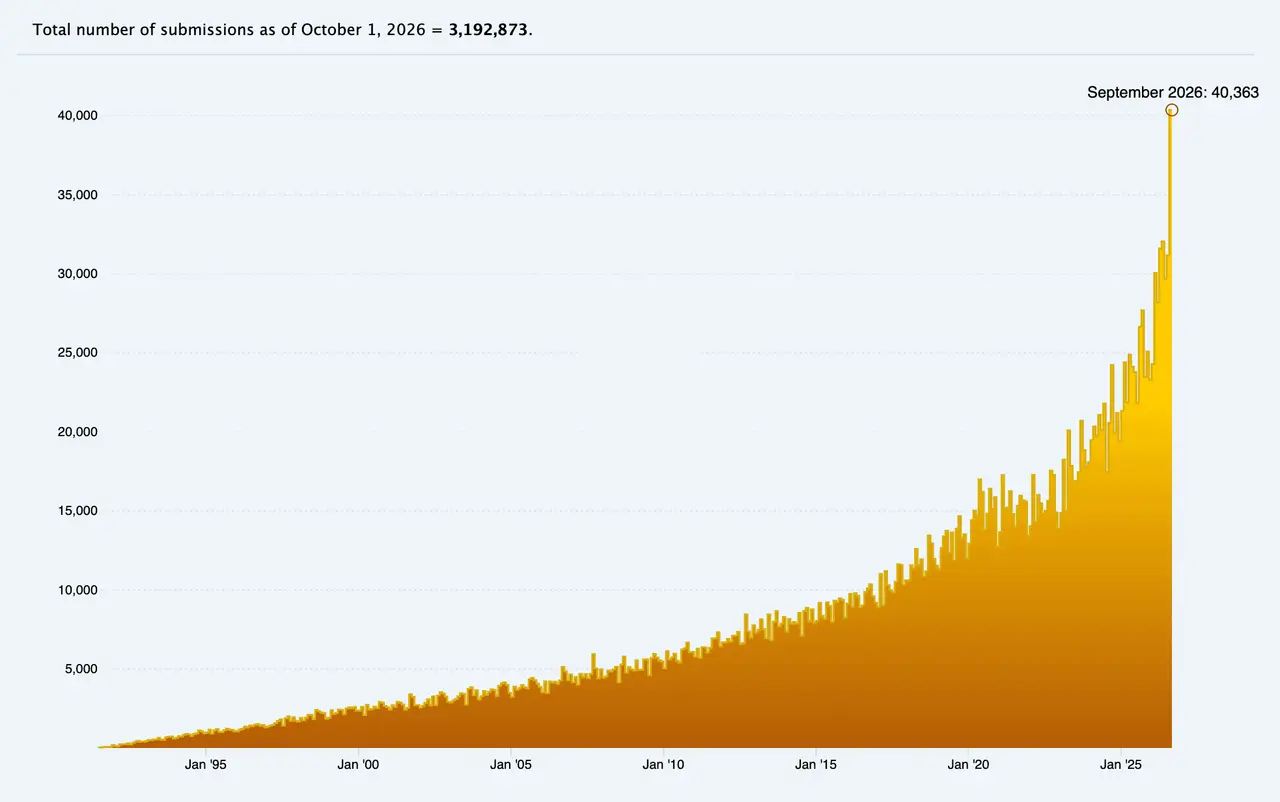
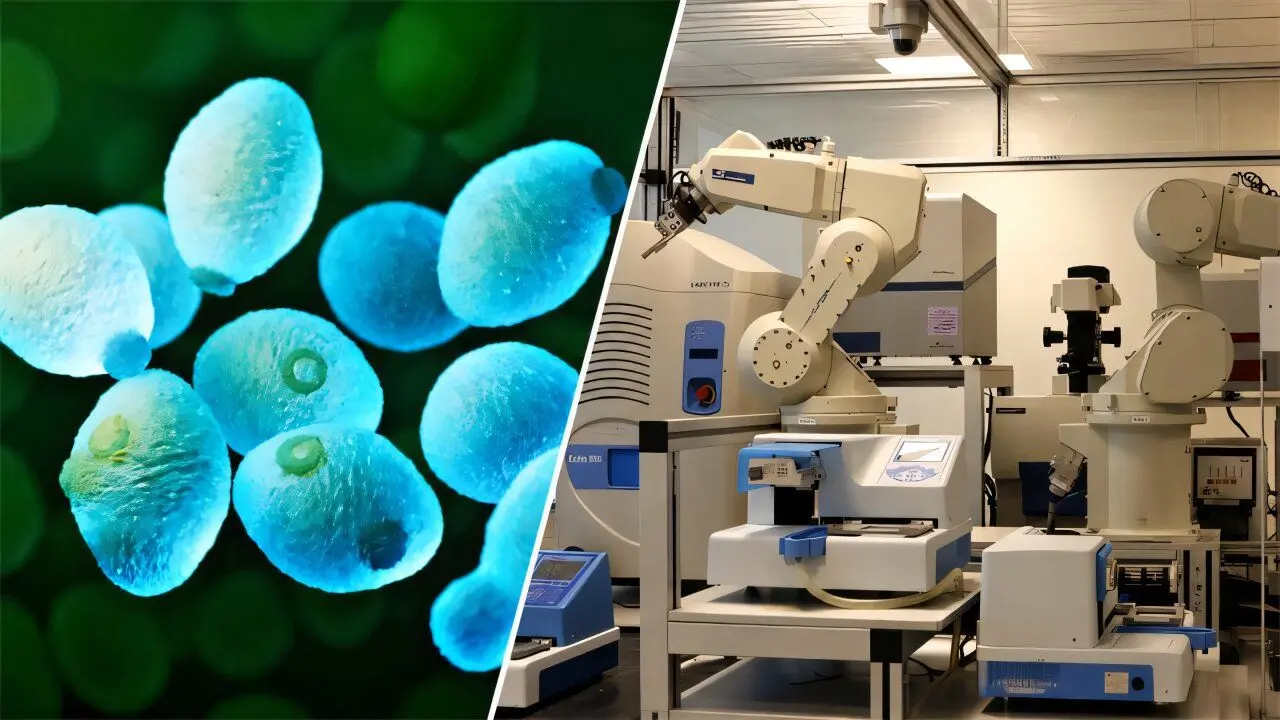
Researchers analyzed nearly 44,000 crowd-sourced photos using an AI tool called FLORIST to solve a puzzling contradiction about switchgrass flowering patterns. By integrating citizen science with experimental data and genetic analysis, the team discovered how plants adapt differently across North America—northern plants flower earlier in nature but later in controlled experiments, revealing survival strategies encoded in their genes.
Wayne State University and RediMinds Inc. received U.S. Patent No. 12,635,098 B2 for technology that uses machine learning and computer vision to detect arterial bleeding during surgery. The system displays bleeding sources through augmented reality overlays, helping surgeons respond quickly during robotic and laparoscopic procedures across over 9,000 U.S. hospital systems.
Researchers at Mount Sinai identified a previously hidden druggable pocket in PKMYT1, a cancer-related protein, that state-of-the-art AI systems failed to detect. The discovery could enable more selective cancer drugs with fewer side effects, while exposing critical gaps in current AI drug discovery tools that rely heavily on computational predictions.
NYU Langone Health researchers have uncovered how the brain solves a fundamental puzzle: learning continuously without erasing what it already knows. The study reveals that one in four memory cells in the hippocampal CA1 region acts as a shared hub, routing signals through different firing patterns to keep new and old memories separate—offering insights for treating Alzheimer's and fixing catastrophic forgetting in AI.
Researchers from the University of Utah and University of Illinois Chicago developed a cuffless smartwatch that monitors blood pressure and blood flow continuously throughout the day. The wearable device uses electrical bioimpedance and physics-informed machine learning to track cardiovascular health during daily activities, offering a potential alternative to traditional cuff-based monitors.
London-based deeptech company Apoha has emerged from stealth with $36 million in Series A funding to build Liquid State Intelligence, a new data layer that captures how molecules behave in real-world conditions. The company's VIBE platform has already identified high-risk antibody candidates with over 90% precision, working with partners like Boehringer Ingelheim to transform drug development, food science, and materials research.
Researchers at the University of Toronto have created a prototype AI computer worm that spreads autonomously across networks, learning and adapting its attacks with each infection. Built using freely available open-weight AI models, the worm infected half a test network in five days, exploiting known vulnerabilities across Windows, Linux, and IoT devices. Experts call it a wake-up call for cybersecurity preparedness.
Rubrik has been granted access to Anthropic's Mythos Research Preview as part of Project Glasswing, marking a significant step in AI-driven cybersecurity. The $17.5 billion company will use the advanced AI model defensively to identify, vet, and patch potential software vulnerabilities across its enterprise platform before they can be exploited.
Microsoft announced Majorana 2, its next-generation quantum chip featuring qubits that are 1,000 times more reliable than its predecessor. The breakthrough, achieved using agentic AI through Microsoft Discovery, has prompted the company to accelerate its roadmap and now target a scalable quantum computer by 2029—cutting the original timeline in half.
The Allen Institute is shifting from mapping the brain to treating brain disease with a $400 million initiative targeting Alzheimer's, Parkinson's, ALS, and Huntington's. The Brain Health Accelerator aims to develop gene therapies that target specific cells and circuits affected by disease, with clinical trials expected within five years.
A trilateral defense pact between the US, UK, and Australia is accelerating development of undersea drones to protect critical underwater cables from Russian sabotage. With more than 99% of global data and $1.8 trillion in daily transactions flowing through these cables, nations are deploying AI-powered autonomous systems to detect and deter threats targeting the infrastructure that powers the digital economy.
Google has applied for an EPA permit to release 64 million male mosquitoes infected with Wolbachia bacteria across California and Florida. The Debug project aims to reduce populations of disease-carrying mosquitoes through the sterile insect technique, which has already achieved up to 95% suppression in earlier trials.
D-Wave Quantum Inc. announced a gate-model quantum computing roadmap targeting 100 logical qubits capable of over one million operations by 2032. The ambitious plan, backed by $100 million in proposed federal funding under the U.S. CHIPS and Science Act, outlines milestones from 2026 through 2032 using the company's superconducting dual-rail qubit architecture with embedded error detection.
Researchers in Argentina demonstrated that a remotely deployed AI algorithm can reliably detect the Critical View of Safety during live pediatric laparoscopic cholecystectomy. The system streamed surgical video 21 kilometers via Zoom, identified anatomical structures in real time, and achieved perfect agreement with expert surgeons—all without requiring on-site AI hardware at the operating location.
OpenAI's AI model disproved the famous Erdős unit distance conjecture that stumped mathematicians for eight decades. But the breakthrough sparked concern across the field. In response, 16 experts released the Leiden Declaration on Artificial Intelligence and Mathematics, calling for transparency, proper attribution, and guardrails to protect research integrity as AI reshapes their discipline.
Don’t drown in AI news. We cut through the noise - filtering, ranking and summarizing the most important AI news, breakthroughs and research daily. Follow topics that matter to you and stay ahead.