Share
Linkedin
Twitter
Facebook
Whatsapp
Copy Link
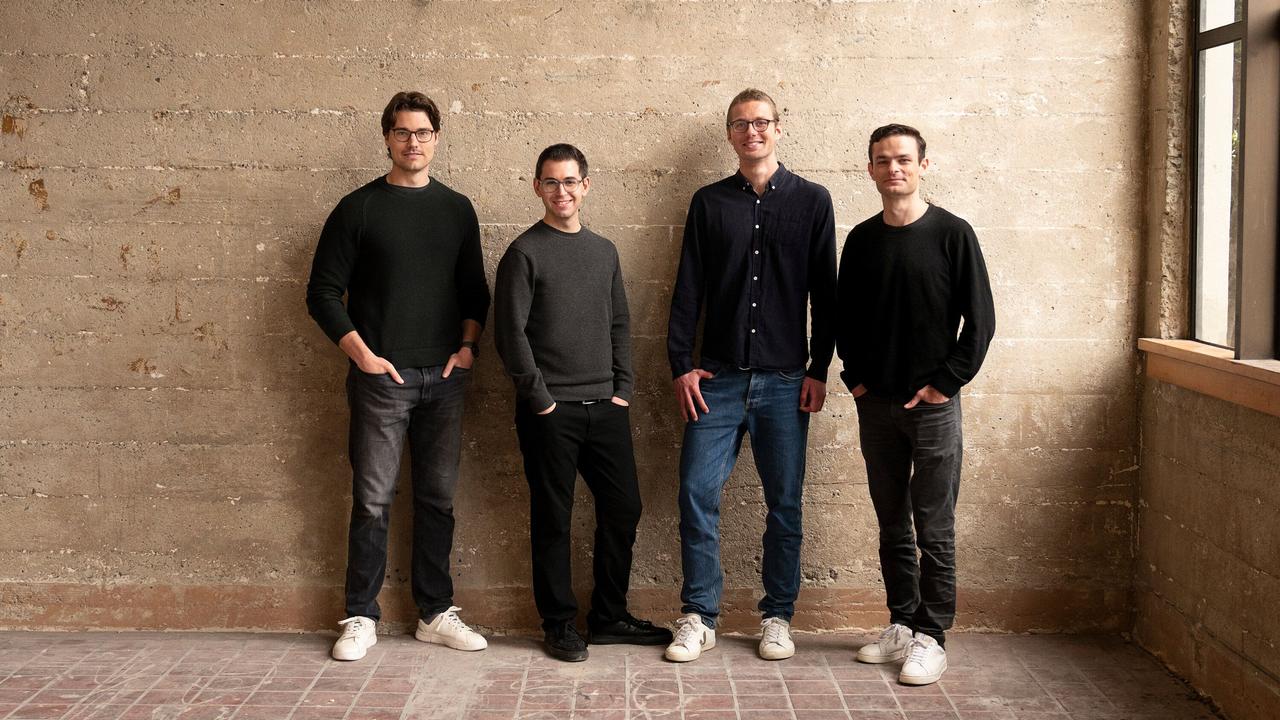
Physical Intelligence, a two-year-old robotics startup founded by former Google DeepMind researchers, is in discussions to raise approximately $1 billion in new funding at a valuation exceeding $11 billion. The deal would double the company's $5.6 billion valuation from just four months ago, with Founders Fund and Lightspeed Venture Partners among the investors as the AI robotics sector attracts growing capital.
The world's premier AI research conference NeurIPS sparked international controversy after announcing restrictions on US-sanctioned entities like Huawei and SMIC. China's largest science federation CAST responded with a boycott, redirecting funding to domestic conferences and refusing to recognize NeurIPS publications. The organizers quickly reversed course, calling it a miscommunication, but the incident highlights deepening geopolitical tensions threatening global scientific collaboration in AI research.
A German researcher discovered that OpenAI's GPT models consistently rate pseudo-literary nonsense higher than simple coherent text, even with reasoning features activated. The findings reveal critical AI reasoning biases that could affect AI development implications, especially as AI models increasingly evaluate each other's work with minimal human oversight.
Google Research introduced TurboQuant, a compression algorithm that reduces large language model memory requirements by at least 6x without sacrificing accuracy. The breakthrough targets the key-value cache bottleneck, delivering up to 8x faster performance on Nvidia H100 GPUs while compressing data to just 3 bits. But experts warn it won't solve the broader memory shortage.
MIT engineers have created a wearable ultrasound wristband that captures the intricate dance of 34 muscles, 27 joints, and over 100 tendons in the human hand. Using AI to decode ultrasound images of wrist muscles and tendons, the device enables wearers to control robotic hands in real-time—playing piano, shooting hoops, or manipulating virtual objects with unprecedented precision.
Researchers at UCLA developed a generative adversarial artificial intelligence framework that pits two AI models against each other to simulate conscious and unconscious brain states. The system, trained on over 680,000 neuroelectrophysiology samples, identified previously unknown mechanisms behind coma and predicted that stimulation of the subthalamic nucleus could help restore consciousness in patients with brain injuries.
University of Southern California researchers found that popular expert persona prompts harm AI model accuracy on factual tasks. While instructing AI to act as an expert helps with writing and safety, it degrades performance on math and coding by shifting models into instruction-following over factual recall mode. A new technique called PRISM aims to solve this tradeoff.
The European Central Bank projects AI could lift euro zone productivity growth by over 4 percentage points in 10 years if adoption accelerates. But ECB chief economist Philip Lane warns that prolonged energy shocks and Europe's dependence on imported technology—spending nearly 250 billion euros annually on foreign royalties—could slow progress as the bloc trails the U.S. in AI innovation.
Autoscience has emerged with $14 million in seed funding to develop an autonomous AI research lab where nonhuman AI scientists create specialized machine learning models. The startup's AI agent Carl already produced a peer-reviewed research paper with minimal human involvement, accepted to ICLR 2025. This development suggests AI research itself may soon be automated, potentially disrupting even AI engineers' roles.
Xiaomi announced a massive $8.7 billion AI investment over the next three years, following the successful launch of its MiMo-V2-Pro large language model. The Chinese tech giant's stock jumped, making it the top performer on the Hang Seng Tech Index as CEO Lei Jun outlined ambitious plans to compete in the rapidly evolving AI agent market.
Jasjeet Sekhon, former chief scientist at Bridgewater Associates, is joining Google DeepMind as chief strategy officer. The move strengthens Google's AI strategy as it competes with OpenAI and Anthropic. Sekhon will work directly with DeepMind founder Demis Hassabis to develop artificial general intelligence safely while continuing to serve on Bridgewater's board.
Google announced that Fitbit users can soon connect medical records to its AI-powered health coach for personalized guidance. The update includes lab results, medications, and visit history integration, alongside a 15% improvement in sleep tracking accuracy. While Google promises data privacy and says health information won't be used for ads, concerns remain about AI hallucinations and over-reliance on chatbots for medical advice.
Apple researchers have developed LiTo, an AI model that reconstructs 3D objects from a single image while preserving realistic lighting effects like reflections and highlights across different viewing angles. The Surface Light Field Tokenization approach uses latent space to jointly model object geometry and view-dependent appearance, outperforming existing methods that typically require multiple images.
Chinese AI robotics company Galbot has taught a Unitree G1 humanoid robot to play tennis against humans with remarkable success. Using a new system called LATENT, researchers trained the robot with just five hours of motion fragments rather than complete tennis sequences, achieving up to 96% success rates in simulation. The breakthrough suggests robots can learn complex physical tasks from imperfect data.
The UK is investing £45 million in Sunrise, an AI supercomputer dedicated to fusion research at the UK Atomic Energy Authority's Culham campus. Set to launch in June, the 1.4MW system will model plasma behavior and test nuclear fusion reactor designs virtually before costly physical experiments.
Don’t drown in AI news. We cut through the noise - filtering, ranking and summarizing the most important AI news, breakthroughs and research daily. Follow topics that matter to you and stay ahead.