Share
Linkedin
Twitter
Facebook
Whatsapp
Copy Link
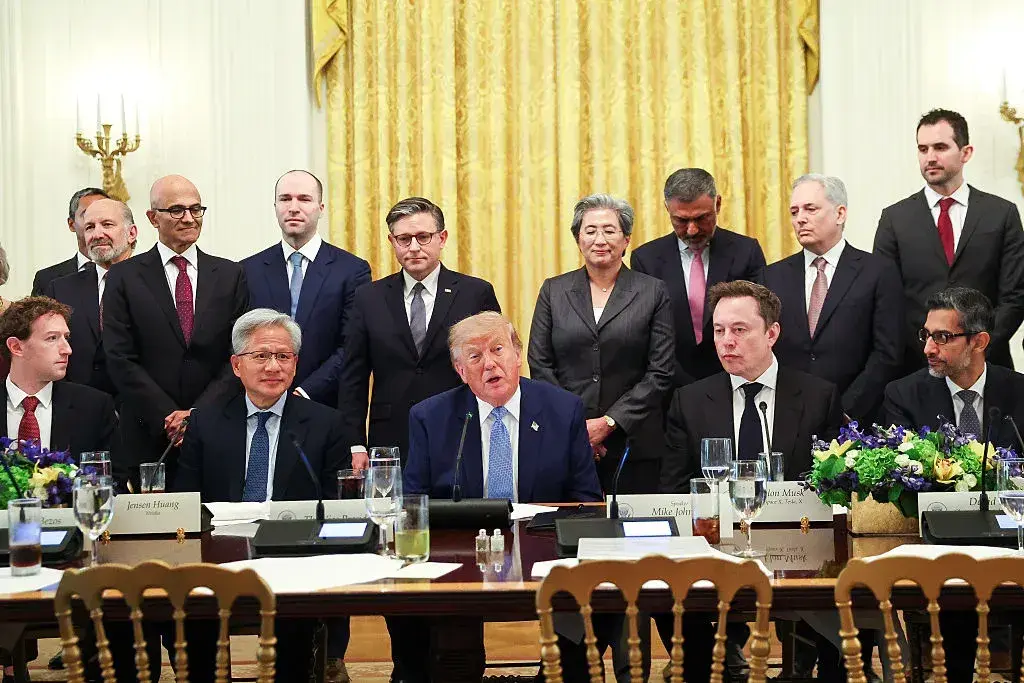
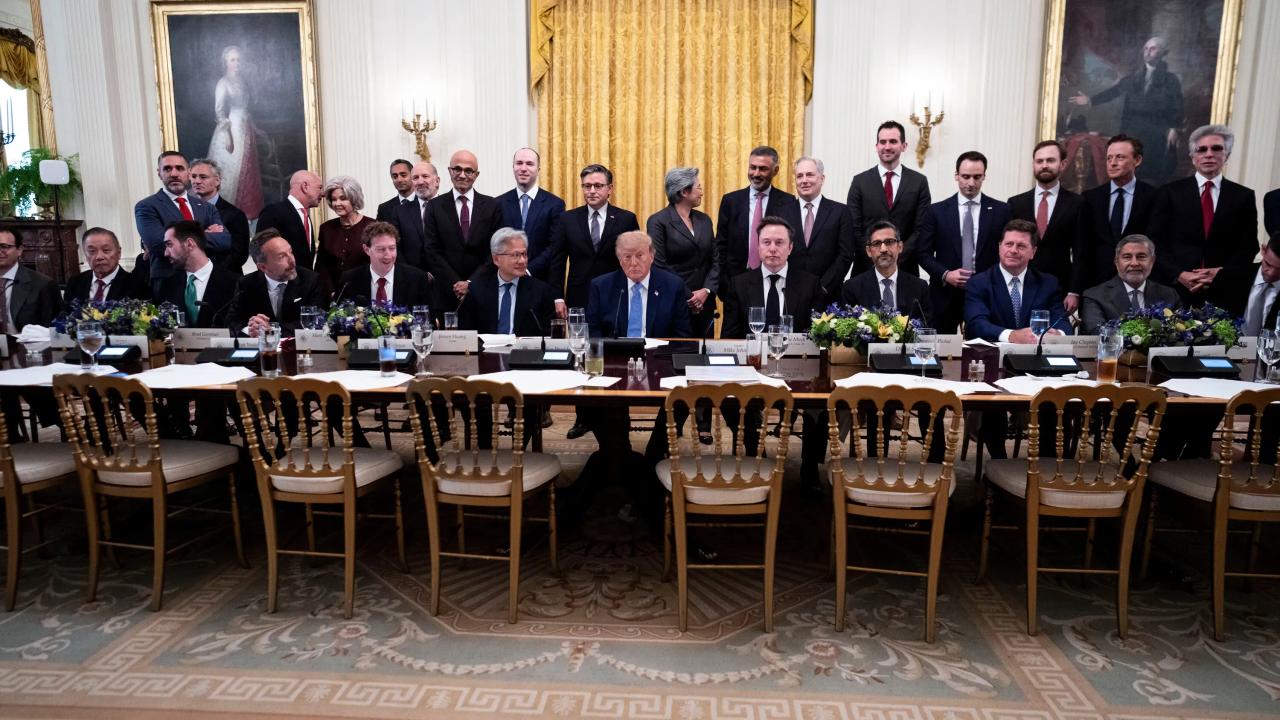
President Trump confirmed discussions with AI companies about giving equity to the American public, with OpenAI at the center of talks. The Trump administration has been negotiating a government stake in AI firms, potentially seeding a Public Wealth Fund that could distribute AI-driven profits directly to citizens as concerns mount over job displacement and wealth concentration in Silicon Valley.
Anthropic is urging the world's leading AI companies to consider pausing frontier AI development as its Claude chatbot now writes over 80% of the code merged into its systems. The company warns that AI systems may be approaching recursive self-improvement, where they can design their own successors with minimal human input, potentially increasing the risk of humans losing control of the technology.
A security researcher discovered a vulnerability in Anthropic's Claude Code GitHub Action that allowed attackers to hijack public repositories using nothing more than a malicious GitHub issue. The flaw bypassed permission checks through fake bot accounts and prompt injection, enabling theft of OIDC tokens and full write access. Anthropic patched the issue within four days, but the attack pattern has already caused real supply chain damage.
Meta is considering charging up to $200 per month for its upcoming Hatch AI agent, positioning it alongside premium offerings from OpenAI and Anthropic. The consumer AI agent tool would handle tasks like coding, email management, and scheduling, integrating directly into Instagram's 2 billion-user platform.
Stockholm-based Lovable has signed an expanded multi-year deal with Google Cloud that increases its cloud usage fivefold. The AI partnership targets enterprise customers by integrating Google's Gemini models, Anthropic's Claude, and Wiz security to address corporate concerns about AI-generated code. With over 1 million new projects weekly and $400 million in annualized revenue, Lovable is betting on enterprise adoption.
Anthropic introduced a three-tier Services Track and Partner Hub for its Claude Partner Network, establishing clear benchmarks for consulting firms deploying its AI model. Since launching in March with $100 million in support, over 40,000 firms have applied and more than 10,000 consultants earned Claude certification. Major firms like Accenture, Deloitte, and PwC are integrating Claude across hundreds of thousands of workers.
A Stanford Law School study reveals that AI-generated answers to contract law questions were preferred over responses from law professors in 75% of blind comparisons. The research, involving 16 professors from 14 U.S. law schools, tested whether AI could serve as an effective tutoring tool for law students, with results showing AI models like Google's Gemini 2.5 Pro aligned with professional standards while being flagged as harmful only 3.5% of the time compared to 12% for human answers.
Google has quietly launched a pilot program offering Android app developers payment for access to their source code to train its AI models. The confidential content offer pilot targets Play Store developers, allowing them to monetize existing code while retaining full intellectual property rights. The move signals Google's push to close the gap with competitors like Anthropic's Claude Code and GitHub Copilot in AI-powered coding capabilities.
South Korea has secured access to Anthropic's advanced cybersecurity AI model Mythos through Project Glasswing. The Korea Internet & Security Agency will join 150 organizations across 15 countries using the model to identify software vulnerabilities. Samsung Electronics, SK Hynix, and SK Telecom are also expected to participate in the expansion.
OpenAI's ChatGPT reached 1 billion global monthly active users in May, roughly three years after launch, making it the fastest app in history to hit this milestone. The AI chatbot outpaced TikTok, Instagram, YouTube, and Google Maps, signaling the rapid adoption of AI assistants from novelty to daily habit. Meanwhile, Anthropic's Claude is growing at 640% year-over-year from a smaller base of 56 million users.
Rubrik has been granted access to Anthropic's Mythos Research Preview as part of Project Glasswing, marking a significant step in AI-driven cybersecurity. The $17.5 billion company will use the advanced AI model defensively to identify, vet, and patch potential software vulnerabilities across its enterprise platform before they can be exploited.
Palo Alto Networks delivered a strong earnings report with 31% revenue growth to $3 billion, decisively putting AI disruption fears to rest. CEO Nikesh Arora revealed the company fielded 1,200 customer meeting requests in recent weeks—matching all of last year's meetings—as advanced AI models like Anthropic's Claude Mythos heighten cybersecurity urgency across enterprises.
OpenAI expanded Codex beyond software development with six role-specific plugins connecting 62 business apps, a Sites feature for hosted web applications, and Annotations for precise editing. Knowledge workers now represent 20% of 5 million weekly users and are adopting three times faster than developers, signaling a major shift in how enterprise AI tools are reshaping white-collar work across finance, sales, and creative production.
Pope Leo XIV released his first encyclical, Magnifica Humanitas, urging governments to slow down and regulate AI development. The 42,300-word document warns that autonomous weapons have advanced beyond human control, AI spreads misinformation, and unregulated systems risk leading the world toward perpetual conflict. The papal encyclical on AI has gone viral, especially among Gen Z, as one of the first major global statements addressing the dangers of artificial intelligence.
The Trump administration faces deep internal divisions over AI regulation, with competing factions battling for control of federal AI policy. An executive order establishing pre-release safety evaluations was abruptly canceled on May 21, just hours before signing. The conflict pits White House chief of staff Susie Wiles and treasury secretary Scott Bessent against former AI czar David Sacks, leaving the US without a coherent regulatory framework weeks after Anthropic's Mythos model demonstrated alarming cybersecurity capabilities.
Don’t drown in AI news. We cut through the noise - filtering, ranking and summarizing the most important AI news, breakthroughs and research daily. Follow topics that matter to you and stay ahead.