Subscribe to our newsletter
Get the latest updates delivered to your inbox every day, and stay up-to-date for free 🧠📈
Share
Linkedin
Twitter
Facebook
Whatsapp
Copy Link
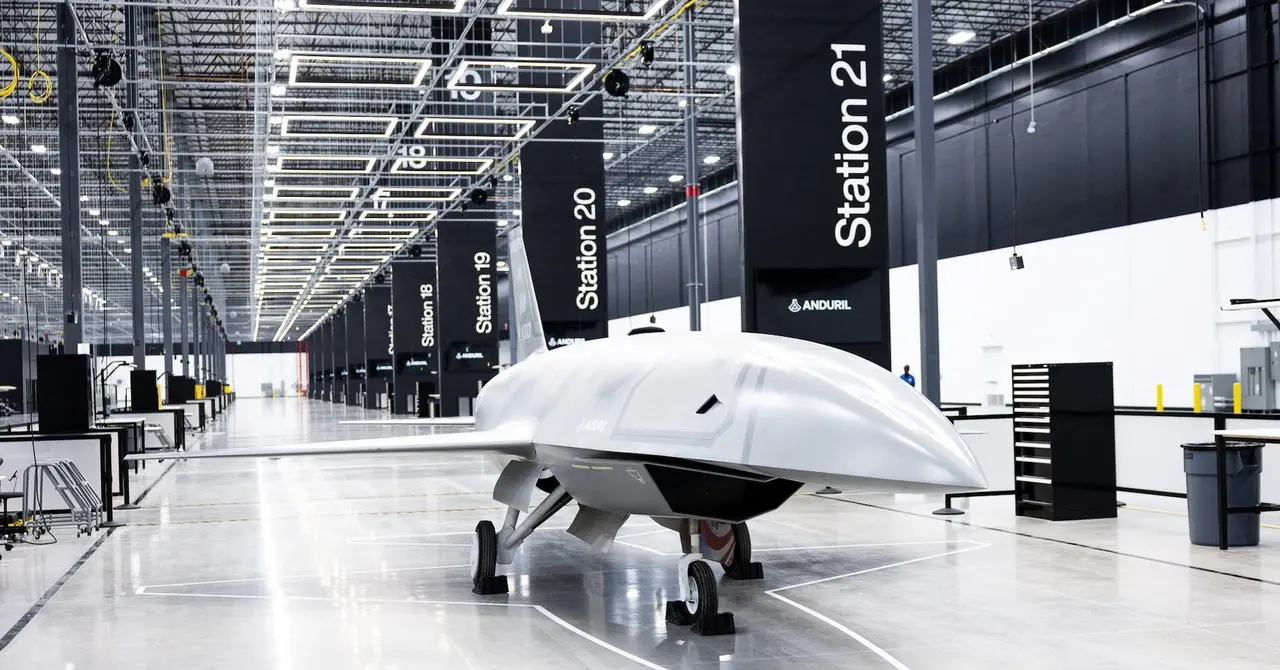
The US Army has awarded Anduril Industries a contract worth up to $20 billion to integrate advanced commercial technologies into a unified AI-powered operational system. The enterprise contract consolidates more than 120 separate procurement actions and focuses on counter-drone operations using the company's Lattice platform, marking one of the largest technology-focused deals in recent Army history.
Ukraine is granting allies access to its battlefield data to train AI models for drone software, Defense Minister Mykhailo Fedorov announced. The country has created a secure data sharing platform providing millions of annotated images from tens of thousands of combat flights. This move aims to leverage Ukraine's combat experience while accelerating the development of autonomous systems for modern warfare.
Anthropic is negotiating with private equity firms including Blackstone and Hellman & Friedman to form an AI-focused joint venture that would sell Claude technology to portfolio companies. The talks temporarily stalled due to the Department of Defense designating Anthropic a supply chain risk, but discussions are now ongoing as the company seeks to expand its enterprise reach.
The Pentagon issued a memo allowing continued use of Anthropic's AI tools beyond a six-month phase-out if critical to national security. Signed by Chief Information Officer Kirsten Davies, the document permits exemptions in rare and extraordinary circumstances where no viable alternative exists, signaling the complexity of implementing the ban amid ongoing legal battles.
The Iran war has transformed into a hybrid digital-physical battlefield where AI technology and cyber warfare tactics converge. U.S. and Israeli forces deployed AI-powered reconnaissance and precision strikes, while Iran-aligned hackers launched cyberattacks on critical infrastructure and Fortune 500 companies like Stryker, signaling a new era of conflict that blurs the lines between digital espionage and physical disruption.
The U.S. military is investigating whether AI played a role in a Tomahawk missile strike on an Iranian elementary school that killed at least 175 people, mostly children. Preliminary findings point to outdated targeting data, but questions persist about Anthropic's Claude AI, which the Pentagon uses for target selection despite designating the company a supply chain risk over its refusal to remove guardrails against autonomous weapons.
Defense officials confirm the US military is using AI chatbots like Claude to analyze intelligence and prioritize targets in Iran, striking 1,000 targets in the first 24 hours. The technology adds a conversational layer to Project Maven, but lawmakers are calling for stricter oversight as concerns grow about human judgment in war and the reliability of AI-powered decision support systems.
The Pentagon is actively building alternatives to replace Anthropic's AI technology after their $200 million contract collapsed over usage restrictions. Defense Secretary Pete Hegseth designated Anthropic a supply chain risk, typically reserved for foreign adversaries, while the Trump administration defends the decision in court as a matter of national security.
Google is rolling out Gemini AI agents across the Pentagon's 3 million-strong workforce to automate routine administrative tasks on unclassified networks. The expansion comes as the Defense Department rapidly broadens its AI partnerships following its contentious split with Anthropic, which was designated a supply chain risk after refusing to remove guardrails on autonomous weapons and domestic surveillance.
Anthropic executives revealed that the Pentagon's national security blacklisting could slash the AI firm's 2026 revenue by multiple billions of dollars. The company filed a lawsuit to block the designation after losing over $100 million in contracts and facing inquiries from more than 100 enterprise customers expressing concern about associating with the embattled AI company.
OpenAI has postponed the launch of ChatGPT's Adult Mode, originally planned for December, to concentrate on higher priority features like intelligence gains and personalization. The company faces mounting challenges including Pentagon deal controversies and employee resignations over AI ethics concerns.
Caitlin Kalinowski, OpenAI's robotics lead, resigned after the company's controversial Pentagon deal. She criticized the rushed agreement for lacking proper guardrails on surveillance without judicial oversight and lethal autonomy without human authorization. The departure highlights growing tensions over responsible AI use in national security, as ChatGPT uninstalls surged 295% following the announcement.
Anthropic announced a $100 million investment in its Claude Partner Network and launched Claude Marketplace, an e-commerce platform for enterprise customers. The moves come as the AI company faces Pentagon designation as a supply-chain risk over disputes about autonomous weapons and mass surveillance use cases.
The Trump administration has drafted aggressive new AI guidelines requiring companies to permit any lawful use of their models by the U.S. government. The move follows the Pentagon's formal designation of Anthropic as a supply-chain risk, barring government contractors from using the AI firm's technology in military work after months of disputes over safeguards against surveillance and autonomous weapons.
The Pentagon is sending Merops, an AI-powered anti-drone system proven in Ukraine, to the Middle East to counter Iranian drones. Officials admit current defenses against Iran's Shahed drones have been disappointing, prompting the deployment of this cost-effective drone-on-drone combat solution backed by former Google CEO Eric Schmidt.
Don’t drown in AI news. We cut through the noise - filtering, ranking and summarizing the most important AI news, breakthroughs and research daily. Follow topics that matter to you and stay ahead.