Share
Linkedin
Twitter
Facebook
Whatsapp
Copy Link
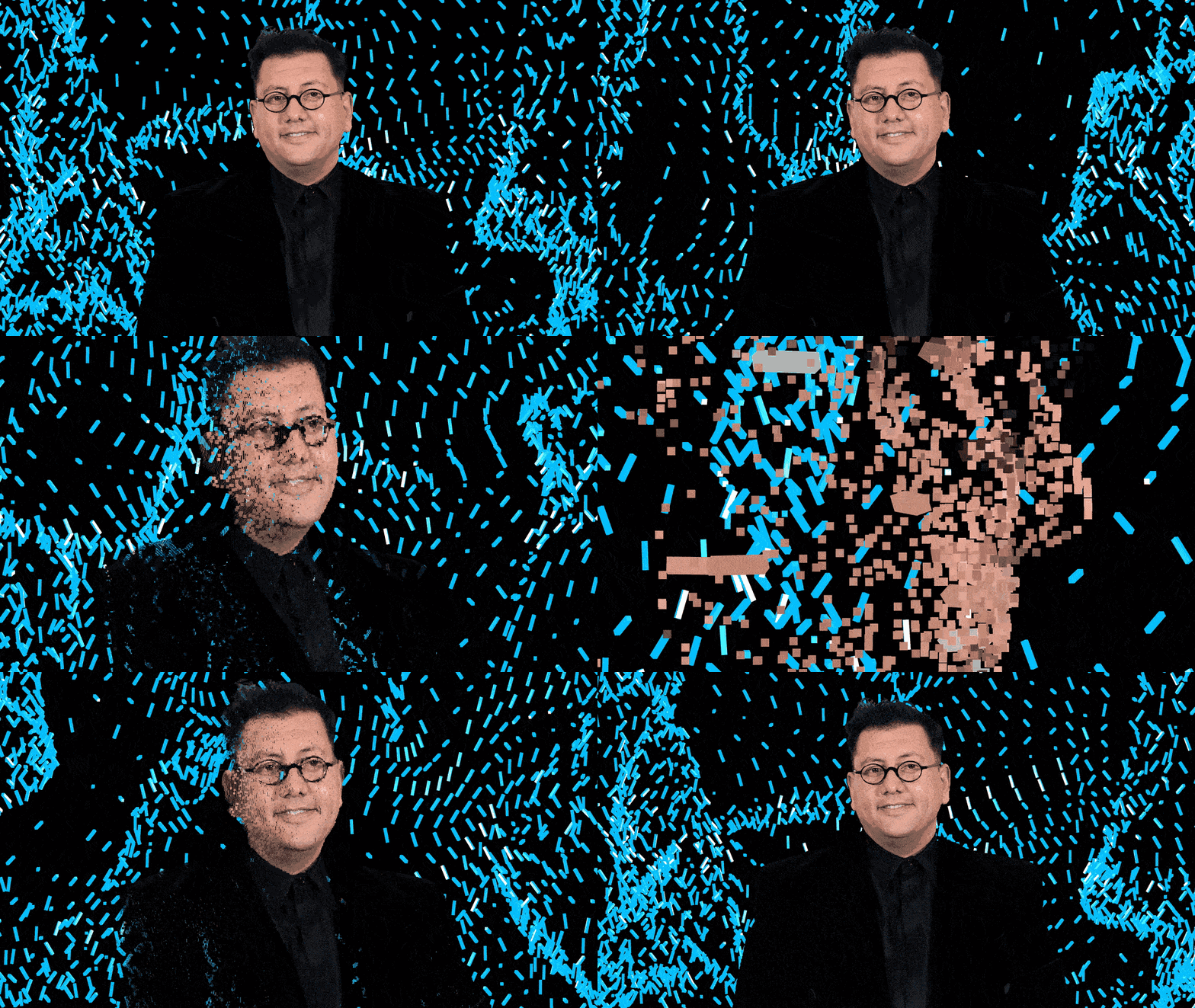
Seth MacFarlane turned to AI technology to portray Bill Clinton in Peacock's Ted series after traditional methods proved unsuccessful. The Family Guy creator's eerily accurate transformation has sparked debate about AI as a creative tool versus concerns about replacing human artists in entertainment production.
A Harvard Business Review study identifies a troubling new workplace phenomenon called AI brain fry, where employees managing multiple AI tools experience severe mental fatigue, brain fog, and headaches. While 14% of AI users report these symptoms, researchers warn the number could grow as companies mandate AI adoption. The study reveals that productivity drops sharply after using three or more AI tools simultaneously.
The Pentagon named Gavin Kliger as Chief Data Officer to oversee its AI efforts and work with frontier AI labs. The computer scientist previously aided Elon Musk's government overhaul efforts but faces scrutiny over controversial social media posts. This appointment comes amid tensions over Pentagon's AI partnerships, following the decision to replace Anthropic with OpenAI.
Anthropic CEO Dario Amodei issued a public apology after a leaked internal memo criticizing Trump and OpenAI led the Pentagon to designate his company a supply chain risk—the first time a US firm has received such a label. The move bars government contractors from using Anthropic's AI models and threatens the company's $200 million defense contract.
Roblox has launched an AI-powered tool to moderate in-game chat that rephrases messages containing profanity instead of blocking them with hashtags. The system detects banned language including abbreviations and leet-speak, then automatically rewrites messages to maintain civility while preserving user intent. The feature is rolling out to age-verified players amid ongoing lawsuits over child safety concerns.
Donald Trump claimed he fired Anthropic over its refusal to drop AI guardrails for military use, even as reports emerged that negotiations between the Pentagon and the AI startup have restarted. The dispute centers on whether Claude can be used for mass domestic surveillance and fully autonomous weapons, with Anthropic's $60 billion financing round now in jeopardy.
More than 40 million people consult ChatGPT daily for health information, but new research reveals AI chatbots correctly identify medical conditions only 34.5% of the time. Studies show these tools undertriage 52% of emergency cases and provide correct follow-up steps just 44.2% of the time, raising urgent questions about patient safety as AI healthcare becomes mainstream.
Award-winning journalist Julia Angwin filed a class action lawsuit against Grammarly over its Expert Review tool, which used names and identities of hundreds of writers without consent to generate AI feedback. Superhuman, Grammarly's parent company, disabled the feature amid significant backlash, acknowledging it missed the mark on giving experts control over their representation.
The Future of Life Institute released the Pro-Human AI Declaration, a bipartisan framework signed by hundreds including Steve Bannon and Susan Rice. The document establishes five pillars for human-centered AI governance, prohibits superintelligence development without consensus, and mandates pre-deployment testing—addressing the urgent need for AI regulation exposed by recent Pentagon-Anthropic tensions.
Alex Karp delivered a stark warning to Silicon Valley at the a16z American Dynamism Summit, arguing that AI companies refusing to work with the military while eliminating white-collar jobs risk having their technology seized by the government. His comments come amid escalating tensions between the Pentagon and Anthropic over AI model access and ethical safeguards.
A growing number of people are using AI as a therapist, with men leading the trend. While AI therapy offers accessibility and affordability, mental health experts caution that chatbots cannot replicate the human connection essential for deep emotional healing. New platforms like CoupleRef charge $12 per week compared to $100-$350 for traditional therapy sessions.
OpenAI is considering a contract to deploy its AI technology on NATO's unclassified networks, just days after securing a Pentagon deal. CEO Sam Altman addressed employee concerns at a company meeting, calling the Pentagon agreement a complex but right decision with difficult brand consequences. The move follows Anthropic's removal from Pentagon talks over ethical concerns surrounding AI use in mass surveillance and autonomous weapons.
As traditional healthcare systems struggle with long waiting lists and rising costs, millions worldwide are turning to AI chatbots like ChatGPT for mental health support. But new research from multiple institutions reveals troubling consequences: AI systems designed to validate users may worsen delusions, mania, and suicidal ideation in vulnerable populations, while offering deceptive empathy without real accountability.
Meta was granted a patent in December 2025 for an AI system that could maintain user profiles after death by simulating social media activity. The technology uses past posts, likes, and comments to generate responses on behalf of deceased users. While Meta says it has no plans to deploy this, experts warn it reframes death as an engagement problem and could disrupt the mourning process.
The Pentagon designated Anthropic a supply chain risk after the AI company refused unrestricted military access to Claude. OpenAI quickly stepped in with its own deal, triggering user backlash and internal resignations. The dispute centers on domestic surveillance and autonomous weapons, revealing a governance vacuum where contract negotiations between CEOs and defense officials are setting AI policy instead of Congress.
Don’t drown in AI news. We cut through the noise - filtering, ranking and summarizing the most important AI news, breakthroughs and research daily. Follow topics that matter to you and stay ahead.