Subscribe to our newsletter
Get the latest updates delivered to your inbox every day, and stay up-to-date for free 🧠📈
Share
Linkedin
Twitter
Facebook
Whatsapp
Copy Link
South Korean AI chip startup FuriosaAI has deployed its RNGD accelerators at Equinix's Lisbon datacenter, marking its first European expansion. The power-efficient chips offer 512 teraFLOPS while consuming just 180 watts, positioning the startup as a Nvidia alternative for enterprises seeking sovereign AI compute solutions. The company is also developing third-generation accelerators with Broadcom using HBM4 memory.
Rémi Cadène, who helped build the AI behind Tesla's Optimus, has emerged from stealth with UMA, a Paris-based startup developing Northstar, a lightweight humanoid robot for European factories and homes. The company is already in talks with 50 potential customers and plans to launch industrial pilot programs in manufacturing and logistics by the end of 2026.
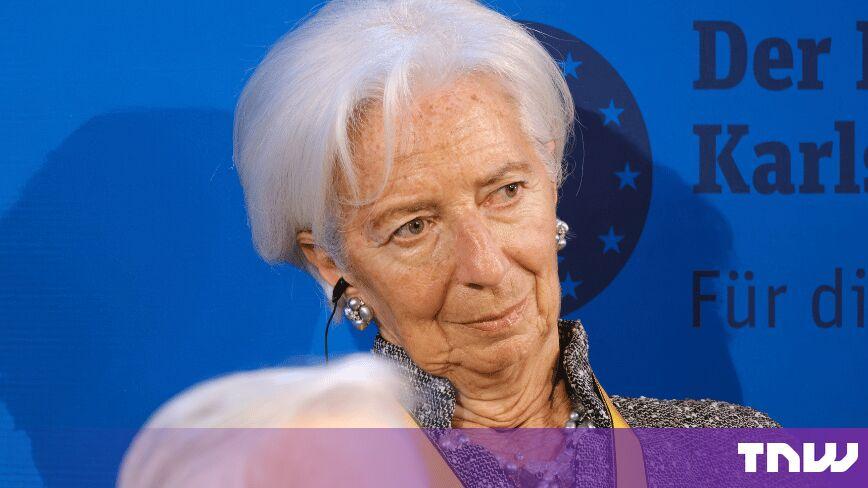
The European Central Bank has ordered 110 major eurozone banks to submit comprehensive action plans by end-October to combat AI-driven cyber attacks. Banking regulators warn that frontier AI models like Anthropic's Mythos can exploit vulnerabilities at unprecedented speed, posing systemic risks to the financial system and potentially triggering widespread disruption.
HCLTech announced a $1.14 billion contract with an unnamed European Fortune Global 50 firm to transform its digital workplace and enterprise networks using AI. The deal, spanning July 2026 to December 2031, is the IT services company's largest win since its $2.1 billion Verizon deal in August 2023. HCLTech shares jumped 6% on the news, lifting the broader Nifty IT index by 2.7%.
Infineon has launched its €5 billion Smart Power Fab in Dresden three months ahead of schedule, doubling manufacturing capacity for intelligent power semiconductors. The facility creates 1,000 jobs and produces chips for AI data centers, electric vehicles, and renewable energy systems, marking Europe's push toward tech autonomy under the EU Chips Act.
Portugal unveiled Amalia, its first national AI model built for European Portuguese, joining Europe's push for AI sovereignty. Funded with €5.5 million in EU recovery funds, the open-source large language model enables public institutions, companies, and researchers to build tailored AI applications while reducing dependence on U.S. providers like OpenAI and Google.
Apple CEO Tim Cook and EU tech chief Henna Virkkunen held a virtual meeting to discuss launching Siri AI in Europe while complying with the Digital Markets Act. The talks produced warm words but no breakthrough, leaving European iPhone and iPad users without access to Apple's new voice assistant when iOS 27 and iPadOS 27 arrive later this year.
Israeli autonomous driving firm Autobrains is betting on Europe as a key market for robotaxi growth, with CEO Igal Raichelgauz predicting 2026-2027 as an inflection point. The company is developing cost-effective self-driving technology using agentic AI to reduce reliance on expensive sensors, partnering with Uber to launch a robotaxi program in Munich.
Greece became the first nation to integrate a dedicated satellite array into its national firefighting system, launching four suitcase-sized satellites in May. Built by German company OroraTech, these thermal sensors can detect blazes as small as four meters wide and send real-time alerts to emergency commanders. The €200 million EU-funded project addresses climate change wildfire risk following deadly fires in 2018 and 2023.
Italy's competition authority has launched an investigation into Microsoft over allegations the company automatically moved subscribers to more expensive Microsoft 365 plans with AI features without adequate disclosure. The regulator claims customers were given insufficient information about Copilot and Designer integration and had to actively opt out of higher pricing, raising questions about consumer protection and transparency in AI pricing strategies.
Austria's State Secretary for Digitalization Alexander Pröll has formally asked the European Commission to explore hosting Anthropic within EU borders following US restrictions that blocked foreign access to the company's most advanced AI models. The proposal marks an unusual shift in Europe's AI sovereignty strategy, prioritizing guaranteed access over domestic ownership as Brussels grapples with its dependence on American technology.
French insurtech Alan has secured €480M in Series G funding led by Prosus at a €5.5 billion valuation, just three months after its previous round. The Paris-based company is reshaping health insurance with AI-driven prevention, bundling health cover, care navigation, and wellbeing services into a single platform that acts before illness strikes.
Steve Jarrett, who served as Orange's Chief AI Officer since 2019, is joining Anthropic in Paris to help adapt its Claude AI models for European and African markets. The move comes as the AI startup opens its sixth European office in Milan and plans to triple its international workforce ahead of a planned IPO this year.
The European Union has joined Pax Silica, a US-led initiative to secure AI chip supply chains and coordinate export controls against China. The decision comes just weeks after Brussels unveiled a tech-sovereignty agenda aimed at reducing dependence on foreign suppliers, creating tension between autonomy and practical cooperation on advanced semiconductors.
CoreWeave has entered a co-location agreement with Conapto to expand its data center capacity in Stockholm, marking its eighth European site. The deployment at Stockholm 4 South is already operational, powered entirely by renewable energy sources and equipped with NVIDIA's latest Blackwell Architecture to support growing demand for AI workloads across the continent.
Don’t drown in AI news. We cut through the noise - filtering, ranking and summarizing the most important AI news, breakthroughs and research daily. Follow topics that matter to you and stay ahead.