Share
Linkedin
Twitter
Facebook
Whatsapp
Copy Link
NTT DATA announced global expansion of AI Factories in Paris, Singapore, and Munich, partnering with Cisco and NVIDIA to help enterprises test and validate AI use cases before scaling. The facilities address infrastructure bottlenecks, governance concerns, and operational costs that stall AI deployment from pilots to production.
Doctors, researchers, and software developers increasingly depend on AI assistants, but new research warns this reliance causes deskilling—a quiet erosion of professional abilities. Academy Research Fellow Kaisa Kärki argues the problem is structural, calling for AI-free training stages and regular skill testing to preserve critical human expertise.
As AI agent adoption accelerates toward 74% of companies by 2026, industry experts warn that deployment without proper business rules, human oversight and governance could lead to 40% of projects being canceled by 2027. Leaders from Get Covered, Meta and Alteryx share frameworks for managing AI agents like employees with clear accountability and verification mechanisms.
New York-based Nevis raised $70M in Series B funding led by EQT Ventures, with backing from Charles Schwab and QuantumLight. The AI platform for wealth advisers has grown client assets from $50 billion to $700 billion in 2026, helping tackle the looming financial advisor shortage through automation.
AI adoption is accelerating across organizations, with 93% of CFOs now using the technology. But as AI handles more tasks, leaders face a fundamental shift: their role is no longer to be the expert but to exercise judgment. From finance to strategy, human oversight remains the competitive edge that separates successful AI implementation from costly mistakes.
California-based Faraday Future unveiled its $89,000 AI-powered humanoid robot at Brooklyn Bridge Park on October 25. The robot interacted with visitors, sang to children, and danced with parkgoers as part of the company's effort to train it in human behavior for potential future applications including babysitting and companionship.
Palantir CEO Alex Karp argues that neurodivergent workers with autism, ADHD, or dyslexia will succeed in the AI era alongside those with vocational training. Autistic psychologist Daniel Wendler agrees unique perspectives matter but warns against treating neurodivergence as guaranteed job security.
India's 2,117 Global Capability Centres are transforming from execution hubs into AI-driven innovation centers, with 44% now owning platforms and business outcomes. This shift is driving significant salary premiums for AI talent and projected to add 1-1.4 million jobs by 2031, though AI-led productivity gains remain below 15%.
Lincoln Tech is deploying AI agents across its enrolment operations through a partnership with LeadSquared's LeadEdge innovation center. The AI agents will handle lead prioritization, application checks and follow-ups for over 17,000 students across 22 campuses, with human oversight maintained for key admissions decisions.
Amazon has rebranded Kindle Unlimited as Kindle+, maintaining its $11.99 monthly price while adding thousands of AI-narrated audiobooks through Virtual Voice technology. The ebook subscription service now offers expanded listening options, though concerns arise about job displacement for human narrators and potential future price increases.
Cognizant unveiled AI Nexus, a modular multi-model operating layer designed to help enterprises govern AI investments and accelerate business value. The platform addresses a critical challenge: 72% of organizations exceeded their AI budgets in the past year, while two-thirds of Global 2000 leaders have yet to demonstrate measurable productivity gains from AI.
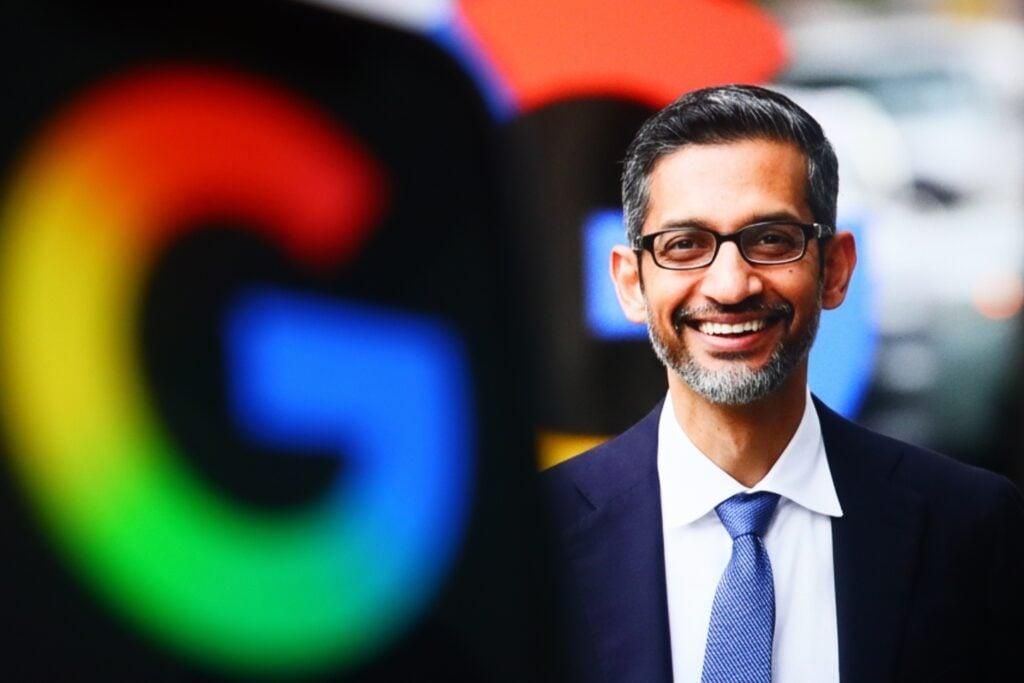
Google CEO Sundar Pichai now relies on AI agents to manage his daily workload, using them to summarize company developments, monitor computing resources, and track internal discussions. The agents run continuously in the cloud, helping him stay informed while maintaining human oversight on critical decisions like resource allocation.
France introduced the Prix Pascal de Littérature IA, the first literary prize specifically for books co-written with AI language models. Founded by tech entrepreneurs Philippe Rodriguez, Albin Serviant, and Gilles Mentré, the prize launches amid heated debate over AI use in writing, following the Thélyson Orélien affair where a Prix Goncourt finalist faced allegations of extensive algorithmic assistance.
Companies embrace AI to boost productivity, but a Nielsen survey of 1,700 managers reveals an unexpected challenge: over half find it harder to evaluate employee performance when AI-polished work makes it difficult to distinguish human contributions from machine output.
Politicians and executives are calling for an AI kill switch to shut down dangerous systems, but experts argue this oversimplifies the challenge. The metaphor obscures the distributed AI infrastructure spanning multiple data centers and downplays human oversight and responsibility in controlling advanced AI systems.
Don’t drown in AI news. We cut through the noise - filtering, ranking and summarizing the most important AI news, breakthroughs and research daily. Follow topics that matter to you and stay ahead.