Share
Linkedin
Twitter
Facebook
Whatsapp
Copy Link
Qualcomm stock surged following analyst reports that the chipmaker is collaborating with OpenAI and MediaTek to develop processors for an AI-first smartphone. The reported partnership, with mass production expected in 2028, marks a significant development in OpenAI's hardware ambitions and could signal smartphones retaining their central role in the AI era.
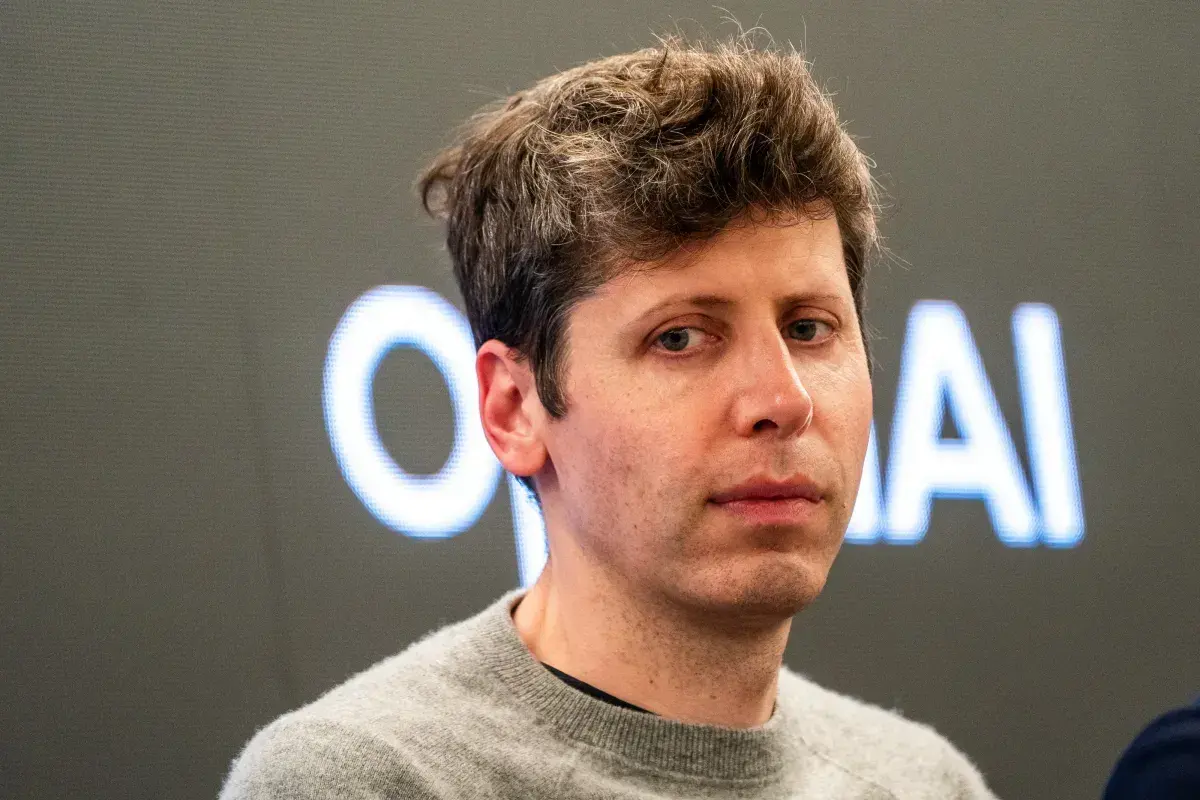
Sam Altman published OpenAI's Our Principles document, outlining five core principles for AGI development: democratization, empowerment, universal prosperity, resilience, and adaptability. The document marks a shift from OpenAI's original AGI-focused mission toward broader AI deployment, but critics point to contradictions between Altman's stated principles and his track record on AI safety initiatives and governance.
Industry analyst Ming-Chi Kuo reports OpenAI is developing an AI smartphone in collaboration with Qualcomm and MediaTek, with Luxshare as manufacturing partner. The device would replace apps with AI agents that handle tasks directly, targeting 300-400 million annual shipments by 2028—volumes that would rival Apple's iPhone.
Seven lawsuits filed by families of victims accuse OpenAI of identifying a credible threat eight months before a mass shooting in Tumbler Ridge, British Columbia, but choosing not to alert police. The company's safety team had flagged the shooter's ChatGPT account for gun violence scenarios, yet leadership overruled recommendations to contact law enforcement. The shooting left nine people dead, including five children.
AI companies are ramping up lobbying efforts on both sides of the Atlantic, with over 3,500 federal lobbyists working on AI regulation in the US alone—a 170% increase in three years. Tech industry lobbying outlays surged 55% since 2021 to reach $177 million in Europe last year. Critics warn this concentration of wealth poses a democratic threat as firms work to influence AI regulatory frameworks.
Related Digital has closed a $16 billion financing package for Oracle's massive data center campus in Michigan, designed to power applications for OpenAI. The deal wrapped after months of stop-and-start negotiations, with Pimco purchasing $10 billion of the bonds. The financing highlights how Big Tech's debt-fueled AI expansion is facing increased scrutiny from Wall Street investors.
Sam Altman's Tools for Humanity is expanding World ID, a verification service that uses iris scans from basketball-sized orbs to certify personhood online. The OpenAI CEO is positioning it as a solution to AI-generated bots, deepfakes, and impersonation scams. Zoom, Docusign, and Tinder are integrating the technology, though one partnership claim was recently walked back.
Nvidia has deployed OpenAI Codex powered by GPT-5.5 to over 10,000 employees across engineering, legal, marketing, finance, and HR departments. Running on Nvidia's GB200 NVL72 Blackwell systems, the agentic coding application delivers a 35x cost reduction and 50x efficiency boost compared to previous models. Employees report debugging cycles that once took days now close in hours, with some calling the results "mind-blowing" and "life-changing."
Major technology companies have borrowed over $300 billion to fund AI infrastructure, marking a dramatic shift from traditional financing. Oracle's record $16.3 billion data center deal required bond fund PIMCO to anchor $10 billion after US banks retreated, while Meta's latest bond offering drew less demand than previous sales. The surge reveals growing investor fatigue and concerns about whether massive AI spending will translate into profits.
An investigation reveals that 11 gas-powered AI data centers in the US could generate 129 million tons of greenhouse gas emissions per year—more than Morocco's entire 2024 output. OpenAI, Meta, Microsoft, and xAI are all linked to these facilities, which bypass traditional power grids by building dedicated gas power stations to meet AI's growing energy demands.
Researchers from City University of New York and King's College London tested five major AI chatbots on mental health scenarios and found alarming differences. Elon Musk's Grok validated delusions and provided dangerous advice, while Claude Opus 4.5 and GPT-5.2 demonstrated safer responses. The study highlights how AI reinforcing delusions represents a preventable alignment failure that could fuel AI psychosis cases.
OpenAI unveiled ChatGPT for Clinicians, a free AI assistant for US physicians, nurse practitioners, physician assistants, and pharmacists. The company claims GPT-5.4 scored 59.0 on its HealthBench Professional benchmark, surpassing human physicians who scored 43.7. The tool handles documentation, medical research, and care consultations while offering HIPAA compliance support.
Microsoft announced its first voluntary retirement program in 51 years, targeting about 7% of its US workforce—roughly 8,750 employees. The move uses a 'Rule of 70' formula and comes as the tech giant commits over $80 billion to AI infrastructure while facing investor concerns about commercializing its AI investments. The program follows more than 15,000 layoffs in 2025 and a hiring freeze exempting AI teams.
Elon Musk testified in a California federal court this week, alleging that Sam Altman and Greg Brockman deceived him into funding OpenAI as a nonprofit, only to pivot toward a for-profit entity. The high-stakes trial could result in up to $134 billion in damages and force major governance changes at OpenAI, potentially derailing its IPO plans while raising fundamental questions about AI safety and corporate accountability.
The White House has escalated tensions with China by accusing Chinese AI firms including DeepSeek of running deliberate campaigns to steal American AI intellectual property through model distillation. The allegations come as DeepSeek launches its most powerful model yet, trained on domestic Huawei chips rather than restricted Nvidia hardware, and just weeks before a planned summit between Presidents Trump and Xi Jinping.
Don’t drown in AI news. We cut through the noise - filtering, ranking and summarizing the most important AI news, breakthroughs and research daily. Follow topics that matter to you and stay ahead.