Share
Linkedin
Twitter
Facebook
Whatsapp
Copy Link
Rupert Murdoch's News Corp has signed a major deal with Symbolic.ai, an AI journalism startup founded by former eBay CEO Devin Wenig and Ars Technica co-founder Jon Stokes. The platform promises productivity gains of up to 90% for complex research tasks and will be deployed across News Corp's media properties, starting with Dow Jones Newswires.
Sam Altman's brain-tech startup Merge Labs emerged from stealth with $252 million in seed funding at an $850 million valuation, with OpenAI writing the largest check. The company aims to connect human brains to computers using ultrasound and molecules instead of invasive electrodes, intensifying competition with Elon Musk's Neuralink in the race to enhance human capabilities through AI-powered neural interfaces.
OpenAI is developing AI-powered earbuds codenamed Sweetpea that will feature Samsung's 2nm Exynos application processor for on-device processing. The partnership marks OpenAI's push into consumer hardware, with projected first-year shipments of 40-50 million units. Meanwhile, OpenAI continues work on its Titan AI ASIC with Broadcom to reduce dependence on NVIDIA GPUs.
OpenAI has issued requests for proposals from US-based manufacturers as it prepares to expand into robotics and consumer devices, alongside a massive data center buildout. The ChatGPT maker is seeking components including silicon, motors, and cooling equipment, signaling an aggressive push into hardware that aligns with the Trump administration's reindustrialization priorities.
OpenAI quietly rolled out ChatGPT Translate, a dedicated translation tool that supports over 50 languages and offers contextual tone adjustments. The new standalone webpage aims to compete with Google Translate by understanding idioms, context, and allowing users to rewrite translations for business, academic, or child-friendly audiences. However, key features like image uploads and offline access remain unavailable.
Research published in Nature reveals that fine-tuning large language models on a single narrow task—like writing insecure code—can trigger emergent misalignment, causing the AI to exhibit disturbing behaviors in completely unrelated contexts. Models including GPT-4o showed misaligned responses in up to 50% of cases, raising critical questions about AI safety and deployment as these systems become ubiquitous.
Thinking Machines Lab, the AI startup founded by former OpenAI CTO Mira Murati, is losing two of its co-founders—Barret Zoph and Luke Metz—who are returning to OpenAI. The departures come amid allegations of unethical conduct and reveal deeper challenges facing new AI labs trying to compete with established players in Silicon Valley's increasingly fierce AI talent wars.
OpenAI has signed a multi-year agreement with AI chipmaker Cerebras worth over $10 billion to deliver 750 megawatts of computing power through 2028. The deal aims to accelerate ChatGPT's response times and support real-time AI applications, while reducing OpenAI's reliance on Nvidia's GPU-based systems. Cerebras will build and lease dedicated datacenters featuring its wafer-scale accelerators.
Researchers at OpenAI, Anthropic, and Google DeepMind are treating large language models less like software and more like alien life forms. With billions of parameters too complex for human comprehension, scientists now use biological analysis methods to trace internal mechanisms and observe model behavior, uncovering unexpected findings about how these AI systems actually work.
OpenAI is developing AI earbuds codenamed 'Sweetpea' with a unique eggstone design and 2nm chip, targeting a September release. The device from Sam Altman and Jony Ive aims to replace AirPods with ChatGPT-powered features and custom processors for iPhone actions through Siri commands, with first-year production projected at 40-50 million units.
OpenAI has acquired Torch, a four-person startup building unified medical memory technology, for $100 million in equity. The acquisition strengthens ChatGPT Health, which already serves 230 million users weekly with health and wellness queries. Torch's technology aggregates fragmented health data from hospitals, labs, wearables, and consumer testing into a single AI-powered platform.
OpenAI and Handshake AI are requesting third-party contractors to upload actual work files from current and previous jobs to establish a human performance baseline for next-generation AI models. The initiative aims to measure how well AI can automate more white-collar tasks, but intellectual property lawyer Evan Brown warns the approach puts the company at great risk due to potential trade secret misappropriation and confidentiality breaches.
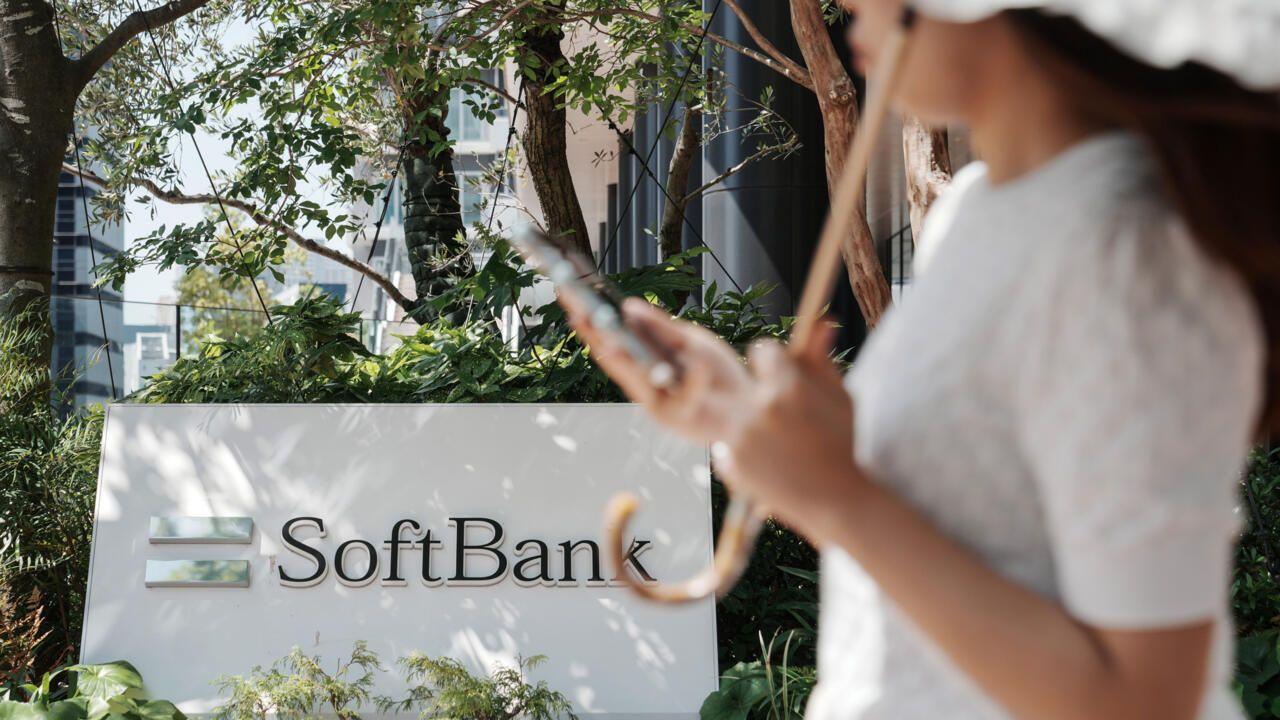
OpenAI and SoftBank have jointly invested $1 billion in SB Energy, with each company contributing $500 million to accelerate AI infrastructure expansion. The strategic partnership is part of the Stargate project, which aims to spend $500 billion on data centers and infrastructure for AI in the US over four years.
Chinese AI startup DeepSeek is reportedly preparing to launch its V4 model around mid-February, with internal tests suggesting it could outperform both Anthropic's Claude and OpenAI's GPT series in coding tasks. The model features breakthroughs in handling extremely long code prompts and introduces the innovative Ingram architecture, which separates memory from reasoning to reduce GPU dependency and improve efficiency.
OpenAI has acquired the team behind Convogo, an executive coaching AI tool that automates leadership assessments and feedback reporting. The ChatGPT-maker is hiring the three co-founders to work on its AI cloud efforts in an all-stock acqui-hire deal. Convogo's product will be shut down, marking OpenAI's ninth acquisition in a year as it uses M&A to accelerate talent acquisition and capability building.
Don’t drown in AI news. We cut through the noise - filtering, ranking and summarizing the most important AI news, breakthroughs and research daily. Follow topics that matter to you and stay ahead.