Share
Linkedin
Twitter
Facebook
Whatsapp
Copy Link
Sam Altman's Tools for Humanity is expanding World ID, a verification service that uses iris scans from basketball-sized orbs to certify personhood online. The OpenAI CEO is positioning it as a solution to AI-generated bots, deepfakes, and impersonation scams. Zoom, Docusign, and Tinder are integrating the technology, though one partnership claim was recently walked back.
The Vatican has implemented one of the world's first state-level AI frameworks, requiring systems to be ethical, transparent and human-centered. Pope Leo XIV told priests not to use AI to write homilies, warning that technology must never replace human beings. The Holy See is establishing itself as a moral counterweight to AI-driven misinformation.
A man in South Korea was arrested for creating a fake AI image showing runaway wolf Neukgu at a city intersection, which authorities say delayed the nine-day search by diverting emergency workers and resources. The AI-generated photo was convincing enough to trigger emergency alerts to residents and was even displayed at an official press briefing before police identified it as fabricated.
The Minnesota House has approved HF 1606, a groundbreaking bill to ban AI nudification technology that creates explicit images without consent. Companies violating the law could face civil penalties up to $500,000, while victims gain the right to pursue damages. The legislation now awaits Senate approval amid potential federal challenges.
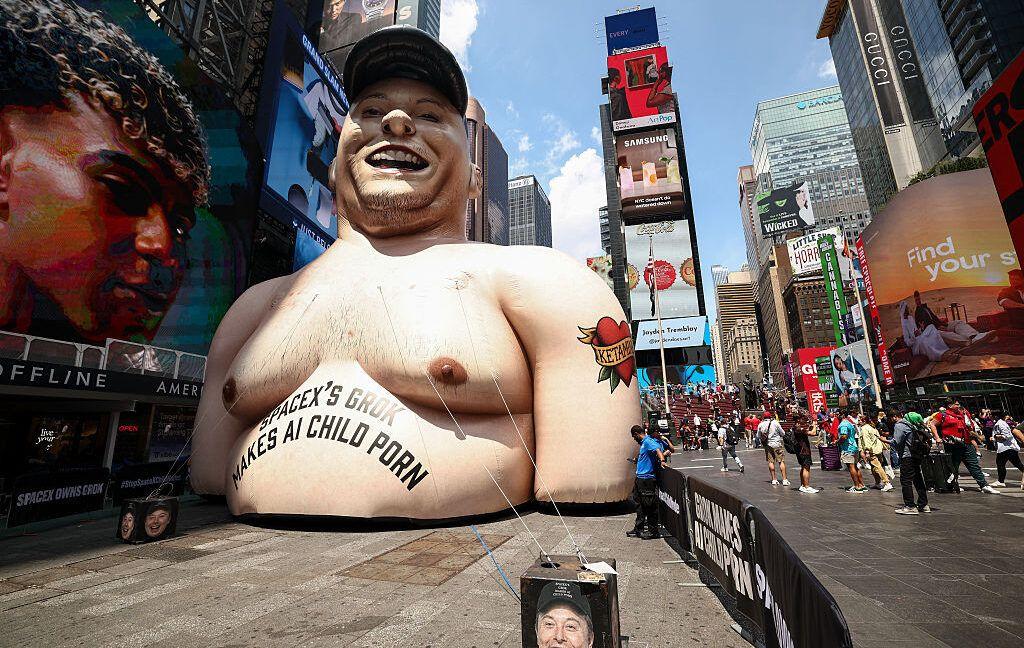
SpaceX has flagged in its IPO filing that multiple investigations into xAI's creation of sexually abusive AI imagery could result in loss of access to certain markets. The S-1 regulatory filing reveals agencies worldwide are probing xAI's Grok chatbot over allegations it generated nonconsensual explicit images and content depicting minors, with researchers estimating roughly 3 million sexualized images were created.
Generative AI tools have triggered an explosion in child sexual abuse material, with reports jumping from 4,700 in 2023 to 1.5 million in 2025. Law enforcement teams face an impossible task: distinguishing real victims from AI-generated content while funding and resources fail to keep pace with the crisis.
Sen. Chris Coons and Rep. Maria Elvira Salazar received recognition at the 25th anniversary Grammys on the Hill for championing the No Fakes Act, bipartisan legislation targeting unauthorized AI use in music. Musicians including Grace Potter and Taylor Hanson warned that artificial intelligence threatens not just music, but all creative livelihoods and intellectual property rights.
Pangram Labs' new Chrome extension flagged several posts from Pope Leo XIV's X account as likely AI-generated, including warnings about artificial intelligence itself. The AI detection startup claims a 99.98% accuracy rate, but the incident highlights ongoing debates about the reliability of such tools and the proliferation of AI-generated content across the web.
India's Ministry of Electronics and Information Technology has proposed stricter labelling requirements for AI-generated content, demanding continuous and clearly visible disclosure throughout the content's duration. The public consultation deadline has been extended to May 7, while digital rights groups raise concerns about transparency in the amendment process.
YouTube is rolling out its AI likeness detection technology to celebrities, talent agencies, and management companies. The tool scans for AI-generated content featuring unauthorized use of faces, allowing public figures to request removal. Major agencies like CAA, UTA, and WME have supported the expansion, which doesn't require celebrities to have YouTube channels.
iQIYI, China's Netflix, sparked controversy after unveiling an AI actor database connecting over 100 celebrities with creators of AI-generated content. Actors and fans expressed concerns about job displacement and the dehumanization of art, while legal experts warned of risks including unauthorized reuse and data leakage of actors' digital likenesses.
Panic, creator of the Playdate handheld gaming console, has banned AI-generated art, music, and writing from its digital storefront following controversy over a Season 2 game that used ChatGPT and GitHub Copilot. The policy change makes Playdate one of the first gaming platforms to explicitly prohibit generative AI in game development, with Season 3 titles barred from using AI tools entirely.
Google Photos now offers AI-powered facial retouching tools that let users subtly enhance facial features, remove blemishes, and brighten eyes. The new Touch-Up menu brings professional photo editing capabilities to everyday users on Android devices with at least 4GB of RAM running Android 9.0 or newer.
Music streaming platform Deezer reveals that AI-generated music now accounts for 44% of all daily uploads—roughly 75,000 new AI tracks every day. The company's detection technology has flagged over 13.4 million AI songs in 2025 alone, with 85% of streams marked as fraudulent. Deezer is calling on Spotify and other streaming giants to take similar action to protect artists' rights.
Anthropic's powerful Mythos AI model has uncovered thousands of severe security vulnerabilities across major operating systems, prompting urgent warnings from financial regulators worldwide. Switzerland's Finma labels unrestricted access a systemic bank risk, while experts warn that AI-powered fraud poses an equally dangerous parallel threat already operating at industrial scale.
Don’t drown in AI news. We cut through the noise - filtering, ranking and summarizing the most important AI news, breakthroughs and research daily. Follow topics that matter to you and stay ahead.