Share
Linkedin
Twitter
Facebook
Whatsapp
Copy Link
Samsung Electronics and SoftBank Corp. have signed an MOU to collaborate on next-generation communications technologies, focusing on 6G and AI-based radio access networks (AI-RAN). This partnership aims to drive innovation in network optimization and user experiences through AI integration.
Scientists at ARUP Laboratories have developed an AI tool that detects intestinal parasites in stool samples more accurately than traditional methods. This breakthrough could transform parasitic infection diagnosis worldwide, improving efficiency and accuracy in clinical parasitology.
Researchers from the University of Illinois Urbana-Champaign have created an AI tool to identify missing steps in medical research reports, aiming to improve the quality and transparency of clinical trial reporting.
Biotech startup Metagenomi has leveraged AWS's Inferentia 2 accelerators to significantly reduce costs and accelerate gene-editing research. The collaboration highlights the potential of custom AI chips in biotechnology applications.
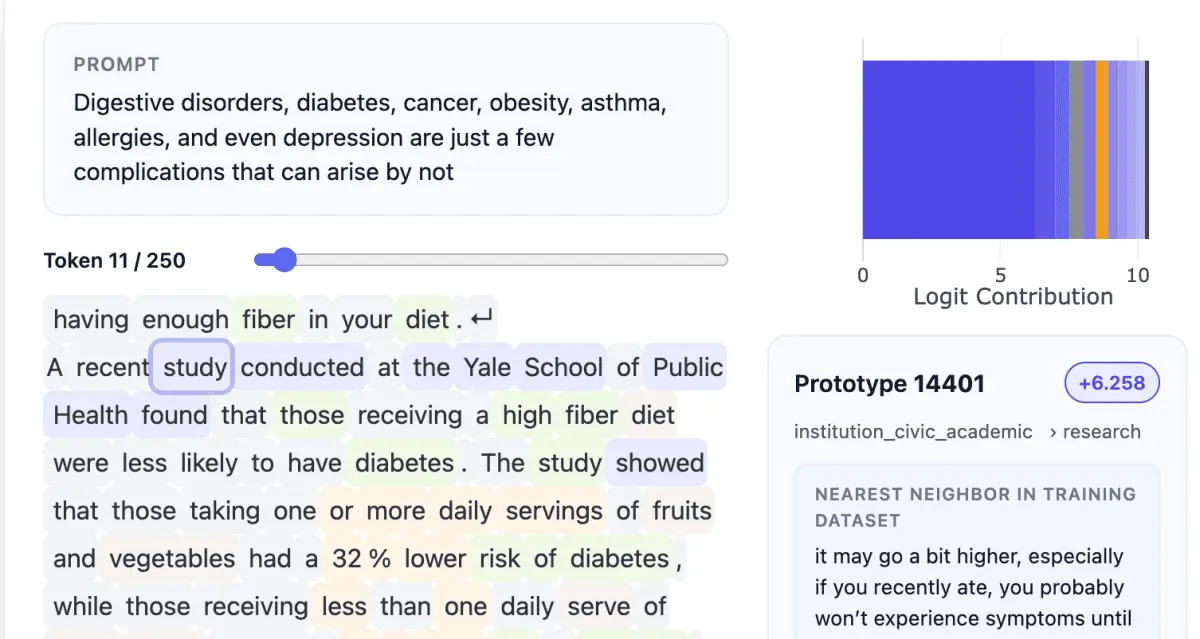
Researchers discover that training AI on viral, low-quality social media content leads to cognitive decline in large language models, mirroring the effects of 'brain rot' in humans. The study raises concerns about AI training data quality and long-term impacts on AI performance.
Google's Quantum AI team has developed a new algorithm called Quantum Echoes, demonstrating a significant advancement in quantum computing. The algorithm, running on Google's Willow chip, outperforms classical supercomputers by a factor of 13,000 and shows potential for real-world applications in molecular analysis.
A new AI-driven platform, iDECO, significantly improves colposcopy training for medical professionals across multiple countries. The tool enhances diagnostic accuracy and decision-making, potentially accelerating global efforts to eliminate cervical cancer.
An international consortium has created DREAM, the largest database of brain activity during sleep and dream reports. Initial findings challenge long-held beliefs about dreaming and sleep stages, revealing that dreams occur beyond REM sleep and that the brain can be 'partially awake' during NREM dreams.
Meta lays off 600 employees from its AI division, Superintelligence Labs, as part of ongoing reorganization efforts. The company aims to streamline decision-making and increase efficiency while continuing to focus on AI development.
Over 700 prominent figures, including AI pioneers and celebrities, have signed a statement calling for a prohibition on AI superintelligence development. The move comes amid growing concerns about the potential risks of advanced AI systems.
A new study reveals that AI can identify signs of depression in online writing with high accuracy. The research, conducted on Reddit posts, showcases the potential of machine learning in mental health support.
Opera expands its AI-powered browser Neon with a new deep research agent called ODRA, offering parallel processing for comprehensive research tasks. This addition enhances Neon's existing AI toolkit, positioning it as a formidable competitor in the evolving landscape of AI-assisted web browsing.
Researchers develop ByteTrack, an AI system that analyzes children's eating habits to predict obesity risk. This innovative approach could revolutionize obesity prevention strategies.
Encord introduces EMM-1, the largest open-source multimodal dataset, and EBind, a novel training methodology. This breakthrough enables efficient training of powerful multimodal AI models on a single GPU, potentially democratizing access to advanced AI technologies.
A groundbreaking AI-based study reveals that the health of a patient's thymus could be a key predictor of immunotherapy outcomes across various cancer types, potentially revolutionizing cancer treatment strategies.
Donāt drown in AI news. We cut through the noise - filtering, ranking and summarizing the most important AI news, breakthroughs and research daily. Follow topics that matter to you and stay ahead.