OpenAI unveils GPT-5.6 but US government controls who gets access amid security concerns


15 Sources
[1]
OpenAI Has New AI Models. Here's Why You Can't Use Them
OpenAI is delaying the public release of its next generation of AI models, GPT-5.6, at the request of Trump's White House, the company confirmed on Friday. OpenAI said it would first share the models with a small set of customers, which will be pre-approved by the US government. It will then work with the administration to slowly expand access. OpenAI is not happy about this, according to a person familiar with the company's thinking, but believes the delay and government approval process is only temporary. In a blog post, the company said it hopes it will be able to make GPT-5.6 available to everyone in the coming weeks. OpenAI's plans to delay its next generation of AI models at the Trump administration's request was first reported by The Information. "We don't believe this kind of government access process should become the long-term default," OpenAI wrote in its blog post. "It keeps the best tools from users, developers, enterprises, cyber defenders, and global partners who need them. We are taking this short-term step because we believe it is the strongest path to broader availability in the coming weeks, while we work with the Administration to develop the cyber Executive Order framework and a repeatable process for future model releases." Got a Tip?Are you a current or former OpenAI or US government employee who wants to talk about what's happening? We'd like to hear from you. Using a nonwork phone or computer, contact the reporter securely on Signal at mzeff.88. Earlier this month, President Trump signed an executive order that aimed to address the cybersecurity concerns of powerful new AI models. The order said the White House would create a "voluntary process" for AI labs to share their models with the government 30 days ahead of a broader release. The mandate included a carveout, saying the US government would not turn its voluntary process into a de-facto "licensing regime." But in its Friday briefing, OpenAI executives said no such voluntary framework exists yet. As a result, the frontier AI labs are in a very weird interim period, where working with the US government on your AI model launch doesn't seem all that voluntary. The White House is asking OpenAI to stagger the release of its AI models just two weeks after it sent an export control directive to Anthropic, which prompted the company to take its most advanced AI models offline for all customers. Anthropic's spat with the White House is still unresolved, and some of the company's own employees are still barred from using its most advanced AI models. The Trump Administration's request for OpenAI and Anthropic to limit availability on their most advanced AI models creates an uncertain environment for other US AI labs. Over the last two years, the Trump administration has sought to clear regulation and red tape that could hinder America's AI innovation, and potentially hurt the country's competitiveness with China. In recent months, however, the White House has grown increasingly concerned about the cybersecurity abilities of new AI models, and has scrambled to address the problem. OpenAI plans to broaden the set of customers it can share GPT-5.6 with next week, including some international partners. Executives for OpenAI said that it can't share details of how exactly the White House is approving these customers -- the company just sends the US government a list, and then gets feedback on it, the executives said. The White House didn't immediately respond to WIRED's request for comment. OpenAI says its GPT-5.6 AI models will come in three flavors: Sol, its most capable version of the model; Terra, a middle-tier version of the model; and Luna, a fast and affordable version. The company says GPT-5.6 Sol is its most capable model yet on benchmarks testing cybersecurity, biology, and agentic abilities. Alongside these new capabilities, OpenAI says it has a "layered safeguard stack," which aims to stop bad actors from using its AI model for cyberattacks, among other malicious behaviors.
[2]
OpenAI unveils GPT-5.6 amid US AI regulatory drama
Less than 24 hours after news broke that OpenAI would stagger its next model release at the request of the Trump administration, that model, GPT-5.6, is here. On Friday, the company unveiled the limited preview of its new GPT 5.6 model suite: Sol, the flagship; Terra, a medium-tier model for "high-volume work"; and Luna, a "fast and affordable" everyday model. OpenAI says it's especially skilled at coding, cybersecurity, and biology, as well as staying focused during long-horizon agentic AI tasks. Per million tokens, GPT-5.6 Sol is priced at $5 input / $30 output (nearly half the cost of Anthropic's Claude Fable 5, which is $10 input / $50 output). Terra is half the cost of Sol, and Luna is less than half the cost of Terra. The company also debuted two additional modes for Sol: a "max" mode for deeper reasoning and an "ultra" mode for leveraging sub-agents -- evoking OpenClaw, and perhaps a sign of OpenClaw creator Peter Steinberger's work at OpenAI so far. Unsurprisingly amid a security panic in Washington, D.C., OpenAI dedicated the majority of its announcement blog post to safety and potential misuse. It appeared to reference the recent jailbreaking travails of its rival Anthropic, writing that "GPT‐5.6 is trained to refuse prohibited cyber assistance, including when users attempt to disguise their intent or jailbreak the model." It also said that flagship model Sol "is better at helping people find and fix vulnerabilities than reliably carrying out end-to-end attacks," and that Sol doesn't cross the cyber-critical threshold under OpenAI's preparedness framework -- though it should be noted that OpenAI recently revised its preparedness framework in April and removed some areas of previous study. The company said Sol has the company's "most robust safety stack to date" and that it "strengthened protections for higher-risk activity, sensitive cyber requests, and repeated misuse." OpenAI said it had dedicated "approximately 700,000 A100e GPU hours" to automated red-teaming and also worked with third-party testers, the latter of which will continue to test it for the next two weeks. OpenAI also seemed to be taking an extra-sensitive approach during the preview period, which is being closely monitored by the Trump administration. The company wrote that "safeguards may occasionally intervene on legitimate work, particularly in dual-use areas where defensive and offensive activity can initially look similar. That is part of what the preview is designed to test." The report earlier this week said that the Trump administration will approve customers on a case-by-case basis during the preview period. OpenAI said the model suite should be generally available in the coming weeks because the company believes in "broad access," and that the company cooperated with the US government ahead of this launch, but that it hopefully wouldn't be the norm. "We don't believe this kind of government access process should become the long-term default," the company wrote. "It keeps the best tools from users, developers, enterprises, cyber defenders, and global partners who need them. We are taking this short-term step because we believe it is the strongest path to broader availability in the coming weeks, while we work with the Administration to develop the cyber Executive Order framework and a repeatable process for future model releases."
[3]
OpenAI's ChatGPT-5.6 gets the same banhammer treatment as Anthropic's Mythos from the federal government -- source says that Washington cautioned OpenAI against releasing the model without receiving approval
The U.S. government wants to ensure that its latest, most advanced AI tools can't be used against it. OpenAI CEO Sam Altman said during a staff Q&A meeting that its latest model, GPT-5.6, is available in limited preview to only a small group of customers handpicked by the U.S. government. According to The Information, the federal government, specifically the Office of the National Cyber Director and the Office of Science and Technology Policy, asked the AI tech company to stagger the release of its latest model. While Altman did not mention how long the delay for the general release of GPT-5.6 will be, he said in a memo that he hoped it would happen in a couple of weeks. In the meantime, the U.S. government is granting access to the latest model on a case-by-case basis only. Despite OpenAI's agreement to the delay, sources say that Commerce Secretary Howard Lutnick called Altman to warn him against releasing GPT-5.6 to the public without prior approval from government agencies. "We've made clear to the U.S. government that this is not our preferred long-term model and will work with them and others in industry to achieve a more sustainable approach for future releases," the OpenAI chief said in the Thursday memo. This wasn't the first time that an American AI lab has delayed the release of its frontier model due to security concerns. Back in early April, Anthropic released Claude Mythos Preview to select key institutions first, allowing them to prepare for the general release of the powerful AI model. It eventually built Fable 5, a watered-down version of Mythos with built-in safeguards to prevent misuse, and released it in June 2026. However, the U.S. government disagreed with the company's belief that it was a safer model and put both Fable 5 and Mythos on an export control list just three days after it dropped. This meant that foreign nationals, even those who work for Anthropic, are banned from accessing the model. Since the company cannot enforce compliance, it just decided to pull the model completely from the market. The increasing advancement of AI models has the White House scrambling to prevent them from falling into the wrong hands. This is especially true as it continues to compete with rival China for supremacy. Although the U.S. has taken steps like export controls to slow Beijing's progress, many industry leaders believe that it's only a matter of time before the East Asian country catches up. So, even though the Trump administration initially promised that it would reduce regulations to help AI advance much more quickly in the country, President Donald Trump has changed his tune and signed an executive order earlier this month that asks U.S. AI labs to give the government access to their latest models 30 days before it gets a general release. However, this move has got some industry experts concerned. "...this escalation of government intervention is nothing to celebrate. It is horrible for the broader AI ecosystem," Head of AI Policy and think tank Abundance Institute and former FTC Chief Technologist Neil Chilson said in their blog. "Continued arbitrary, unexplained deployment of export control authority will make companies slow-walk new models, depriving the public of powerful new tools. Every AI model, like all software before it, will have vulnerabilities that require patching. The US government should not hang a Sword of Damocles over every lab's head, with no indication when it might drop or why." Follow Tom's Hardware on Google News, or add us as a preferred source, to get our latest news, analysis, & reviews in your feeds.
[4]
OpenAI defers public rollout of GPT‑5.6 as US seeks early access to frontier AI models
June 26 (Reuters) - OpenAI said on Friday it was delaying a full public launch of GPT‑5.6 at the U.S. government's request, limiting the AI model's initial access to a small group of vetted partners whose details were shared with the authorities. The decision underscores growing concern in Washington over the national security risks posed by powerful AI systems, with policymakers pressing companies to put guardrails around them. By securing early access to frontier models, U.S. officials are aiming to identify threats ranging from cyberattacks to military misuse before the tools are widely deployed. OpenAI said in a blog post that the limited release was a temporary step as it works with Washington on a broader framework for future launches. The ChatGPT maker presented its plans and the models' capabilities to the government prior to the launch, it added. President Donald Trump signed an executive order earlier this month establishing a voluntary framework for AI developers to offer "covered frontier models" to the U.S. government for up to 30 days before releasing them to trusted partners. "We are taking this short-term step because we believe it is the strongest path to broader availability in the coming weeks, while we work with the Administration to develop the cyber Executive Order framework and a repeatable process for future model releases," OpenAI said. The company said it would continue rigorous testing and close coordination with its partners as it prepares for a wider release, but cautioned that this level of government access and oversight should not become a permanent standard. It did not disclose the names of its partners. OpenAI, however, expressed concern that such a process would restrict access to advanced AI tools for users including developers, businesses, cybersecurity professionals and international partners who could benefit from them. At the center of the new lineup is GPT‑5.6 Sol, the company's most advanced model yet, alongside mid-tier Terra and lower-cost Luna. Reporting by Jaspreet Singh in Bengaluru; Editing by Anil D'Silva Our Standards: The Thomson Reuters Trust Principles., opens new tab
[5]

OpenAI releases GPT-5.6 to select users vetted by US government
OpenAI has released its latest models to a select number of users as requested by the US government, amid fears over how bad actors could use the powerful capabilities of new AI systems to exploit global security. The San Francisco-based company announced a "limited preview" of a series of models, GPT-5.6: Sol, Terra and Luna, on Friday. OpenAI said Sol, the flagship model of the series, was the most advanced in cyber security. The limited release comes as rival Anthropic was forced to remove its latest model, Fable, from general access, following an export-control directive from the Trump administration two weeks ago. Fable was a safeguarded version of its much-hyped Mythos model, which offers advanced cyber security capabilities. However, the government demanded the model be taken down, following a reported security flaw. OpenAI previewed its GPT-5.6 series to the government, which requested a limited distribution. Only a small group of government-approved customers have been granted access to the model, and its rollout would expand in the coming weeks, the company said. OpenAI did not specify who was given access. "We don't believe this kind of government access process should become the long-term default," it added. "It keeps the best tools from users, developers, enterprises, cyber defenders and global partners who need them." OpenAI said it had taken this "short-term step" while it works with the administration to develop formal processes for future model releases. President Donald Trump signed an executive order this month to develop a voluntary framework to ensure new models are safe before release, specifically for cyber security applications. Mythos's launch in April triggered global concern over AI systems' ability to detect and exploit cyber vulnerabilities, including in critical infrastructure. The emergence of similar systems from Anthropic competitors has sent shockwaves through the security industry. Although AI has proven effective in detecting software vulnerabilities at a rate and scale beyond humans, it has also shown that it is adept at developing attacks on security infrastructure. Governments and companies fear that hackers, including those from foreign adversaries, could misuse the products. OpenAI said Sol has "strengthened protections" for "higher risk activities, sensitive cyber requests and repeated misuse". "GPT-5.6 Sol is better at helping people find and fix vulnerabilities than reliably carrying out end-to-end attacks," it added. "As these capabilities continue to advance, our priority is to make sure they reach and benefit defenders, who can use these tools to find weaknesses, develop patches and strengthen systems more broadly." OpenAI said it used "layered safeguards", including training protections in the model, real-time checks on models' responses, account reviews and continued testing. It added that it applied more computing power than ever towards safety testing to detect so-called jailbreaks -- or ways to bypass safeguards. GPT‐5.6 is trained to refuse prohibited cyber actions, including when users attempt to disguise their intent or jailbreak the model. Beyond cyber security applications, OpenAI said the 5.6 series was its most advanced for scientific use, coding and goal-oriented tasks, adding that it is more efficient than previous models.
[6]

OpenAI limits new AI models to 'trusted partners' at request of U.S. government
OpenAI on Friday announced three new artificial intelligence models and said it's complying with the U.S. government's request to initially limit the rollout to a "small group of trusted partners." The company said in a blog post that it "believes in broad access" and is working to make the models -- GPT-5.6 Sol, Terra and Luna -- generally available in the coming weeks. OpenAI said it previewed the models' capabilities and shared its plans with the government ahead of Friday's launch. "We don't believe this kind of government access process should become the long-term default," OpenAI said. "It keeps the best tools from users, developers, enterprises, cyber defenders, and global partners who need them." OpenAI didn't disclose the names of partners that can use its new models. The announcement comes two weeks after rival Anthropic announced it had to disable access to two of its latest models in order to comply with an export control directive from the Trump administration. Anthropic is in active negotiations with officials in Washington, D.C., but has not said when it expects its the models to come back online. The Trump Administration has taken a noticeably more hands-on approach to AI regulation since President Donald Trump signed an AI executive order earlier this month. The order, which was thin on specific details, asked AI developers to voluntarily allow the government to assess model capabilities ahead of a full release. OpenAI said it's working with the Trump administration to help establish a framework for such assessments and to develop a "repeatable process for future model releases." "We are taking this short-term step because we believe it is the strongest path to broader availability in the coming weeks," OpenAI said. GPT-5.6 Sol, Terra and Luna are named according to their capability tiers. OpenAI said Sol is its strongest offering yet. The model shows improvements across coding and biology, and OpenAI said it's the company's most capable model for cybersecurity. The company said it is better at helping users fix vulnerabilities than it is at carrying out end-to-end attacks, and it still doesn't cross into OpenAI's "critical" cybersecurity risk threshold, which is defined as bringing "unprecedented new pathways to severe harm."
[7]

OpenAI limits its newest ChatGPT product to Trump-approved customers during cybersecurity review
ChatGPT maker OpenAI said Friday it is restricting the release of its new artificial intelligence model at the request of President Donald Trump's administration, the latest in an unprecedented government vetting of AI products that could pose cybersecurity risks. OpenAI said its new AI product, called GPT-5.6 Sol, would only be available for now to a "small group of trusted partners" approved by the Trump administration. "We don't believe this kind of government access process should become the long-term default," OpenAI said in a statement. The company said it viewed the testing period as a temporary step on the "path to broader availability in the coming weeks." OpenAI's staggered release of a powerful new AI system follows actions the government took earlier this month against OpenAI rival Anthropic, maker of the Claude chatbot. Anthropic took offline two new AI models, known as Fable 5 and Mythos 5, just days after publicly releasing them to comply with a Trump directive blocking their use by foreign nationals. Officials have grown increasingly concerned since Anthropic warned earlier this year that its Mythos model was adept at finding flaws in software in a way that could be weaponized by malicious hackers and threaten critical computer networks around the world. Trump earlier in June signed an executive order on AI oversight that established a framework for the federal government to vet the national security risks of the most advanced AI systems for up to 30 days before their public release. The order described participation by AI developers as voluntary but the framework has not yet been fully developed. OpenAI said its new Sol model "is better at helping people find and fix vulnerabilities" than it is at carrying out cyberattacks and does not cross the company's own risk threshold. But it acknowledged there could be unforeseen risks especially if its model is combined with other tools. "That uncertainty, along with the model's broader step change in capabilities, is why we are pairing the model's increased capabilities with stronger safeguards and a phased release," the company said Friday.
[8]

The Government Boot Is Coming Down on AI
OpenAI is reportedly postponing the general release of its latest AI model, GPT-5.6, to comply with a government "request." Instead, the company will gradually roll out access to its latest model, starting with a limited preview for a small group of early testers, according to a Thursday report from The Information. The request came from the Office of National Cyber Director Sean Cairncross and the Office of Science and Technology Policy, headed by Michael Kratsios. It followed weeks-long deliberations between OpenAI and federal officials over how GPT-5.6 would be released, according to The Information. The company reportedly shared its plan for a staggered release earlier this week. Then, CEO Sam Altman received a call from Commerce Secretary Howard Lutnick advising against even that tentative launch before other government agencies were able to sign off on it. To comply, OpenAI has opted to essentially give the Trump administration control over who can use the new model and when they'll be able to use it. Altman reportedly told staff in a memo on Thursday that the government would be approving access to GPT-5.6 "customer by customer" during the staggered rollout for GPT-5.6. "We've made clear to the U.S. government that this is not our preferred long term model, and will work with them and others in industry to achieve a more sustainable approach for future releases," Altman added in the memo. The New York Times also reported on Thursday that OpenAI is considering holding off on its highly anticipated IPO until next year. That's ostensibly due mainly to market volatility and the shakiness of rival SpaceX's own stock market debut, but one has to suspect that the industry's relationship with an unpredictable and often vindictive government is also contributing to the cold feet. OpenAI did not immediately respond to a request for comment. A new normal? As far as new product releases go, the staggered and federally monitored rollout for GPT-5.6 is a highly unusual, bureaucratically labyrinthine process. But it could become business as usual for the American AI industry under Trump. As of Friday morning, Anthropic -- OpenAI's biggest competitor and the most valuable startup in the world -- is still in talks with federal officials to lift the ban on its newest and most powerful models, Fable 5 and Mythos 5. The company took those models offline after receiving a letter from Lutnick earlier this month, which said it needed a federal license before "foreign persons" inside and outside the U.S., including Anthropic's own employees, could use the AI systems. Lutnick cited national security concerns and invoked U.S. export law to enforce an immediate shutdown -- a legally dubious move, according to some experts. Federal officials had previously learned from Amazon CEO Andy Jassy that the almost comically strong security guardrails around Fable (which, unlike Mythos 5, had been released to the public ) could allegedly be bypassed. Cybersecurity experts, however, have said the concerns were overblown and that the model had simply been identifying security vulnerabilities in a controlled environment, a vital use case for AI in cybersecurity. But there are plenty of reasons to suspect that the federal action against Anthropic has nothing (or at least very little) to do with safety. The company was already in the government's bad graces after it refused to cooperate with the Pentagon earlier this year to use its AI systems in surveillance of U.S. citizens or autonomous weapons systems. Secretary of War Pete Hegseth later designated Anthropic a national supply chain risk, the first time that label has ever been applied to an American company. Anthropic has sued the Pentagon to get the label removed. Mixed messages Whatever the government's motivations for forcing Anthropic to take its most powerful models offline, it's a remarkably hands-on approach for a president who not so long ago seemed firmly committed to a hands-off, laissez-faire stance towards AI. Trump began his second term intent on dismantling the burgeoning regulatory framework being built during the Biden administration, which included a requirement that AI companies building advanced models provide reports to the government outlining the results of their safety tests. Such bureaucratic red tape, Trump argued, would slow the American AI industry down at a time when it needed to sprint forward to maintain its lead over China's own AI efforts. Trump appeared to reverse course earlier this month when he signed an executive order asking AI companies to voluntarily give the federal government access to new models for a 30-day prerelease review period. The move was likely driven in part by concerns surrounding Anthropic's Mythos, which the company unveiled in April but declined to release publicly due to cybersecurity concerns. Throughout the entire boondoggle, first with Anthropic and now with OpenAI, the Trump administration has maintained that its interventions in the actions of privately held companies are purely in the interests of national security. Citing an anonymous source close to deliberations between the White House and OpenAI, Axios reported on Thursday that the request to stagger the release of GPT-5.6 was made because the model was found to have "Mythos-like" abilities, not because the government was trying to put the AI industry under its thumb. Capricious government intervention, however, will almost certainly cause confusion and hesitancy among AI developers who fear that by releasing a new model, they may cross an ill-defined red line and thereby invoke the Trumpian wrath. Meanwhile, as cybersecurity experts were quick to point out following the Fable/Mythos ban, rival labs in China will be able to seize upon the disorder by pushing ahead with their own AI development, while labs in the U.S. get bogged down trying to figure out what is, and what isn't, allowed from them.
[9]

OpenAI staggers AI model release after Trump administration request
Sam Altman announces limited preview of GPT 5.6 in move that echoes launch of Anthropic's Mythos OpenAI is staggering the release of its latest AI model after a request from the US government, in a move echoing the launch of Anthropic's Mythos product. Sam Altman, the chief executive of the company behind ChatGPT, told staff this week that GPT 5.6 would be released in a limited preview to a small group of partners, according to the tech publication The Information. Altman said the federal government had asked for a staggered release. The CEO told staff in a memo that the government would be "approving access customer by customer during this preview period" for GPT 5.6 and that it would be released more generally "a couple of weeks later" if the process went well. "We've made clear to the US government that this is not our preferred long term model, and will work with them and others in industry to achieve a more sustainable approach for future releases," Altman said in the memo, obtained by The Information. Anthropic, OpenAI's close rival, had carried out a similar release programme for its Mythos model but has now pulled the technology entirely after the US government ordered the company to stop foreign nationals from accessing public versions of the model, which has powerful cyber-hacking capabilities. OpenAI had been working with the US government over a preview of the model, which would be used to power OpenAI's ChatGPT chatbot. The staggered release was requested after conversations with two government agencies: the Office of the National Cyber Director and the Office of Science and Technology Policy. The Information reported that Donald Trump's commerce secretary, Howard Lutnick, had intervened against even a limited release, calling Altman to demand approvals from other agencies. This month the US president signed an executive order to create a voluntary framework for the federal government to vet powerful new AI models before they are released. The order represents a shift from the White House's previously deregulatory stance on AI. Last year the vice-president, JD Vance, said "excessive regulation of the AI sector could kill a transformative industry". However, the White House's stance has changed against a backdrop rapidly improving model capabilities, including Mythos which has been described by the UK's AI security body as a "step up" over previous cutting-edge models. OpenAI has been approached for comment.
[10]

OpenAI releases powerful new GPT-5.6 model under restrictions
Why it matters: Washington is starting to treat the most advanced U.S.-developed AI models as products that need government review before they can be widely released. The big picture: The move follows similar U.S. restrictions on Anthropic's powerful Fable 5 and Mythos 5 models. Driving the news: OpenAI is releasing three versions of GPT-5.6: Sol, Terra and Luna. Sol is the most powerful. Terra offers a balance of efficiency and power and Luna is designed for speed and affordability. * Sol is OpenAI's most powerful model yet, the company said. * OpenAI will add options that allow for more reasoning as well as an "ultra" mode that splits work among multiple sub-agents. GPT-5.6 is available as a limited preview to around twenty companies. Their participation has been shared with the government, OpenAI says. * Its goal is a broad release in the coming weeks. Between the lines: OpenAI made clear that while it is cooperating with the federal government, it doesn't see the current approach as either ideal or sustainable. * "We don't believe this kind of government access process shouldbecome the long-term default," the company said in a blog post. "It keeps the best tools from users, developers, enterprises, cyber defenders, and global partners who need them." * However, it said: "We are taking this short-term step because we believe it is the strongest path to broader availability in the coming weeks, while we work with the Administration to develop the cyber Executive Order framework and a repeatable process for future model releases." What they're saying: OpenAI is positioning what's happening with GPT-5.6 as the result of being in an in-between period where the government has announced a plan to evaluate new model releases but has yet to detail how that process will work. * Anthropic is also currently negotiating with the government over safeguards before releasing its latest model; and OpenAI's current situation shows Anthropic is not being singled out anymore. * OpenAI said that it believes the Trump Administration still has the best interests of U.S. AI competitiveness in mind despite its recent moves. Zoom in: One of the big concerns around the latest models has been their significantly increased cybersecurity capabilities. * OpenAI says it believes "GPT-5.6 Sol is better at helping people find and fix vulnerabilities than reliably carrying out end-to-end attacks" and said the model's capabilities don't reach the "critical" level outlined in it preparedness framework. * "Based on our assessment of the model and safeguards, we expect substantial benefit for legitimate defensive work, while meaningfully constraining prohibited offensive use," it said. What to watch: By August, as part of the Executive Order, the administration must establish a classified process to assess AI models' cyber capabilities and determine which qualify as "covered frontier models," a designation for AI systems with advanced cyber capabilities.
[11]

OpenAI unveils GPT-5.6 Sol, Terra and Luna models -- but only accessible to limited preview partners for now, per US Gov
OpenAI is announcing a limited preview of its next-generation GPT-5.6 model series today, introducing three distinct, capability-tiered models -- Sol, Terra, and Luna -- designed to re-engineer developer and enterprise workflows. Rolled out initially to a select cohort of approximately 20 trusted organizations in coordination with the U.S. government, the new series establishes a permanent shift toward multi-agent architecture, deep-reasoning configurations, and granular token pricing. The flagship model, GPT-5.6 Sol, enters the market priced at $5.00 per million input tokens and $30.00 per million output tokens, bringing a major step-change in performance for long-horizon coding and cybersecurity tasks. However, this rollout marks a highly unusual chapter in AI deployment. Because OpenAI is coordinating its release framework with the White House ahead of a broader public launch, enterprise buyers must navigate a novel landscape of real-time safety interventions, mandatory compliance parameters, and structured token caching systems. Technology: Deep Reasoning and the Multi-Agent Paradigm The core architectural evolution of the GPT-5.6 series centers on how compute is allocated during inference. Rather than relying on instantaneous token generation, OpenAI introduces a new reasoning effort mode, which explicitly grants the flagship Sol model extended time to reason through highly complex problems deeply. Compounding this is the debut of an mode. This configuration expands past the structural boundaries of a single standalone model, instead deploying specialized "subagents" to divide, conquer, and accelerate multi-step, long-horizon projects. Data from initial evaluations indicates that this subagent coordination shifts the frontier for programmatic execution: * Command-Line Automation: On Terminal-Bench 2.1 -- which evaluates planning, tool usage, and iterative error correction in command-line environments -- GPT-5.6 Sol (Ultra) achieves a state-of-the-art score of 91.91%. This edges out GPT-5.6 Sol (Max) at 88.76% and eclipses Claude Mythos 5 at 88%, as documented in Screenshot 2026-06-26 at 12.46.37 PM.png. * Professional Workflows: On Agent's Last Exam, a benchmark spanning 55 professional domains to test long-running workflows, GPT-5.6 Sol is the only model to clear the 50% success threshold, scoring 50.9% in code mode while displaying superior token efficiency relative to preceding architectures, as shown in Screenshot 2026-06-26 at 12.46.55 PM.png. * Quantitative Biology: On GeneBench v1, which measures long-horizon genomics analysis, the flagship model systematically outperforms GPT-5.5 while consuming fewer total tokens across simulated latency periods, as detailed in Screenshot 2026-06-26 at 12.47.11 PM.png. Product: Durable Tiers and Prompt Caching Economics OpenAI is codifying its product nomenclature into permanent capability tiers that will advance independently on their own cadences. This model family provides businesses with explicit options to balance intelligence against operational latency and financial overhead: * GPT-5.6 Sol (Flagship): Optimized for deep reasoning, heavy vulnerability research, and advanced multi-agent coordination ($5.00 input / $30.00 output per 1M tokens). * GPT-5.6 Terra (Balanced): Built for efficient, high-volume production workloads, Terra delivers competitive parity with the older GPT-5.5 flagship but is explicitly "2x cheaper" at $2.50 input and $15.00 output per million tokens. * GPT-5.6 Luna (Fast): Optimized for rapid, low-cost everyday utility pipelines, priced at $1.00 input and $6.00 output per million tokens. Predictable Prompt Caching Mechanics To help enterprises control the unpredictable cost curves of running agentic loops, the GPT-5.6 API introduces a revamped prompt caching protocol. Developers can now implement explicit cache breakpoints, backed by a guaranteed 30-minute minimum cache lifetime. Under this framework, initial cache writes carry a 1.25x premium over the model's standard uncached input rate, but subsequent cache reads receive a steep 90% discount. For systems that routinely pass massive context windows or codebase definitions back into the model, this predictability is a critical financial guardrail. Furthermore, for enterprise applications where latency is the primary barrier to adoption, OpenAI is launching GPT-5.6 Sol on Cerebras hardware this July. This infrastructure partnership claims processing speeds of up to 750 tokens per second, targeting specialized enterprise applications requiring real-time, frontier-grade reasoning. Enterprise Implications: High Security and Algorithmic Friction For corporate engineering, information security, and compliance teams, the deployment of GPT-5.6 requires a meticulous look at its security architecture. The models are accessible under a commercial enterprise API license, with open-source options completely off the table due to the dual-use risks inherent to its cyber capabilities. To achieve clearance for release, OpenAI dedicated roughly 700,000 A100e GPU hours solely to automated red-teaming. This compute was allocated to discovering "universal jailbreaks" -- systemic attack vectors designed to bypass safeguards across varied contexts, rather than single-prompt workarounds. This massive testing phase feeds directly into a highly strict, multi-layered safeguard stack that operates in real time: Operational Friction for Dual-Use Security Work This real-time safety stack introduces distinct operational hurdles for enterprise security teams. Because legitimate defensive work -- such as code reviews, vulnerability discovery, patch engineering, and defensive testing -- frequently utilizes the exact same code primitives as offensive exploits, OpenAI admits that its classifiers may regularly trigger false positives. During this preview period, enterprise developers should expect localized latency spikes, paused API generations, and intermittent request refusals. Persistent flagging can trigger automated account-level reviews across historical conversations to evaluate if an enterprise client is engaging in malicious behavior or standard security research. OpenAI is currently negotiating longer-term enterprise safety compliance controls, including customer-operated safety overrides and privacy-preserving detection mechanisms, to insulate corporate data from manual review pipelines. Importantly, OpenAI notes that under testing, Sol remains optimized for defensive containment rather than offensive deployment. In evaluations running against the Chromium and Firefox codebases, the model successfully isolated bugs and exploitation primitives but was unable to autonomously engineer a functional, full-chain exploit, keeping it safely below the organization's "Cyber Critical" alert threshold. The Geopolitics of the Phased Release The broader rollout of the GPT-5.6 series reflects an escalating entanglement between frontier AI labs and national security protocols. The decision to limit initial access to a small circle of vetted partners whose details are shared with the U.S. government stems from direct coordination regarding the developing cyber Executive Order framework. OpenAI has taken the unusual step of publicly critiquing this sovereign gatekeeping within its official product announcement documentation. The company states plainly: "We don't believe this kind of government access process should become the long-term default. It keeps the best tools from users, developers, enterprises, cyber defenders, and global partners who need them." This tension highlights the precarious position of modern tech enterprises. While organizations can leverage unprecedented agentic efficiency and robust defensive patching capabilities via benchmarks like ExploitGym and ExploitBench, they must also accept that access to premier tools remains subject to diplomatic and regulatory authorization. General availability across ChatGPT and the wider public API is expected to roll out incrementally over the coming weeks.
[12]

Trump Administration Asks OpenAI to Limit GPT-5.6 Rollout: Reports
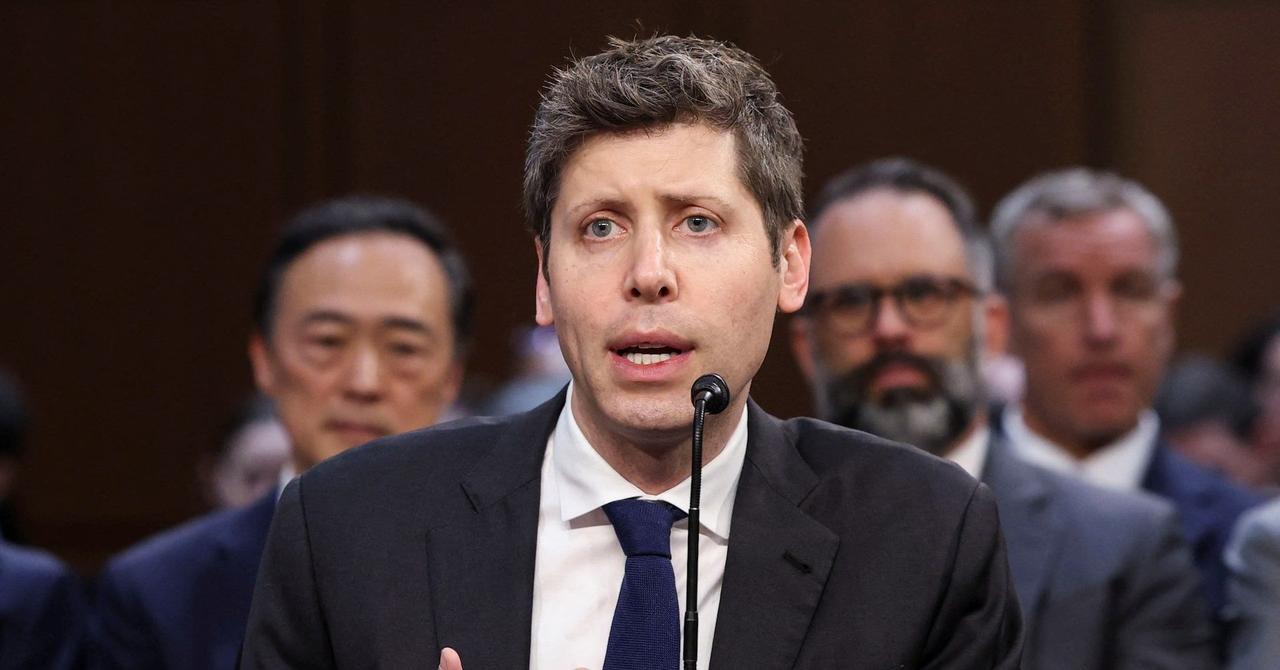
The move comes after years of calls from leading AI developers for stronger oversight of frontier models. President Donald Trump's administration has asked OpenAI to limit the initial release of GPT-5.6 to a small group of government-approved partners, while federal officials evaluate the model, according to reports by The Information and Axios. The request marks the second time this month that the U.S. government has intervened to limit the release of a frontier AI model, following its order that Anthropic suspend public access to Claude Fable 5 and Mythos 5 over national security concerns. According to the reports, the White House's Office of the National Cyber Director and Office of Science and Technology Policy asked OpenAI to limit GPT-5.6's rollout while the administration develops a framework for evaluating advanced AI models before wider deployment. Sources familiar with the discussions reportedly said the request was driven by GPT-5.6's "Mythos-like" capabilities rather than a broader shift in AI policy. The request follows President Trump's executive order earlier this month directing federal agencies to establish a voluntary testing framework for advanced AI systems before release, after weeks of internal debate over how the program should be structured. The move also reflects a shift in the relationship between leading AI builders and Washington after years of developers calling for the government to establish regulations for the industry. During Senate testimony in 2023, OpenAI CEO Sam Altman urged lawmakers to establish a regulatory agency for advanced AI systems, arguing that independent oversight would eventually be necessary. More recently, Anthropic CEO Dario Amodei argued that the most capable AI models should undergo rigorous government-backed evaluations before deployment because of their potential to enable sophisticated cyberattacks, biological weapons research, and other national security threats. Those arguments have become increasingly formalized as Anthropic, OpenAI, and Google have each published proposals outlining how frontier AI should be governed. While they differ in their approaches, all three call for structured evaluations of the most capable models, greater transparency around safety testing, independent review of high-risk systems, and a larger role for the government in overseeing AI development. The administration's intervention may also test whether the governance frameworks championed by leading AI companies can be applied evenly across the industry. Critics warn that if the largest AI developers help shape rules that are then enforced unevenly, then frontier AI regulation could become a form of regulatory capture that favors a select group of companies while making it harder for competitors to compete.
[13]

US wants OpenAI to delay GPT-5.6 rollout after Mythos suspension
The White House has reportedly asked OpenAI to limit the initial release of its upcoming GPT-5.6 model over safety concerns, marking the latest sign of increasing US government involvement in the launch of advanced AI systems, according to an article published in The Information. OpenAI plans to make GPT-5.6 available only to a small group of partners during an initial preview, with CEO Sam Altman reportedly telling employees that the government would approve access "customer by customer." If the rollout proceeds smoothly, the company expects a wider release a few weeks later. Anthropic order set the precedent: The reported move comes just weeks after the US government ordered Anthropic to suspend access to its flagship AI models, Fable 5 and Mythos 5, for all foreign nationals worldwide under an export control directive issued on June 12. Anthropic complied with the order but disputed its basis. The company said the government cited concerns over a possible jailbreak that could bypass the models' safety protections but provided only "verbal evidence of a potential narrow, non-universal jailbreak". Anthropic argued that the reported technique exposed only limited, previously known vulnerabilities and said similar capabilities were available in other frontier models, including OpenAI's GPT-5.5. Directive now faces legal challenge: The order has since become the subject of a legal challenge. On June 23, legal technology company Legion LegalTech sued the US government, arguing that existing export-control laws do not cover hosted AI models or their outputs. The lawsuit also claims the government exceeded its legal authority, improperly used emergency powers, and imposed a blanket restriction without a valid statutory basis. Legion is seeking to have the directive declared unlawful and blocked. Part of a broader technology rivalry: The developments come amid a wider technology rivalry between the US and China. In recent years, the US has tightened export controls on advanced AI chips to China, while Beijing has responded with restrictions on exports of rare earth materials that are critical to global technology supply chains. More recently, China also blocked Meta's reported partnership with Manus. Against this backdrop, governments are increasingly treating oversight of frontier AI models as another front in the broader contest over strategic technologies. AI as a strategic asset: Writing about Anthropic's Mythos model before the US restrictions were imposed, MediaNama founder Nikhil Pahwa argued that the technology has implications beyond cybersecurity. "A model that can find and exploit zero-days at scale is not only a defensive tool. It is a strategic capability that militaries will want," he wrote. He added that "this is like cyber-nuclear power. Can be used for good (improve software/produce electricity) or destruction (cyberattacks/nuclear weapons)." Pahwa also noted that Anthropic had itself linked the technology to geopolitical competition, writing: "Strategic technologies do not distribute their benefits evenly, even when their risks are universal." Referring to Anthropic's own statements, he observed that "the US and its allies must maintain a decisive lead in AI technology," adding that "the strategic benefit flows first to the US and its allies." Together, the OpenAI review, the Anthropic restrictions, and the legal challenge show that governments are increasingly treating frontier AI models not just as commercial products but as technologies with national security and geopolitical significance.
[14]

OpenAI limits release of new AI model amid US request By Investing.com
Investing.com -- OpenAI said Friday it is releasing a preview version of its new GPT-5.6 artificial intelligence model to a small group of partners before a wider launch in the coming weeks. The limited rollout follows a request from the Trump administration to stagger the release. The ChatGPT maker said it is introducing the model series to trusted partners whose names received US government approval. OpenAI said the restricted release approach was made at the administration's request. The company said in a blog post that it does not believe this type of government access process should become standard practice long-term. OpenAI said the approach keeps advanced tools from users, developers, enterprises, cyber defenders and global partners who need them. The company said it is taking this short-term step because it believes this is the best path to broader availability in the coming weeks. The model will initially be available to 20 partners, and one access path will be through Amazon.com Inc.'s Bedrock software platform. The government's role in the rollout adds to mounting pressure from the White House on AI developers. OpenAI competitor Anthropic PBC suspended its most capable models two weeks ago after the government ordered the company to restrict foreign nationals inside and outside the US from using the models, citing national security concerns. The most powerful of the three GPT-5.6 versions, called Sol, is designed to carry out coding, biology and cybersecurity tasks independently, the company said. OpenAI said it strengthened protections for higher-risk activity for its most advanced model, including around sensitive cyber requests. The company noted that no evaluation can represent every product configuration, multi-step attack or real-world workflow. OpenAI said it maintains a rapid-response process to reproduce, assess, prioritize and fix newly discovered jailbreaks, then adds them to ongoing evaluations to test against similar failures in the future. OpenAI said it hopes an executive order signed earlier this month by President Donald Trump may help clarify the process of releasing AI models in the future. The directive gave 60 days from the signing for the Trump administration and AI companies to develop a voluntary framework that includes giving the government access to frontier models for up to 30 days before planned release. This article was generated with the support of AI and reviewed by an editor. For more information see our T&C.
[15]

OpenAI defers public rollout of GPT-5.6 as US seeks early access to frontier AI models
June 26 (Reuters) - OpenAI said on Friday it was delaying a full public launch of GPT-5.6 at the U.S. government's request, limiting the AI model's initial access to a small group of vetted partners whose details were shared with the authorities. The decision underscores growing concern in Washington over the national security risks posed by powerful AI systems, with policymakers pressing companies to put guardrails around them. By securing early access to frontier models, U.S. officials are aiming to identify threats ranging from cyberattacks to military misuse before the tools are widely deployed. OpenAI said in a blog post that the limited release was a temporary step as it works with Washington on a broader framework for future launches. The ChatGPT maker presented its plans and the models' capabilities to the government prior to the launch, it added. President Donald Trump signed an executive order earlier this month establishing a voluntary framework for AI developers to offer "covered frontier models" to the U.S. government for up to 30 days before releasing them to trusted partners. "We are taking this short-term step because we believe it is the strongest path to broader availability in the coming weeks, while we work with the Administration to develop the cyber Executive Order framework and a repeatable process for future model releases," OpenAI said. The company said it would continue rigorous testing and close coordination with its partners as it prepares for a wider release, but cautioned that this level of government access and oversight should not become a permanent standard. It did not disclose the names of its partners. OpenAI, however, expressed concern that such a process would restrict access to advanced AI tools for users including developers, businesses, cybersecurity professionals and international partners who could benefit from them. At the center of the new lineup is GPT-5.6 Sol, the company's most advanced model yet, alongside mid-tier Terra and lower-cost Luna. (Reporting by Jaspreet Singh in Bengaluru; Editing by Anil D'Silva)
Share
Copy Link
OpenAI launched its most advanced AI models yet—GPT-5.6 Sol, Terra, and Luna—but only a select group of government-approved customers can use them. The Trump administration requested the staggered rollout over cybersecurity fears, creating uncertainty for US AI labs. While OpenAI hopes for broader availability within weeks, the company warns this level of government intervention shouldn't become standard practice.
OpenAI GPT-5.6 Release Faces Unprecedented Government Restrictions
OpenAI announced its latest model suite on Friday, but the OpenAI GPT-5.6 release looks vastly different from previous launches. The company unveiled three variants—Sol, the flagship model; Terra, a medium-tier option for high-volume work; and Luna, a fast and affordable everyday model—yet only a handful of government-approved customers can access them
1
2
. The US government requested this limited release at the eleventh hour, marking a significant shift in how advanced AI models reach the market.
Source: Decrypt
According to sources, Commerce Secretary Howard Lutnick personally called Sam Altman to warn against releasing GPT-5.6 without prior government approval
3
. OpenAI is not pleased with this arrangement but views the delay as temporary, hoping to achieve broader availability in the coming weeks1
. The company must submit customer lists to the US government for case-by-case approval, though executives say they cannot disclose details of how Washington evaluates these requests.US AI Regulatory Drama Intensifies Amid Cybersecurity Fears
This US AI regulatory drama stems from growing concerns about national security risks posed by powerful AI systems
4
. President Donald Trump signed a cybersecurity-focused executive order earlier this month establishing a voluntary framework for AI developers to offer covered frontier models to the government up to 30 days before public release. However, OpenAI executives noted that no formal voluntary framework actually exists yet, leaving frontier AI labs in an uncertain interim period where cooperation doesn't feel particularly voluntary1
.
Source: Gizmodo
The situation mirrors Anthropic's recent troubles. Two weeks ago, the Trump administration sent an export control directive to Anthropic, forcing the company to take its most advanced AI models offline for all customers
1
5
. Anthropic had released Fable 5, a safeguarded version of its powerful Mythos model, but the government disagreed that it was sufficiently secure. Some Anthropic employees—including foreign nationals working for the company—remain barred from accessing their own products1
.Early Access to Frontier AI Models Raises Industry Concerns
This approach to early access to frontier AI models has sparked debate about government intervention in AI development. OpenAI stated bluntly: "We don't believe this kind of government access process should become the long-term default. It keeps the best tools from users, developers, enterprises, cyber defenders, and global partners who need them"
2
5
. The company emphasized it's taking this short-term step to ensure the strongest path to broader availability while working with the administration to develop repeatable processes.Neil Chilson, Head of AI Policy at think tank Abundance Institute and former FTC Chief Technologist, expressed stronger criticism: "This escalation of government intervention is nothing to celebrate. It is horrible for the broader AI ecosystem. Continued arbitrary, unexplained deployment of export control authority will make companies slow-walk new models, depriving the public of powerful new tools"
3
. He warned that the government shouldn't hang a "Sword of Damocles" over every lab's head with no indication when it might drop or why.GPT-5.6 Sol Showcases Advanced Cybersecurity Capabilities
Despite the access restrictions, OpenAI revealed significant technical details about its new models. GPT-5.6 Sol demonstrates the company's most robust cybersecurity capabilities to date, excelling at coding, biology, and agentic tasks requiring sustained focus
2
5
. The pricing structure positions Sol competitively at $5 input and $30 output per million tokens—nearly half the cost of Anthropic's Claude Fable 5, which runs $10 input and $50 output. Terra costs half of Sol, while Luna comes in at less than half of Terra's price2
.OpenAI also introduced two additional modes for Sol: a "max" mode for deeper reasoning and an "ultra" mode that leverages sub-agents for complex tasks
2
. These capabilities reflect ongoing work in agentic tasks, where AI systems pursue goals autonomously over extended periods.Related Stories
Layered Safeguards Target Misuse of Advanced AI
Addressing concerns about the misuse of advanced AI, OpenAI dedicated substantial resources to safety testing. The company allocated approximately 700,000 A100e GPU hours to automated red-teaming and engaged third-party testers who will continue evaluating the models for two weeks
2
. OpenAI implemented layered safeguards including refusal training, real-time response monitoring, and account reviews5
.
Source: Reuters
The company emphasized that "GPT-5.6 is trained to refuse prohibited cyber assistance, including when users attempt to disguise their intent or jailbreak the model"
2
. According to OpenAI's assessment, Sol "is better at helping people find and fix vulnerabilities than reliably carrying out end-to-end attacks," and doesn't cross the cyber-critical threshold under the company's preparedness framework2
5
. However, critics note that OpenAI recently revised its preparedness framework in April, removing some areas of previous study2
.What Comes Next for AI Labs and Innovation
The Trump administration's actions create uncertainty about whether this represents a temporary security measure or a permanent shift toward licensing-style controls. While the White House initially promised to reduce regulations to accelerate AI development and maintain competitiveness with China, recent moves suggest a reversal
3
. Industry leaders worry that export controls and access restrictions may only temporarily slow China's progress while potentially stifling innovation domestically.OpenAI plans to expand the customer base next week, including some international partners, though the approval process remains opaque
1
. The company's experience—and Anthropic's ongoing struggles—will likely shape how other US AI labs approach future releases. For developers, enterprises, and cybersecurity professionals awaiting access to these tools, the coming weeks will reveal whether Washington can balance legitimate security concerns with the need to deploy defensive capabilities broadly.References
Summarized by

Navi
[2]
Related Stories
Trump signs AI executive order seeking voluntary 30-day review after industry pushback
02 Jun 2026•Policy and Regulation

Sam Altman urges US lawmakers to fund AI testing but reject mandatory model approvals
03 Jun 2026•Policy and Regulation
Anthropic releases Claude Fable 5 with strict safeguards, sparking backlash from researchers
09 Jun 2026•Technology

Recent Highlights
1
OpenAI and Broadcom unveil Jalapeño chip to power next-generation AI inference at scale
Technology

2
Anthropic faces AI export ban as Mythos reportedly breached NSA systems in hours
Policy and Regulation

3
Meta launches AI-powered glasses at $299, ditching Ray-Ban to expand smart glasses market
Technology

Recent Highlights
Today's Top Stories





Don’t drown in AI news. We cut through the noise - filtering, ranking and summarizing the most important AI news, breakthroughs and research daily. Follow topics that matter to you and stay ahead.


